
Introduction
This fast-growing, 50 feet tall and wide deciduous tree with green and yellow-variegated, 6-inch-long leaves creates a broad canopy but has spiny branches. In spring, before the leaves appear, coral tree is decorated with showy red blossoms, each flower 2.5 inches long and arranged in dense, 6-inch-long racemes. These blooms are followed by 12-inch-long, red/brown seedpods which contain poisonous seeds.
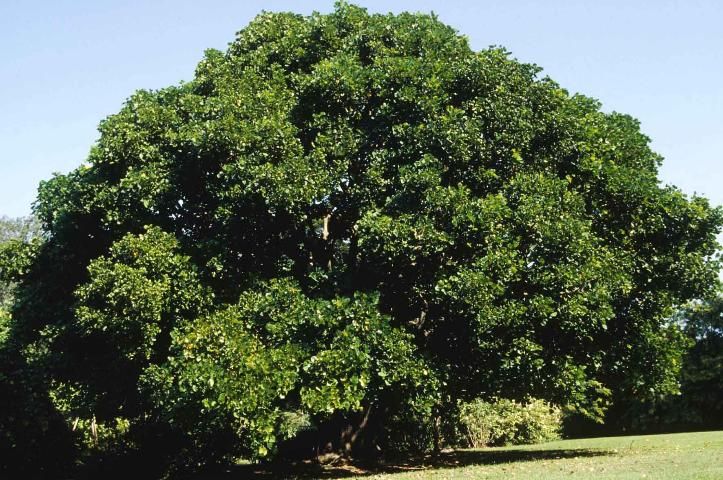
Credit: Ed Gilman, UF/IFAS
General Information
Scientific name: Erythrina variegata var. orientalis
Pronunciation: air-rith-RYE-nuh vair-ee-eh-GAY-tuh variety or-ee-en-TAY-liss
Common name(s): Coral tree
Family: Leguminosae
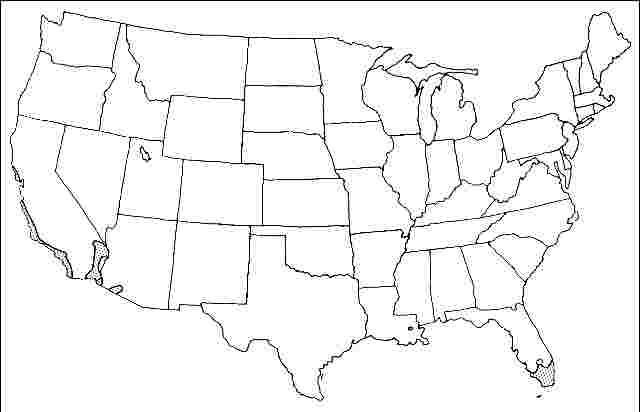
USDA hardiness zones: 10A through 11 (Fig. 2)
Origin: not native to North America
Invasive potential: little invasive potential
Uses: shade; specimen
Availability: somewhat available, may have to go out of the region to find the tree
Description
Height: 50 to 60 feet
Spread: 40 to 50 feet
Crown uniformity: symmetrical
Crown shape: round, vase
Crown density: dense
Growth rate: fast
Texture: coarse
Foliage
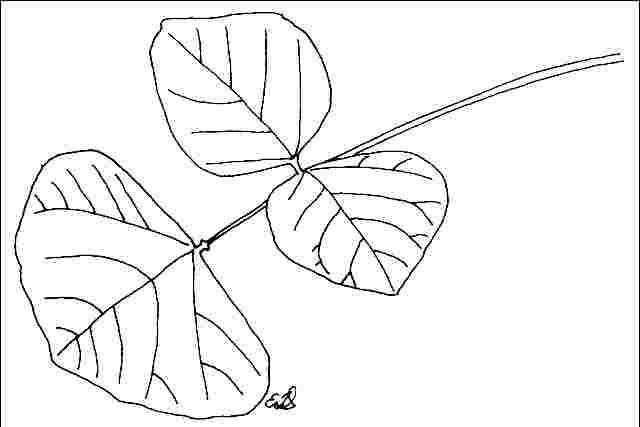
Leaf arrangement: alternate (Fig. 3)
Leaf type: trifoliate, odd-pinnately compound
Leaf margin: entire
Leaf shape: deltoid, ovate
Leaf venation: pinnate, reticulate
Leaf type and persistence: deciduous
Leaf blade length: 2 to 4 inches
Leaf color: green
Fall color: no color change
Fall characteristic: not showy
Flower
Flower color: red
Flower characteristics: showy
Fruit
Fruit shape: unknown
Fruit length: unknown
Fruit covering: dry or hard
Fruit color: brown
Fruit characteristics: does not attract wildlife; not showy; fruit/leaves not a litter problem
Trunk and Branches
Trunk/bark/branches: branches don't droop; showy; typically multi-trunked; no thorns
Pruning requirement: needed for strong structure
Breakage: resistant
Current year twig color: gray, brown
Current year twig thickness: very thick, thick
Wood specific gravity: unknown
Culture
Light requirement: full sun
Soil tolerances: clay; sand; loam; alkaline; acidic; well-drained
Drought tolerance: high
Aerosol salt tolerance: moderate
Other
Roots: can form large surface roots
Winter interest: yes
Outstanding tree: yes
Ozone sensitivity: unknown
Verticillium wilt susceptibility: unknown
Pest resistance: sensitive to pests/diseases
Use and Management
The large size of coral tree makes it suited for planting in parks, golf courses and in other large-scale landscapes. Multiple trunks ascend from the lower portion of the main trunk giving rise to a wide-spreading canopy casting dense shade. Lower branches droop to the ground if they are allowed to remain on the tree. Give this tree plenty of room to develop since the canopy is large and the tree looks wonderful with a symmetrical crown. Since the trunk often flares or buttresses at the base, plant it at least 10 feet from a sidewalk or driveway.
Coral tree should be grown in full sun on well-drained soil. Trees are highly drought-tolerant and moderately salt-tolerant.
Propagation is easily done by seeds, cuttings, or division.
Pests
Borers may infest weakened trees.
Diseases
No diseases are of major concern. Caterpillars can eat significant amounts of foliage.