


Pinus bungeana: Lacebark Pine1
Introduction
Lacebark Pine is a very picturesque multi-trunked and upright, oval tree through about age 40, then begins spreading into a flattened canopy allowing filtered sunlight beneath. The beautiful grey/green, mottled, exfoliating bark becomes chalky white on mature trees and is one of the best Pines for this character. Cultivated in the Orient for its striking bark, Lacebark Pine can be often seen on the grounds of Buddhist temples. Capable of reaching 75 feet in height, it is more often seen at 30 to 50 feet with a 20 to 35-foot spread and has a rounded to pyramidal outline when young. Those planting the tree will wait a long time to see the tree display its true virtue, for growth is slow at best. The stiff, two to four-inch-long needles are sharp to the touch, as are the light brown, two to three-inch-wide, rounded cones.
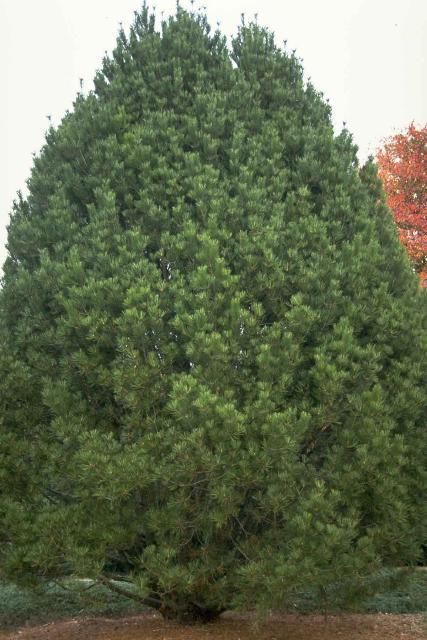
Credit: Ed Gilman
General Information
Scientific name: Pinus bungeana
Pronunciation: PIE-nus bun-jee-AY-nuh
Common name(s): Lacebark Pine
Family: Pinaceae
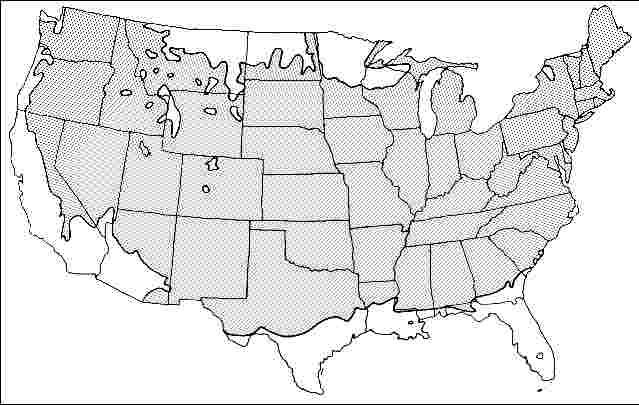
USDA hardiness zones: 4A through 8A (Fig. 2)
Origin: not native to North America
Invasive potential: little invasive potential
Uses: deck or patio; specimen; Bonsai; shade; highway median
Availability: somewhat available, may have to go out of the region to find the tree
Description
Height: 30 to 50 feet
Spread: 12 to 20 feet
Crown uniformity: symmetrical
Crown shape: oval, pyramidal
Crown density: moderate
Growth rate: slow
Texture: fine
Foliage
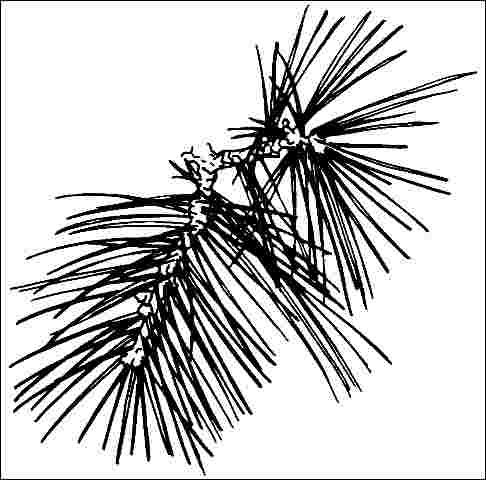
Leaf arrangement: alternate (Fig. 3)
Leaf type: simple
Leaf margin: entire
Leaf shape: needle-like (filiform)
Leaf venation: parallel
Leaf type and persistence: evergreen, needled evergreen, fragrant
Leaf blade length: 2 to 4 inches
Leaf color: green
Fall color: no color change
Fall characteristic: not showy
Flower
Flower color: yellow
Flower characteristics: not showy
Fruit
Fruit shape: oval, cone
Fruit length: 1 to 3 inches
Fruit covering: dry or hard
Fruit color: brown
Fruit characteristics: does not attract wildlife; showy; fruit/leaves not a litter problem
Trunk and Branches
Trunk/bark/branches: branches don't droop; very showy; typically multi-trunked; thorns
Pruning requirement: needed for strong structure
Breakage: susceptible to breakage
Current year twig color: gray, green
Current year twig thickness: medium
Wood specific gravity: unknown
Culture
Light requirement: full sun
Soil tolerances: clay; sand; loam; slightly alkaline; acidic; well-drained
Drought tolerance: moderate
Aerosol salt tolerance: unknown
Other
Roots: not a problem
Winter interest: yes
Outstanding tree: yes
Ozone sensitivity: unknown
Verticillium wilt susceptibility: resistant
Pest resistance: resistant to pests/diseases
Use and Management
Locate the tree where passers-by can view the trunk character, such as along a walk or near a patio or deck. Trees have a reputation for splitting apart in snow and ice storms. This can probably be largely prevented by training newly planted trees to one central leader and eliminating weakly attached trunks and branches, but this will spoil the striking multi-trunked habit so characteristic of the tree.
Growing best in full sun on well-drained, acid soil, Lacebark Pine may tolerate soil with a higher pH but should not be exposed to soils which are excessively wet or dry. The trees are also reportedly sensitive to air pollution.
Propagation is by seed or grafting.
Pests and Diseases
There are a large number of pests and diseases reported on Pine.

