


Quercus bicolor: Swamp White Oak1
Introduction
This deciduous native tree reaches 50 to 70 feet in height with an equal spread, forming a broad, open, rounded canopy and casting dense shade below. The shiny, dark green, 5- to 6-inch-long by 2- to 4-inch-wide leaves have fine white hairs on their underside, and irregular margins. In fall, the leaves turn a showy yellow/brown to red before dropping. The oval, 1-inch acorns are usually found in pairs on 1- to 4-inch-long stems, and are quite attractive to a variety of mammals and birds. Swamp white oak has deeply ridged and furrowed, dark brown bark, and forms an impressive shade tree.
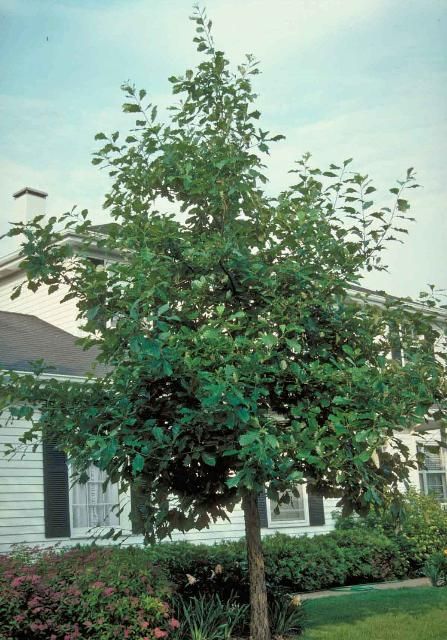
Credit: Ed Gilman, UF/IFAS
General Information
Scientific name: Quercus bicolor
Pronunciation: KWERK-us BYE-kull-er
Common name(s): Swamp white oak
Family: Fagaceae
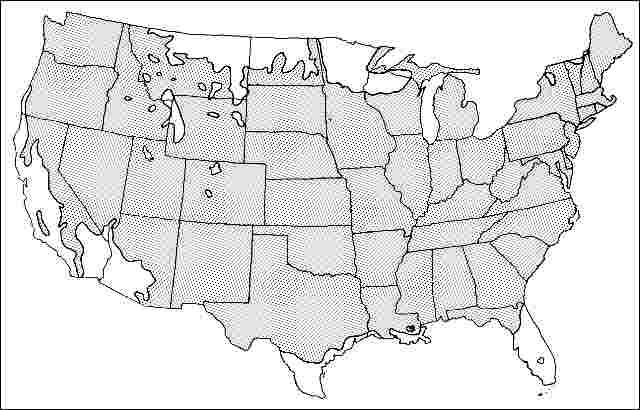
USDA hardiness zones: 4A through 8B (Fig. 2)
Origin: native to North America
Invasive potential: little invasive potential
Uses: parking lot island > 200 sq ft; street without sidewalk; tree lawn > 6 ft wide; specimen; shade
Availability: not native to North America
Description
Height: 50 to 70 feet
Spread: 50 to 70 feet
Crown uniformity: irregular
Crown shape: round, oval
Crown density: moderate
Growth rate: moderate
Texture: coarse
Foliage
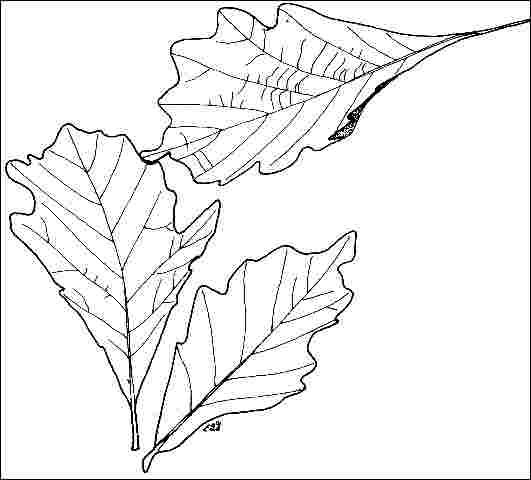
Leaf arrangement: alternate (Fig. 3)
Leaf type: simple
Leaf margin: lobed, dentate, sinuate/undulate
Leaf shape: oblong, obovate
Leaf venation: pinnate
Leaf type and persistence: deciduous
Leaf blade length: 4 to 8 inches
Leaf color: green
Fall color: yellow, copper, red
Fall characteristic: showy
Flower
Flower color: brown
Flower characteristics: not showy
Fruit
Fruit shape: round, oval
Fruit length: .5 to 1 inch
Fruit covering: dry or hard
Fruit color: brown
Fruit characteristics: attracts squirrels/mammals; not showy; fruit/leaves a litter problem
Trunk and Branches
Trunk/bark/branches: branches droop; showy; typically one trunk; thorns
Pruning requirement: needed for strong structure
Breakage: resistant
Current year twig color: brown
Current year twig thickness: medium, thick
Wood specific gravity: 0.72
Culture
Light requirement: full sun, partial sun, or partial shade
Soil tolerances: clay; sand; loam; slightly alkaline; acidic; extended flooding; well-drained
Drought tolerance: moderate
Aerosol salt tolerance: moderate
Other
Roots: not a problem
Winter interest: no
Outstanding tree: yes
Ozone sensitivity: unknown
Verticillium wilt susceptibility: resistant
Pest resistance: resistant to pests/diseases
Use and Management
Found in the wild along streams and in swampy soils, swamp white oak should be grown in full sun to partial shade on acid soils, showing severe chlorosis on alkaline soils. These trees are very long-lived, surviving for more than 300 years. They tolerate soil compaction, drought and some salt exposure. They should be tried more often in urban areas. Transplanting is best done in springtime. Container-grown material can be planted anytime.
Propagation is by seed.
Pests
Borers, variable oak caterpillar, oak slug caterpillar and other caterpillars are pests although natural enemies usually keep infestations under control. Gypsy moth can cause significant damage. There are many other potential pests on oak.
Diseases
Some diseases of this oak are anthracnose, canker, powdery mildew, shoestring root rot and oak wilt. Leaf spot diseases are usually harmless. Leaf blister can cause moderate to severe defoliation. A dormant spray may reduce symptoms.

