
Introduction
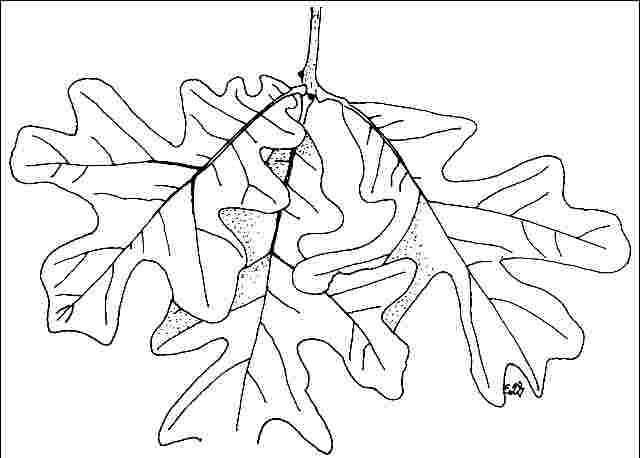
This 40- to 50-foot-tall deciduous tree creates a dense, rounded canopy of spreading, twisted branches, but is not cultivated in nurseries. The 4- to 6-inch-long by 3- to 4-inch-wide, shiny, dark green leaves are deeply lobed and appear somewhat in the shape of a Maltese cross. Only rarely do the leaves change to a golden brown in the fall before dropping. The one-half to one-inch-long acorns are quite popular with squirrels and other wildlife. Old trees growing on good soil form a wonderful silhouette in the winter, with large-diameter, curving branches growing from a sinuous trunk.
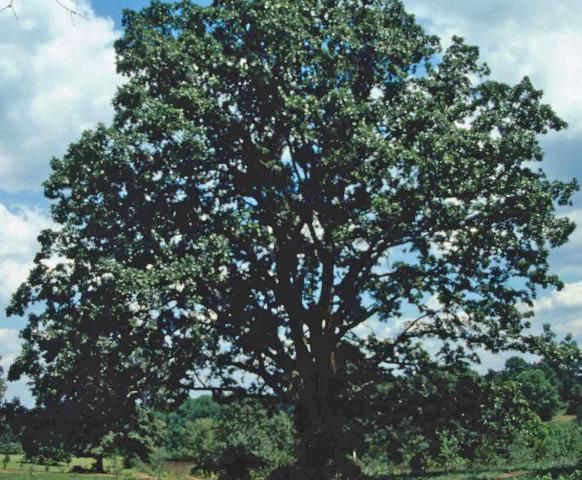
Credit: Ed Gilman, UF/IFAS
General Information
Scientific name: Quercus stellata
Pronunciation: KWERK-us stell-AY-tuh
Common name(s): Post oak
Family: Fagaceae
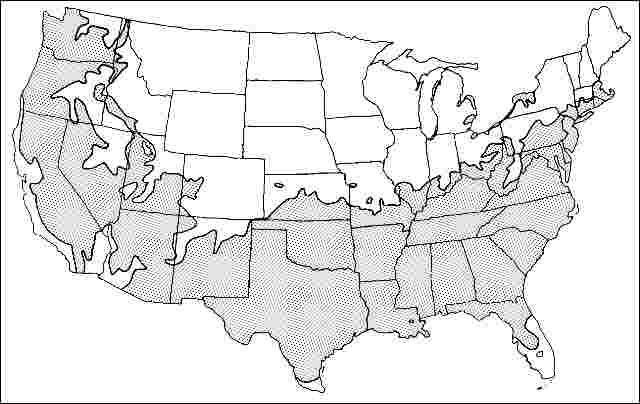
USDA hardiness zones: 6A through 9A (Fig. 2)
Origin: native to North America
Invasive potential: little invasive potential
Uses: reclamation; specimen; shade; highway median
Availability: not native to North America
Description
Height: 40 to 50 feet
Spread: 35 to 50 feet
Crown uniformity: irregular
Crown shape: round
Crown density: open
Growth rate: moderate
Texture: coarse
Foliage
Leaf arrangement: alternate (Fig. 3)
Leaf type: simple
Leaf margin: parted, lobed
Leaf shape: elliptic (oval), obovate
Leaf venation: pinnate, reticulate
Leaf type and persistence: deciduous
Leaf blade length: 4 to 8 inches
Leaf color: green
Fall color: copper
Fall characteristic: not showy
Flower
Flower color: brown
Flower characteristics: not showy
Fruit
Fruit shape: round, oval
Fruit length: .5 to 1 inch
Fruit covering: dry or hard
Fruit color: brown
Fruit characteristics: attracts squirrels/mammals; not showy; fruit/leaves a litter problem
Trunk and Branches
Trunk/bark/branches: branches droop; showy; typically one trunk; thorns
Pruning requirement: little required
Breakage: resistant
Current year twig color: gray, brown
Current year twig thickness: thick
Wood specific gravity: 0.67
Culture
Light requirement: full sun
Soil tolerances: clay; sand; loam; acidic; slightly alkaline; well-drained
Drought tolerance: high
Aerosol salt tolerance: moderate
Other
Roots: not a problem
Winter interest: yes
Outstanding tree: no
Ozone sensitivity: unknown
Verticillium wilt susceptibility: resistant
Pest resistance: resistant to pests/diseases
Use and Management
Most often found on dry, low-fertility, sandy soils, post oak is extremely drought-tolerant. Trees should be located in full sun. Native trees are very sensitive to soil compaction, drainage changes and soil disturbance. Do not disturb the soil beneath the canopy on a construction site if the tree is to be saved.
Propagation is by seed.
Pests and Diseases
No pests or diseases of major concern but the tree occasionally succumbs to chestnut blight. There are many other potential problems on oaks but none are normally serious. Post oak is susceptible to oak wilt.