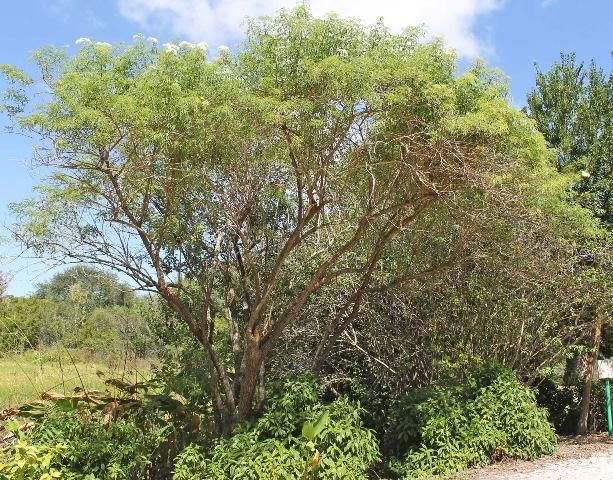
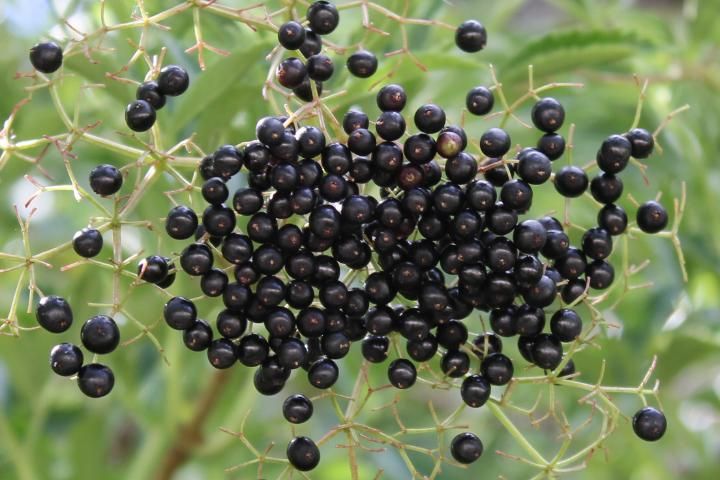
A fast-growing deciduous shrub, elderberry suckers quite easily and is often seen as a broad, spreading, multi-stemmed plant with bright green, pinnately compound, 6- to 10-inch-long leaves arranged along the arching branches. But it can be effectively pruned into a nice, small, single or multi-stemmed, small, flowering tree but needs regular pruning to remove suckers growing from the base of the plant. In early summer (northern part of its range) or sporadically all year long (in USDA hardiness zones 9 and 10), elderberry is literally smothered with 6- to 10-inch-wide clusters of yellowish-white blooms. These are followed by a multitude of small, dark purple berries which are quite popular with birds, and can be used in pies, jellies, or fermented to make a wine. Some reference books refer to Sambucus simpsonii as a separate species, but this is probably a southern extension of Sambucus canadensis.
Figure 1. Full Form—Sambucus nigra ssp. canadensis: elderberry Credit: Ed Gilman, UF/IFAS
General Information
Scientific name: Sambucus nigra ssp. canadensis
Pronunciation: sam-BEW-kuss kan-uh-DEN-sis
Common name(s): elderberry,American elder, common elder
Family: Adoxaceae
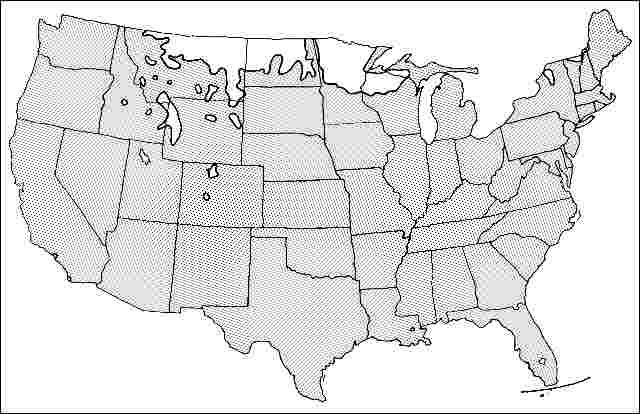
USDA hardiness zones: 4A through 10B (Figure 2)
Origin: native to the eastern half of the United States and southeastern Canada
UF/IFAS Invasive Assessment Status: weedy native
Uses: container or planter; reclamation; trained as a standard; deck or patio; specimen
Figure 2. Range
Description
Height: 5 to 12 feet, and thicket-forming
Spread: 6 to 10 feet
Crown uniformity: irregular
Crown shape: round
Crown density: open
Growth rate: moderate
Texture: fine
Foliage
Leaf arrangement: opposite/subopposite
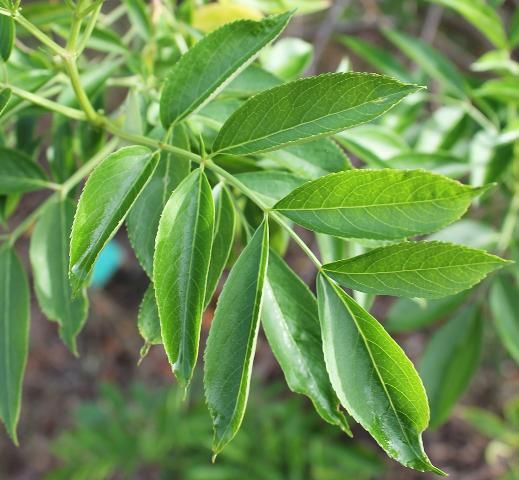
Leaf type: odd-pinnately compound; made up of 7 to 11 leaflets
Leaf margin: serrate
Leaf shape: elliptic (oval), lanceolate
Leaf venation: pinnate
Leaf type and persistence: deciduous
Leaf blade length: 6 to 10 inches; leaflets are 2 to 6 inches
Leaf color: dark green on top, paler green underneath
Fall color: yellow
Fall characteristic: not showy
Figure 3. Leaf—Sambucus nigra ssp. canadensis: elderberry
Flower
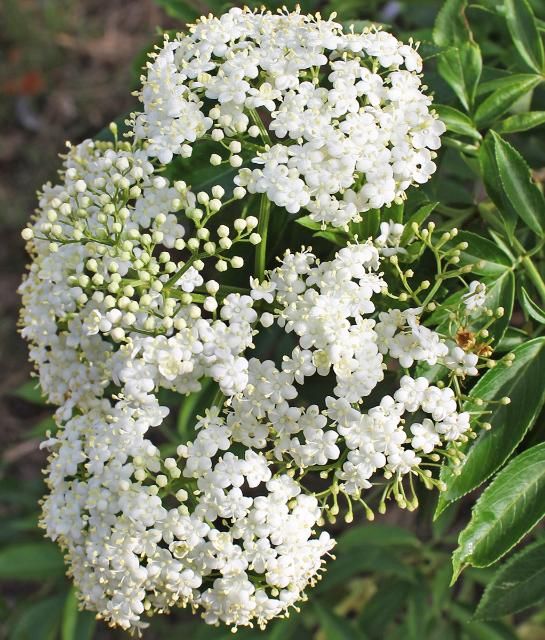
Flower color: white
Flower characteristics: showy; emerge in clusters on flat-topped cymes
Flowering: late spring to early summer
Figure 4. Flower—Sambucus nigra ssp. canadensis: elderberry
Fruit
Fruit shape: round
Fruit length: ¼ inch
Fruit covering: fleshy drupe
Fruit color: green topurplish black
Fruit characteristics: attracts birds; showy; fruit/leaves not a litter problem
Fruiting: mid to late summer
Figure 5. Fruit—Sambucus nigra ssp. canadensis: elderberry
Trunk and Branches
Trunk/branches: branches droop; not showy; typically multi-trunked; no thorns
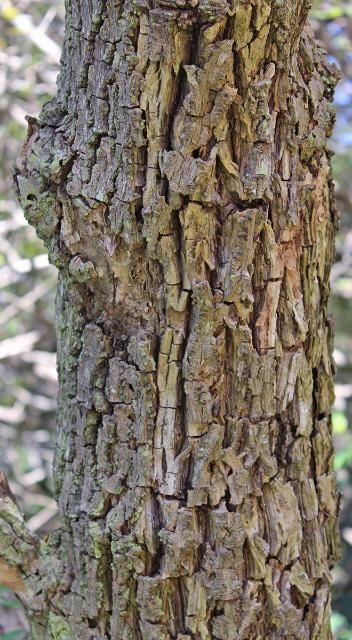
Bark: brown, smooth, and warty, becoming rough and shallowly furrowed with age
Pruning requirement: needed for strong structure
Breakage: susceptible to breakage
Current year twig color: gray
Current year twig thickness: thick
Wood specific gravity: unknown
Figure 6. Bark—Sambucus nigra ssp. canadensis: elderberry Credit: Gitta Hasing
Ideal for use in naturalized landscapes where it will tolerate acid or alkaline soil and even some drought, elderberry performs best in full sun on moist to wet, fertile soils. Plant it in the shrub border or locate it next to the patio for a wonderful flower display. The plant is often overlooked by the trade perhaps because it is so commonly found in and along the woods, but it has a place in the garden, although its rather random habit may not make it popular in the commercial landscape. Requires pruning to create a neat small tree.
A few cultivars include: 'Acutiloba', leaflets very deeply divided, a nice fine-textured plant; 'Aurea', bright red fruit, yellow leaves; 'Adams', fruits in dense, large clusters, excellent for baking. There are a variety of other very attractive species.
Propagation is by seed or cuttings.
Pests
Borers, occasional leaf-chewing insects, may infest this tree.
Diseases
Elderberry can be infected by cankers, leaf spots, powdery mildew.
References
Koeser, A. K., Hasing, G., Friedman, M. H., and Irving, R. B. 2015. Trees: North & Central Florida. Gainesville: University of Florida Institute of Food and Agricultural Sciences.
Koeser, A.K., Friedman, M.H., Hasing, G., Finley, H., Schelb, J. 2017. Trees: South Florida and the Keys. Gainesville: University of Florida Institute of Food and Agricultural Sciences.