Edward F. Gilman, Dennis G. Watson, Ryan W. Klein, Andrew K. Koeser, Deborah R. Hilbert, and Drew C. McLean
2
Introduction
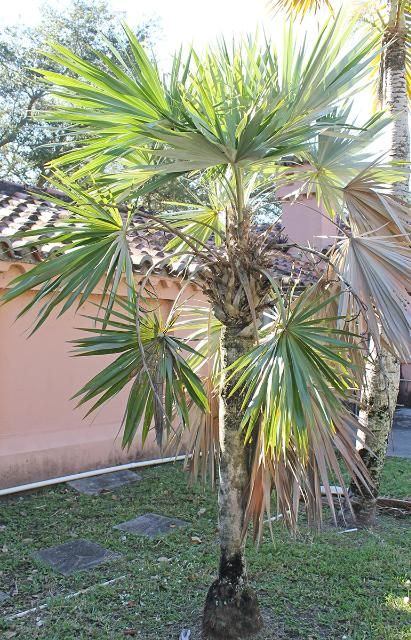
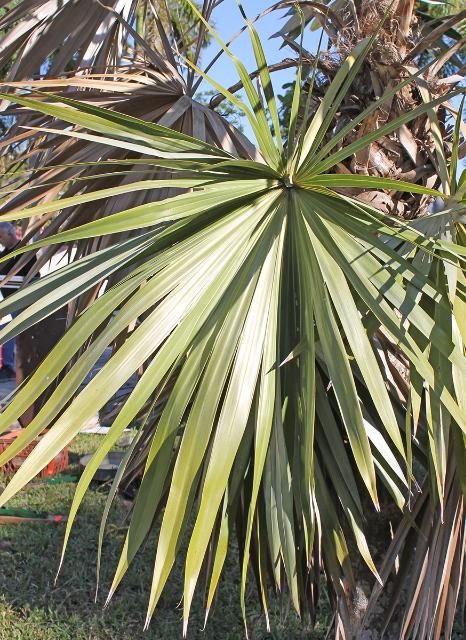
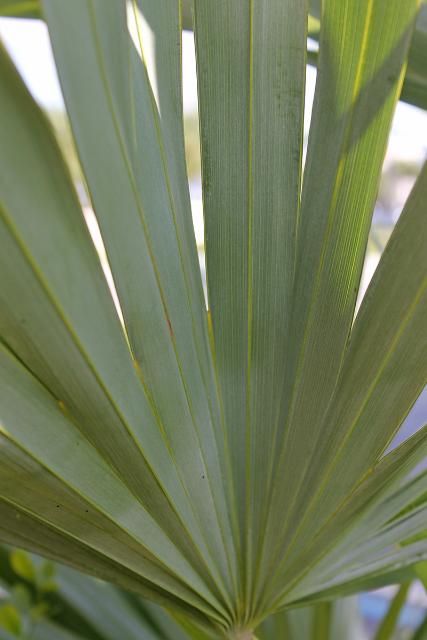
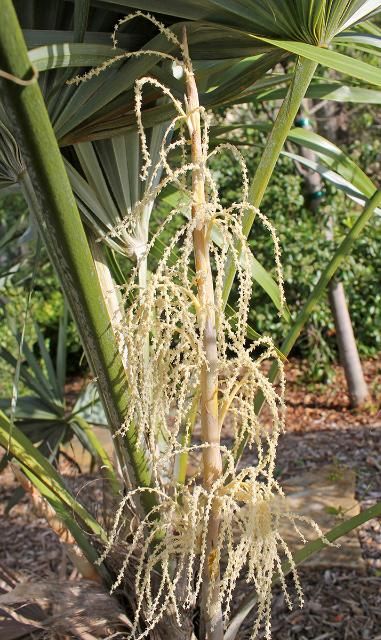
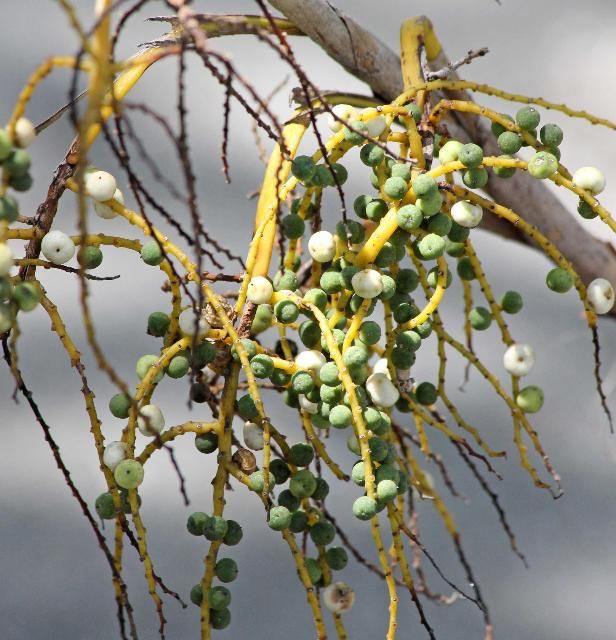
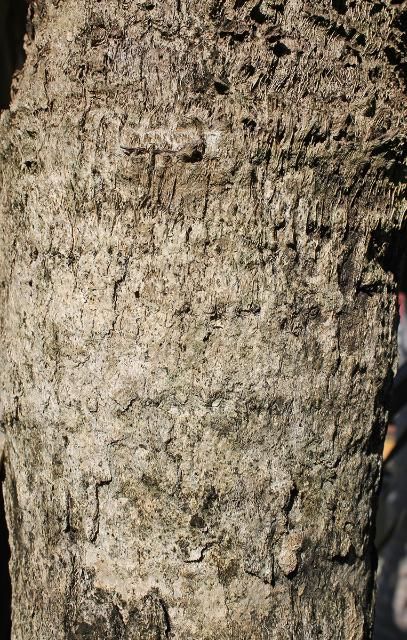
This native North American palm slowly grows 20 to 35 feet tall, its smooth, slender trunk topped with 3.5-foot-wide, beautiful, green and silver fronds. The fronds are a shimmering silver/white underneath and are a source for thatch. The insignificant white or yellow spring flowers are followed by small, round, fleshy white or yellow fruits.
Figure 1. Full Form—Leucothrinax morrisii: key thatch palm
General Information
Scientific name: Leucothrinax morrisii
Pronunciation: loo-ko-THRI-nax more-ISS-ee-eye
Common name(s): key thatch palm
Family: Arecaceae
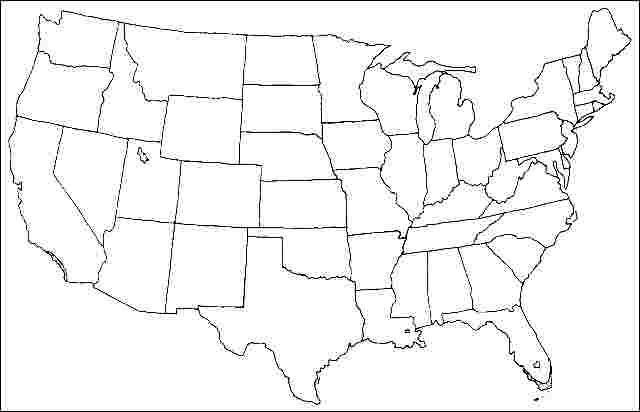
USDA hardiness zones: 10B through 11 (Figure 2)
Origin: native to Florida and the West Indies
UF/IFAS Invasive Assessment Status: native
Uses: deck or patio; container or planter; specimen; highway median
Figure 2. Range
Description
Height: 20 to 35 feet
Spread: 8 to 12 feet
Crown uniformity: symmetrical
Crown shape: palm, upright/erect
Crown density: open
Growth rate: slow
Texture: coarse
Foliage
Leaf arrangement: alternate
Leaf type: simple
Leaf margin: entire
Leaf shape: fan-shaped
Leaf venation: palmate
Leaf type and persistence: broadleaf evergreen, evergreen
Leaf blade length: 18 to 24 inches
Leaf color: dark green to blue and shiny on top, silver to light green underneath
Pest resistance: free of serious pests and diseases
Use and Management
This palm is small enough to be popular in residential landscapes. It is often planted as a single specimen or in groups of three to accent an area. Due to the coarse texture, they make a nice entryway palm planted to attract attention to the front door of a building. It often looks best planted in a mulched area or in a bed with a low-growing ground cover.
Key thatch palm should be grown in full sun or partial shade and is highly drought- and salt-tolerant, making it ideal for seaside applications.
Propagation is by seed.
Pests
No pests are of major concern.
Diseases
No diseases are of major concern.
Reference
Koeser, A.K., Friedman, M.H., Hasing, G., Finley, H., Schelb, J. 2017. Trees: South Florida and the Keys. Gainesville: University of Florida Institute of Food and Agricultural Sciences.