
Introduction
Cedar elm is a native North American deciduous tree which reaches 50 to 90 feet in height with a spread of 40 to 60 feet and forms a rounded silhouette. Trees 118 feet tall have been documented in the wild. The stiff and rough-textured, dark green leaves fade to bright yellow to red/brown before dropping in fall. The inconspicuous, green, summertime flowers are followed by the production of winged seeds in late summer or early fall.
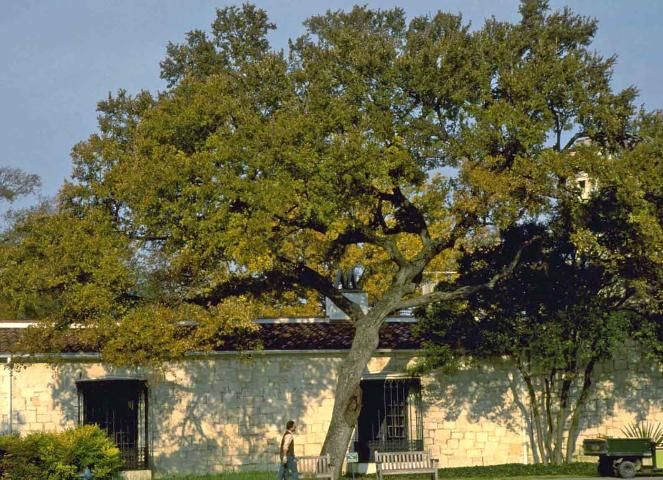
Credit: Ed Gilman, UF/IFAS
General Information
Scientific name: Ulmus crassifolia
Pronunciation: UL-mus krass-ih-FOLE-ee-uh
Common name(s): Cedar elm
Family: Ulmaceae
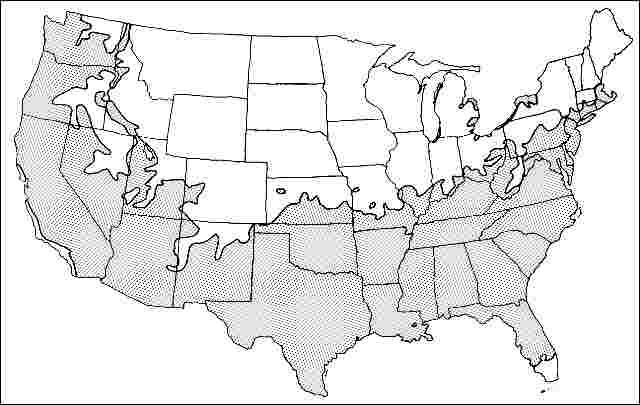
USDA hardiness zones: 6A through 9B (Fig. 2)
Origin: native to North America
Invasive potential: little invasive potential
Uses: reclamation; shade; street without sidewalk; parking lot island 100-200 sq ft; parking lot island > 200 sq ft; sidewalk cutout (tree pit); tree lawn 4-6 feet wide; tree lawn > 6 ft wide; urban tolerant; highway median
Availability: not native to North America
Description
Height: 50 to 70 feet
Spread: 40 to 60 feet
Crown uniformity: irregular
Crown shape: vase, round
Crown density: moderate
Growth rate: moderate
Texture: fine
Foliage
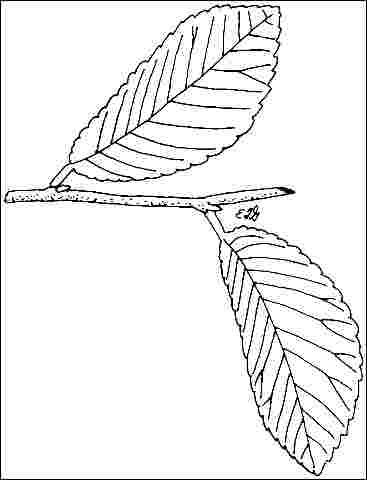
Leaf arrangement: alternate (Fig. 3)
Leaf type: simple
Leaf margin: serrate, double serrate, crenate
Leaf shape: obovate, elliptic (oval)
Leaf venation: pinnate
Leaf type and persistence: deciduous
Leaf blade length: less than 2 inches
Leaf color: green
Fall color: yellow
Fall characteristic: showy
Flower
Flower color: green
Flower characteristics: not showy
Fruit
Fruit shape: oval
Fruit length: .5 to 1 inch, 1 to 3 inches
Fruit covering: dry or hard
Fruit color: green
Fruit characteristics: does not attract wildlife; not showy; fruit/leaves not a litter problem
Trunk and Branches
Trunk/bark/branches: branches droop; not showy; typically one trunk; thorns
Pruning requirement: needed for strong structure
Breakage: susceptible to breakage
Current year twig color: brown, gray
Current year twig thickness: thin
Wood specific gravity: unknown
Culture
Light requirement: full sun, partial sun, or partial shade
Soil tolerances: clay; sand; loam; alkaline; acidic; extended flooding; well-drained
Drought tolerance: high
Aerosol salt tolerance: moderate
Other
Roots: not a problem
Winter interest: no
Outstanding tree: no
Ozone sensitivity: unknown
Verticillium wilt susceptibility: susceptible
Pest resistance: sensitive to pests/diseases
Use and Management
It would be a low maintenance shade and street tree except for its thin, somewhat drooping branches which are somewhat susceptible to breakage at the crotches of major limbs. Some of this could be avoided by maintaining a regular pruning and training program in the early years after transplanting. Strive to keep branches no larger than about two-thirds the diameter of the trunk. Cedar elm has been used extensively (almost exclusively in some local areas) in Texas as a street tree for many years due to its adaptability to wet, poor soil conditions. However, it is always best to diversify the tree species in an area so that if a major problem arises on one species, it will only effect a portion of the tree population in the community.
Cedar elm should be grown in full sun on well-drained soil, acid, or alkaline. It is very drought-tolerant once established and tolerates wet soil well. However, mistletoe can engulf the tree leading to its demise.
Propagation is by seed.
Pests
Elm leaf beetles can feed on foliage. Aphids can also drop copious amounts of honey dew beneath the canopy.
Diseases
Dutch elm disease kills trees. Powdery mildew can be a problem in some years.