University of FloridaSolutions for Your Life

Download PDF 
Publication #ENH-68

Perennial Gardening in Florida1

Sydney Park Brown2

Flowering perennials can provide color in your landscape during every season of the year. Once established, these plants require less maintenance than annual flowers, and they have the advantage of being a more permanent part of your landscape.

Perennials are plants that grow indefinitely. The shrubs and trees that comprise our landscapes are perennials, but these are referred to as woody perennials. The plants discussed here are herbaceous perennials-plants with little or no woody tissue. However, under the continuous growing conditions of south Florida, some herbaceous perennials become woody shrubs. Likewise, plants that are normally woody shrubs in south Florida behave as herbaceous perennials in north Florida where they are killed to the ground each winter.

Plants which grow from bulbs, corms, tubers, or other types of underground storage systems are also herbaceous perennials. The selection and care of these plants is discussed in Circular 552, "Bulbs For Florida," here: http://edis.ifas.ufl.edu/MG029.

Selection and Use

The flowering perennials listed in Table 1 are good performers in Florida gardens or in containers. Many other perennials exist, but they may not be suited to Florida's climate and soils.

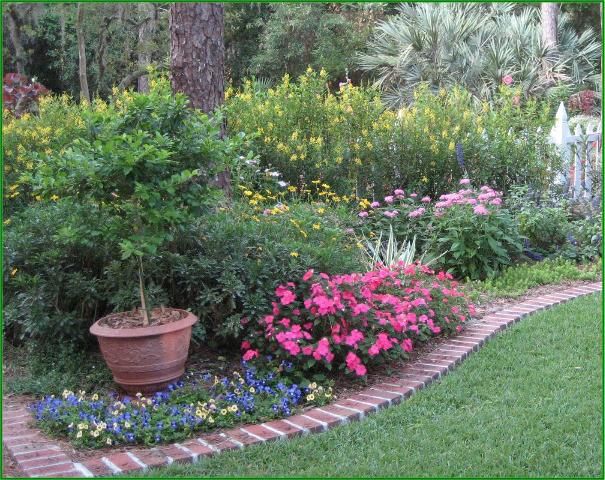
Some perennials are used to best advantage when they are planted in masses. The bold displays of color they provide are much more pleasing than individual plants placed here and there. Evergreen and flowering shrubs provide a beautiful backdrop for masses of small perennials, whereas large-growing perennials can be used as specimen plants.
Note the mature size of each perennial you select. Most large-growing perennials can be maintained as a smaller plant, but it may require frequent pruning to keep them that way. Is the perennial tender or hardy to cold? Tender perennials will need cold protection during frosts or freezes. How much sunlight does it require? When does it flower? Ideally, a garden should have a succession of blooms throughout the year.

When designing a bed, think of plant form and texture. Pleasing foliage combinations (clumping with upright forms; delicate with bold textures) give the garden interest long after the flowers are gone.
Flower and foliage color is another important design consideration. "Warm" colors such as orange, red and yellow should be grouped together and segregated from the "cool" hues and pastels. White, blue, silver/gray and green go with everything and can be used as transition colors in the garden. Repetition of color and form pulls the eye through the garden and provides a pleasing cohesiveness.
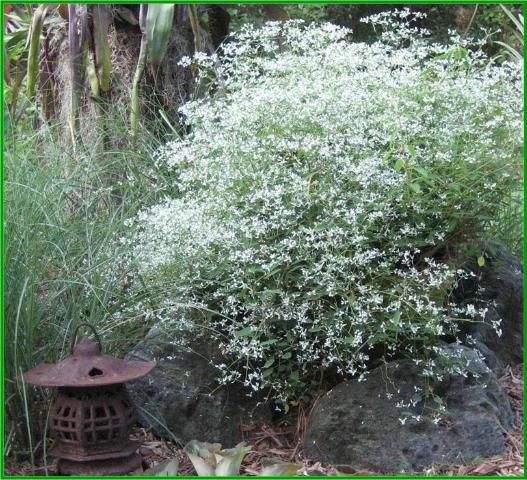
Consider all these factors when determining how and where plants should be used in the landscape or perennial garden. Inexperienced perennial growers may find it challenging to design a garden. Luckily, most perennials transplant well and beds can be easily rearranged if needed.

Planting and Care

The most important step in establishing perennials is preparing the planting bed. Because most perennials remain in the bed for several years without being divided or moved, proper soil preparation is essential.

Sandy soils should be amended with organic matter such as manure, peat, or compost. Apply several inches of organic matter to the soil surface and work into the top 10 to12 inches. A soil pH of 5.5 to 6.5 is recommended. Many county Extension offices test soil and make pH recommendations.

Space the plants in the bed to allow for their future growth and for cultivation between them. Plant them in the soil so that the top of the root ball is slightly above the ground line. Mulch heavily, at least 2 to 3 inches, with an organic mulch such as leaves, pine straw or wood chips. A thick mulch will conserve moisture, insulate roots from heat and cold, and discourage weeds. Do not allow the mulch to touch the base of the plants and re-apply it as needed.

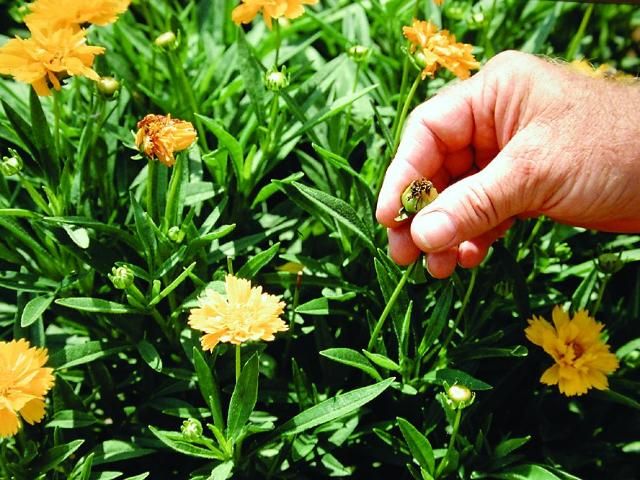
Most flowering perennials require little maintenance other than occasional pruning and fertilizing. Timing of fertilizer applications and amounts may vary with different plants and parts of the state. Let the appearance and growth rate of the plant guide you. Many perennials require little or no fertilizer once established; others benefit from one to four light applications of fertilizer per growing season. A general purpose landscape fertilizer containing equal amounts of nitrogen and potassium and low to no phosphorus (such as 15-0-15) is recommended. Controlled-release fertilizers such as Osmocote, Nutricote or Polycon, can also provide excellent results. Occasional pruning may be needed to remove dead flower spikes or unsightly leaves, or to reduce the size of the plant. Some perennials become top-heavy when in bloom and will need to be staked.

Propagation

The propagation method for each perennial is listed in Table 1. Division is the quickest and easiest method of multiplying some herbaceous perennials. Simply dig the plants and shake off the soil. It will be apparent where to separate the plants into smaller units having roots and leaves. The best time to divide plants is after the blooming season or during milder times of the year. Perennials that are frozen back to the ground can be lifted, divided, and reset at that time with good results. Some perennials are easily grown from seed or cuttings as well. Spring and summer are the appropriate seasons for these forms of propagation.

Pests and Diseases

Although the plants listed here are relatively pest free, perennials should be inspected frequently for insects and diseases. If pests are detected early enough, they can be managed before other plants become infested. Many problems can be prevented by simply hand-picking the insects or infected leaves. For severe infestations, chemical control may be needed.

Perennials can also be damaged by microscopic, worm-like parasites called nematodes, which live in soil. Nematodes feed on roots and may badly damage the root systems of some perennials when present in sufficient numbers. Severely infested beds should be fumigated or solarized and replanted with new plants. For information on soil fumigants, soil solarization, insecticides and fungicides contact your county's Extension office, here: http://solutionsforyourlife.ufl.edu/map/

Reference

Brown, Sydney Park and Rick Schoellhorn, Your Florida Guide to Perennials. University Press of Florida, Gainesville, FL 2006.

This document was first published as Flowering Perennials for Florida in 1991 by Brown, S. P., Hodyss, L., and Marshall, D.

Tables

Table 1. 

Useful Information for Selecting and Growing Flowering Perennials in Florida

Name

Zones

Growth Habit

Common Height

Flower Color/

Season

Light Conditions

Soil Type

Salt Spray Tolerant

Cold Hardy*

Method of Propagation

African Iris (Dietes species)

N,C,S

Clumping

3'

White,Yellow/ Year-round

Sun, light shade

Wide range, drought tolerant

No

Hardy

Division

Use/Comments: Background, bedding.

Beach Sunflower

(Helianthus debilis)

N,C,S

Ground cover

6-10"

Yellow/

Year-round

Sun

Well drained, wide range, very drought tolerant

Yes

Tender

Cuttings

Use/Comments: Ground cover, wildflower garden, attracts butterflies. Florida native.

Begonia,

Hardy Begonia

(Begonia species)

N,C,S

Upright, rounded, or ground cover

Varies

White, pinks, reds/

Winter, Spring, some year-round

Light to full shade

Moist, organic

No

Tender

Stem or leaf cuttings, division

Use/Comments: Hosta replacement in the shade garden, best in Central to South Florida. Best performers are Cane, Angel Wing and rhizomatous types (other than Rex). Wax Begonias B. semperflorens are normally treated as annuals, although they can be long-lived in central and south FL.

Blackberry Lily (Belamcanda chinensis)

N,C,S

Upright

3'

Orange-red/ June-October

Sun

Wide range, drought tolerant

No

Hardy

Division, seed

Use/Comments: Background, massing. Iris-like foliage.

Blue Daze (Evolvulus glomerata 'Blue Daze')

N,C,S

Spreading

1-2'

Blue/

Year-round

Sun

Wide range

Yes

Tender

Cuttings

Use/Comments: Mass plantings, ground cover. Often suffers from a leaf fungal disease in summer. May not survive a hard freeze in north FL.

Blue Sage (Eranthemum pulchellum)

C,S

Upright

3-5'

Deep blue/

Winter

Light to full shade

Well-drained

Yes

Tender

Cuttings

Use/Comments: Background, massing. Prune back after flowering.

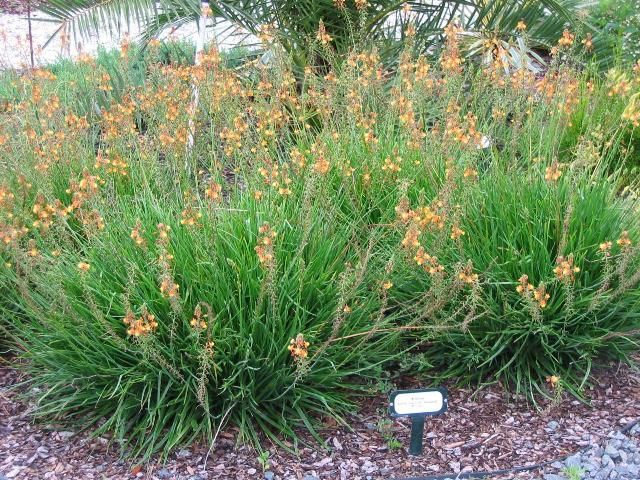
Bulbine

(Bulbine frutescens)

C,S

Clumping

1-2'

Orange, yellow/

Spring, Summer

Sun to light shade

Well-drained, drought tolerant

Yes

Hardy

Division, seed

Use/Comments: Ground cover, container. 'Hallmark' is a sterile cultivar.

Bush Daisy, African Bush Daisy

(Euryops pectinatus)

C,S

Erect, bushy

2-3'

Yellow/ Spring, Summer, Fall

Sun to light shade

Well drained, wide range, somewhat drought tolerant

Yes

Semi-

hardy

Cuttings

Use/Comments: Massing, mid-border, attracts butterflies.

Cat's Whiskers

()

C,S

Upright

2-3'

White, pale lavender/

Year-round

Sun to light shade

Moist, fertile, organic

No

Tender

Cuttings

Use/Comments: Mid border, accent plant, attracts butterflies/hummingbirds.

Chrysanthemum, Garden Mum (Chrysanthemum grandiflora)

N,C

Spreading

1-2'

Many colors/ Fall-Spring

Sun

Fertile, well-drained

No

Hardy

Cuttings, division

Use/Comments: Bedding. Pinch once or twice until August 15 to induce branching.

Cigar Flower (Cuphea micropetala)

N,C

Upright

3-4'

Yellow, orange/ Fall

Sun

Drought tolerant

No

Tender

Cuttings

Use/Comments: Bedding. Attracts hummingbirds.

Daylily (Hemerocallis species)

N,C,S

Clumping

1-3'

Many colors/ March-June

Sun, shifting shade

Wide range, drought tolerant

Yes

Semi-

hardy

Division, seed

Use/Comments: Background, border plantings, massing.

Firebush

(Hamelia patens)

N, C, S

Rounded

4-6'

Red-orange/

warm months

Sun to light shade

Wide range, very drought tolerant

Yes

Tender

Air layers, cuttings, seed

Use/Comments: Back of border, accent plant, attracts butterflies/hummingbirds. Florida native.

Firecracker Plant, Coral Plant

(Russelia equisetiformis)

C, S

Rounded/Weeping

3'

Red, pale yellow, coral/Year-round

Sun to light shade

Well drained, somewhat drought tolerant

Yes

Tender

Division, tip cuttings

Use/Comments: Massing, accent plant, container, attracts butterflies/hummingbirds. R. sarmentosa is another nice garden perennial with red flowers.

Firespike (Odontonema cuspidate - syn. O. strictum)

N,C,S

Upright

6'

Red/

Summer-Fall

Sun to light shade

Fertile, well-drained

No

Tender

Cuttings, division

Use/Comments: Background. Attracts hummingbirds/butterflies. O. callistachyum bears purple flowers January-March.

Flax Lily

(Dianella tasmanica 'Variegata')

N,C,S

Clumping

1-2'

Small blue/

Winter, Spring

Sun or shade

Moist, well-drained

Unknown

Hardy

Division

Use/Comments: Grown for its attractive, variegated iris-like foliage. Ground cover, specimen or container. May re-seed. Tends to develop scale insect problems in shade.

Fleabane, Mexican Daisy (Erigeron karvinskianus)

N,C,S

Spreading

6"

White/

Year-round

Sun

Well-drained, drought tolerant

No

Hardy

Cuttings, seed

Use/Comments: Ground cover, edging. May re-seed.

Gaura

(Gaura lindheimeri)

N,C

Clumping

2-4'

White or pink

Year-round

Sun

Well-drained,drought tolerant

No

Tender

Cuttings, seed

Use/Comments: Massing.

Gerbera Daisy (Gerbera jamesonii)

N,C,S

Clumping

12-18"

Many colors/ Year-round

Sun to light shade

Fertile, well-drained

Yes

Tender

Division, seed

Use/Comments: Bedding, cut flower. Keep crowns above ground. Marginal in south Fl.

Golden Dewdrop (Duranta erecta)

C,S

Upright

4-6'

Blue, white, purple/

Summer, Fall

Sun to light shade

Well-drained, drought tolerant

Yes

Tender

Cuttings, seed

Use/Comments: Accent plant, attracts butterflies/ hummingbirds. Attractive cultivars include 'Sapphire Showers' and 'Cuban Gold'.

Golden Shrimp Plant (Pachystachys lutea)

C,S

Upright

3-4'

Yellow/

warm months

Light to deep shade

Wide range

No

Tender

Cuttings

Use/Comments: Background.

Heliotrope, Scorpion Tail or Butterfly Heliotrope

(Heliotropium angiospermum)

C,S

Rounded

3'

White/

Year round

Sun to light shade

Drought and flood tolerant

No

Tender

Cuttings, seed

Use/Comments: Mid-border, transition plant, wildflower garden, attracts butterflies. Florida native.

Jacobinia (Justicia carnea)

C,S

Erect, bushy

2-4'

Rose, white/ warm months

Light to full shade

Fertile, moist

No

Tender

Cuttings

Use/Comments: Background, massing. Frequently remove old blooms.

Jewels of Opar

(Talinum paniculatum 'Variegata'

C,S

Rounded to upright

3'

Pink/

Summer

Light to deep shade

Rich, moist

Unknown

Tender

Cuttings

Use/Comments: Mid-border, massing. Green form of this plant re-seeds and becomes very weedy.

Lantana

(Lantana species)

N,C,S

Ground cover, rounded, upright

Varies

Red, pink, orange, yellow, white/

warm months

Sun

Well-drained, wide range, very drought tolerant

Yes

Tender

Cuttings

Use/Comments: Massing, ground cover (depending on type); attracts butterflies/hummingbirds. Native species exist. Lantana camara is considered invasive in south and central Florida and is not recommended; use with caution in north FL. Purple Weeping Lantana (L. montevidensis) is not considered invasive in Florida. Further assessment of potentially pollen- and seed-sterile cultivars of L. camara in 2007 may result in different conclusions; check the IFAS Assessment website at: <http://plants.ifas.ufl.edu/assessment/> for updated recommendations.

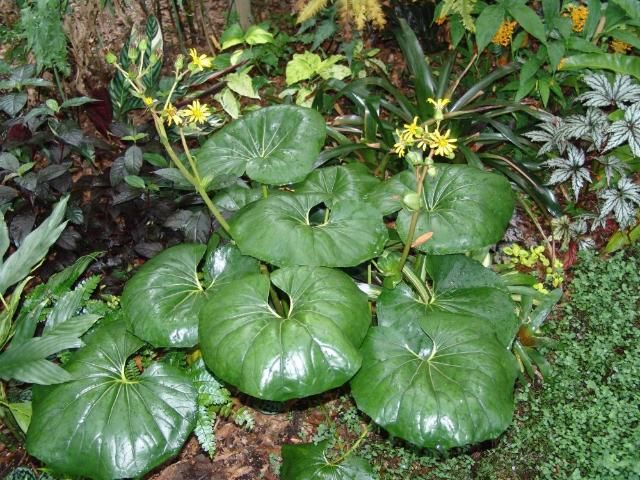
Leopard Plant

(Farfugium japonicum)

N,C,S

Ground cover

2'

Yellow/

Fall,Winter

Light shade

Rich, moist

Unknown

Hardy

Division

Use/Comments: Ground cover, container. Most cultivars have cream or yellow leaf markings.

Lily of the Nile (Agapanthus species)

N,C

Clumping

2-3'

Blue, Lavender, White/

Summer, Early Fall

Sun to light shade

Fertile, well-drained

Yes

Semi-

hardy

Division, seed

Use/Comments: Massing, mid-border, cut flowers.

Lion's Ear (Leonotis leonurus)

N,C,S

Upright

4-5'

Orange/ Fall-Spring

Sun

Well-drained

Yes

Tender

Cuttings

Use/Comments: Background. Prune to keep plant bushy.

Marble Leaf

(Peristrophe hyssopifolia)

C,S

Ground

1'

Lavender/

Winter

Sun to light shade

Well-drained

Unknown

Tender

Cuttings

Use/Comments: Ground cover.

Mexican Heather

(Cuphea hyssopifolia)

N,C,S

Rounded

18"

Purple, white/ Year-round

Sun to light shade

Well-drained

No

Tender

Cuttings

Use/comments: Massing, edging, ground cover. Prune frequently.

Ornamental Sweet Potato

(Ipomoea batatas)

N,C,S

Ground cover

6-12"

Flowers not showy

Sun

Well-drained, wide-range

Unknown

Tender

Cuttings

Use/Comments: Ground cover (seasonal), container. Vigorous plants grown for their attractive foliage. Chartreuse, purple-black, variegated, and copper-colored cultivars exist. Give Ornamental Sweet Potato plants plenty of growing space.

Peacock Ginger

(Kaempferia species)

N,C,S

Ground cover

6-36"

Lavender, white/

Spring, Summer

Light to full shade

Wide range, prefers enriched soil

No

Hardy

Division, seed

Use/Comments: Ground cover, Hosta replacement. Dormant in winter (except in south FL).

Pentas

(Pentas lanceolata)

N,C,S

Rounded to sprawling shrub

4'

Red, pink, white, lilac/

year-round

Sun to light shade

Well-drained, drought tolerant

No

Tender

Cuttings

Use/Comments: Background plantings, cut flower. Attracts butterflies.

Persian Shield

(Strobilanthes dyerianus)

C,S

Rounded

4'

Pale blue/

Winter

Light to full shade

Wide range

Yes

Tender

Cuttings

Use/Comments: Mid-border, massing, accent plant. Winter blooms are unattractive; prune back plants at this time.

Pinks

(Dianthus species)

N,C

Rounded

6-18"

Reds, pinks, white/

Fall-Spring

Light shade

Well-drained, drought tolerant

No

Hardy

Seed

Use/Comments: Massing, edging. Short-lived, unsightly in summer.

Philippine Violet

(Barleria cristata)

N,C,S

Upright

4'

Lavender, white/ October-April

Sun to light shade

Wide range

No

Tender

Cuttings

Use/Comments: Background. Reseeds and may become weedy in the garden. B. oenotheroides (syn. B. micans) is a 3 foot, upright perennial with yellow flowers fall through early winter.

Plectranthus

(Plectranthus species)

C,S

Rounded, upright, or ground cover

Varies

White, purple, pink/

Summer, Fall or intermittent

Sun to light shade

Rich, organic, moist

No

Semi-

hardy

Cuttings

Use/Comments: Front or mid-border, ground cover, container. Many are grown solely for their attractive variegated or silver foliage.

Plumbago (Plumbago auriculata)

N,C,S

Sprawling shrub

3-6'

Blue, white/ year-Round

Sun to light shade

Wide range

Yes

Tender

Cuttings, division

Use/Comments: Background, massing.

Porterweed

(Stachytarpheta species)

C,S

Upright

Varies

Blues, coral, red, purple/

warm months

Sun to light shade

Well drained, drought tolerant

Yes

Tender

Cuttings

Use/Comments: Massing or accent plant, attracts butterflies/hummingbirds. May re-seed. S. urticifolia may escape cultivation. S. jamaicensis is a FL native.

Ruellia

(Ruellia species)

N,C,S

Varies, Clumping to upright

2-3'

Blue, violet, red, pink/ May-November

Sun to light shade

Well-drained, drought tolerant

Yes

Semi-

hardy

Cuttings, seed

Use/Comments: Background, bedding. R. brittoniana/R. tweediana is considered invasive in north and central Florida and is not recommended; use with caution in south FL. Further assessment in 2007 may result in different conclusions for the sterile cultivar 'Purple Showers'; check the IFAS Assessment website at: <http://plants.ifas.ufl.edu/assessment/> for up-dated recommendations.

Salvias, Sages (Salvia species)

N,C,S

Upright, bushy

2-5'

Blues, red, pink, yellow, white/ Species dependent

Sun

Well-drained, drought tolerant

Generally no

Variable by species

Division, cuttings

Use/Comments: Background, massing. Many species exist.

Sanchezia

(Sanchezia nobilis)

C,S

Upright

3-8'

Yellow/

Summer

Sun, shade

Rich, well drained

Yes

Tender

Cuttings

Use/Comments: Back of border, massing, accent plant, container.

Shrimp Plant (Justicia brandegeana)

N,C,S

Sprawling

4-6'

Reddish-brown and other colors/ Spring, Summer

Sun to light shade

Wide range

No

Tender

Cuttings, division

Use/Comments: Mass plantings, background. Attracts hummingbirds. 'Flava' (yellow), 'Jambaleya' (red) and 'Fruit Cocktail' (chartreuse and pink) are popular cultivars.

St. Bernard's Lily

(Anthericum liliago)

N,C,S

Upright, clumping

2'

White/

Year-round

Sun, shade

Moist, well- drained

Unknown

Hardy

Division, seed

Use/Comments: Mixed or mass plantings, container, specimen.

Trailing Wishbone Flower

(Torenia hybrids)

C,S

Ground cover

3-6"

Deep blue, purple, pink, white/

warm months

Light to full shade

Fertile, moist, well- drained

No

Tender

Cuttings, seed

Use/Comments: Back of border, accent plant, attracts hummingbirds. Very tolerant of heat and humidity.

Tropical Jasmines

(Cestrum species)

N,C,S

Rounded to upright

up to 15'

Varies by species/Fall, Winter, Spring

Sun to light shade

Wide range

Depends on type

Hardy

Cuttings, seed

Use/Comments: Back of border, accent plant. Prune to maintain a smaller size. Caution: C. diurnum may escape cultivation.

Verbena (Verbena species and hybrids)

N,C,S

Sprawling

6-8"

Red, pink, white, lavender/ March-October

Fertile, drought tolerant

No

Semi-

hardy

Cuttings, seed

Use/Comments: Massing, ground cover. 'Sissinghurst', a rose-pink cultivar, appears reliable in south FL.

Yellow Alder (Turnera ulmifolia)

C,S

Upright

2'

Yellow or cream Year-round

Sun

Wide range

No

Tender

Cuttings

Use/Comments: Attracts butterflies.

*Hardy---Frost and freeze hardy. Semi-hardy---Some plant damage from frost or freeze. Tender---indicates that the plant is killed to the ground by frost or freeze, but recovers quickly.

Footnotes

1.

This document is Fact Sheet ENH-68, a series of the Environmental Horticulture Department, Florida Cooperative Extension Service, Institute of Food and Agricultural Sciences, University of Florida. First published: May 1991. Revised: February, 2007.

2.

Sydney Park Brown, Associate Professor, Environmental Horticulture Department, Institute of Food and Agricultural Sciences, University of Florida, Gainesville FL 32611.


The Institute of Food and Agricultural Sciences (IFAS) is an Equal Opportunity Institution authorized to provide research, educational information and other services only to individuals and institutions that function with non-discrimination with respect to race, creed, color, religion, age, disability, sex, sexual orientation, marital status, national origin, political opinions or affiliations. For more information on obtaining other extension publications, contact your county Cooperative Extension service.

U.S. Department of Agriculture, Cooperative Extension Service, University of Florida, IFAS, Florida A. & M. University Cooperative Extension Program, and Boards of County Commissioners Cooperating. Millie Ferrer-Chancy, Interim Dean.