
Best Management Practices
With the passage of the Federal Clean Water Act (FCWA) in 1972, states were required to assess the impacts of non-point sources of pollution on surface and ground waters, and establish programs to minimize the pollutants. Section 303(d) of the FCWA also requires states to identify impaired water bodies and establish total maximum daily loads (TMDLs) for pollutants entering these water bodies. Water quality parameters targeted by the TMDLs and involving vegetable production are concentrations of nitrate, phosphate, and total dissolved solids in these water bodies. A TMDL establishes the maximum amount of pollutant a water body can receive and still keep its water quality parameters consistent with its intended use (swimming, fishing, or potable uses). The establishment of the TMDLs is currently underway and they will be implemented through a combination of regulatory, non-regulatory, and incentive-based measures. Best Management Practices (BMPs) are specific cultural practices aimed at reducing the load of a specific compound, while maintaining or increasing economical yields. They are tools available to vegetable growers to achieve the TMDLs. BMPs are intended to be educational, economically sound, environmentally effective, and based on science. It is important to recognize that BMPs do not aim at becoming an obstacle to vegetable production. Instead, they should be viewed as a means to balance economical vegetable production with environmental responsibility.
The BMPs that will apply to vegetable production in Florida are described in the Agronomic and Vegetable Crop Water Quality/Water Quantity BMP Manual for Florida. This manual was developed between 2000 and 2005 through a cooperative effort between state agencies, water management districts and commodity groups, and under the scientific leadership of the University of Florida's Institute of Food and Agricultural Sciences (UF/IFAS). The manual has undergone a thorough scientific review in 2003 and was presented to stakeholders and state commodity groups for feed back in 2004. The manual was adopted by reference in 2006 and by rule in Florida Statutes (5M-8 Florida Administrative Code). The manual was revised in 2015, adopted by rule, and may be consulted online at http://www.floridaagwaterpolicy.com/ PDFs/BMPs/vegetable&agronomicCrops.pdf. Vegetable growers may get one-on-one information on 1) the benefits for joining the BMP program, 2) how to join it, 3) how to select the BMPs that apply to their operation, and 4) record keeping requirements by getting in contact with their county extension agent or their local implementation team (see the vegetable BMP website at http://swfrec.ifas.ufl.edu/programs/veg-hort/research/veg-bmp.php for more information).
The vegetable BMPs have adopted all current UF/IFAS recommendations; including those for fertilizer and irrigation management (see the new BMP manual Optimum Fertilizer Management which will be published soon). Through the implementation of a series of targeted cultural practices (the BMPs), growers should be able to reconcile economic profitability and responsible use of water and fertilizer. At the field level, adequate fertilizer rates should be used together with irrigation scheduling techniques and crop nutritional status monitoring tools (leaf analysis, petiole sap testing). In the BMP manual, adequate fertilizer rates may be achieved by combinations of UF/IFAS recommended base rates and supplemental fertilizer applications added after leaching rainfall, when tissue analyses suggest a need for more fertilizer, or when the harvesting season is prolonged.
Soils
Vegetables are grown on more than 300,000 acres in various soil types throughout the state. These soil types include sandy soils, sandy loam soils, histosols (organic muck), and calcareous marl soils. Each soil group is described below.
Sands
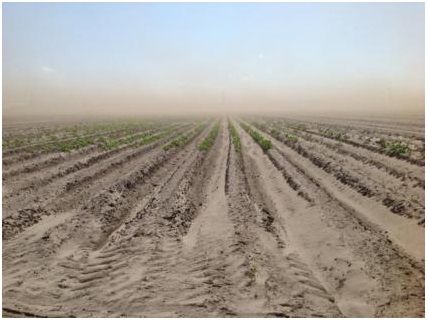
Sandy soils (Figure 1) make up the dominant soil type for vegetable production in Florida. Vegetables are produced on sandy soils throughout the Florida peninsula and on sandy soils and sandy loams in the panhandle. Sandy soils have the advantage of ease of tillage and they can produce the earliest vegetable crops for a particular region. Sandy soils allow timely production operations such as planting and harvesting. Sandy soils, however, have the disadvantage that mobile nutrients such as nitrogen, potassium, and even phosphorus can be leached by heavy rain or over irrigation. Therefore, sands must be managed carefully with regard to fertility programs. Sands hold very little water; therefore, irrigation management is more critical compared to other soil types used for vegetable production in Florida. Nearly all vegetable crops produced in Florida can be successfully grown on sandy soils. The major vegetable crops such as tomatoes, peppers, potatoes, watermelons, strawberries, and cabbage are grown commonly on sandy soils.
Histosols
Histosols (Figure 2) are organic soils which occur in areas throughout the peninsula, especially in southern and central Florida. Large organic deposits used for vegetable production occur south of Lake Okeechobee. Smaller pockets of muck occur throughout central and northern Florida.
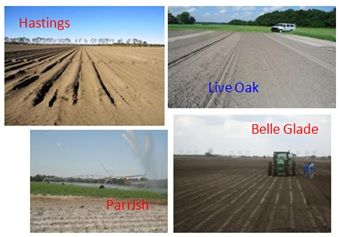
Histosols consist largely of decomposing plant material and are largely underlain by calcareous deposits. Muck soils have large water and nutrient holding capacities and are used to produce crops such as the leafy vegetables (leaf lettuce, and various greens), celery, sweet corn, and radishes. With time, the organic matter decomposes and the muck subsides. Thus the pH of the muck can increase because of increasing proximity to the underlying calcareous material.
Muck subsidence causes problems for water and nutrient management. The increase in pH due to subsidence and also to the practice of flooding the histosols to reduce oxidation can result in increased requirements of phosphorus and micronutrients. These nutrients can be fixed by the high pH of the soil. Nutrient management in these situations should involve banding rather than increased rates of nutrients.
Calcareous Rock and Marl
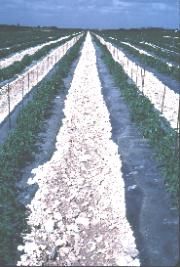
The calcareous soils (Figure 3) in southern Florida (Miami-Dade County) consist of two phases, rockland and marl. Rockland soils are calcium carbonate soils consisting of particles that range from sand-like in size to pebble and gravel. The rockland soils are extremely shallow, about 4 to 6 inches deep. The marl is the fine-textured, clay-like phase of the calcium carbonate soils. Tomatoes, beans, summer squash, okra, sweet corn, boniato, and strawberries can be produced in the winter months on the rockland soils of Miami-Dade County. Potatoes, malanga, snap beans, and sweet corn are produced on the marl. Both soils have extremely high pH, therefore, nutrients such as phosphorus and micronutrients must be banded to ensure availability.
Soil Testing
Plants require 17 elements for normal growth and reproduction (Table 1). American Association of Plant Food Control officials added nickel (Ni) to the list of essential elements in 2004. Nickel is the seventeenth element recognized as essential for plant growth and development (see Nickel Nutrition in Plants, https://edis.ifas.ufl.edu/hs1191). The crop nutrient requirement (CNR) for a particular element is defined as the total amount in lb/A of that element needed by the crop to produce economic optimum yield. This concept of economic optimum yields is important for vegetables because a certain amount of nutrients might produce a moderate amount of biomass, but produce negligible marketable product due to small fruit size. Fruit size and quality must be considered in the CNR concept for vegetables.
The CNR can be satisfied from many sources, including soil, water, air, organic matter, or fertilizer. For example, the CNR of potassium (K) can be supplied from K-containing minerals in the soil, from K retained by soil organic matter, or from K fertilizers.
The CNR for a crop is determined from field experiments that test the yield response to levels of added fertilizer. For example, a watermelon study involving K might be conducted on a soil which tests very low in extractable K. In this situation, the soil can be expected to contribute only a small amount of K for optimum watermelon growth and yield, and K must be supplied largely from fertilizer. The researcher plots the relationship between crop yield and fertilizer rate.
The CNR is equivalent to the fertilizer rate above which no significant increases in yield are expected. The CNR values derived from such experiments take into account factors such as fertilizer efficiencies of the soils. These efficiencies include fertilizer leaching or fertilizer nutrient fixing capability of the soil. If data are available from several experiments, then reliable estimates of CNR values can be made. Using the CNR concept will ensure optimum, economic yields when developing a fertilizer program while minimizing both pollution from overfertilization and loss of yield due to underfertilization.
The CNR values are those amounts of nutrients needed to produce optimum, economic yields from a fertilization standpoint. It is important to remember that these nutrient amounts are supplied to the crop from both the soil and the fertilizer. The amounts are applied as fertilizers only when a properly calibrated soil test indicates very small extractable amounts of these nutrients to be present in the soil. Therefore, soil testing must be conducted to determine the exact contribution from the soil to the overall CNR. Based on such tests, the amount of fertilizer that is needed to supplement the nutrition component of the native soil can be calculated (Tables 2 and 3).
It is important that soil samples represent the field or management unit to be fertilized. A competent soil testing laboratory that uses calibrated methodologies should analyze the samples. Not all laboratories can provide accurate fertilizer recommendations for Florida soils. The BMP program for vegetables requires the importance of calibrated soil test. More information about soil testing can be found in Developing a Soil Test Extractant: The Correlation and Calibration Processes, https://edis.ifas.ufl.edu/ss622, and Soil Testing for Plant-Available Nutrients—What Is It and Why Do We Use It? https://edis.ifas.ufl.edu/ss621.
Liming
Current University of Florida standardized recommendations call for maintaining soil pH between 6.0 and 6.5 (Table 4). However, some vegetables, such as watermelon, will perform normally at lower soil pH as long as large amounts of micronutrients are not present in the soil. A common problem in Florida has been overliming, resulting in high soil pH. Overliming and resulting high soil pH can tie up micronutrients and phosphorus and restrict their bioavailability to the crop. Overliming also can reduce the accuracy with which a soil test can predict the fertilizer component of the CNR.
It is important, however, not to allow soil pH to drop below approximately 5.5 for most vegetable production, especially where micronutrient levels in the soil may be high due to a history of micronutrient fertilizer and micronutrient-containing pesticide applications. When soil pH decreases in such soils, the solubility of micronutrients and probably aluminum (Al) can increase to levels that may become toxic to plants.
Irrigation water from wells in limestone aquifers is an additional source of liming material usually not considered in many liming programs. The combination of routine additions of lime and use of alkaline irrigation water has resulted in soil pH greater than 8.0 for many sandy soils in south Florida. To measure the liming effect of irrigation, have a water sample analyzed for total bicarbonates and carbonates annually, and the results converted to pounds of calcium carbonate per acre. Include this information in your decisions concerning lime.
It should be evident that liming (Table 5), fertilization (Table 6), and irrigation programs are closely related to each other. An adjustment in one program will often influence the other. To maximize overall production efficiency, soil and water testing must be made a part of any fertilizer management program.
Choosing ammoniacal fertilizers as nitrogen (N) source can neutralize alkalinity in rootzone due to selective uptake of plants to different ions. Fertigation with ammonium-N is effective for neutralization. If nitrification inhibitors are also used with the fertilizers together, the neutralization can last much longer. Ammonium sulfate is one of the most effective fertilizers to lower rootzone pH. Similarly, sulfate of potash or muriate of potash also can reduce rootzone pH.
For more information about liming see Liming of Agronomic Crops, https://edis.ifas.ufl.edu/aa128.
Manures
Waste organic products, including animal manures and composted organic matter, contain nutrients (Table 7) that can enhance plant growth. These materials decompose when applied to the soil, releasing nutrients that vegetable crops can absorb and utilize in plant growth. The key to proper use of organic materials as fertilizers comes in the knowledge of the nutrient content and the decomposition rate of the material. Many laboratories offer organic material analyses to determine specific nutrient contents. Growers contemplating using organic materials as fertilizers should have an analysis of the material before determining the rate of application. In the case of materials such as sludges, it is important to have knowledge about the type of sludge to be used. Certain classes of sludge are not appropriate for vegetable production, and in fact may not be permitted for land application. Decomposition rates of organic materials in warm sandy soils in Florida are rapid. Therefore, there will be relatively small amounts of residual nutrients remaining for succeeding crops. Organic materials are generally similar to mixed chemical fertilizers in that the organic waste supplies an array of nutrients, some of which may not be required on a particular soil. For example, the P in poultry manure would not be required on a soil already testing high in phosphate. Usually application rates of organic wastes are determined largely by the N content. Organic waste materials can con tribute to groundwater or surface water pollution if applied in rates in excess of the crop nutrient requirement for a particular vegetable crop. Therefore, it is important to understand the nutrient content and the decomposition rate of the organic waste material as well as the P-holding capacity of the soil.
For more information about using manure for vegetable production see Using Composted Poultry Manure (Litter) in Mulched Vegetable Production, https://edis.ifas.ufl.edu/ss506.
N, P, K Nutrient Sources
Nitrogen often is the most limiting nutrient in Florida's sandy soils. The amount of nitrogen required by vegetable plants must be applied each growing season because it leaches rapidly. Therefore crop nitrogen requirements vary among crops and are not dependent on soil test results (Table 8). Fertilizer rates of other nutrients must be applied based on soil test results (see soil test above) to follow BMPs (Table 9). The soil test extractant used in UF/IFAS recommendations recently has changed from Mehlich 1 to Mehlich 3. More information on the Change to Mehlich-3 can be found in Extraction of Soil Nutrients Using Mehlich-3 Reagent for Acid-Mineral Soils of Florida, https://edis.ifas.ufl.edu/ss620.
The range of soil nutrients found in soil at three ranges (low, medium, and high) also have changed (Table 9). The recommendations found in Tables 8 and 9 were determined in field rate studies considering a wide range of nutrient applications and various soil pH levels. Crop plant development, crop yield, and vegetable quality were considered in determining the optimum nutrient levels for UF/IFAS recommendations.
Nitrogen (N) can be supplied in both nitrate and ammoniacal forms (Table 10). Nitrate-nitrogen is generally the preferred form for plant uptake in most situations, but ammoniacal N can be absorbed directly or after conversion to nitrate-N by soil microbes. Since this rate of conversion is reduced in cold, fumigated, or strongly acidic soils, it is recommended that under such conditions 25% to 50% of the N be supplied from nitrate sources. This ratio is not critical for unfumigated or warm soils.
Phosphorus (P) can be supplied from several sources, including single and triple superphosphate, diammonium phosphate and mono ammonium phosphate, and monopotassium phosphate. All sources can be effective for plant nutrition on sandy soil. However, on soils that test very low in native micronutrient levels, diammonium phosphate in mixtures containing micronutrients reduces yields when banded in large amounts. Availability of P also can be reduced with use of diammonium phosphate compared to use of triple superphosphate. Negative effects of diammonium phosphate can be eliminated by using it for only a portion of the P requirement and by broadcasting this material in the bed.
Potassium (K) can also be supplied from several sources, including potassium chloride, potassium sulfate, potassium nitrate, and potassium-magnesium sulfate. If soil-test-predicted amounts of K fertilizer are adhered to, there should be no concern about the K source or its relative salt index.
Ca, S, and Mg
The secondary nutrients calcium (Ca), sulfur (S), and magnesium (Mg) have not been a common problem in Florida. Calcium usually occurs in adequate supply for most vegetables when the soil is limed. Since there is not yet an interpretation for Mehlich-3 soil Ca, we will use the Mehlich-1 soil Ca intepretation. If the Mehlich-1 soil Ca index is above 300 ppm, it is unlikely that there will be a response to added Ca. Maintaining correct moisture levels in the soil by irrigation will aid in Ca supply to the roots. Calcium is not mobile in the plant; therefore, foliar sprays of Ca are not likely to correct deficiencies. It is difficult to place enough foliar-applied Ca at the growing point of the plant on a timely basis.
Sulfur deficiencies have seldom been documented for Florida vegetables. Sulfur deficiency would most likely occur on deep, sandy soils low in organic matter after leaching rains. If S deficiency has been diagnosed, it can be corrected by using S-containing fertilizers such as magnesium sulfate, ammonium sulfate, potassium sulfate, normal superphosphate, or potassium-magnesium sulfate. Using one of these materials in the fertilizer blends at levels sufficient to supply 30 to 40 lb S/A should prevent S deficiencies.
Magnesium deficiency may be a problem for vegetable production; however, when the Mehlich-3 soil-test index for Mg is below 21 ppm, 30–40 lb Mg/A will satisfy the Mg CNR. If lime is also needed, Mg can be added by using dolomite as the liming material. If no lime is needed, then the Mg requirement can be satisfied through use of magnesium sulfate or potassium-magnesium sulfate. Blending of the Mg source with other fertilizer(s) to be applied to the soil is an excellent way of ensuring uniform application of Mg to the soil.
Micronutrients
It has been common in Florida vegetable production to routinely apply a micronutrient package. This practice has been justified on the basis that these nutrients were inexpensive and their application appeared to be insurance for high yields. In addition, there was little research data and a lack of soil-test calibrations to guide judicious application of micronutrient fertilizers. Compounding the problem has been the vegetable industry's use of micronutrient-containing pesticides for disease control. Copper (Cu), manganese (Mn), and zinc (Zn) from pesticides have tended to accumulate in the soil.
This situation has forced some vegetable producers to overlime in an effort to avoid micronutrient toxicities. Data have now been accumulated which permit a more accurate assessment of micronutrient requirements (Table 3). Growers are encouraged to have a calibrated micronutrient soil test conducted and to refrain from shotgun micronutrient fertilizer applications. It is unlikely that micronutrient fertilizers will be needed on old vegetable land, especially where micronutrients are being applied regularly via recommended pesticides. A micronutrient soil test every 2 to 3 years will provide recommendations for micronutrient levels for crop production.
Foliar Fertilization
Foliar fertilization should be thought of as a last resort for correcting a nutrient deficiency (Table 11). The plant leaf is structured in such a way that it naturally resists easy infiltration by fertilizer salts. Foliar fertilization most appropriately applies to micronutrients and not to macronutrients such as N, P, and K. Foliar applications of N, P, and/or K are not needed where proper soil-directed fertilizer programs are in use. Leaves cannot absorb sufficient macronutrients (without burning the leaves) to correct any related deficiency. Some benefit from macronutrient foliar sprays probably results when nutrients are washed by rain or irrigation water off the leaf surface into the soil. The nutrient then may enter the plant via the roots. Amounts of macronutrients recommended on the label of most commercial foliar products are so minuscule compared to nutrition derived from the soil that benefit to the plant is highly unlikely. Additionally, fertilizer should only be added if additional yield results and research with foliar-nutrient applications has not clearly documented a yield increase for vegetables.
In certain situations, temporary deficiencies of Mn, Fe, Cu, or Zn can be corrected by foliar application. Examples include vegetable production in winter months when soils are cool and roots cannot extract adequate amounts of micronutrients and in cases where high pH (marl and rockland soils) fixes broadcast micronutrients into unavailable forms. Micronutrients are so termed because small, or micro, amounts are required to satisfy the CNR. Such micro amounts may be supplied adequately through foliar applications to correct a temporary deficiency.
Boron is highly immobile in the plant. To correct boron deficiencies, small amounts of boron must be applied frequently to the young tissue or buds.
Any micronutrient should be applied only when a specific deficiency has been clearly diagnosed. Do not make unneeded applications of micronutrients. There is a fine line between adequate and toxic amounts of these nutrients. Indiscriminate application of micronutrients may reduce plant growth and restrict yields because of toxicity. Compounding the problem is the fact that the micro-nutrients can accumulate in the soil to levels which may threaten crop production on that soil. An important part of any micronutrient program involves careful calculations of all micronutrients being applied, from all sources.
Liquid vs. Dry Fertilizer
There is no difference in response of crops to similar amounts of nutrients when applied in either liquid or dry form. Certain situations (use of drip irrigation or injection wheel) require clear or true solutions. However, sidedress applications of fertilizer can be made equally well with dry or liquid forms of nutrients.
The decision to use liquid or dry fertilizer sources should depend largely on economics and on the type of application equipment available. The cost per unit of nutrient (e.g., dollars per unit of actual N) and the combination of nutrients provided should be used in any decision-making process.
Conversion from liquid fertilizer to dry fertilizer is critical for using the proper fertilizer rate in fertigation for commercial vegetable production (see How to Convert Liquid Fertilizer into Dry Fertilizer in Fertigation for Commercial Vegetable and Fruit Crop Production, https://edis.ifas.ufl.edu/hs1200).
Controlled-Release Fertilizers
Several brands of controlled-release fertilizers (CRFs) are available for supplying N. Some vegetables increase in yield when controlled-release fertilizers, such as polymer-coated or sulfur-coated urea, or isobutylidene-diurea, are used to supply a portion of the N requirement. Although more expensive, these materials may be useful in reducing fertilizer losses through leaching and possible N loss through ammonia volatilization in high pH soils, in decreasing soluble salt damage, and in supplying adequate fertilizer for long-term crops such as strawberry or pepper. Controlled-release potassium fertilizers also have been demonstrated to be beneficial for several vegetables. It is essential to match the nutrient release pattern of the CRF with the crop's uptake pattern.
Controlled-release fertilizers as nutrient management tools are important for BMPs (see Controlled-Release and Slow-Release Fertilizers as Nutrient Management Tools, https://edis.ifas.ufl.edu/hs1255).
Soluble Salts
Overfertilization or placement of fertilizer too close to the seed or root leads to soluble salt injury or "fertilizer burn." Fertilizer sources differ in their capacity to cause soluble salt injury. Therefore, where there is a history of soluble salt problems, or where irrigation water is high in soluble salts, choose low-salt index fertilizer sources, and broadcast or split-apply the fertilizer.
Starter Fertilizer
A true starter fertilizer is a soluble fertilizer, generally high in P, used for establishment of young seedlings and transplants. Starter fertilizers generally work best if a small amount of N and K is present along with the P. Starters represent a very small percentage of the overall fertilizer amount but are very important in establishing crops in cool, damp soils. They can be applied with the planter at 2 inches to the side of the seed and 2 inches deep or can be dissolved in the transplant water and applied in the furrow.
Fertilizer Placement
Management of fertilizer consists of the proper combination of what may be referred to as the "4Rs": right rate, right source, right placement, and the right timing. Fertilizer rate and placement must be considered together. Banding low amounts of fertilizer too close to plants can result in the same amount of damage as broadcasting excessive amounts of fertilizer in the bed.
Because P movement in most soils is minimal, it should be placed in the root zone. Banding is generally considered to provide more efficient utilization of P by plants than broadcasting. This is especially true on the high P-fixing calcareous soils. Where only small amounts of fertilizer P are to be used, it is best to band. If broadcasting P, a small additional amount of starter P near the seed or transplant may improve early growth, especially in cool soils. The modified broadcast method where fertilizer is broadcast only in the bed area provides more efficient use of fertilizer than complete broadcasting.
Micronutrients can be broadcast with the P and incorporated in the bed area. On the calcareous soils, micronutrients, such as Fe, Mn, and B, should be banded or applied foliarly.
Since N and, to a lesser extent, K are mobile in sandy soils, they must be managed properly to maximize crop uptake. Plastic mulch helps retain these nutrients in the soil. Under non-mulched systems, split applications of these nutrients must be used to reduce losses to leaching. Here, up to one-half of the N and K may be applied to the soil at planting or shortly after that time. The remaining fertilizer is applied in one or two applications during the early part of the growing season. Splitting the fertilizer applications also will help reduce the potential for soluble salt damage to the plants.
When using plastic mulch, fertilizer placement depends on the type of irrigation system (seep or drip) and on whether drip tubing or the liquid fertilizer injection wheels are to be used.
With seep irrigation, all P and micronutrients should be incorporated in the bed. Apply 10 to 20 percent (but not more) of the N and K with the P. The remaining N and K should be placed in narrow bands on the bed shoulders, the number of which depends on the crop and number of rows per bed. These bands should be placed in shallow (2- to 2 1/2-inch- deep) grooves. This placement requires that adequate bed moisture be maintained so that capillarity is not broken. Otherwise, fertilizer will not move to the root zone.
Excess moisture can result in fertilizer leaching. Fertilizer and water management programs are linked. Maximum fertilizer efficiency is achieved only with close attention to water management.
Under either system above, fertilizing with drip irrigation or with a liquid fertilizer injection wheel might be suitable alternatives to the placement of all N and K in or on the bed prior to mulching.
In cases where supplemental sidedressing of mulched crops is needed, applications of liquid fertilizer can be made through the mulch with a liquid fertilizer injection wheel. This implement is mounted on a tool bar and, using 30 to 40 psi pressure, injects fertilizer through a hole pierced in the mulch.
The 4Rs are described in The Four Rs of Fertilizer Management, https://edis.ifas.ufl.edu/ss624.
Supplemental Fertilizer Applications and BMPS
In practice, supplemental fertilizer applications allow vegetable growers to numerically apply fertilizer rates higher than the standard UF/IFAS recommended rates when growing conditions require doing so. The two main growing conditions that may require supplemental fertilizer applications are leaching rains and extended harvest periods. Applying additional fertilizer under the following three circumstances is part of the current UF/IFAS fertilizer recommendations. Supplemental N and K fertilizer applications may be made under these three circumstances:
-
For vegetable crops grown on bare ground with seepage irrigation and without drip irrigation, a 30 lbs / acre of N and /or 20 lbs /acre of K2O supplemental application is allowed after a leaching rain. A leaching rain occurs when it rains at least 3 inches in 3 days, or 4 inches in 7 days.
-
For all vegetable crops grown on any production system with one of the IFAS recommended irrigation scheduling methods, a supplemental fertilizer application is allowed when nutrient levels in the leaf or in the petiole fall below the sufficiency ranges. For bare ground production, the supplemental amount allowed is 30 lbs /acre of N and/or 20 lbs /acre of K2O. For drip irrigated crops, the supplemental amount allowed is 1.5 to 2.0 lbs /A/day for N and/or K2O for one week.
-
Supplemental fertilizer applications are allowed when, for economical reasons, the harvest period has to be longer than the typical harvest period. When the results of tissue analysis and/or petiole testing are below the sufficiency ranges, a supplemental 30 lbs /acre N and/or 20 lbs /acre of K2O may be made for each additional harvest for bare ground production. For drip-irrigated crops, the supplemental fertilizer application is 1.5 to 2.0 lbs/A/day for N and/or K2O until the next harvest. A new leaf analysis and/or petiole analysis is required to document the need for additional fertilizer application for each additional harvest.
Double-Cropping
Successive cropping of existing mulched beds is a good practice in order to make effective use of the polyethylene mulch and fumigant. Double-cropping also can make use of residual fertilizer in the beds. If fertilizer-N applications and amounts were properly managed for the first crop, then there should be negligible amounts of N-fertilizer remaining in the beds. The practice of adding extra fertilizer to the beds when planting the first crop, thinking that this fertilizer will aid growth of the second crop is strongly discouraged. The extra fertilizer could contribute to soluble-salt damage to the first crop, and might still be leached from the root zone before the second crop is established.
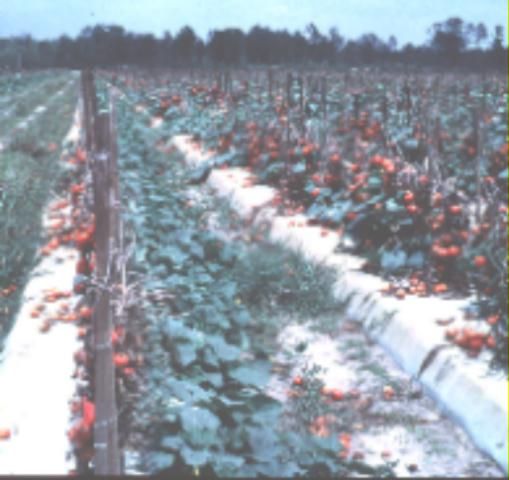
A drip-irrigation system can be used to supply adequate nutrients to each crop in a double crop system. In most cases, only N and K may be needed for the second crop. Amounts of P and micronutrients (if any) used for the first crop will likely remain adequate for the second crop as well. Soil testing of a sample taken from the bed away from any fertilizer bands will help determine P or micro-nutrient needs, assuming that these nutrients were broad-cast in the bed prior to planting the first crop.
If N for the first crop was not applied in excess of the CNR, then the second crop should receive an amount of N equal to its own CNR. Potassium requirements of the second crop can be determined as for P in cases where the K for the first crop was incorporated in the bed. Potassium requirements for the second crop are more difficult to determine in cases where K for the first crop was banded. A moderate amount of residual K will probably remain in the bed from the application to the first crop. Therefore, K requirements for the second crop will likely be slightly less than the CNR value for the chosen crop.
Once the crop fertilizer requirements have been ascertained, the needed nutrition may be applied through the drip system. Where drip irrigation is not being used, a liquid injection wheel can be used to place fertilizer in the bed for the second crop.
Linear Bed Foot (LBF) system for Fertilizer Application
The UF/IFAS Extension Soil Testing Laboratory (ESTL) employs the Standardized Fertilizer Recommendation System in which all recommendations are expressed in lb/A. These fertilizer rates are based upon typical distances between bed centers for each crop. Use of lb/100 LBF as a fertilizer rate assures that an appropriate rate of fertilizer will be applied, regardless of the total number LBF in the cropped area. In other words, use of lb/A to express the fertilizer rate requires an adjustment based upon actual cropped area.
In reality, the goal is to provide a specific concentration of nutrients to plant roots; that is, a specific amount of fertilizer within a certain volume of soil. This conceptual approach makes sense because most plant roots are con-fined within the volume of soil comprising the bed, especially under the polyethylene in the full-bed mulch system.
The LBF system is described in Calculating Recommended Fertilizer Rates for Vegetables Grown in Raised-Bed, Mulched Cultural Systems, https://edis.ifas.ufl.edu/ss516.
Irrigation Management
Water management and fertilizer management are linked. Changes in one program will affect the efficiency of the other program. Leaching potential is high for the mobile nutrients such as N and K; therefore, over irrigation can result in movement of these nutrients out of the root zone. This could result in groundwater pollution in the case of N. The goal of water management is to keep the irrigation water and the fertilizer in the root zone. Therefore, growers need knowledge of the root zone of the particular crop so that water and fertilizer inputs can be managed in the root zone throughout the season.
With increased pressure on growers to conserve water and to minimize the potential for nutrient pollution, it becomes extremely important to learn as much as possible about irrigation management.
Plant Tissue Analysis
Analysis of plants for nutrient concentration provides a good tool to monitor nutrient management programs. There are basically two approaches to plant tissue testing: standard laboratory analyses based on dried plant parts; and the plant sap testing procedures. Both procedures have value in nutrient management programs for vegetable crops, each having its own advantages and disadvantages.
Standard laboratory analyses can be very accurate and are the most quantitative procedures. However, they can be time consuming for most diagnostic situations in the field. Standard laboratory analysis involves analyzing the most-recently-matured leaf of the plant for an array of nutrients. The resulting analyses are compared against published adequate ranges for that particular crop. Laboratory results that fall outside the adequate range for that nutrient may indicate either a deficiency or possibly toxicity (especially in the case of micronutrients). The most-recently- matured leaf serves well for routine crop monitoring and diagnostic procedures for most nutrients. However, for the immobile nutrients such as Ca, B, and certain other micro-nutrients, younger leaves are generally preferred.
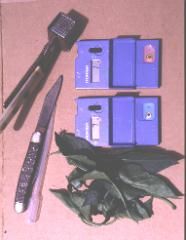
Several plant sap quick test kits have been calibrated for N and K for several vegetables in Florida. These testing kits analyze fresh plant sap for N and K. Quick test kits offer speed of analysis but are less quantitative than standard laboratory procedures. However, quick tests are accurate enough and if properly calibrated are a valuable tool for on-the-spot monitoring of plant nutrient status with the goal of making fine adjustments in fertilizer application programs, especially for those involving drip irrigation.
Diagnostic information for leaf and petiole sap testing can be found in Plant Tissue Analysis and Interpretation for Vegetable Crops in Florida, https://edis.ifas.ufl.edu/ep081 and Petiole Sap Testing for Vegetable Crops, https://edis.ifas.ufl.edu/cv004.
Drip Irrigation/Fertigation
Drip irrigation has become a very important water management tool for Florida vegetable growers. Approximately 60,000 acres of vegetables are produced with drip irrigation yearly in Florida. Many drip irrigation users have turned to fertigation (applying nutrients through the irrigation tube) to gain better fertilizer management capability. In most situations, N and K are the nutrients injected through the irrigation tube. Split applications of N and K through irrigation systems offers a means to capture management potential and reduce leaching losses. Other nutrients, such as P and micronutrients, are usually applied to the soil rather than by injection. This is because chemical precipitation can occur with these nutrients and the high calcium carbonate content of our irrigation water in Florida.
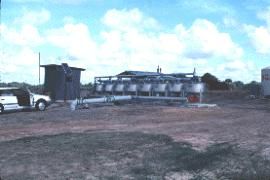
Nutrient management through irrigation tubes involves precise scheduling of N and K applications. Application rates are determined by crop growth and resulting nutrient demand. Demand early in the season is small and thus rates of application are small, usually on the order of ½ to ¾ lb of N or K2O per acre per day. As the crop grows, nutrient demand increases rapidly so that for some vegetable crops such as tomato the demand might be as high as 2 lb of N or K2O per day. Schedules of N and K application have been developed for most vegetables produced with drip irrigation in Florida. Schedules for these crops are presented in the crop chapters in this book.
Fertigation management such as reduction of clogging problems is key for efficient use of fertilizers and BMPs. For information about reducing clogging problems in fertigation for commercial vegetable production see How to Reduce Clogging Problems in Fertigation, https://edis.ifas.ufl.edu/hs1202).
Soil Preparation
A well-prepared seed or planting bed is important for uniform stand establishment of vegetable crops. Old crop residues should be plowed down well in advance of crop establishment. A 6- to 8-week period between plowing down of green cover crops and crop establishment is recommended to allow the decay of the refuse. Freshly incorporated plant material promotes high levels of damping-off organisms such as Pythium spp. and Rhizoctonia spp. Turning under plant refuse well in advance of cropping reduces damping-off disease organisms. Land should be kept disked if necessary to keep new weed cover from developing prior to cropping.
Chisel plowing is beneficial in penetrating and breaking tillage pan layers in fields. If plastic mulch culture is practiced, debris and large undecayed roots will create problems in preparing good beds over which mulch will be applied. For information about soil preparation for commercial vegetable production see Soil preparation and Liming for Vegetable Gardens, https://edis.ifas.ufl.edu/vh024.
Bedding
Fields, where seepage irrigation is used or fields prone to flooding, should be cropped using raised beds. Beds generally range from 3 to 8 inches in height, with high beds of 6 to 8 inches preferred where risk of flooding is greatest. Raised beds dry faster than if the soil was not bedded, requiring closer attention to irrigation management especially early in the season when root systems are limited. Raised beds promote early season soil warming resulting in somewhat earlier crops during cool seasons. Many raised beds covered with mulch in north Florida in sandy, well drained soils do not need to be as high as 6 to 8 inches as they do in poorly drained soils.
Bedding equipment may include single or double bedding discs, and curved bedding blades. After the soil is cut and thrown into a loose bed the soil is usually firmed with a bed press. In unmulched production the loosely formed bed may be leveled off at the top by dragging a board or bar across the bed top. Boarding-off the raised beds is common in unmulched watermelon production in central and northern Florida. Mulching requires a smooth, well-pressed bed for efficient heat transfer from black mulch to the soil. Adequate soil moisture is essential in forming a good bed for mulching. Dry sandy soils will not form a good bed for a tight mulch application. Overhead irrigation is sometimes needed to supply adequate moisture to dry soils before bedding.
Cover Crops
Cover crops between vegetable cropping seasons can provide several benefits. The use of cover crops as green manure can slightly increase soil organic matter during the growing season. Properties of soil tilth can also be improved with turning under good cover crops. The cover can reduce soil losses due to erosion from both wind and water. Many crops are effective at recycling nutrients left from previous crops. Recycling of nutrients is becoming an increasingly important issue in protecting groundwater quality.
The selection of a cover crop is based on the seasonal adaptation and intended use for the crops. Vegetable production in south Florida results in cover crops needed during the late spring and summer months. Summer grasses like sorghum or sudan/sorghum hybrids have been popular among Florida producers as a summer cover. Pearl millet is another grass crop providing excellent cover but is not as popular as sudan/sorghum. Both pearl millet and sudan/ sorghum provide a vigorous tall crop with high biomass production and are excellent at competing with weeds. The cover crop selected should have resistance to nematodes or at least serve as a relatively poor nematode host. Warm-season legumes such as sunn hemp, velvet bean, and hairy indigo have been noted for their resistance to nematodes. Hairy indigo has been unpopular because of its habit of reseeding. It also has hard seed and produces volunteers in later years. Alyce clover is another warm season legume with one variety, F1-3, having nematode resistance
Alyce clover produces excellent quality hay for producers that can utilize hay from a cover crop.
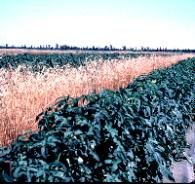
In north Florida, vegetable crops are established in the spring and early fall. Cover crops are generally utilized during the winter months of November through March. Popular cool season grasses have included rye, wheat, oats, or ryegrass. The traditional crop rotation for water-melon growers has included the use of well-established bahiagrass pastures followed by a crop of watermelon. The acreage of available bahiagrass pastures for rotation has been reduced and these pastures are difficult to find for many growers. As a result, growers are being forced to more intensively crop fields. Cover crops would be helpful in managing the land. When bahiagrass sod is used for production, the extensive root system must be very well tilled well in advance of the cropping season to break up the clumps, especially if plastic mulch will be used. Deep plowing is best to facilitate decomposition of the grass roots and stems. For information about cover crops for commercial vegetable production see Cover Crops, https://edis.ifas.ufl.edu/aa217.
Windbreaks
The use of windbreaks is an important cultural practice consideration in many vegetable crops and in most states in the United States. Windbreaks used in agriculture are barriers, either constructed or vegetative, of sufficient height to create a windless zone to their leeward or protected side. Strong winds, even if a few hours in duration, can cause injury to vegetable crops by: whipping plants around, abrasion with solid particles ("sand blasting"), cold damage, and plant desiccation. Windbreaks are especially important to protect young plants that are most susceptible to wind damage. Abrasion to plants from wind-blown sand is of concern in most of Florida where sandy soils are commonly used for production. Spring winds in Florida are expected each year. Many of the vegetable crops produced in central and north Florida are at a young and very susceptible stage during these windy spring periods. Strips of planted rye are generally recommended for temporary windbreaks in those areas. Sugarcane can also serve as a more permanent windbreak in South Florida.
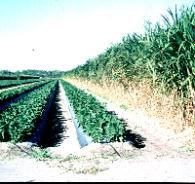
The primary reasons windbreaks have been used in vegetable crops have been to reduce the physical damage to the crop from the whipping action of the wind and to reduce sand blasting. Young, unprotected vegetable crop stands can be totally lost from these two actions. Many Florida vegetable crops are grown using plastic mulch culture. Young cucurbit crops, such as watermelon and cantaloupe grown on plastic are especially susceptible to the whipping action of the wind. Vines of these crops eventually become anchored to the soil between mulched beds, however, young vines can be whipped around in circles for several days until they become anchored. The physical damage by whipping and sandblasting can reduce stand, break or weaken plants, open wounds which can increase disease, and reduce flowering and fruit set.
Windbreaks can also help conserve moisture for the crop. Effective windbreaks reduce the wind speed reaching the crops. This reduces both direct evaporations from the soil and transpiration losses from the plant. Improved moisture conditions can help in early season stand establishment and crop growth. Air temperatures around the crop can also be slightly modified by windbreaks.
Temperature on the leeward side of the windbreaks can be slightly higher than if no windbreak were present. Early season crop growth is also greater when windbreaks are utilized. Workers in several states reported increased earliness when rye strips were effectively used as windbreaks.
A field layout to include windbreaks must be properly designed to achieve the maximum benefit. The windbreaks should be positioned perpendicular to the prevailing winds. This determination is perhaps more difficult in Florida than most other states, however, windbreaks planned for protection in the spring should generally protect against winds from the west or northwest. Wind protection is achieved as long as the barrier is a least three feet high, the vegetation is sufficiently dense, and is positioned perpendicular to the prevailing wind.
The height of the windbreak is the most important factor in determining how far apart the strips must be located. Research on windbreaks has been conducted indicating wind protection is afforded to a distance of 6 to 20 times the height of the barrier. Field research with rye strips showed protection was afforded up to a distance of 10 times the height of the barrier. For example, a healthy crop of rye planted in a 5 to 8 ft wide strip using a grain drill and reaching a height of 3 ft would afford wind protection up to 30 ft from the rye strip. If the same rye strip reached a height of 4 ft it would afford protection up to 40 ft from the rye strip. These examples use the calculation of protection afforded up to 10 times the height of an adequate rye strip.
Crops such as small grains, trees, shrubs, or sugarcane are "permeable" barriers in comparison to solid barriers such as smooth constructed walls. Solid barriers are less effective windbreaks than permeable barriers. Wind passing over a solid barrier is deflected over and creates an area of turbulence on the protected side and returns to the ground quickly.
Another type of technology that can provide excellent protection from high winds is the use of plastic row tunnels. Polyethylene or polypropylene materials are place over the plants in a row and held in place. Tunnels are popular for many vegetable crops, especially cucurbits such as cantaloupes. The cover is removed from cucurbits when the first female blooms appear to allow honeybees to pollinate the crops. Tunnels are generally used in conjunction with rye strips because the tunnels have to be removed and once removed the crop is susceptible to wind.
The most widely used windbreak in vegetable crops across the United States is the rye strip method. Winter or cereal rye (Secale cereale) is the preferred small grain for this use because the seed is usually cheaper; it provides more growth under cold temperatures and results in the highest plant habit. In some cases the field is solid seeded and later tilled in only the narrow strips where the plastic mulch bed is applied. This leaves a narrow strip of rye between each bed and row and is generally a very effective windbreak design. This design can result in more difficulties in weed management if weeds emerge in the rye strips, however, the rye can be managed with herbicide in certain crops.
The most common use of rye as a windbreak is planting it into strips. Seeding rye should be done in the fall (October–December) for protection in a spring crop. The strips are typically 5-8 ft wide and planted with a grain drill. The windbreak is a valuable component of the cropping system and should be treated as such. A top dressing or two of a fertilizer (at least nitrogen) will promote sufficient early spring growth of the rye to maximize effectiveness as a windbreak. Unfertilized rye strips on low fertility soil will often result in poor, thin, short strips of rye that will be less effective as a windbreak.
The spacing of the rye strips every 30 to 40 feet also allows them to be used as drive roads or spray roads in the field. These are generally necessary in managing most vegetable crops and therefore the rye strips are not taking away cropped areas of the field.
When the rye strips have served their purpose, they can be removed by mowing, rototilling, or disking. If mowing is used in a plastic mulched field, the mower should not throw the rye stems into the plastic area because holes will be pierced in the mulch. One insect management concern in using rye strips in Florida is their attractiveness to thrips. Rye strips also seem to be an excellent environment for beneficial insects, especially lady beetles. If thrips need to be managed in the rye strips, the strips could be sprayed just before the rye is mowed or tilled out. Once the rye is destroyed, the thrips migrate to the crops so control would be more effective while they are still on the rye strips. For more information see The Benefits of Windbreaks for Florida Growers at https://edis.ifas.ufl.edu/fr253; Management of Field Windbreaks at https://edis.ifas.ufl.edu/fr290; and Windbreak Designs and Planting for Florida Agricultural Fields at https://edis.ifas.ufl.edu/fr289.
Tables
Target pH and nitrogen (N) fertilization recommendations for selected vegetable crops in mineral soils of Florida.
Phosphorus (P; expressed as P2O5) and potassium (K; expressed as K2O) fertilization recommendations for selected vegetable crops in mineral soils of Florida, using Mehlich 1 soil extractant method. VL, L, M, H, and VH = very low, low, medium, high, and very high, respectively.