For the full version of this document, view the PDF.
Introduction
The new Florida 4-H Aquatic and Marine Ecosystems: Leader's Activity Guide helps leaders address the 4-H Science Initiative and is part of the Environmental Sciences Framework, OUR NATURAL WORLD. This framework includes the basic premise that aquatic/marine environments are important in children's lives, particularly to those children in Florida. The 4-H Aquatic and Marine Ecosystems curriculum provides an opportunity for young people to practice a variety of life skills while learning marine science concepts. The curriculum also utilizes science inquiry as a way for young people to gain a deeper curiosity about the natural world.
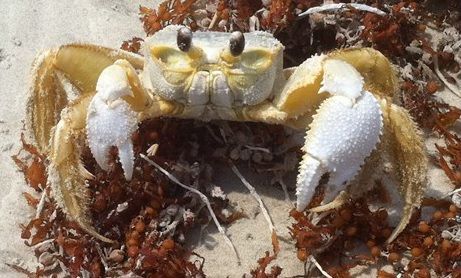
Credit: Photos in this publication taken by 4-H members
The Aquatic and Marine Ecosystems: Leader's Activity Guide is designed to help 9–14 year old children understand the role freshwater and marine environments play in our lives and how we as individuals might become better stewards of these environments. Additional curriculum packages are being designed for youth in other age ranges for sequential advancement in the area of aquatic, marine, and environmental sciences. The following page identifies those subject areas included in 4-H's Environmental Science curricula and form the core of "Our Natural World."
To the informed Florida citizen, it is not surprising that educational activities related to the aquatic and marine studies commands a priority within the total Florida 4-H education curriculum. An investment in young people's knowledge, understanding and attitudes about these topics will certainly produce a citizen that is better prepared for the decisions of tomorrow.
Age or Grade Levels
This project was developed for youth ages 9–14. Both group and individual activities encourage participation and action in all aspects of this program. Because of the large age range, teachers and volunteers are encouraged to select learning activities that are most suitable to their youth, as some activities are more advanced than others. Youths' individual experiences and grade level should be considered when selecting activities. The overall intent is to facilitate learning and to spark creativity in both teachers and youth.
Contents
LESSON 1 Aquatic/Marine Ecosystem Connections
Lesson 1 is designed to be a primer for the Aquatic/Marine Leader’s Activity Guide. It is suggested that anyone using this guide begin with Lesson 1 and complete all eight activities. The concepts presented here will help set the stage for the remainder of the lessons which are related to specific ecosystems. Following Lesson 1, the remaining four lessons can be randomly selected depending on the interest of the participants and/or the location relative to the experience.
Activity 1 : What is an Ecosystem?
Participants will learn to locate Florida’s aquatic/marine ecosystems and learn how they are interrelated.
Activity 2 : Salt or No Salt, What’s the Difference
Discovering how fish respond to fresh and salt water.
Activity 3 : Water Basin
Learning how water cycles.
Activity 4 : Abiotic Influences
Distinguishing between nonliving and living components of an ecosystem.
Activity 5 : Aquatic Food Chains
Sampling from a local ecosystem and learning about its energy flow.
Activity 6 - Food Webs: Strings Attached
Discover how living and nonliving components of both ecosystems are related.
Activity 7 - Aquatic Succession
Learning about ecological succession.
Activity 8: Aquatic/Marine Values
Participants will associate human values with aquatic/marine ecosystems resources.
LESSON 2 Wetland Ecosystems: Freshwater Marshes and Swamps
This lesson focuses on freshwater wetlands. These most fascinating ecosystems have an important role in Florida. From wildlife corridors to water storage areas, these areas are critical in the survival of endangered species as well as to the ever growing human population. Discover the values of wetlands and the importance of increasing these habitats province.
Activity 1 - What is a Wetland?
What do you think a wetland is? Discover what a wetland looks and feels like. Take a trip to a freshwater wetland to identify its characteristics.
Activity 2 - Wetland Bingo
Each plant and animal species has characteristics that make it different from other species. Discover what lives in freshwater wetlands.
Activity 3 - Wetlands Can Store and Filter
Learn some of the functions of freshwater wetland areas.
Activity 4 - Wetland Recharge
Examine the effects and impacts of the water cycle on wetlands and explore the effectiveness of wetlands as aquifer recharge areas.
Activity 5 - Food Connections
An activity to demonstrate knowledge of food chains and energy flow of wetlands.
Activity 6 - Wetland Types
Naming and describing several wetland types will help participants discover the plants and animals that inhabit each wetland type.
Activity 7 - Wet & Wild Trivia
Use this game to test the wetland knowledge of the participants.
LESSON 3 Aquatic Ecosystems: Lakes, Springs & Rivers
The many lakes, springs and rivers of Florida attract millions of people every year. These systems are used for transportation, irrigation, recreation, and they also supply Florida’s inhabitants with fresh water. In this lesson we will explore the many ecosystems that exist in or are adjacent to water of high quality and biodiversity. Students will explore the understanding and the interconnections within these habitats.
Activity 1 - Wetlands on the Map
Defining and locating aquatic ecosystems will help participants become familiar with resources in their area.
Activity 2 - Running Rivers
Through hands-on experiments, participants will learn to measure velocity and volume related to stream flow.
Activity 3 - Stream Bank Boxes
By creating a model, participants will discover why stream banks and pond edges are an important part of an aquatic ecosystem.
Activity 4 - Healthy Water = Healthy Ecosystems
Learn how to measure water quality inside a pond, lake, or river and use those results to evaluate the health of the ecosystem.
Activity 5 - How Many Bugs Do You Have?
Identify different types of lower-level aquatic organisms present in aquatic ecosystems.
Activity 6 - Aquatic Flora & Fauna
Participants will learn to identify common and management plants and animals found in aquatic ecosystems.
LESSON 4 Coastal Ecosystems: Beach, Estuary, Marsh and Swamp
Lesson 4 is where freshwater meets saltwater, land meets ocean and people meet beach. With over 80% of this state’s population living in coastal counties, the pressures of development and sea rise are tremendous on a relatively limited amount of coastal space. An understanding of the functions and dynamics of these coastal areas is presented. These concepts will help inform people and provide a greater sense of the fragile nature of these critical coastal areas.
Activity 1: Coastal Match-Up
Discover Florida’s diverse coastal ecosystems and learn about coastal plants.
Activity 2: Beach Bonanza
What else is a Beach for besides sunbathing and fun in the ocean?
Activity 3: Create an Estuary
Understand the functions of estuary and identify animals that depend on them.
Activity 4: Mangrove Madness
Why are mangroves important to humans and animals?
Activity 5: Who Eats Whom?
A fun activity to help participants learn about food chains.
Activity 6: Are We In Seiner?
A field trip activity to provide youth the opportunity to collect and identify samples from a local estuary.
LESSON 5 Marine Ecosystems: Coral Reef & Open Ocean
Florida has the distinction of having the only barrier reef in North America. This, along with the Gulf Stream of the Atlantic Ocean and the rich biodiversity of this state’s coastal offers a tremendous resource for fisheries and recreational activities. Lesson 5 explores these resources, evaluates the need to conserve these resources and explores management strategies. The activities are intended to help participants understand the effects of humans on marine and coastal environments and suggest ways that humans might reduce impacts to this “one of a kind” resource.
Activity 1: Water Web
Participants will discover the relationships in a marine ecosystems and create a mural that depict examples of marine food chains.
Activity 2: Ocean Harvest
Youth will learn concepts of sustainable resources and conservation.
Activity 3: Fishy Business
A field trip to a local fish market helps youth learn to identify fish and harvest methods.
Activity 4: The Too Much Game
This activity will show the importance of sustaining marine resources.
Activity 5: Where's My Home, Where's My Food?
Coral Reef destruction affects many animals. This activity will help youth to determine how to protect and conserve coral reefs.