
Microirrigation, also known as drip irrigation or low-volume irrigation, is an efficient and effective irrigation method that delivers water directly to the root zone of plants. Microirrigation systems can be customized to accommodate different plant types, soil conditions, and landscape layouts, making them ideal for home gardens, flower beds, shrubs, and vegetable plots. This Ask IFAS publication is intended for homeowners, Extension agents, master gardeners, and the general public. The objective is to provide basic information about microirrigation systems when used in home landscapes.
What is microirrigation?
Microirrigation is a way to apply water precisely to the base of plants through a network of tubing, emitters, and other components, using low pressure and low flowrates (usually 15 psi or less and 60 gph or less). Unlike traditional sprinkler systems that spray water over a large area, microirrigation targets the root zone, ensuring that plants receive the right amount of water. Microirrigation systems can be easy to install above, on, or below the soil or mulch in landscape beds and are relatively inexpensive to purchase.
Types of Microirrigation System Emitters
Microirrigation systems use different types of emitters to deliver water. The most common types include the following:
Drip Emitters
Drip emitters are used for plants that are spaced far apart, such as containerized plants or hanging baskets. Emitters can be installed directly into the main tubing line or attached to the "spaghetti" tubing and can be placed directly at the base of the plants (Figure 1). If plant spacing is not uniform, the latter method may work the best. Typical flow rates range from 0.5 to 2 gallons per hour.
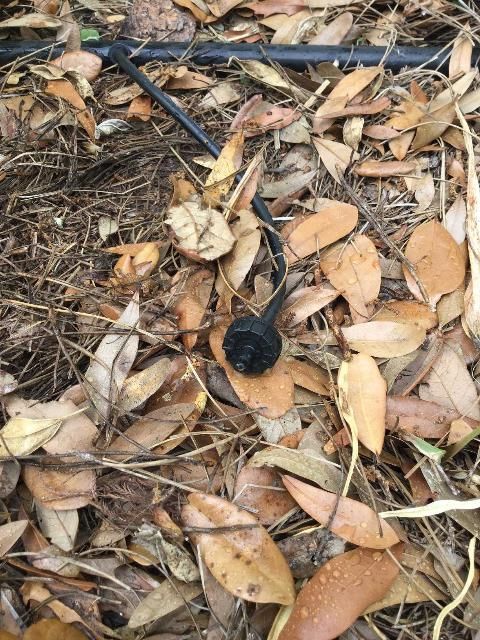
Credit: Anne Yasalonis, UF/IFAS
Bubblers
Bubblers are often used to establish and maintain large plants such as trees, but they can also be used in containers or on large shrubs (Figure 2). Bubblers can be installed directly into the main tubing line or on short stakes. Bubblers are available in adjustable or fixed flow rates and typically have the highest flow rate of all the microirrigation emitters.
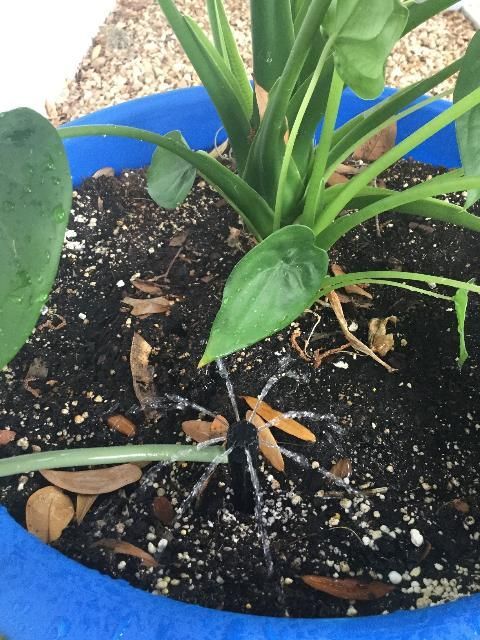
Credit: Anne Yasalonis, UF/IFAS
Drip Tubing
Drip tubing can be manufactured with either in-line emitters or as tubing where separate emitters can be attached to it. In-line emitter tubing has evenly spaced holes, so it’s important to position them near the base of the plants being watered. It ensures uniform water distribution along the tubing line, and it is suitable for rows of plants, groundcovers, and vegetable gardens. This system can be placed beneath the soil surface or under mulch, making the irrigation system virtually invisible (Figures 3 and 4). Alternatively, emitter spacing can be customized to match the plant layout, which is particularly effective for annual bedding plants.

Credit: Anne Yasalonis, UF/IFAS
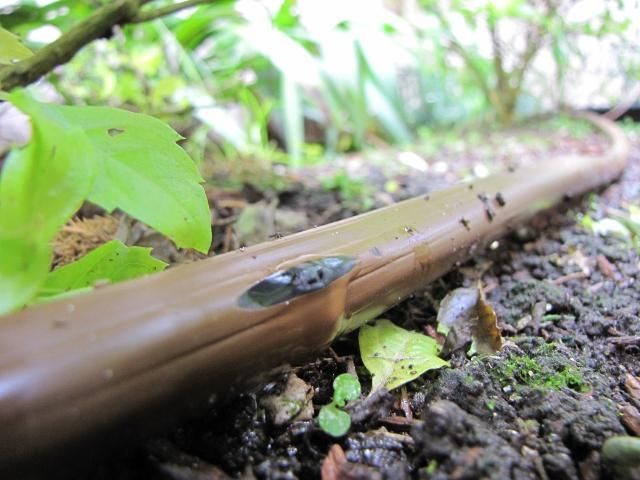
Credit: Michael Gutierrez, UF/IFAS
Microsprays
Microsprays (also known as microjets or microsprinklers) must be installed above the soil surface or mulch. Compared to the other types of microirrigation, microsprays emit water in fine spray patterns and water the largest area. Many different spray patterns are available (including full-circle, half-circle, and quarter-circle designs) and can water up to 8 feet in diameter. Microsprays work well in mixed planting beds such as perennial gardens (Figure 5) and groundcovers.
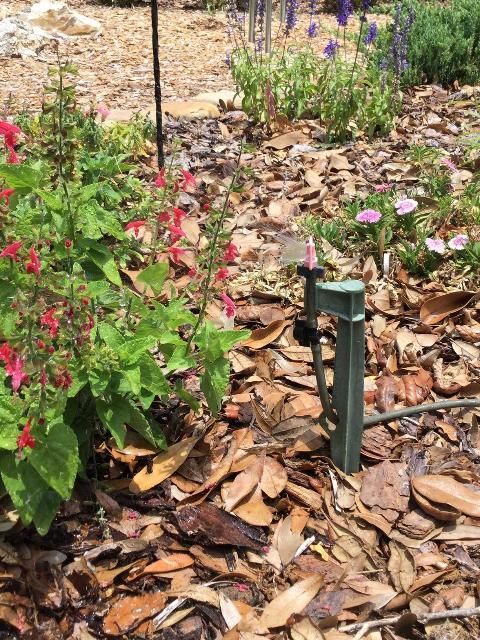
Credit: Anne Yasalonis, UF/IFAS
Soaker Hoses
Soaker hoses are porous hoses that allow water to seep slowly along their length, reducing evaporation. They are best suited for garden beds, rows of plants, and raised beds.
Why use microirrigation?
Microirrigation benefits include the following:
- Applies water directly to the root zone, reducing water use, evaporation, and runoff, resulting in financial savings and water conservation.
- Lower risk of disease when using drip or bubbler systems that keep foliage dry.
- Reduction of weed growth due to targeted distribution of water to the plants and not to open areas.
- Low water pressure requirement, which often makes microirrigation exempt from certain watering restrictions, and ideal for homes with limited water supply.
- Easy installation, ability to irrigate unusually shaped gardens, and relatively low cost.
Design and Installation
Microirrigation can be installed with a battery-operated timer on an outside hose bib or attached to an existing in-ground automated irrigation system. If attached to an in-ground system, a new valve will be needed to accommodate the low-pressure needs of the microirrigation components. Always remember to keep like sprinkler heads in the same zone and never mix different types. Microirrigation emitters should not be combined in the same zone with rotors or pop-up spray heads.
Maintenance
Frequent inspection is key for any microirrigation system. This style of watering can make detection of leaks or other issues difficult. Look for wet/dry soil and decline in plant health. Turn on the system frequently and inspect it while it is operating. Remember to check timer batteries and irrigation run times to maintain efficiency.
The small plastic parts of a microirrigation system can be damaged by mowing and maintenance equipment, so take care when using machinery around these systems.
Microirrigation is an efficient way to water your vegetable gardens, containerized plants, hanging baskets, and garden beds. The systems are flexible and easy to expand and adapt to changing landscapes over time.
Where can I find more information?
Operation of Residential Irrigation Timers: https://edis.ifas.ufl.edu/ae220
Home Irrigation and Landscape Combinations for Water Conservation in Florida: https://edis.ifas.ufl.edu/ae287
Estimated Water Savings Potential of Florida-Friendly Landscaping Activities: https://edis.ifas.ufl.edu/ae515