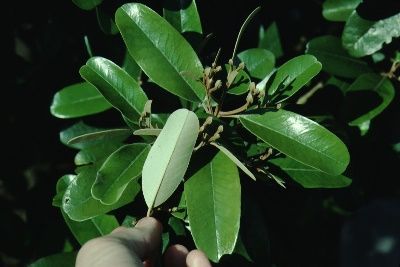
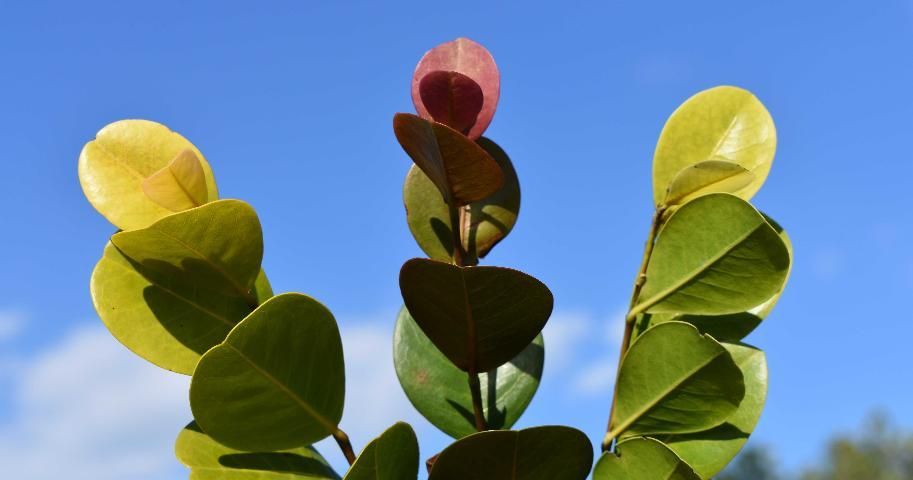
Recommended Native Landscape Plants for Florida's Treasure Coast

Elise Schuchman, Sandra B. Wilson, Judith Gersony, andJanice C. Broda


Introduction

Plants are considered native to Florida if they were here at the time of European contact in the early sixteenth century (1513). Florida has more than 2,400 native species of plants, with some found only in Florida (Wunderlin 1998). They have survived through the ages because they are adapted to Floridian soils, temperature, and rainfall patterns. Each plant is associated with specific natural plant communities or ecosystems that occur throughout Florida, such as the coastal strand, sand scrub, sandhills, hammocks, flatwoods, and swamps. Although the Florida Association of Native Nurseries (FANN) estimates that only about 25% of our native flora is in commercial production (FANN 2003), interest in native landscaping continues to increase as evidenced by the recent influx of native plant literature and books. Still, data indicate that native plant sales in Florida have remained essentially constant over recent years with estimated total sales of $100.9 million in 2000 (Hodges and Haydu 2002).

Because of demand for the use of native plants in the landscape, "Native Florida Landscaping (ORH 3815C)" was developed and added to the UF curriculum to teach students how to incorporate these plants into existing landscapes. With a "Right Plant, Right Place" concept in mind, native plants can offer unique attributes that fulfill color, line, form, texture, and scale requirements of a variety of landscapes. Proven native performers of the Florida Treasure Coast (Martin, St. Lucie, and Indian River Counties) will be discussed with relation to function, form, and landscape use.

Useful Native Plant Resources

Books

Barnett, M. R., and D. W. Crewz. 1997. Common Coastal Plants in Florida: A Guide to Planting and Maintenance. Gainesville: University Press of Florida.

Bell, C. R., and B. J. Taylor. 1982. Florida Wild Flowers and Roadside Plants. Chapel Hill, NC: Laurel Hill Press.

Daniels, J. C. 2000. Your Florida Guide to Butterfly Gardening. Gainesville: University Press of Florida.

Dehgan, B. 1998. Landscape Plants for Subtropical Climates. Gainesville: University Press of Florida.

Haehle, R. G., and J. Brookwell. 2004. Native Florida Plants (2nd ed.). Lanham, MD: Taylor Trade Publishing.

Huegel, C. N. 2010. Native Plant Landscaping for Florida Wildlife. Gainesville: University Press of Florida.

Nelson, G. 1996. The Shrubs & Woody Vines of Florida. Sarasota, FL: Pineapple Press.

Nelson, G. 2000. The Ferns of Florida. Sarasota, FL: Pineapple Press.

Nelson, G. 2010. Best Native Plants for Southern Gardens. Gainesville: University Press of Florida.

Nelson, G. 2010. The Trees of Florida (2nd ed.). Sarasota, FL: Pineapple Press.

Nelson, G. 2011. Botanical Keys to Florida's Trees, Shrubs and Woody Vines. Sarasota, FL: Pineapple Press.

Rogers, G. K. 2011. Landscape Plants for South Florida. Palm Beach Gardens, FL: George Rogers Publishing.

Simberloff, D., D. C. Schmitz, and T. C. Brown (eds.). 1997. Strangers in Paradise. Washington, D. C.: Island Press.

Suncoast Native Plant Society. 1997. The Right Plants for Dry Places. St. Petersburg, FL: Great Outdoors Publishing.

Taylor, W. K. 2009. A Guide to Florida Grasses. Gainesville: University Press of Florida.

Wasowski, S., and A. Wasowski. 2010. Gardening with Native Plants of the South. Lanhsam, MD: Taylor Trade Publishing.

Wunderlin, R. P., and B. F. Hansen. 2011. Guide to the Vascular Plants of Florida (3rd ed.). Gainesville: University Press of Florida.

Useful Native Plant Websites

Cowley, M. 1997–2005. Florida's Native Plants. Useful information about native gardening, plants for birds, and butterfly plants. http://www.nsis.org/garden

Florida Association of Native Nurseries. 2013. Contains wholesale and retail plant listings, news and events, and useful "know the difference" articles. http://www.floridanativenurseries.org/

Florida Wildflowers Growers Cooperative. 2013. Informative brochures, planting information, seed availability, and photo gallery. http://www.floridawildflowers.com/

Florida-Friendly Landscaping (FFL) Program. 2011. Informative website with designing information, plant database, landscaping tips, and glossary. Teaches homeowners about low-maintenance plants and environmentally sustainable practices. http://fyn.ifas.ufl.edu. (Direct link to the Florida-friendly interactive database and yard at https://ffl.ifas.ufl.edu/resources/apps/plant-guide/.)

The Florida Native Plant Society. 2011. Information about upcoming native conferences, local chapters, and publication links. The site also contains a state map where you can click on your county and see what native species grow in your area. https://www.fnps.org/

Native Plant Network. 2009. A forum for dispersing practical information about planting and growing native plants for conservation, restoration, reforestation, and landscaping. Bloomington: Indiana University Press. https://npn.rngr.net [Accessed 4/12/2022]

Reforestation, Nurseries, & Genetic Resources (RNGR). This program's mission and site is to supply people who grow forest and conservation seedlings with the very latest technical information and to provide links to other organizations and individuals with similar interests. http://www.rngr.net

Wilson, S. B. 2011. Florida Native Landscaping. Website contains a virtual garden tour and hyperlinked plant identification sheets showing flower, fruit, form, and leaf characteristics. https://irrecenvhort.ifas.ufl.edu/fnl/index.html

Related Ask IFAS (EDIS) or UF/IFAS Extension Publications

Meerow, A. W., T. K. Broschat, and H. M. Donselman. 2011. Native Trees for South Florida. EES-57. Gainesville: University of Florida Institute of Food and Agricultural Sciences. https://edis.ifas.ufl.edu/eh157

Norcini, J. G. 2012. Native Plants: An Overview. ENH1045. Gainesville: University of Florida Institute of Food and Agricultural Sciences. https://edis.ifas.ufl.edu/ep297

Sources to Obtain Native Plants for the Treasure Coast

D. R. Bates Liners Plus, 17639 64th Place North, Loxahatchee, FL 33470, 561-790-3246, E-mail: d.r.bates@att.net, https://www.facebook.com/drbateslinersandgallons/

Florida Association of Native Nurseries (FANN). Native Plant & Service Directory. Wholesale and retail catalogs available online at www.afnn.org.

Indian Trails Native Nursery, 6315 West Park Lane, Wellington, FL 33449, https://www.indiantrailsnativenursery.com/

Meadow Beauty Nursery, 5782 Ranches Road, Lake Worth, FL 33463, 561-601-9673, http://meadowbeautynursery.com/

Mesozoic Landscapes, 7667 Park Lane Road, Lake Worth, FL 33449-6728, 561-313-6661, E-mail: moyroud@prodigy.net

The Natives, 1617 Champagne, Davenport, FL 33837, 863-422-6664, http://www.thenatives.net

Plant Real Florida. A website dedicated to homeowners that lists landscape professionals, environmental consultants, garden and landscape products for native landscaping, and retail nurseries and garden centers that sell native plants. Also contains relevant information on native plants and landscaping with natives. http://www.plantrealflorida.org/

Gardens Within or Near the Treasure Coast with Native Plant Displays

Environmental Learning Center, 255 Live Oak Drive, Vero Beach, FL 32963, 772-589-5050, https://www.discoverelc.org

Heathcote Botanical Gardens, Inc., 210 Savannah Road, Fort Pierce, FL 34982, 772-464-4672, https://www.heathcotebotanicalgardens.org

IRREC Teaching Garden, Indian River Research and Education Center, University of Florida, 2199 S. Rock Road, Fort Pierce, FL 34945, 772-468-3922, https://irrec.ifas.ufl.edu

Mounts Botanical Gardens, 531 North Military Trail, W. Palm Beach FL 33415, 561-233-1757, http://www.mounts.org

Pan's Garden, 386 Hibiscus Ave., Palm Beach, FL 33480, 561-832-0731, https://www.palmbeachpreservation.org/visit/pans-garden [Accessed 4/12/2022]

Local Treasure Coast Chapters of the Florida Native Plant Society***

Cocoplum Chapter, Jensen Beach. Region: Martin County.

Conradina Chapter, Melbourne. Region: Southern portion of Brevard County.

Eugenia Chapter, Vero Beach. Region: Indian River County.

Lakela's Mint Chapter, Fort Pierce. Region: St. Lucie County.

***For statewide membership information and meeting dates and locations of local chapters, see https://www.fnps.org/.

Literature Cited

Florida Association of Native Nurseries (FANN). 2003. Native Plant & Service Directory. Retrieved 10 April 2007. https://www.fann.org

Hodges, A. W., and J. J. Haydu. 2002. Economic Impacts of the Florida Environmental Horticultural Industry, 2000. Econ. Info. Rpt. EI 02-3, Food and Resource Economics Department. Gainesville: University of Florida Institute of Food and Agricultural Sciences.

Wunderlin, R. P. 1998. Guide to Vascular Plants. Gainesville: University Press of Florida. 

Table 1. Florida Native Landscape Plants for the Treasure Coast: Foundation.

Scientific Name

Common Name

Growth Rate

Height/Width

Description/Comments


Borrichia frutescens

Sea ox-eye daisy

Moderate to fast

2–4 ft tall

2–3 ft wide

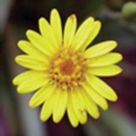
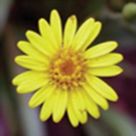
Pubescent gray-green foliage; large yellow daisy-like flowers attract butterflies; salt-tolerant plants spread by rhizomes and can be hedged.

Sea ox-eye daisy
T1F1. Sea ox-eye daisy

Capsicum annuum var. glabriusculum

Bird pepper

Moderate to fast

1.5–3 ft tall

1.5–3 ft wide

Evergreen, dwarf and densely branched small leaved shrub; green ripening to red small fire-hot chili peppers are savored by birds.

Bird pepper
T1F2. Bird pepper

Chrysobalanus icaco

Cocoplum

Moderate

5–15 ft tall

3–10 ft wide

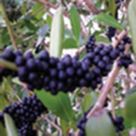
Shiny, green dense foliage can be hedged; salt- and drought-tolerant; provides wildlife cover; varying colors of purple to white fruit are edible.

Cocoplum
T1F3. Cocoplum

Eugenia foetida

Spanish stopper

Slow to medium

15–20 ft tall

8–15 ft wide

Large shrub or small tree; can be pruned and may have a rounded appearance; small oval leaves and small red fruits are desirable to wildlife.

Spanish stopper
T1F4. Spanish stopper

Hymenocallis latifolia

Spider lily

Moderate after well established

2–3 ft tall

2–3 ft wide

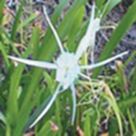
Dark green, clumping, maintenance-free perennial with strap-like leaves producing large showy white flowers; salt-tolerant plant self maintains its height; also used as a ground cover and for borders.

Spider lily
T1F5. Spider lily

Ilex vomitoria Schilling's or ‘Schellings Dwarf'

Schilling's dwarf holly

Slow

3–4 ft tall

3–4 ft wide

Very compact, dense with small leaves; drought-tolerant; dwarf forms are male and do not produce fruit.

Schilling's dwarf holly
T1F6. Schilling's dwarf holly

Lantana involucrata

Wild lantana, wild sage

Moderate

3–5 ft tall

1–3 ft wide

Coarse, spoon-shaped leaves; dainty, white to light pink lace-like flower clusters are attractive to butterflies; dark pink to blue fruit are edible by wildlife.

Wild lantana, wild sage
T1F7. Wild lantana, wild sage

Myrcianthes fragrans

Simpson's stopper

Slow

5–20 ft tall

3–5 ft wide

Densely branched leaves are variable in shape and color; some plants have reddish new growth; dainty, fragrant white flowers followed by wildlife-edible orange-red berries; distinctive reddish flaking bark on mature plants; salt-tolerant plants can be hedged and shaped.

Simpson's stopper
T1F8. Simpson's stopper

Morella cerifera

Southern wax myrtle

Moderate

4–15 ft tall

3–5 ft wide

Short lived, salt tolerant; densely branched, multi-trunked and sometimes sucking shrub or small tree; soft, serrated, narrow leaves; female plants produce waxy berries on stems that are eaten by birds; prefers moist conditions but adaptable to dryer conditions; tolerates some pruning.

Southern wax myrtle
T1F9. Southern wax myrtle

Psychotria nervosa

Wild coffee

Moderate to fast

5–15 ft tall

3–5 ft wide

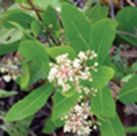
Multi-stemmed bush with shiny, dark green, puckering leaves; clusters of tiny white flowers that attract bees and butterflies are followed by red to maroon fruit eaten by birds; can be hedged to desired height.

Wild coffee
T1F10. Wild coffee

Randia aculeata

White indigo berry

Slow

3–6 ft tall

3–4 ft wide

Densely foliated, rounded to oval, leathery leaves; stiff branches, small white flowers and white berries with blue pulp; some ecotypes bear spines; indestructible and drought tolerant once established.

White indigo berry
T1F11. White indigo berry

Myrsine cubana

Myrsine

Slow

5–10 ft tall

3–4 ft wide

Versatile to dry or moist conditions and sun or shade; salt tolerant; dark green shiny leaves have lighter mid-vein; small, greenish white inconspicuous flowers; female plants produce small dark brown or black fruits that attract birds; plants can be pruned.

Myrsine
T1F12. Myrsine

Senna mexicana var. chapmanii

Chapman's senna

Fast

3–6 ft tall

2–4 ft wide

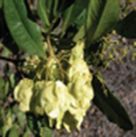
Short lived, drought- and salt-tolerant woody perennial; loosely branching evergreen is host for sulphur butterfly caterpillars; prominent clusters of large yellow flowers borne on the leaf axils give rise to flat brown capsules containing seeds that are easily propagated.

Chapman's senna
T1F13. Chapman's senna

Yucca filamentosa

Adam's needle

Slow

2–3 ft tall

2–3 ft wide

Flower panicle can reach up to 12 feet but usually under 7 feet

The leafy basal rosette of leathery grass-like leaves of this stout perennial make a great foundation plant; annual, showy panicles of white flowers that can soar to 12 feet should be considered; adds a southwestern desert-like look to the garden; salt- and drought-tolerant.

Adam's needle
T1F14. Adam's needle

Zamia pumila

Coontie

Slow

2–3 feet tall

2–4 feet wide

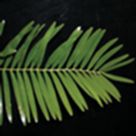
Dark green, stiff, fern-like leaves; this cycad resembles a trunk-less palm; salt- and drought-tolerant; when used as a foundation planting will not need hedging.

Coontie
T1F15. Coontie

Table 2. Florida Native Landscape Plants for the Treasure Coast: Accent.

Scientific Name

Common Name

Growth Rate

Height/Width

Description/Comments


Callicarpa americana

Beautyberry

Moderate

4–6 ft tall

3–5 ft wide

Deciduous or semi-deciduous shrub with pink to lavender flowers followed by persistent purple fruit.

Beautyberry
T2F1. Beautyberry

Rhapidophyllum hystrix

Needle palm

Slow

4–6 ft tall

4–6 ft wide

Single-stemmed evergreen fan palm having spiny stems; inconspicuous flowers are followed by reddish brown fruit; prefers moist conditions.

Needle palm
T2F2. Needle palm

Serenoa repens

Saw palmetto

Slow

Height and width vary with form, but usually less than 8 ft

Recumbent, spiny, clumping palm producing white flower clusters followed by dark purple fruit; silver and green forms available; drought and salt tolerant.

Saw palmetto
T2F3. Saw palmetto

Tripsacum dactyloides

Fakahatchee grass

Fast

4–8 ft tall

3–4 ft wide

Clumping perennial grass producing brownish flower spikes above the foliage.

Fakahatchee grass
T2F4. Fakahatchee grass

Yucca filamentosa

Adam's needle

Slow

3 ft tall

3 ft wide

Basal, somewhat twisted foliage with erect, large, cream-colored flower panicles protruding several ft. above foliage.

Adam's needle
T2F5. Adam's needle

Table 3. Florida Native Landscape Plants for the Treasure Coast: Privacy.

Scientific Name

Common Name

Growth Rate

Height/width

Description/Comments


Ardisia escallonioides

Marlberry, Marbleberry

Moderate

20 ft tall in sun

10 ft in shade

Large evergreen shrub suitable for a hedge in shady locations; can be trimmed to desired height; dark green, glossy, large leaves with light mid vein; clusters of small, white fragrant flowers followed by fruit turning purple to black when ripened.

Marlberry, Marbleberry
T3F1. Marlberry, Marbleberry 
Credit: UF/IFAS 

Capparis cynophallophora

Jamaican caper

Slow

Up to 18 ft tall

Small, densely branched evergreen tree with glossy, dark green leaves that can be clipped in to a hedge; fragrant, white spider-like flowers that open in the evening and wither by noon the next day.

Jamaican caper
T3F2. Jamaican caper 
Credit: Edward F. Gilman, UF/IFAS 

Chrysobalanus icaco

Cocoplum

Moderate

5–15 ft tall

3–10 ft wide

Salt- and drought-tolerant shrub with dense foliage that makes an excellent plant for screening.

Cocoplum
T3F3. Cocoplum 
Credit: Stephen H. Brown, UF/IFAS 

Coccoloba uvifera

Sea grape

Moderate

3–35 ft

Very large round leaves with prominent and attractive venation; can be sheered to form a hedge or trained and trimmed to tree form; leaves have some fall-like foliage color; large grape-like fruit attract wildlife; salt and drought tolerant.

Sea grape
T3F4. Sea grape 
Credit: UF/IFAS 

Conocarpus erectus

Green buttonwood

Moderate

40–50 ft tall

5–10 ft wide

Upright tree that branches outward with age and can be trimmed to form a thick dense hedge; dark green, shiny leaves with contrasting lighter venation; strong dense wood; salt and drought tolerant; also tolerant of wet conditions.

Green buttonwood
T3F5. Green buttonwood 

Conocarpus erectus var. sericeus

Silver buttonwood

Moderate

20 ft tall

4–20 ft wide

Low-branched shrub or small tree can be clipped into a hedge and used as an attractive screen; leaves high pubescent, appearing gray; highly tolerant of full sun, salt, and dry and wet conditions; plant in seaside or well- ventilated conditions to avoid sooty mold.

Beach sunflower, dune sunflower
T5F6. Beach sunflower, dune sunflower

Cordia globosa

Bloodberry, Butterfly sage

Fast

4–9 ft tall

4–6 ft wide

Dense branching to the ground makes this an ideal plant for privacy; can be trimmed into almost any shape or height; leaves have rough texture; small white flowers produce abundant nectar attracting numerous bees and butterflies; small red berries attract birds.

Bloodberry, Butterfly sage
T3F7. Bloodberry, Butterfly sage

Dodonaea viscosa

Varnish leaf

Fast

8–12 ft tall

6 ft wide

Multi-trunked and naturally open habit with a denser look when trimmed for a screen or hedge; attractive, glossy leaves are coated with a natural resin which protects the plant from salt spray and drought; Winged fruit are very showy and change color from light green to creamy yellow to pink as they mature; seeds are eaten by songbirds.

Varnish leaf
T3F8. Varnish leaf

Eugenia foetida

Spanish stopper

Slow

15–20 ft tall

3–4 ft wide

Small evergreen tree or tall shrub with oval leaves, small white inconspicuous flowers and small berries turning from reddish orange to black.

Spanish stopper
T3F9. Spanish stopper

Forestiera segregata

Wild olive, Florida privet

Fast

4–15 ft tall

3–5 ft wide

Large shrub or small tree, dense foliage that can be hedged; female plants produce copious amounts of blue-black fruit relished by songbirds.

Wild olive, Florida privet
T3F10. Wild olive, Florida privet

Illicium parviflorum

Yellow anise

Slow to moderate

6–15 ft tall

3–4 ft wide

Evergreen shrub with dark green licorice-scented, aromatic leathery leaves; prefers moist acidic soils; small, pale yellow flower followed by an interesting star-shaped fruit.

Yellow anise
T3F11. Yellow anise

Juniperus virginiana

Southern juniper, southern red cedar

Moderate

20–60 ft tall

10–30 ft wide

This large, coniferous tree makes an excellent tall thick hedge along a property border; small, scale-like leaves; male and female cones borne on separate trees, female cones are attractively bluish and berrylike and eaten by birds.

Southern juniper, southern red cedar
T3F12. Southern juniper, southern red cedar

Myrcianthes fragrans

Simpson's stopper

Slow to moderate

5–12 ft tall

3–5 ft wide

Evergreen, densely branched, variable in habit and leaf shape; small delicate, fragrant white flowers followed by orange to red fruit, which is enjoyed by birds. Note: compact/dwarf cultivars are available; choose the proper selection for your intended use.

Simpson's stopperT3F13. Simpson's stopper

Randia aculeata

White indigo berry

Slow

3–10 ft tall

3–5 ft wide

Oval to round leathery dark green leaves, small white, tubular, fragrant flowers; when ripe, fruit is white with dark purple to black pulp; salt tolerant with stems having varying presence of spines.

White indigo berry
T3F14. White indigo berry

Myrsine cubana

Myrsine

Slow to moderate

8–20 ft tall

3–5 ft wide

Large shiny, thick leaves clustering at the ends of branches; female plants bear small dark blue to black fruit along the leafless portions of the stems; fruit attracts songbirds; highly versatile, tolerates dry or wet conditions

Myrsine
T3F15. Myrsine

Viburnum obovatum

Walter's viburnum

Slow

6–30 ft tall

6–12 ft wide

Densely branched and vegetated shrub that can tolerate shearing. Forms a dense thicket of underground suckers; flowering is profuse in spring with tiny white flowers borne in clusters; small berries red to black in autumn; provides cover and food for birds and wildlife. Note: compact/dwarf cultivars are available; choose the proper selection for your intended use.

Walter's viburnum
T3F16. Walter's viburnum

Table 4. Florida Native Landscape Plants for the Treasure Coast: Color.

Scientific Name

Common Name

Growth Rate

Height/Width

Description/Comments


Borrichia frutescens

Sea ox-eye daisy

Fast

2–3 ft tall

Colony forming

Large evergreen shrub suitable for a hedge in shady locations; can be trimmed to desired height; dark green, glossy, large leaves with light mid vein; clusters of small, white fragrant flowers followed by fruit turning purple to black Herbaceous, stoloniferous perennial; leaves have silvery grey pubescence; solitary flowers have attractive ray and disk petals; salt spray tolerant.

Sea ox-eye daisy
T4F1. Sea ox-eye daisy

Coreopsis leavenworthii

Tickseed coreopsis

Fast, reseeding

1-2 ft tall

Herbaceous annual or short- lived perennial with glabrous basal leaves, yellow ray flowers and a dark center disk.

Tickseed coreopsis
T4F2. Tickseed coreopsis

Dodonaea viscosa

Varnish leaf

Fast

8–12 ft tall

6 ft wide

Evergreen shrub having elliptic to spatulate, resinous leaves; inconspicuous flowers are followed by clusters of winged fruit that change color from light green to creamy yellow to pink as they mature.

Varnish leaf
T4F3. Varnish leaf

Flaveria linearis

Yellowtop

Fast

2–3 ft and spreading

Herbaceous perennial having linear leaves, reddish stems and showy yellow corymbs.

Yellowtop
T4F4. Yellowtop

Gaillardia pulchella

Blanketflower

Fast, reseeding

1–2 ft tall

Herbaceous, short-lived perennial with brilliant flower rays in shades of orange, red and yellow; drought and salt tolerant.

 BlanketflowerT4F5. Blanketflower

Glandularia tampensis

Tampa verbena

Fast

1–2 ft tall

3–4 ft wide

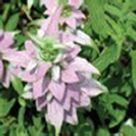
Sprawling, short-lived perennial having pink/purple flowers borne in terminal corymbs.

Tampa verbena
T4F6. Tampa verbena

Hamelia patens

Firebush

Fast

6–12 ft tall (compact forms available)

Small tree or large shrub having glabrous green leaves turning to shades of red; tubular showy red to orange flowers are followed by red fruit turning purple in time.

Firebush
T4F7. Firebush

Helianthus angustifolius

Swamp sunflower

Fast, self sowing

3–5 ft tall

Herbaceous perennial with narrow long leaves and yellow daisy-like flowers; tolerant of wet conditions.

Swamp sunflower
T4F8. Swamp sunflower

Lantana depressa

Pineland lantana

Moderate

3–6 ft tall

4 ft wide

Evergreen shrub with aromatic leaves and yellow flowers appearing in bracteate heads.

Pineland lantana
T4F9. Pineland lantana

Monarda punctata

Monarda, horsemint

Fast, self sowing

3 ft tall

3 ft wide

Herbaceous perennial with pubescent, aromatic leaves and purple spotted flower petals offset by showy purple bracts.

 Monarda, horsemintT4F10. Monarda, horsemint

Pityopsis graminifolia

Silkgrass

Fast

1–2 ft tall

Clump-forming, herbaceous perennial with linear, silvery pubescent leaves and yellow daisy-like flowers borne on elongated stems.

Silkgrass
T4F11. Silkgrass

Rudbeckia hirta

Black-eyed Susan

Fast, self sowing

2–3 ft tall

Herbaceous perennial with hirsute leaves and having yellow/orange/red ray petals surrounding a dark brown, raised central disk.

Black-eyed Susan
T4F12. Black-eyed Susan

Ruellia caroliniensis

Wild petunia

Moderate, self sowing

1 ft tall

Herbaceous perennial with strigose leaves and stems and 5-petaled purple flowers.

Wild petunia
T4F13. Wild petunia

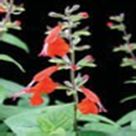
Salvia coccinea

Tropical sage

Fast, self sowing

2–4 ft tall

Herbaceous perennial with bilabiate red flowers produced on determinate spikes.

Tropical sage
T4F14. Tropical sage

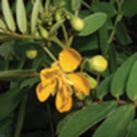
Senna mexicana var. chapmanii

Chapman's senna

Fast

6–8 ft tall

5–6 ft wide

Multi-trunked evergreen shrub having pinnately compound leaves and abundant yellow flowers in axillary clusters of 4 to 9 blooms.

Chapman's senna
T4F15. Chapman's senna

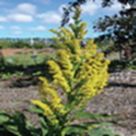
Solidago sempervirens

Goldenrod

Fast

4–5 ft tall

2–3 ft wide

Herbaceous perennial with smooth strap-like leaves and attractive golden yellow flowers occurring well above the foliage on spike-like racemes.


Goldenrod
T4F16. Goldenrod

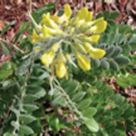
Sophora tomentosa

Necklace pod

Moderate

4–10 ft tall

2–3 ft wide

Evergreen shrub having pinnately compound, tomentose leaves; yellow inflorescences occur above foliage in long spikes; fruit is pronouncedly constricted between seeds; salt, drought and wind tolerant.


Necklace pod
T4F17. Necklace pod

Stachytarpheta jamaicensis

Porterweed

Fast, reseeding

3–4 ft tall

3 ft wide

Evergreen, sprawling shrub becoming woody with age; having serrated leaf margins and purple flowers borne on long spikes.


Porterweed
T4F18. Porterweed

Stokesia laevis

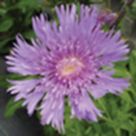
Stokes' aster, stokesia

Moderate

1–2 ft tall

1 ft wide

Herbaceous perennial having basal, glabrous leaves and large solitary, purple flowers with fringed petals.


Stokes' aster, stokesia
T4F19. Stokes' aster, stokesia

Table 5. Florida Native Landscape Plants for the Treasure Coast: Vines and Groundcovers.
Scientific Name

Common Name

Growth Rate

Height/Width

Description/Comments


Canavalia maritima

Beach bean, bay bean

Fast

Low climbing vine and/or ground cover

Large trifoliate leaves with pink, pea-like flowers; produce large seed pods, can be used as ground cover and will climb structures; wind, drought, heat and salt tolerant.

Beach bean, bay bean
T5F1. Beach bean, bay bean

Dyschoriste oblongifolia

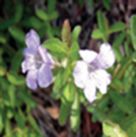
Twin flower

Slow

Ground cover

6 to 12 in tall

Delicate small plants with pale lavender flowers spreading by underground rhizomes; semi-dormant in winter.

Twin flower
T5F2. Twin flower

Eragrostis elliottii

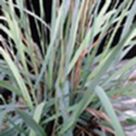
Elliott's love grass

Fast

Ground cover 1–2 ft tall

1–2 ft wide

A bunch grass with fine bluish or silvery green leaves and delicate masses of flower spikes that can be produced at any time of year but with the most abundance in the autumn.


Elliott's love grass
T5F3. Elliott's love grass

Ernodea littoralis

Golden creeper

Moderate

Ground cover

1–2 ft tall, spreading from 2 to 6 ft wide

Glossy green, fleshy leaves becoming tinged with yellow as leaves age; small tubular white to pinkish flowers; salt, drought and heat tolerant; good for erosion control


Golden creeper
T5F4. Golden creeper

Gelsemium sempervirens

Carolina yellow jessamine

Moderate

High climbing and/or ground cover

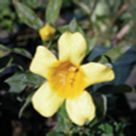
Twining vine with shiny leaves and bright yellow flowers that attract hummingbirds and butterflies; blooms late winter/early spring.


Carolina yellow jessamine
T5F5. Carolina yellow jessamine

Helianthus debilis

Beach sunflower, dune sunflower

Fast

Ground cover

1–2 ft tall spreading up to 6 ft wide

Drought- and salt-tolerant perennial with triangular leaves and 2-inch yellow ray flowers with brown disks that attract insects.

Beach sunflower, dune sunflower
T5F6. Beach sunflower, dune sunflower

Hymenocallis latifolia

Spider lily

Fast

Ground cover

2–3 ft tall

2–3 ft wide

Clumping, herbaceous, low-maintenance perennial forming dark green linear leaves from a central bulb base; large white flowers with golden anthers are elevated above the foliage.


Spider lily
T5F7. Spider lily

Ipomoea pescaprae

Railroad vine

Fast

Ground cover

6–8 in tall

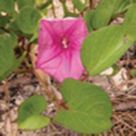
Salt- and drought-tolerant, non-climbing perennial with large leaves and showy purple flowers; good for stabilization of dry, sandy areas.


Railroad vine
T5F8. Railroad vine

Geobalanus oblongifolius

Gopher apple

Slow

Ground cover

1–2 ft tall

Salt- and drought-tolerant woody ground cover forming dense populations from underground stems; not tolerant of moisture; does best in full sun; 1–2 inch white to brown fruit is attractive to wildlife, hence the common name “gopher apple.”


Gopher apple
T5F9. Gopher apple

Lonicera sempervirens

Coral honeysuckle

Slow to establish but grows quickly thereafter

Vine up to 15 ft

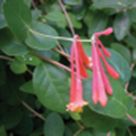
Woody twining vine; oval to oblong dark green leaves with silvery undersurface; trumpet-shaped, bright pink flowers with protruding yellow stamens attractive to hummingbirds and butterflies; produces small red berries attractive to wildlife.


Coral honeysuckle
T5F10. Coral honeysuckle

Melanthera nivea

Squarestem; nonpareil

Moderate to Fast

Ground cover

1–3 ft tall

1–4 ft wide

Two forms of Squarestem are found in cultivation: An open, loosely coarse form that grows to about 3 feet tall, and a low-growing compact form that grows to about 12–18 inches and spreads in a dense clump. Flowering most of the year, this later form makes an excellent ground cover that is tough, and attractive to insects and people.


T5F11. Squarestem; nonpareil
T5F11. Squarestem; nonpareil 

Mimosa strigillosa

Sunshine mimosa; sensitive plant

Moderate to Fast

Ground cover

6–9 in tall

Beautiful pink flowers that are shaped like puff balls and delicate leaflets that fold when touched give this plant its common names; can be mowed and is drought tolerant once established; stems creep and root when they touch the ground.


Sunshine mimosa; sensitive plant
T5F12. Sunshine mimosa; sensitive plant

Muhlenbergia capillaris

Muhly grass

Fast

Ground cover

1–4 ft tall

1–3 ft wide

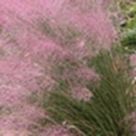
Clumping grass with tightly rolled, thread-like leaves producing tall panicles of pink to purplish flowers in late summer or early fall.


Muhly grass
T5F13. Muhly grass

Nephrolepsis exaltata

Boston fern

Fast

Ground cover

2–4 ft tall

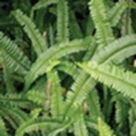
Long, tapering fronds with numerous leaflets arranged pinnately possessing kidney-shaped clusters of spore cases; an excellent groundcover for shady areas; not to be confused with several species of non-native invasive sword ferns.

Boston fern
T5F14. Boston fern

Pentalinon luteum

Wild allamanda

Moderate

Vine

3–12 ft

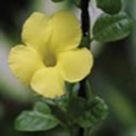
Twining, salt-tolerant vine with glossy leaves and large, showy yellow flowers; plants are deciduous or semi-deciduous in winter.


Wild allamanda
T5F15. Wild allamanda

Pityopsis graminifolia

Silkgrass, silver-leaved aster, golden aster

Fast

Ground cover

1–2 ft tall

Attractive silvery green grass-like foliage; yellow, daisy-like flowers bloom heaviest in spring and fall; varying habit with some forming a single clump while others spread and form several colonies from underground rhizomes.


Silkgrass, silver-leaved aster, golden aster
T5F16. Silkgrass, silver-leaved aster, golden aster

Salvia lyrata

Lyre-leaf sage

Fast

Ground cover

6–12 in wide with 1–2 ft flower spikes

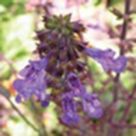
Colorful, green- and red-tinged, usually lobed leaves forming basal rosettes; blue or purple flowers borne on spikes; variable habit, may act as either annual or perennial, seeding abundantly.


Lyre-leaf sage
T5F17. Lyre-leaf sage

Symphyotrichum carolinianum

Climbing aster

Fast

Vine

3–10 ft

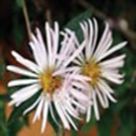
Woody perennial with a vine-like habit but climbs without tendrils. Light pink, dainty flowers with yellow centers form abundantly at the ends of each branch; flowers attract butterflies, bees and numerous other insects.


Climbing aster
T5F18. Climbing aster

Tripsacum floridanum

Florida gamagrass

Fast

Ground cover

2–3 ft tall

2–3 ft wide

Clumping grass with dense, dark green leaves and insignificant flowers.


Florida gamagrass
T5F19. Florida gamagrass

Yucca filamentosa

Adam's needle

Slow

Ground cover

3 ft tall

3 ft wide

Space 3–4 ft on center

Leaves have spiny apices; in summer, showy flower spikes (to 15 feet tall) emerge for several weeks; requires sandy, well drained soils.


Adam's needle
T5F20. Adam's needle

Zamia integrifolia

Coontie

Slow

1–3 ft tall

1–3 ft wide

Stiff, fern-like leaves that mound from a center stalk; new leaves are lime green while older leaves are a dark green creating a particularly pleasing color contrast.


Coontie
T5F21. Coontie

Table 6. Florida Native Landscape Plants for the Treasure Coast: Specimen Trees.

Scientific Name

Common Name

Growth Rate

Height and Canopy Spread

Description/Comments


Acer rubrum

Red maple

moderate

45 ft tall

25–30 ft canopy

Large, singled-trunked, deciduous tree preferring open moist areas but will tolerate shade and drought conditions.

Red maple
T6F1. Red maple

Acoelorrhaphe wrightii

Paurotis palm

slow

20–30 ft tall

15–20 ft canopy

Tall, multi-trunked palm, preferring moist conditions; makes a magnificent specimen tree as long as it's not confined to a small area.

Paurotis palm
T6F2. Paurotis palm

Bursera simaruba

Gumbo limbo

fast

60 ft tall, but usually found 25-40 ft tall with a 25–30 ft canopy in the urban landscape

Semi-evergreen, salt-tolerant tree that is resistant to high winds and drought; exfoliating, coppery bark makes for interesting appearance and contrast in the landscape.


Gumbo limbo
T6F3. Gumbo limbo

Magnolia grandiflora

Southern magnolia

moderate

80 ft tall

30–40 ft canopy

Evergreen tree with large, beautiful, saucer-shaped, fragrant flowers; does not do well in highly alkaline soils and prefers occasionally wet, well-drained soils.


Southern magnolia
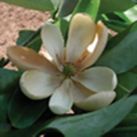
T6F4. Southern magnolia

Persea borbonia

Sweet bay

moderate

3–50 ft tall; 30–50 ft canopy; somewhat shorter and wider in urban landscapes

Evergreen tree with glossy, leathery leaves that emit a spicy fragrance when crushed; inconspicuous flowers followed by dark blue, globose fruit; thrives with little care in full sun or partial shade and can tolerate a wide range of soils; allow ample area for growth.


Sweet bay
T6F5. Sweet bay

Pinus elliottii var. densa

Southern slash pine

fast

75–100 ft tall

35–50 ft canopy

Evergreen, heavily branched gymnosperm that can be planted in groups to provide a natural setting; adapted to most soils as long as they are occasionally wet and well drained.


Southern slash pine
T6F6. Southern slash pine

Quercus laurifolia

Laurel oak

fast

60–70 ft tall

35-45 ft canopy

Semi-evergreen, dense-growing shade tree with an upright growth and tolerance to wet sites.


Laurel oak
T6F7. Laurel oak

Quercus virginiana

Live oak

moderate

60–80 ft tall

80–100 ft canopy

Mostly evergreen tree growing under variable conditions in moist to dry soils in full sun or light shade; majestic horizontal branching habit with cupped leaves.


Live oak
T6F8. Live oak

Taxodium distichum

Bald cypress

moderate

30–60 feet tall

25–30 ft canopy

Deciduous gymnosperm ideal for wet locations; however, will grow remarkably well on almost any soil and is also drought tolerant.


Bald cypress
T6F9. Bald cypress

Sabal palmetto

Cabbage palm

slow

40–60 ft tall

15 ft canopy

Tall, single-trunked palm which when grouped in threes or fives can provide shade and depth to a landscape.


Cabbage palm
T6F10. Cabbage palm

Ulmus alata

Winged elm

fast

40–50 ft tall

30–40 ft canopy

Deciduous tree found growing in wet sites as well as dry; very adaptable tree for urban planting.


Winged elm
T6F11. Winged elm

Table 7. Florida Native Landscape Plants for the Treasure Coast: Trees for Small Places.

Scientific Name

Common Name

Growth Rate

Height/Width

Description/Comments


Acacia farnesiana

Sweet acacia

Fast

20 ft tall

20 ft canopy

Long, cascading, zig-zagging branches of soft bi-pinnately compound leaves flow from a straight trunk of furrowed bark; fragrant, yellow, globose flowers often occur throughout the year and are followed by cylindrical seed pods.

Sweet acacia
T7F1. Sweet acacia

Ardisia escallonioides

Marlberry, marbleberry

Moderate

20 ft tall in sun

10 ft tall in shade

3–8 ft canopy

Large, glossy dark green leaves; prefers light to considerable shade; thick and compact in sun with a more open habit in shade; panicles of fragrant white tinged with purple flowers throughout the year followed by clusters of small, marble-sized blue-black fruits; tolerant of alkaline "marl" soils.

Marlberry, marbleberry
T7F2. Marlberry, marbleberry

Cephalanthus occidentalis

Buttonbush

Moderate

15–25 ft tall

8–12 ft canopy

Requires moist or wet conditions. Sputnik-shaped, 1½-inch-wide, fragrant, nectar-bearing white flowers displayed throughout the summer.


Buttonbush
T7F3. Buttonbush

Citharexylum spinosum

Fiddlewood

Fast

25 ft tall

18–10 ft canopy

Glossy leaved and very drought tolerant with long drooping spikes of fragrant white flowers throughout the year; fruits change color from pale green to orange to dark blue-black; prefers sun or light shade.


Fiddlewood
T7F4. Fiddlewood

Guaiacum sanctum

Lignum vitae

Slow

25 ft tall

15–20 ft canopy

Characteristic gnarled, stout trunks with slender, drooping branches; small but striking truly blue flowers in late spring on new growth; wood so heavy that it sinks in water.

Lignum vitae
T7F5. Lignum vitae

Ilex cassine

Dahoon holly

Moderate to fast

25–35 ft tall

8–20 ft canopy

Evergreen tree with glabrous leaves and red berries forming on female plants.

Dahoon holly
T7F6. Dahoon holly

Magnolia virginiana

Sweet bay magnolia

Fast

25–40 ft tall

15–20 ft canopy

Grayish bark, erect branches, and leaves with silvery undersides; fragrant white flowers primarily during spring and early summer; wide native range from Massachusetts to Texas; prefers moist, fresh conditions.

Sweet bay magnolia
T7F7. Sweet bay magnolia

Rapanea punctata

Myrsine

Moderate

6–20 ft tall

4–6 ft canopy

Evergreen shrub or small tree that maintains pyramidal shape if not pruned; thick and compact in sun with a more open habit in shade; small black fruits borne directly on branches are attractive to birds.

Myrsine
T7F8. Myrsine

Myrcianthes fragrans

Simpson's stopper

Slow to moderate

12–20 ft tall

6–8 ft canopy

Evergreen shrub or multi-trunked small tree with fragrant leaves, reddish new foliage, attractive bark, fragrant white flowers and showy red fruit.

Simpson's stopper
T7F9. Simpson's stopper

Quercus myrtifolia

Myrtle oak

Slow to moderate

20–40 ft tall

20 ft canopy

Evergreen shrub or small tree; salt and drought tolerant; small, obovate and folding leaves and shallow cupped acorns.

Myrtle oak
T7F10. Myrtle oak

Suriana maritima

Bay cedar

Slow to moderate

15 ft tall

6–10 ft canopy

Clusters of downy, fleshy grey-green leaves along slender, flexible branches; very salt tolerant; small yellow flowers produced throughout the year.

Bay cedar
T7F11. Bay cedar

Zanthoxylum fagara

Wild lime

Moderate to fast

15–25 ft tall

10–20 ft canopy

Evergreen tree with glabrous compound leaves, winged petioles, curved spines, and attractive yellow, globose flowers; larval food source for swallowtail butterflies.

Wild lime
T7F12. Wild lime