
Introduction
The UF/IFAS South Florida Beef Forage Program (SFBFP) is composed of county Extension faculty and state specialists. The members, in conjunction with the UF/IFAS Program Evaluation and Organizational Development unit, created a survey in 1982 to evaluate ranch management practices and determine benchmarks in cattle production and pasture management. The survey is updated and distributed every five years to ranchers in 17 south Florida counties: Charlotte, Citrus, Collier, DeSoto, Glades, Hardee, Hendry, Highlands, Hillsborough, Lee, Manatee, Martin, Okeechobee, Pasco, Polk, St. Lucie, and Sarasota. There were 158 anonymous responses. According to the 2017 National Agriculture census, Florida has 21,469 cattle ranches with 1,635,745 head of cattle. The surveyed area accounts for 6,723 cattle ranches and 762,771 head of cattle (47%) of the state’s herd. 1,045 ranchers received the survey, and 158 surveys were completed. This data serves Florida ranchers, their allied industries, and governmental and nongovernmental agencies making or advocating for policy that affects ranchers.
Characteristics of Beef Operations in South Florida
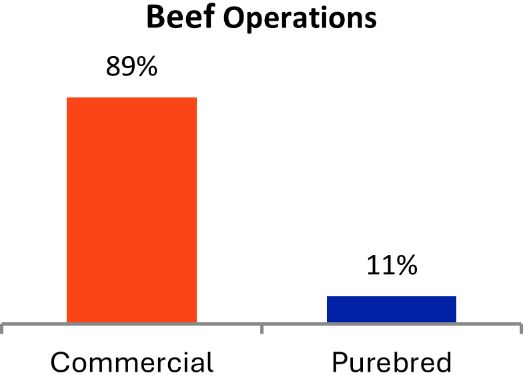
Type of Beef Operations: The beef cattle industry in south Florida is primarily commercial. Some ranchers ran both purebred and commercial herds (Figure 1).
Credit: Sonja Crawford and Lindsey Crum, UF/IFAS
Business Structure of the Ranch: Sixty-seven percent (67%) of ranches are family proprietorships, while 19% are corporate-owned and 14% operate as partnerships.
Rancher’s Source of Income: Eighty-four percent (84%) of ranchers receive income from another profession.
Years in Cattle Business: Survey respondents have been in the business for an average of 35 years.
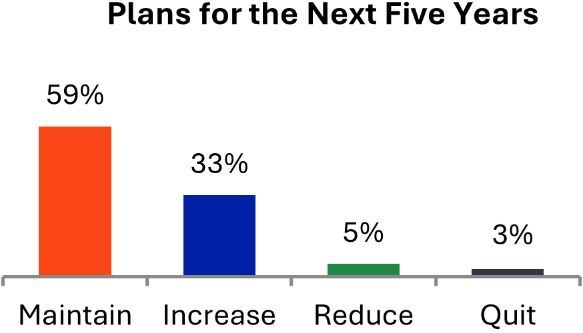
Plans for the Next Five Years: Ninety-two percent (92%) of ranchers plan to maintain or increase the size of their operations in the next five years (Figure 2).
Credit: Sonja Crawford and Lindsey Crum, UF/IFAS
Reproduction
Breeding Season: Sixty-three percent (63%) of ranchers use a controlled breeding season, whereas 37% expose females to bulls year-round. Fifty-nine percent (59%) expose bulls to females in December/January and 66% remove bulls between March and June.
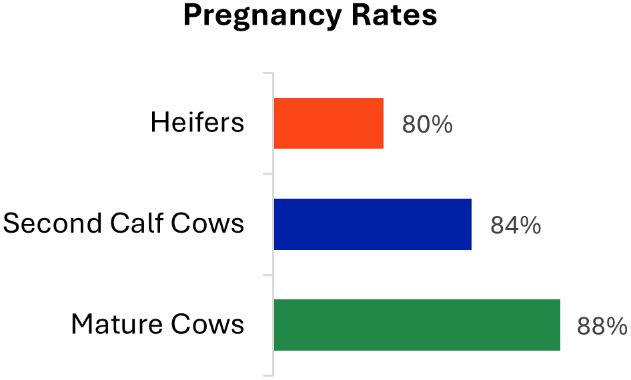
Pregnancy Rate: Average pregnancy rates are shown in Figure 3. Pregnancy rates are calculated by dividing the number of females exposed to bulls by the number of females determined to be pregnant through pregnancy diagnosis methods.
Credit: Sonja Crawford and Lindsey Crum, UF/IFAS
Pregnancy Checking: Forty-nine percent (49%) of ranchers checked for pregnancy. Veterinarians (67%) checked for pregnancy most often, followed by ranch employees (42%). Rectal palpation was the most used method (72%), followed by ultrasound (33%) and blood testing (17%). (Some respondents used multiple methods and received assistance from employees and veterinarians.) Thirty-three percent (33%) of respondents or their employees attended a reproductive management (palpation) school.
Weaning Rate: Weaning rate for first-calf heifers was 77%. The mature cow weaning rate was 87%. Weaning rate is calculated by dividing the number of calves weaned by the number of cows or heifers exposed to bulls.
Calf Loss: Calf loss was estimated at 8% to gestational loss, 9% due to predators, 7% due to health issues, and 11% due to unknown reasons.
Artificial Insemination (AI): Eight percent (8%) of the ranchers who participated in the survey use AI. Thirty-eight percent (38%) of their herd were inseminated artificially. CIDR™ and prostaglandin were the most commonly used methods of synchronization.
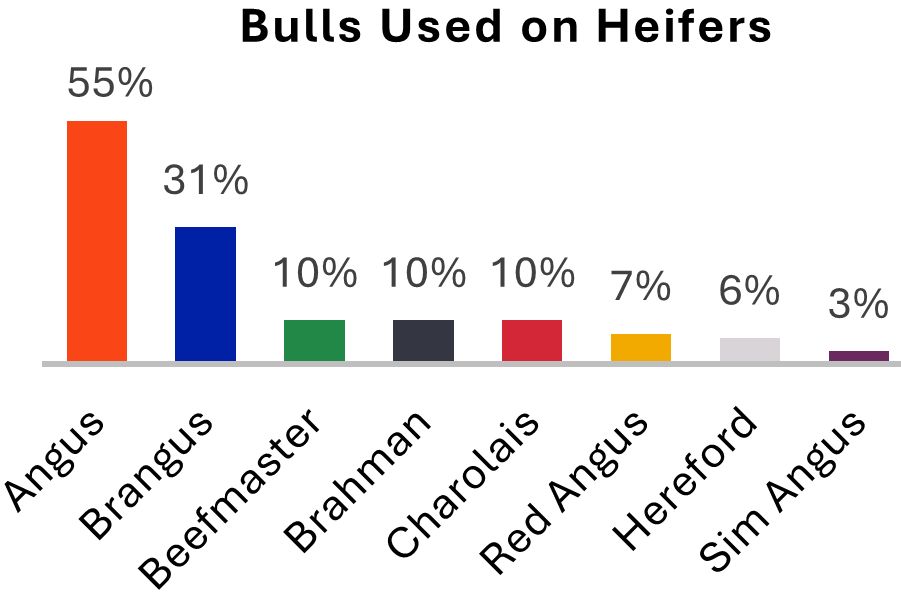
Bull Breeds for Heifers: Angus bulls were most frequently used on heifers (Figure 4). Some ranchers indicated using more than one breed.
Credit: Sonja Crawford and Lindsey Crum, UF/IFAS
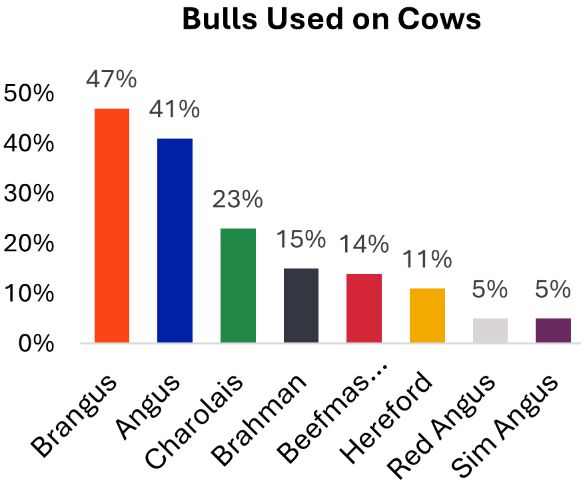
Bull Breeds for Cows: Brangus bulls were most frequently used on cows (Figure 5). Some ranchers indicated using more than one breed.
Credit: Sonja Crawford and Lindsey Crum, UF/IFAS
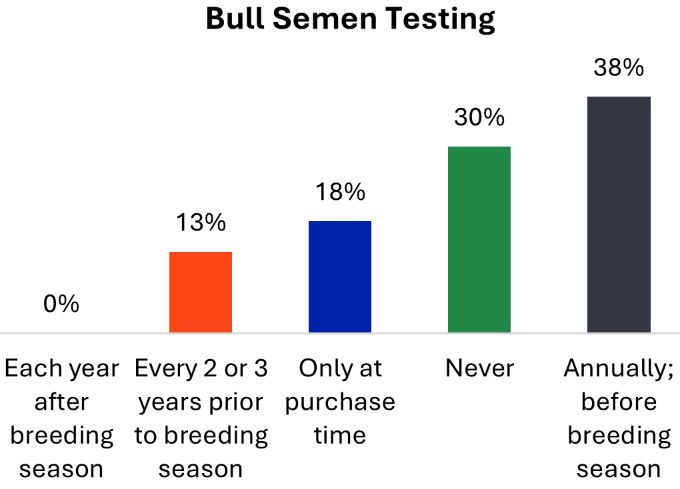
Semen Testing: Figure 6 illustrates the frequency of semen testing for the bulls.
Credit: Sonja Crawford and Lindsey Crum, UF/IFAS
Bull Selection: Respondents ranked 12 attributes they used to select bulls. Birth weight was the most important attribute, followed by the visual appearance of the bull. Price ranked third in importance.
Bull to Heifer Ratio: On average, 1 bull per 16 heifers was used.
Bull to Cow Ratio: On average, 1 bull per 23 cows was used.
Culled Cows: South Florida ranchers, on average, culled 9% of their cow herd each year.
Limitations to Reproduction: Producers ranked nutrition as the most significant limitation to reproduction, followed by management and genetics.
Heifer Management: Fifty-nine percent (59%) of ranchers did not expose heifers to bulls at a date prior to the mature cow herd. Fifty-nine percent of operations managed their heifers separately from the mature cow herd.
Trichomoniasis Testing: Eighty-six percent (86%) of ranchers tested their herd for Trichomoniasis. Only 34% of those tested their herd annually.
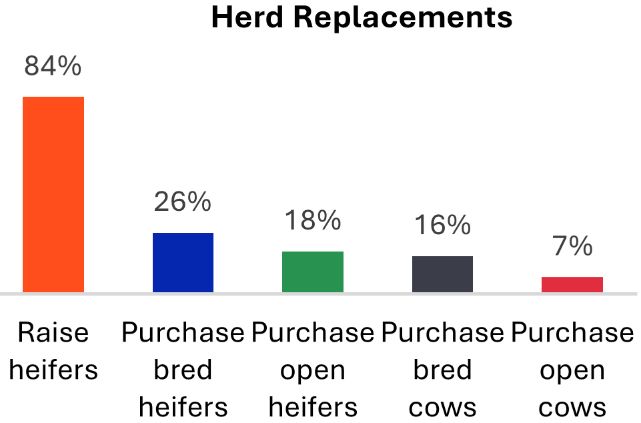
Herd Replacements: Eighty-four percent (84%) of ranchers raised their own heifers (Figure 7). Private treaty was preferred most among respondents who purchased replacements. Special sales and the livestock market were the next most preferred means of obtaining replacements.
Credit: Sonja Crawford and Lindsey Crum, UF/IFAS
Age at Which Heifers First Calve: Sixty-eight percent (68%) of ranchers allowed their heifers to have their first calf at 2 years of age.
Production
Cow/Calf Identification: Sixty-six percent (66%) of respondents identified each cow, and 43% of respondents identified each calf with an ear tag, hot iron, or freeze brand.
Beef Herd Records: Ninety percent (90%) of ranchers kept financial and production records, 49% used the records for business analysis, and 55% used the records to select heifers and/or cull cows. Forty-seven percent (47%) of those keeping records use a computerized system.
Annual Cow Cost: Ranchers estimated their cost per cow per year to be $419.
Marketing
Weaning Age and Weight: Calves were weaned at an average age of 7.6 months. Steer calves averaged 506 pounds, and heifer calves averaged 475 pounds.
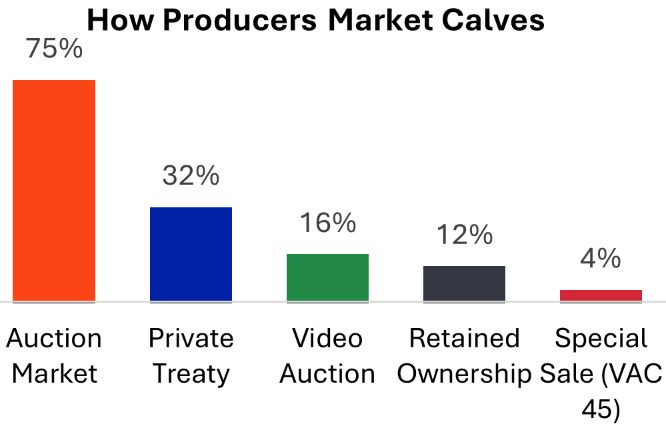
Calf Marketing Methods: Seventy-five percent (75%) of responding beef cattle operations sold their calves through the auction/livestock market. Many ranchers indicated multiple methods for marketing (Figure 8).
Credit: Sonja Crawford and Lindsey Crum, UF/IFAS
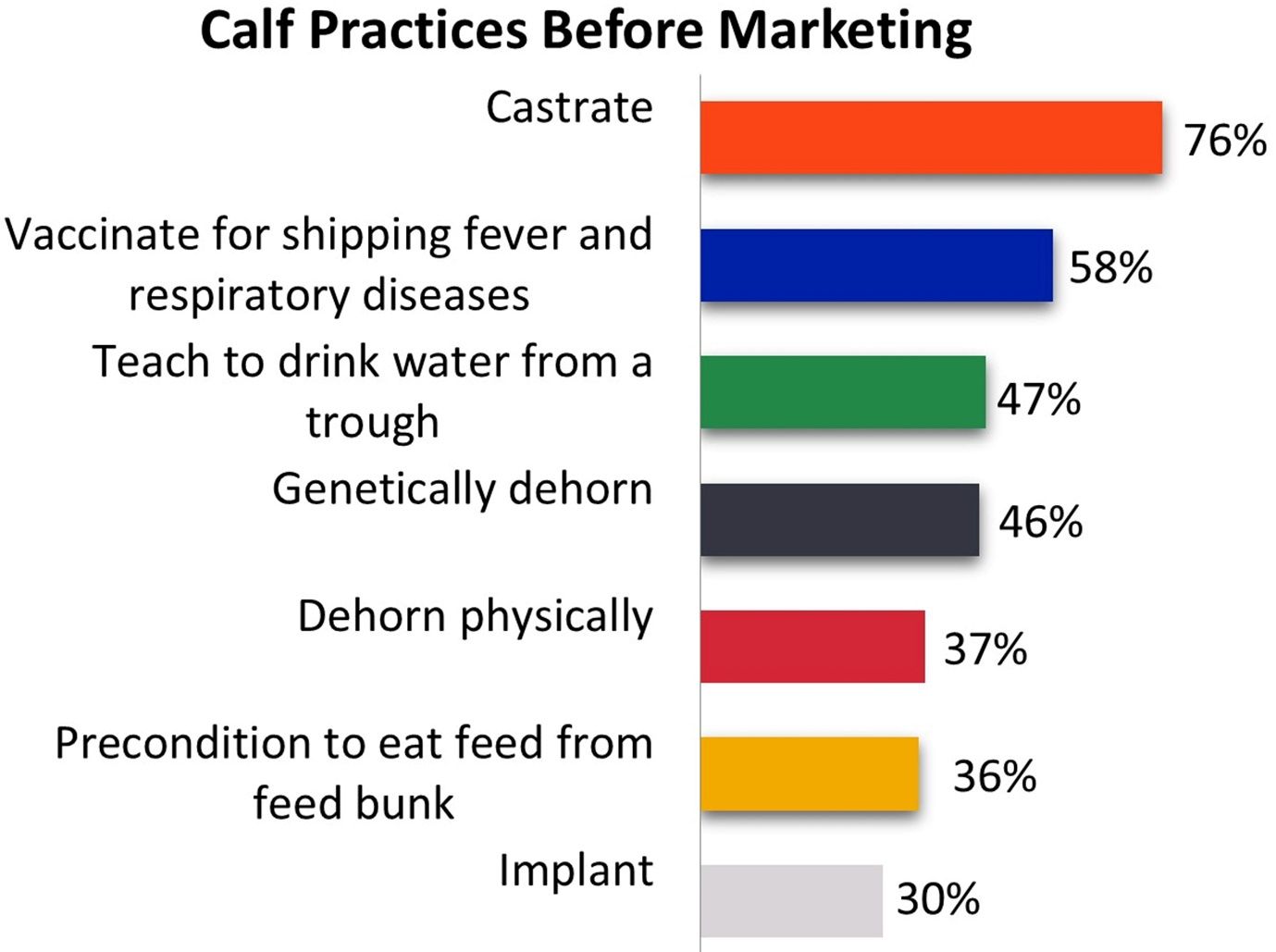
Marketing Preparation: Various marketing preparations are conducted, with castration (76%) being used most (Figure 9).
Credit: Sonja Crawford and Lindsey Crum, UF/IFAS
Herd Health
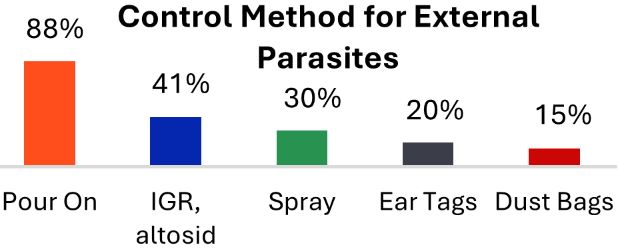
External Parasite Control: Ninety-nine percent (99%) of responding producers control external parasites on their cattle. The pour-on method was the most frequently used. Dust bags were the least commonly used. Some producers used more than one method to control external parasites (Figure 10).
Credit: Sonja Crawford and Lindsey Crum, UF/IFAS
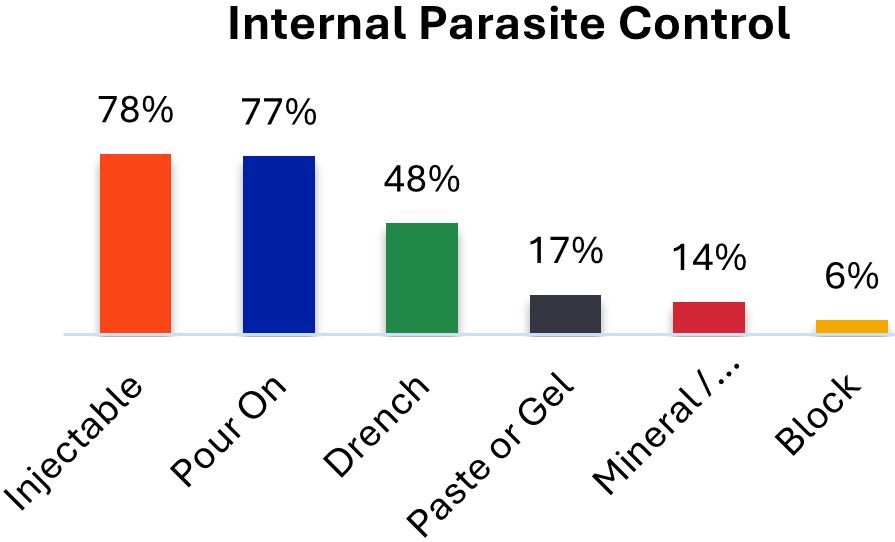
Internal Parasite Control: Most South Florida beef producers used some type of internal parasite control in their herd (Figure 11). Pour-on and injectable methods were most frequently used. Blocks were used the least.
Credit: Sonja Crawford and Lindsey Crum, UF/IFAS
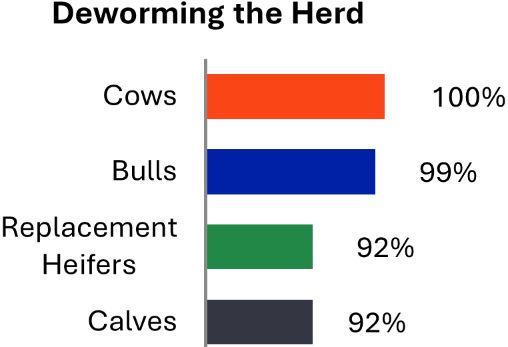
Deworming the Herd: South Florida beef cattle producers deworm their cattle herd each year (Figure 12).
Credit: Sonja Crawford and Lindsey Crum, UF/IFAS
Liver Fluke Treatment: Survey results indicated 77% of the responding producers in south Florida treated the herd for liver flukes.
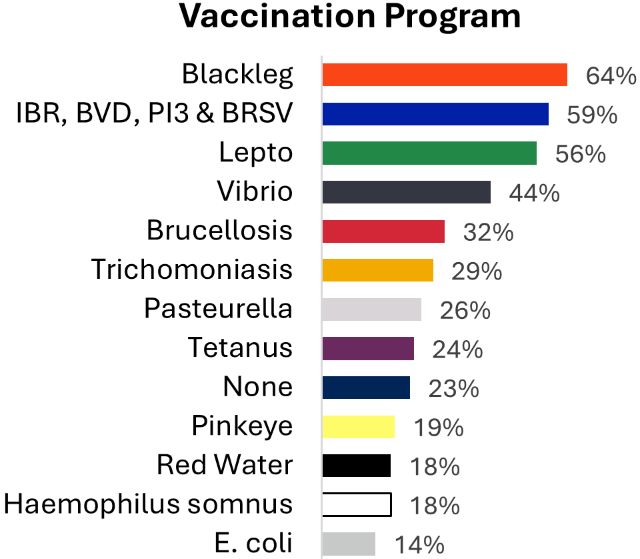
Vaccination Program: Figure 13 indicates vaccines used in south Florida for beef herds.
Credit: Sonja Crawford and Lindsey Crum, UF/IFAS
Nutrition
Body Condition Score Before Supplementing: Ninety-one percent (91%) of ranchers assessed cows’ body condition score (BCS) to determine when to begin and end supplementation. Seventy-nine percent (79%) utilized BCS to determine the amount of supplement to feed the animals. Seventy percent (70%) of ranchers started supplementing their herd October–December and ended supplementation March–May.
Mineral Supplementation: Ninety-six percent (96%) of producers provided mineral supplementation to their cattle, and 70% of these producers provided mineral supplementation year-round.
Pasture Analysis: Only 26% of responding ranchers reported analyzing their pasture grass for forage quality.
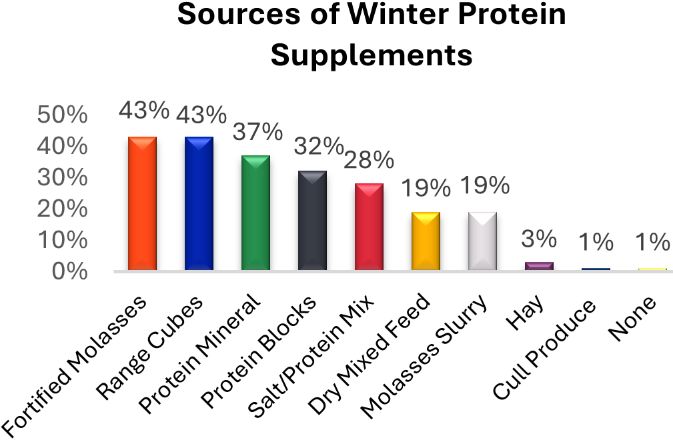
Sources of Winter Supplementation: Operations frequently used more than one supplement. Molasses and range cubes are most commonly used during the winter (Figure 14).
Credit: Sonja Crawford and Lindsey Crum, UF/IFAS
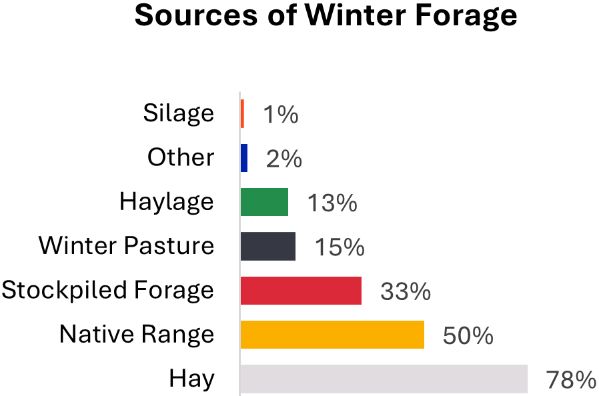
Winter Forages Used: Hay was most commonly used as a winter forage source, followed by native range (Figure 15).
Credit: Sonja Crawford and Lindsey Crum, UF/IFAS
Analyzing Hay: Only 24% of responding south Florida ranchers indicated analyzing their hay or silage for forage quality.
Forage Production
Owned or Leased Acreage: Eighty-one percent (81%) of the acreage is owned, and 25% is leased at an average of $31/acre/year.
Pasture Irrigation: Thirteen percent (13%) of pasture acreage is irrigated.
Forages Used: Sixty-four percent (64%) of the hay and grazing acreage is improved forage varieties, followed by semi-improved acreage (41%), then native range (36%).
Pasture and Hay Fertilization: Eighty-three percent (83%) of respondents utilize soil and/or tissue analysis to determine soil fertility requirements.
Lime/Fertilizer Application: Ninety-eight percent (98%) fertilized their pasture and/or hayfield. Complete fertilizer is the most used with 60% of responding ranchers using it; 22% utilized ammonium nitrate, and 18% utilized ammonium sulfate. Lime was applied by 61% of the responding ranchers.
Organic Waste: Seventeen percent (17%) of responding ranchers used organic waste on their pasture (sludge, biosolids, poultry litter, etc.) as fertilizer. Eighty-one percent (81%) of ranchers noticed improved forage production when it was applied with 24% recognizing increased soil pH and 43% reporting increased weed production.
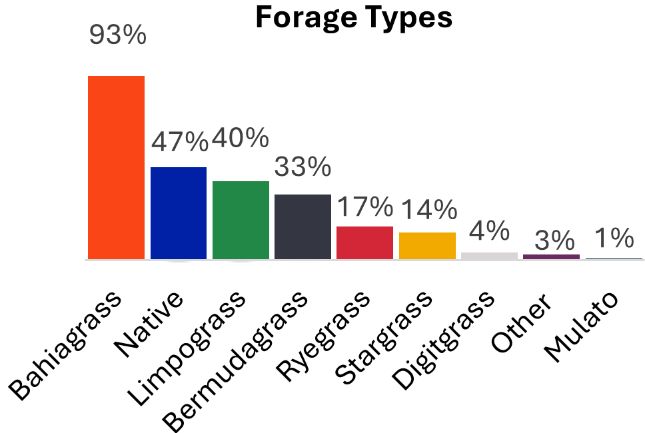
Types of Forage: Bahiagrass is the most used forage (Figure 16).
Credit: Sonja Crawford and Lindsey Crum, UF/IFAS
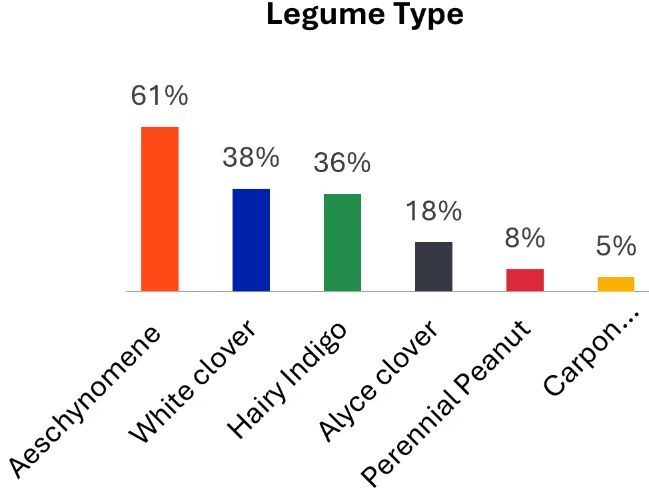
Types of Legumes: Producers identified Aeschynomene as the most used legume (Figure 17).
Credit: Sonja Crawford and Lindsey Crum, UF/IFAS
Conserved Forage: Thirty-six percent (36%) of ranchers conserved forage by producing hay, silage, or haylage, and/or stockpiling forage. Forty-nine percent (49%) of these ranchers produced hay, with 18% of those irrigating the hayfield. Twenty-five percent (25%) produced silage or haylage. Fifty-nine percent (59%) of ranchers stockpiled forages, such as Hemarthria.
Rotational Grazing: Eighty-two percent (82%) of producers rotationally grazed their pasture.
Mole Cricket Pasture Damage: Twenty-five percent (25%) of responding producers reported damage from mole crickets.
Troublesome Weeds: Producers ranked ten troublesome weeds. Smutgrass ranked as the most troublesome, followed by dog fennel. Cogongrass ranked third.
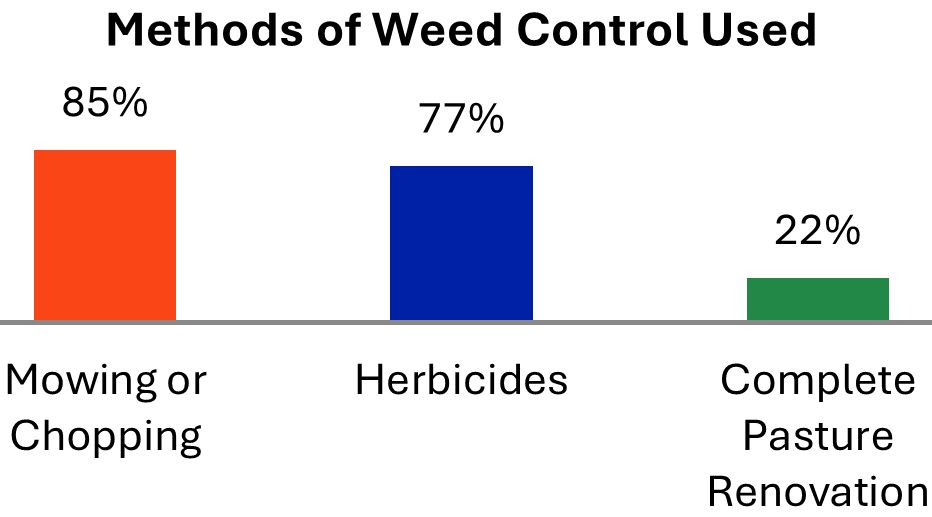
Weed Control Methods: Mowing or chopping is most employed to combat weeds (85%). Some ranchers used more than one method (Figure 18).
Credit: Sonja Crawford and Lindsey Crum, UF/IFAS
Environment
Ecosystem Services Provided: Eighty-two percent (82%) of responding ranchers had open water areas on their ranch that provide quality drinking water to resident wildlife and valuable habitat for aquatic plants and animals. Seventy-three percent (73%) of these ranchers provided water troughs in these areas for their cattle to drink from.
Additional Information
UF/IFAS Extension: Ninety-four percent (94%) of the producers indicated that the service of UF/IFAS Extension to Florida’s beef industry was satisfactory.
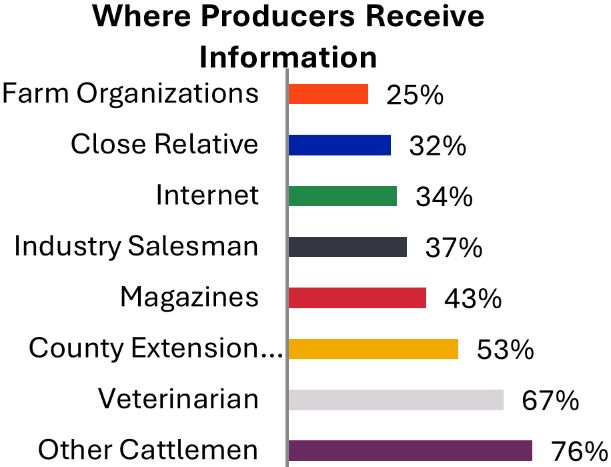
Information Sources: Respondents received information on beef production and/or management from the sources listed in Figure 19.
Credit: Sonja Crawford and Lindsey Crum, UF/IFAS
Problems Facing the Cattle Industry: South Florida cattle producers ranked ten problems facing the beef cattle industry. Urban encroachment ranked as the most important, followed by governmental regulations, with environmental issues as the third most important concern.
For more information and to compare this data with previous surveys, visit https://edis.ifas.ufl.edu/.