
Introduction
Weeds are a costly and continual threat to ornamental nursery profitability. Due to a lack of labeled postemergence herbicide options, growers typically rely on timely preemergence herbicide applications for weed control, among other methods such as hand-weeding. While preemergence herbicides are usually the most cost-effective method of weed control, labor and chemical costs can still be high. In some cases, costs can be reduced and weed control can be improved by making changes to the equipment that is used to apply preemergence herbicides, or by potentially changing the herbicide formulation that is used. This publication was written for nursery managers to provide an overview of the types of herbicide equipment that are commonly used in nursery production, to discuss the advantages and disadvantages of each, and to highlight considerations regarding herbicide formulations and how they may impact different aspects of weed control and ornamental plant tolerance.
Comparison of Granular vs. Spray-Applied Herbicide Formulations
Preemergence herbicides are formulated as either granular (G) or spray-applied formulations, which may include liquids (L), suspension concentrates (SC), emulsifiable concentrates (EC), dry flowables (DF), or others. For more information on each formulation, visit EDIS publication PI231, "Pesticide Formulations.”
There are advantages and disadvantages for using granular and spray-applied formulations from a nursery grower perspective (Table 1). Many growers are currently opting for spray-applied formulations due to the cost savings associated with them. The major downside is that maintaining plant safety will limit what applicators can apply. Effective and comprehensive rotations can still be built with granular herbicides, spray-applied herbicides, or both formulations at different timings. The best option will depend upon nursery infrastructure, taxa being grown, problematic weed species, and available labor. Another major factor is the type of equipment that the nursery already has access to or is willing to purchase for the purposes of herbicide application. Some of the most commonly available and widely used application equipment are detailed in this publication.
Table 1. Major advantages and disadvantages of granular and spray-applied preemergence herbicides for use in ornamental plant production.
Granular Application Equipment
Shaker Jars and Gravity-Flow Type Granular Spreaders
For small areas, some growers may opt to use homemade shaker jars to apply preemergence herbicides (Figure 1). These jars are usually made of plastic or glass with a lid that has holes drilled into the top of it. These application devices are not recommended for large areas as they are inefficient and can only cover a small area before needing to be refilled.
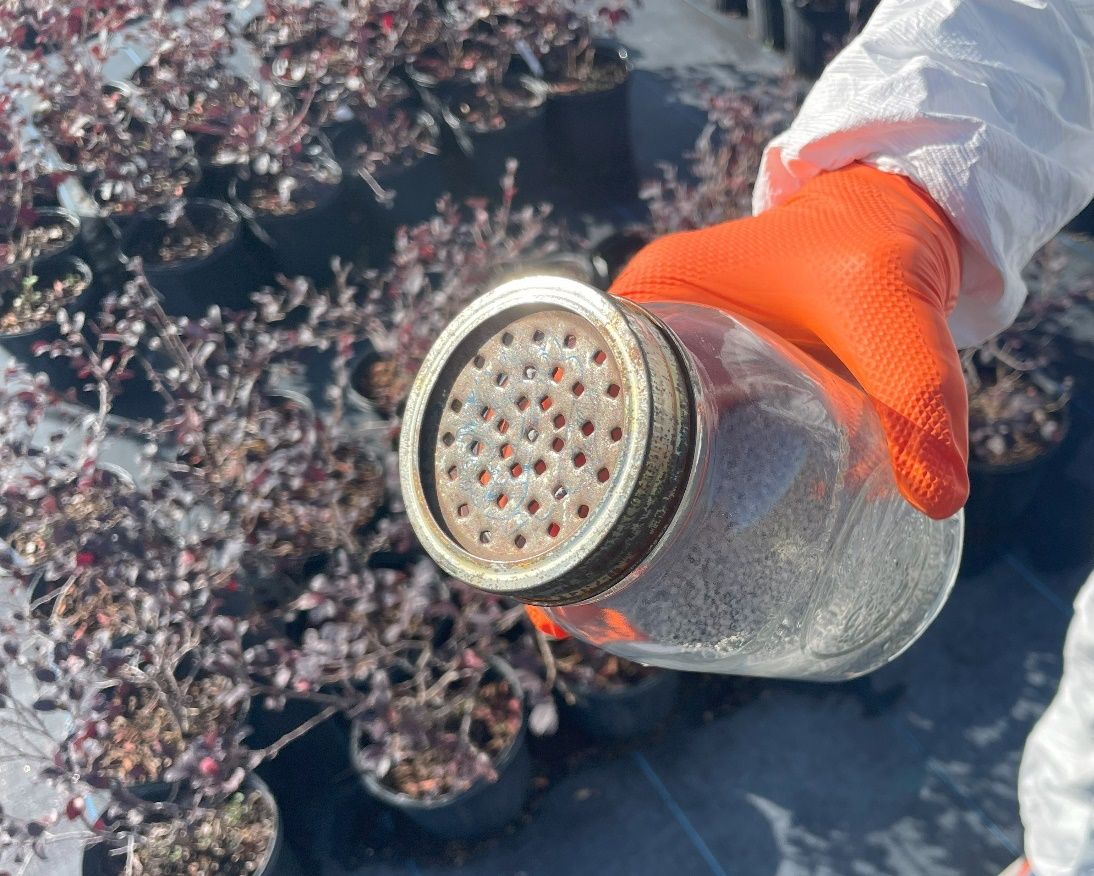
Credit: Yuvraj Khamare, UF/IFAS
Alternatively, these jars may be useful for small areas, providing a good application if certain practices are followed. When they are used to treat individual containers, they can lead to uneven distribution if the applicator is not trained, does not have much practice using shaker jars, or estimates rates by how the granules look on the pot surface (Figure 2).
To use these effectively, first calculate the square footage of the area you intend to treat, which should be small enough to allow treatment by making at least two passes over the entire area with the contents of one jar. In this situation, you would weigh out the amount of herbicide needed for the given area and then treat the area, making several passes to ensure good coverage and even distribution.
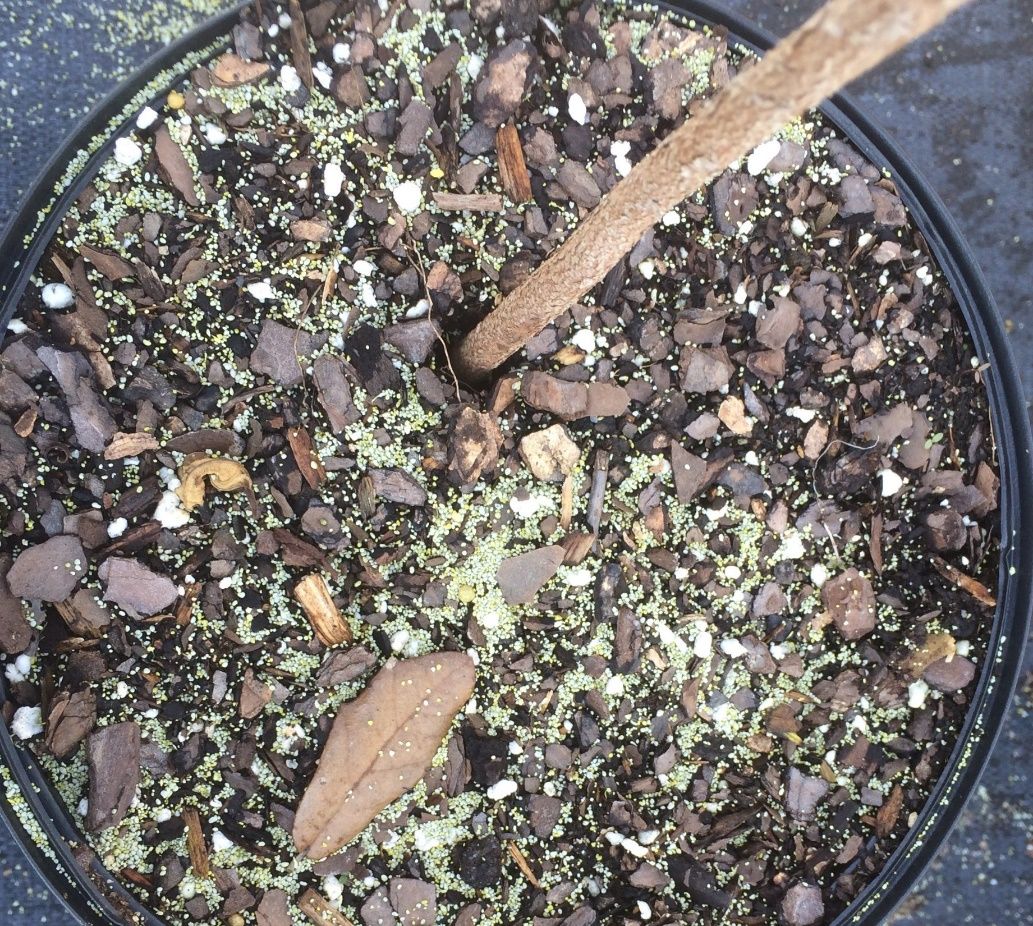
Credit: Chris Marble, UF/IFAS
For example, if the treatment area was a small section of plants that were potted in a 100 ft2 block or on a trailer and you wanted to treat them with a granular preemergence herbicide at a rate of 150 lb/acre (equivalent to a rate of 0.34 lb or 154 g per 100 ft2), you would weigh out 154 g and then apply it as evenly as possible over the entire 100 ft2 block. You could also place a mark on the jar so it could be filled by volume for the next treatment without the need for a scale (if the same herbicide was being used).
Gravity-flow-type granular spreaders (Figure 3) work similarly. They typically hold more herbicide, usually around 5 lb at a time, and can be more accurate or more uniform with practice and repetition. Each contains a jar to hold the herbicide and a tube to connect the jar with a deflector plate, which disperses the granules over the pot. These devices are useful when trying to apply granules to the soil (i.e., substrate) around plants with dense foliage, typically when treating larger pots individually. Calibrating these devices can be difficult, involving a process of trial and error and practice to determine how to apply the proper rate to each pot or over a given area.
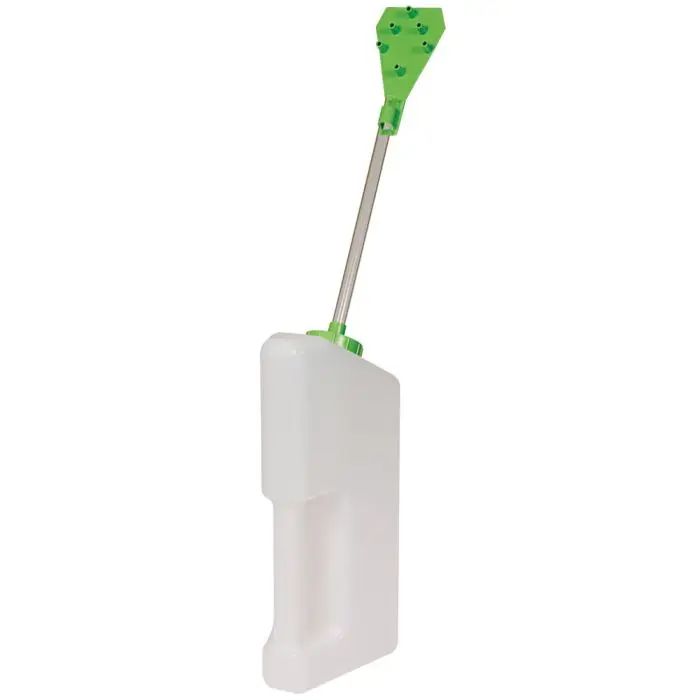
Credit: Yuvraj Khamare, UF/IFAS
“Belly-Grinder” Granular Spreaders
The most common method of applying granular herbicides in container nurseries is with a handheld, hand-cranked rotary spreader, commonly referred to as a “belly-grinder” (Barker and Neal 2016) or “chest-spreader” (Figure 4).
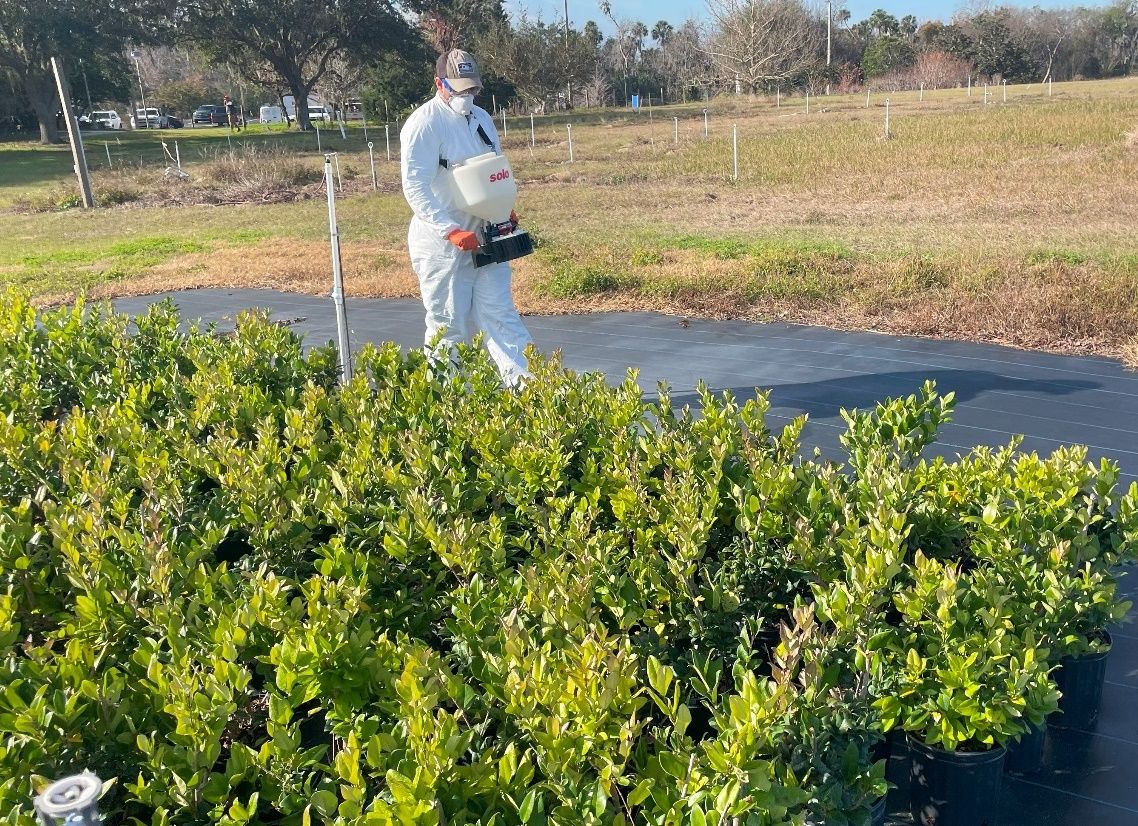
Credit: Yuvraj Khamare, UF/IFAS
These spreaders are held at about chest height on the applicator with straps around the shoulders and neck. They are gravity fed, and as the hopper is opened, the granules fall onto a spinning impeller that is turned by a hand-crank to throw the granules. The granules are distributed into an arc pattern, with a heavier distribution in the center compared with the sides, requiring overlap to achieve a uniform application.
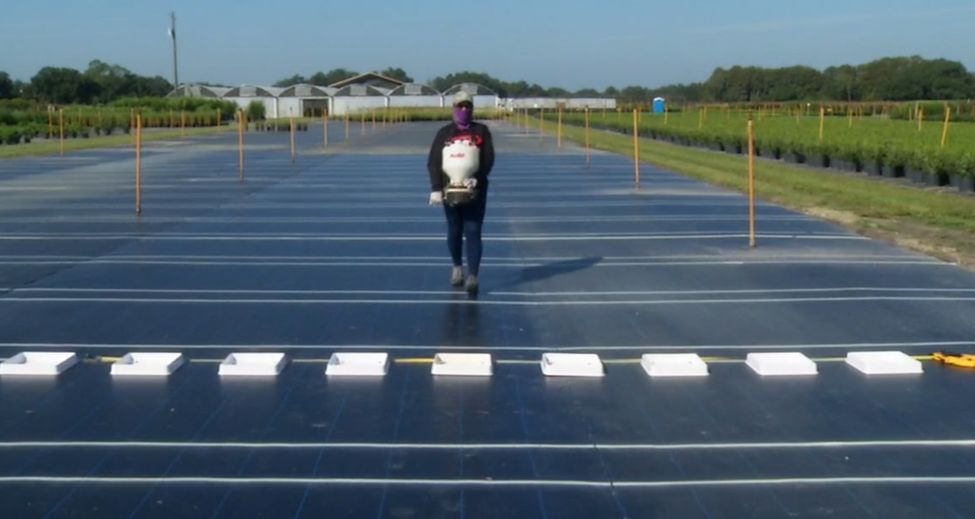
These application devices are much more efficient in terms of treating larger areas more quickly but are more difficult to calibrate as walking speed, hand-crank speed, hopper output settings, and other factors like wind all affect the application (Figure 5). For more information on how to calibrate these spreaders and ensure a uniform application, visit these resources from NC State Extension: “Using a Hand-Cranked, Hand-Held Spreader to Apply Herbicides in Container Nurseries” and “Calibrating Hand-Held Granular Spreaders for Nursery Weed Control.”
Credit: Chris Marble, UF/IFAS
Backpack Spreaders and Motorized or Power Take-Off (PTO) Driven Spreaders
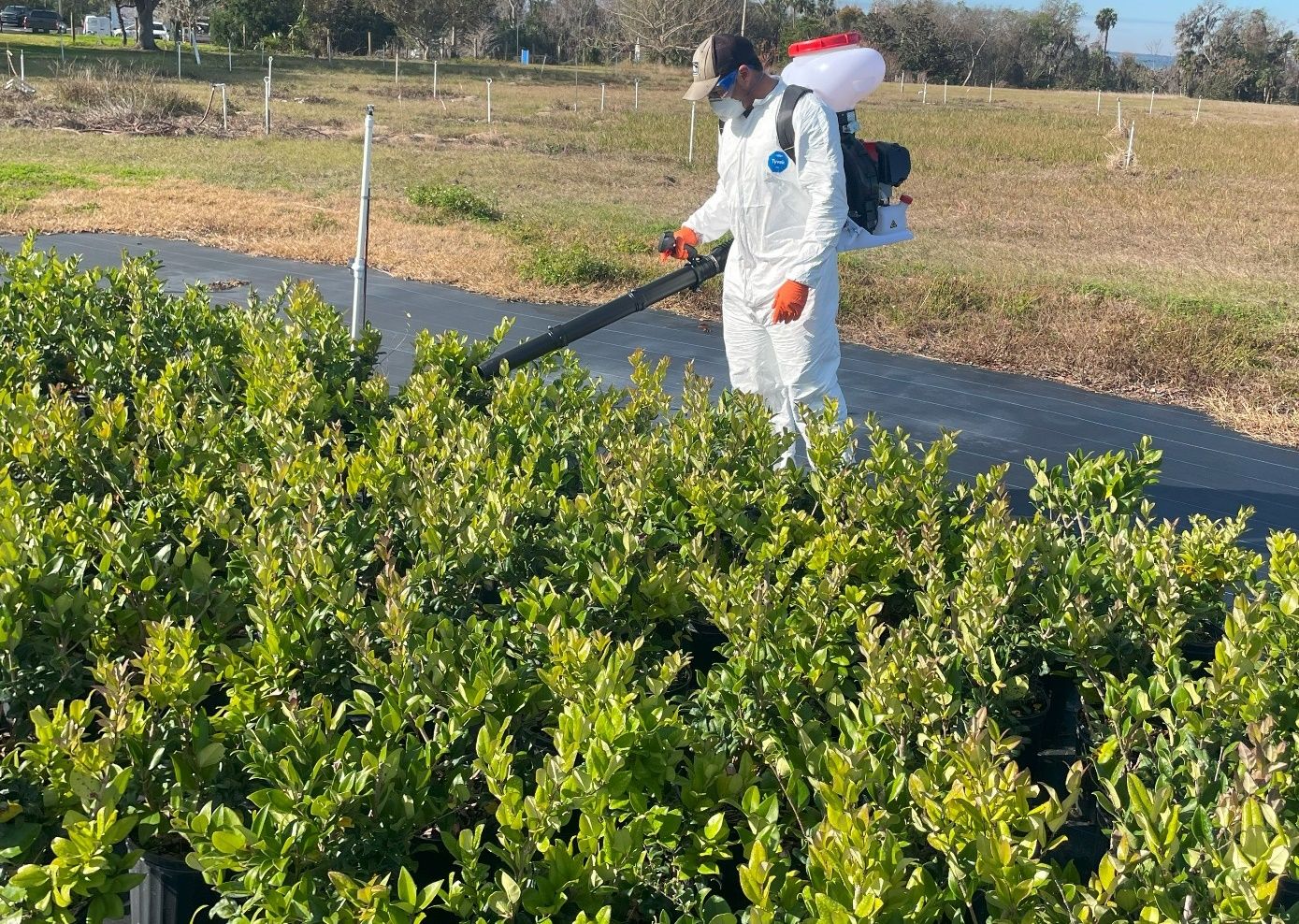
Less commonly used spreaders would include motorized backpack-type spreaders and large tractor-mounted-type spreaders that use either an external engine or a power take-off (PTO) driven engine, which draws power from the tractor itself. For backpack spreaders, models usually draw power from a small engine (~ two-stroke engines) and use forced air to throw granules within the target area (Figure 6).
Credit: Yuvraj Khamare, UF/IFAS
These spreaders can cover large areas in a short amount of time, but with herbicides, this can be a disadvantage, as it is difficult to apply proper rates and get good coverage. Additionally, applying granules from the side of a plant, which is common with these spreaders, as opposed to over the top of plant foliage, as with a belly-grinder, can lead to large portions of the substrate surface untreated. These spreaders are typically used for things like salt application in northern climates, broadcasting seed, and so forth. Larger models are available, but most hold only 20 to 30 lb, leading to frequent stops for refilling the hopper. These have been used successfully by some growers but would require practice and close evaluation to determine the correct rates were being applied and the entire portion of the substrate surface was being treated.
A more advanced version of backpack-type spreaders would be other types of air-driven spreaders that blow granules, such as VortexTM spreaders. These larger models have more power than a typical backpack-type blower and hold more granular material, which goes through a tube and is then dispersed onto the production area. Several nurseries employ this type of equipment as they can apply material faster than a typical backpack-type blower or belly-grinder.
Many different types of tractor-mounted granular application equipment are available and can hold several hundred pounds or more of material at any one time. They may not be compatible with most container nurseries due to difficulty in accessing different parts of the nursery and due to the wide swath widths these applicators produce that can result in large percentages of the granules landing off-target. However, field growers, who often need to treat large areas, may find this type of equipment very useful and possibly consider it the best method of broadcasting granular material.
Liquid/Spray-Applied Application Equipment
There are many different types of liquid application equipment in nurseries, but backpack-type sprayers and various forms of boom sprayers are most commonly used for herbicide application in nurseries.
Compression and Backpack Sprayers
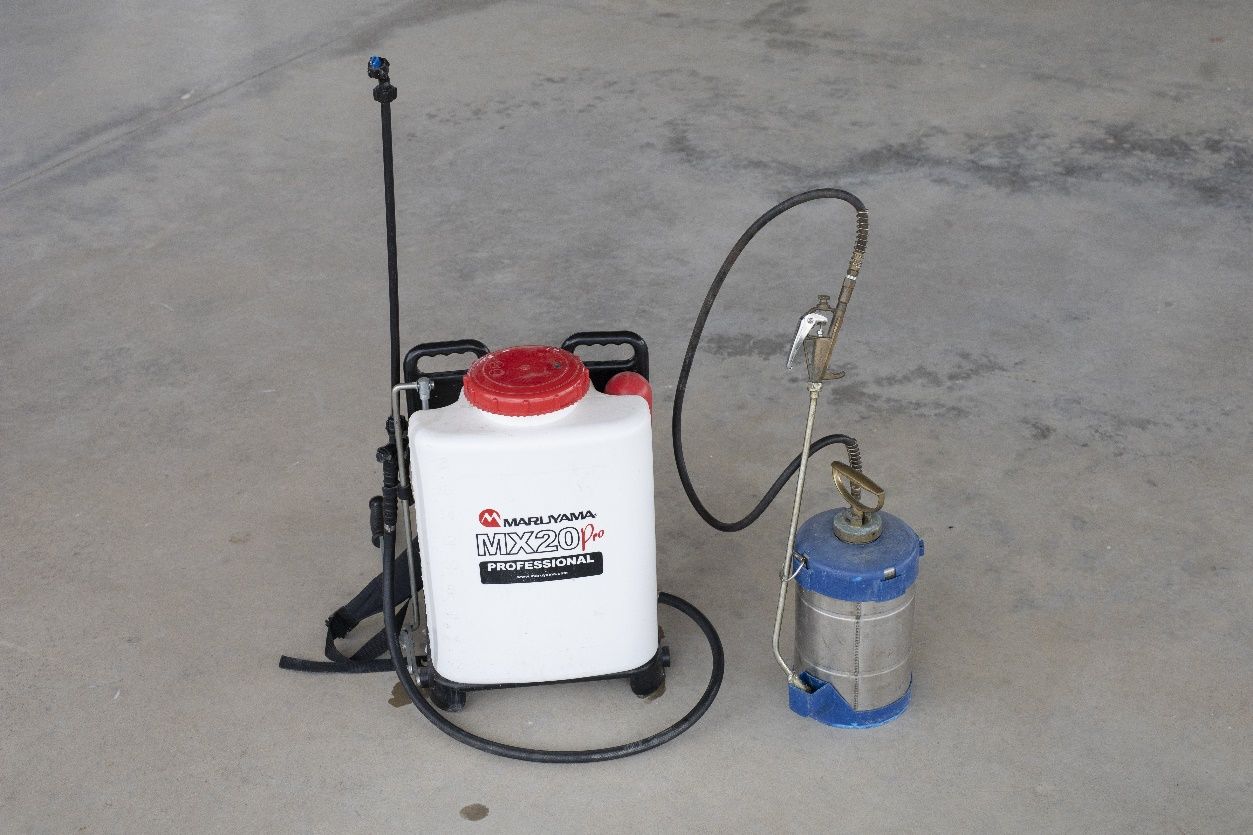
Two common types of small-scale sprayers are the ~ 2-to-4-gallon compression sprayers and also the continuous backpack sprayer or battery-powered sprayers (Figure 7).
Credit: Tyler Jones, UF/IFAS
These sprayers are well-suited for treating small areas, spot spraying, and even treating plants over-the-top with liquid herbicide applications in areas like shade houses where booms cannot reach. These sprayers can be either pumped manually to increase the pressure of the spray or battery-powered to keep a constant pressure. Pressure regulators are also available for manual pump sprayers.
Any of these sprayer systems will work well for spot-treating weeds with postemergence herbicides when calibration is not important. However, sprayers that keep constant pressure are preferrable for preemergence herbicide applications over manually pumped sprayers for two reasons. First, they are easier for the applicator to use. Secondly, if constant pressure is not maintained, rates can vary widely during the application, resulting in either under- or overdosing plants with herbicides. If pressure regulators are not used, using pressure gauges to easily monitor pressure is recommended.
When backpacks or other small sprayers are used to apply preemergence herbicides, a few common problems often arise. First is calibrating and making a proper application. In many cases, applicators who have only used these types of sprayers to apply insecticides or fungicides as “spray-to-wet” treatments or as a drench tend to apply preemergence herbicides at too high of a rate if not properly trained. Ensure that the equipment is calibrated and applicators know the differences between a lower volume herbicide application and higher volume applications of other types of pesticides. Secondly, each applicator is responsible for mixing the pesticide into their own backpack, oftentimes leading to mixing errors. There are many different solutions to these problems, such as clearly marking measuring devices or having someone oversee all mixing and loading.
Boom Sprayers
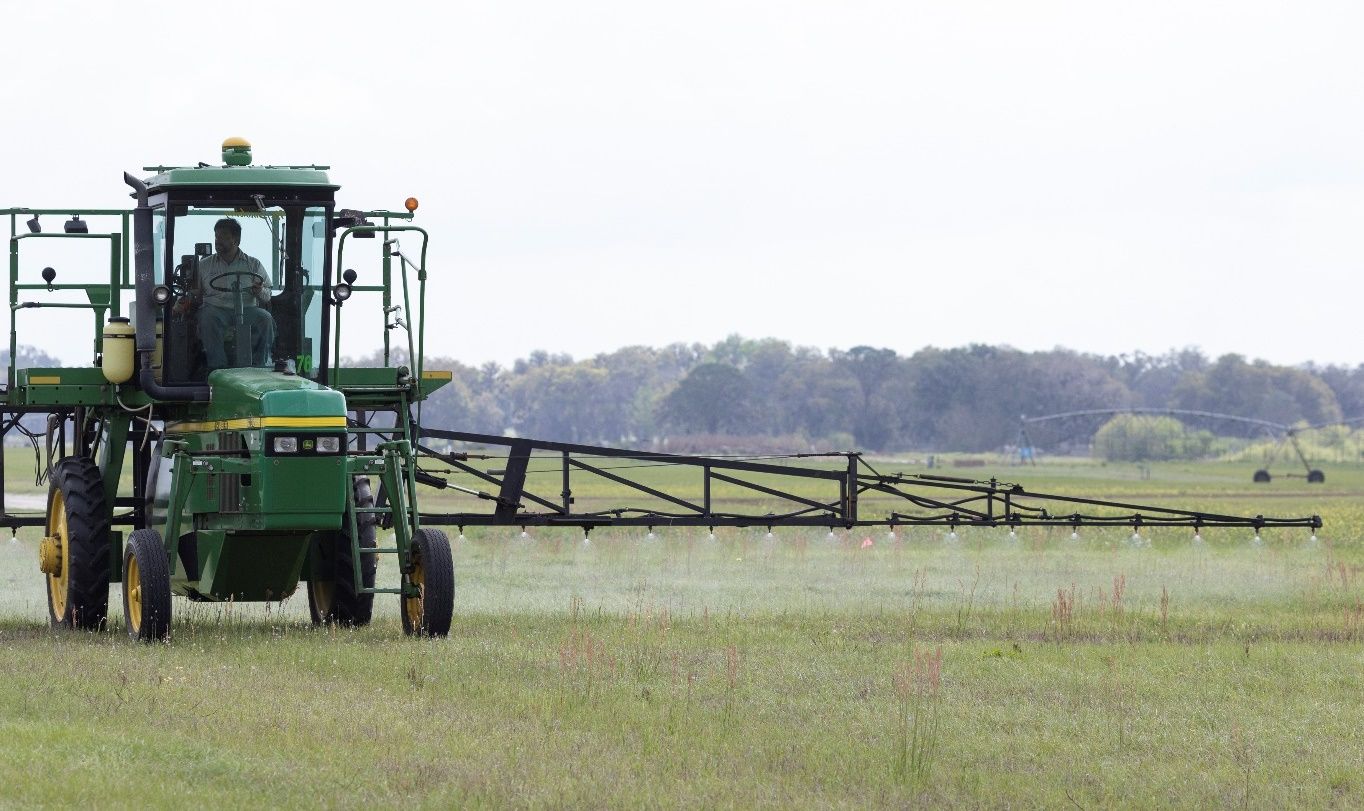
Boom sprayers are a type of sprayer equipped with a long horizontal boom containing multiple nozzles (Figure 8). They can be either “wet” or “dry” booms. A wet boom contains the spray solution in the boom itself and has nozzles attached directly to the boom, while a dry boom describes a boom that acts as support for a separate set of hoses and nozzles.
Credit: Tyler Jones, UF/IFAS
Compared with other methods mentioned in this publication, boom sprayers are highly efficient and capable of covering large areas quickly, thus they are the preferred method for making over-the-top applications of preemergence herbicides. With a typical boom sprayer, the liquid is applied from above the crop canopy, providing much better coverage and foliage penetration than a boomless sprayer, which applies liquid horizontally. With boomless sprayers, horizontal air blast sprayers, cannon sprayers, and other sprayers that apply product in a more vertical pattern from only one side of a production block, uniformity needed for effective herbicide applications is difficult to achieve. Moreover, plants in the middle of the production block may not receive any treatment at all depending on the crop size and growth habit. These types of sprayers are better suited for insecticide and fungicide applications where contact with the soil surface is not critical.
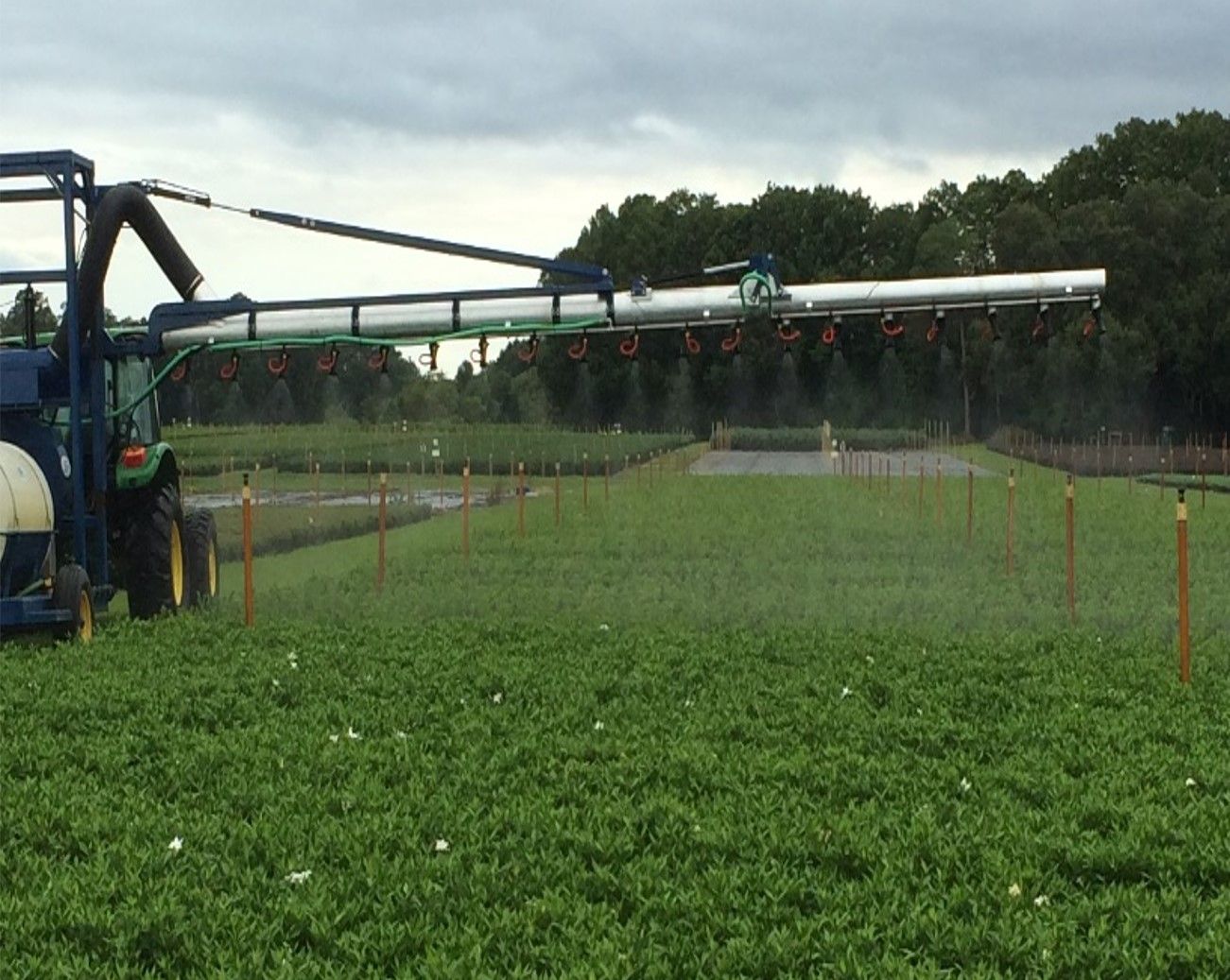
Air-assisted boom sprayers, or air sprayers (e.g., Airtec sprayers), are a type of boom sprayer that uses air pressure as the carrier rather than water pressure, which is used in conventional systems (Figure 9). These systems are more costly but can result in better canopy penetration. An additional benefit of these systems is that growers using air sprayers do not need to use as high of an application volume, which increases efficiency and reduces labor and equipment costs. While these types of systems are most commonly used to apply liquid herbicides, Airtec also manufactures equipment that works similarly to the spray system but can apply granular material through the boom, resembling a very high-tech version of a drop spreader.
Credit: Chris Marble, UF/IFAS
Skid Sprayers
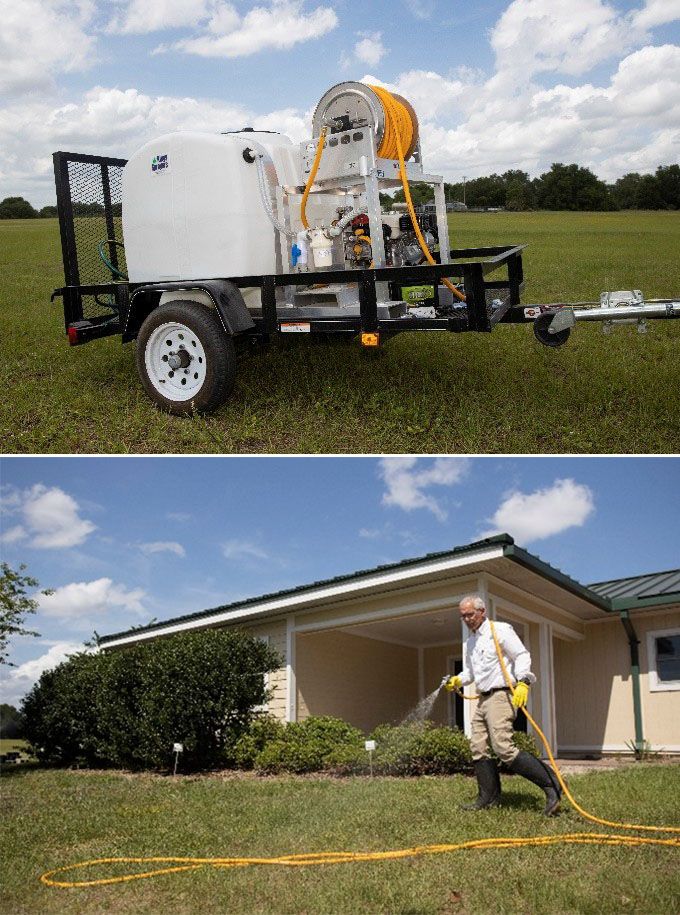
For growers producing smaller plant material (i.e., 3 gal sizes or less), a small number of operations have adopted the use of skid sprayers, which are most commonly used for turfgrass applications (Figure 10). These are mobile sprayers with a hose, spray gun, motor, and a tank that can be mounted on a vehicle or trailer. These systems can be more efficient than a typical backpack sprayer because a much larger area can be treated before needing to refill the tank. Its biggest disadvantage in a container nursery is the need for the hose, which can be cumbersome to position when moving in and around blocks of containerized plants.
Credit: Tyler Jones, UF/IFAS
Conclusions
Many different options are available for applying preemergence herbicides in container nurseries. The best option will depend on the nursery infrastructure and design, crops being grown, preferred herbicide formulations, and costs and durability of the equipment, among other factors. Theoretically, any of these methods could be effective if the correct amount of herbicide is applied to the crops being grown. Thus, calibration and proper applicator training will be critical for any of these methods. Some of the more advanced types of application equipment can be costly, but many growers have reported significant overall savings due to the reduction in time it takes to make herbicide applications and the improvements in weed control.
For any type of equipment to be effective, it must be calibrated prior to use. For calibrating spray-applied equipment, see EDIS publication SS-AGR-108, “Single Nozzle Backpack or ATV Sprayer Calibration,” while boom calibration instructions can be found in EDIS publication PI24, “Broadcast Boom Spray Calibration.” Spray gun calibration instructions are available in EDIS publication PI225, “Spray Gun Calibration.”
Acknowledgments
This publication was supported in part by funding from the Specialty Crop Research Initiative, grant no. 2024-51181-43291 entitled “Labor, Efficiency, Automation, and Production: LEAP Nursery Crops Towards Sustainability” from the U.S. Department of Agriculture’s National Institute of Food and Agriculture.