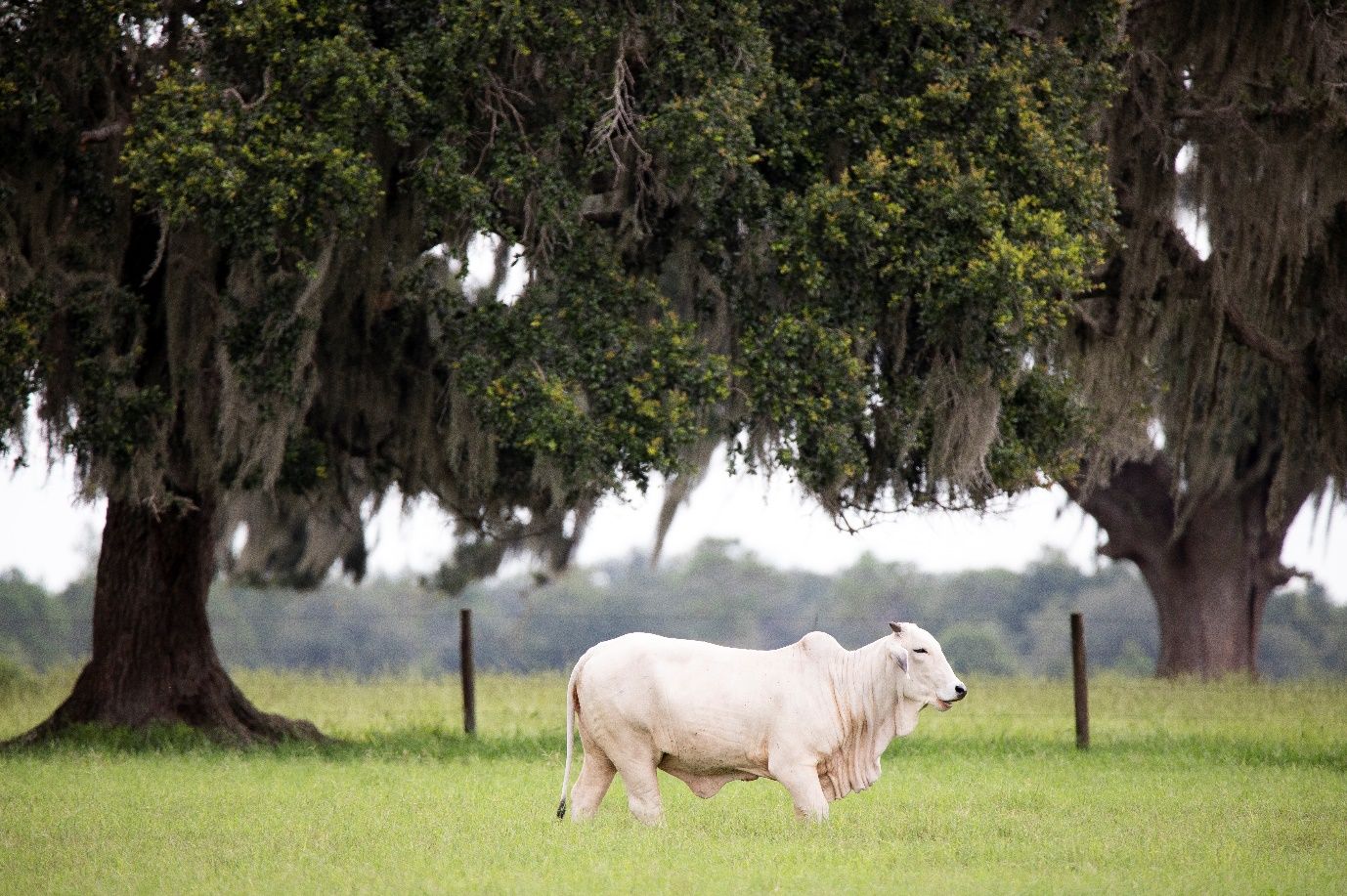
Credit: Cat Wofford, UF/IFAS
Introduction
Agricultural conservation easements provide an option for farmers and ranchers to continue agricultural operations while protecting their land in perpetuity from conversion to non-agricultural uses. Agricultural conservation easements are voluntary legal agreements that separate the development rights from the ownership of the land while keeping it in agricultural production. The development rights are sold or granted to a nonprofit land trust or government agency.
This quick reference guide is designed to provide Florida farmers and ranchers, as well as county Extension agents, with a brief overview of federal, state, and county agricultural conservation easement acquisition programs. For each program, we summarize the program objectives, allowable agricultural practices, and how applications will be evaluated and prioritized. This guide focuses exclusively on programs that allow for working land to remain in agriculture or silviculture. A list of land trusts operating in Florida that prioritize the preservation of agriculture is also provided since many programs require or prioritize applications that include cost sharing opportunities with an eligible third party,
Land trusts are private 501(c)(3) nonprofit organizations that support land conservation efforts. Applications to each program undergo a competitive ranking process. Funding limitations mean that there is no guarantee that an offer will be made to purchase an easement on your land. However, choosing a program and land trust partner that aligns with your desired management goals can increase your chances of success.
Selling the development rights to your land is a significant decision. Landowners are strongly encouraged to approach conservation easements with care and seek legal and professional advice beforehand. Operations that involve intensive land use, such as concentrated animal feeding operations, are unlikely to qualify under any program. For more information on how conservation easements function as well as the potential financial benefits and limitations, please see the EDIS.ifas.ufl.edu publication “Conservation Easements: An Option for Preserving Current Land Uses.”
Federal Programs
There are two main federal programs for agricultural conservation easements that are currently available: the Agricultural Conservation Easement Program (ACEP) Agricultural Land Easements (ACEP-ALE) and the Regional Conservation Partnership Program (RCPP).
Agricultural Conservation Easement Program (ACEP) Agricultural Land Easements (ACEP-ALE)
The ACEP-ALE is designed to help private and tribal landowners, land trusts, and other entities such as state and local governments protect croplands and grasslands on working farms and ranches by limiting non-agricultural uses of the land through conservation easements. More Florida-specific information on the ACEP-ALE can be found on the ACEP webpage. A list of evaluation criteria for the ACEP-ALE follows.
Allowed Land Uses

The ACEP-ALE permits land to be used for grazing, hay production, row cropping, horse pasture, fruit and specialty crops, and silviculture.
Evaluation Criteria for the ACEP-ALE
Eligibility Requirements
Must meet at least one of the following:
- Contains a minimum of 50% prime, unique, or other productive soil as defined by the USDA
- Provides protection of grazing uses and related conservation values
- Contains historical or archaeological resources
- Furthers a state or local policy consistent with the purposes of ACEP-ALE
- Average Adjusted Gross Income (AGI) below $900,000 for the three preceding tax years
- Compliance with USDA’s conservation requirements for highly erodible land and wetlands
- Farm records established with USDA/Farm Service Agency (FSA)
- Must be secured by or have a written pending offer from an eligible partner (e.g., land trust or government agency) to hold the easement (list of land trusts provided below) or be subject to a buy-protect-sell transaction by an eligible entity
Priority given to
- Applicants who can demonstrate access to markets, infrastructure, and other agricultural support services
- Parcels at risk of conversion to other non-agricultural uses
Regional Conservation Partnership Program (RCPP)
The RCPP is designed to protect working agricultural lands, limit non-agricultural uses, and facilitate the restoration and enhancement of wetlands, grasslands, forestlands, and other natural resources. For more information and a list of active projects in Florida, please see USDA.gov's Florida RCPP webpage. A list of evaluation criteria for the RCPP follows.
Allowed Land Uses

The RCPP permits land to be used for grazing, hay production, row cropping, horse pasture, fruit and specialty crops, and silviculture.
Evaluation Criteria for the RCPP
The RCPP divides easements into two categories: US-held and entity-held. Both US- and entity-held easements are available for any agriculturally linked land use. US-held easements are further subcategorized based on purpose and intended land use. They can be minimally restrictive, moderately restrictive, or highly restrictive.
Eligibility Requirements
- For US-held easements, terms must be consistent with the goals of an RCPP project and must be within the project’s geographic area
- For Entity-held easements, the landowner must partner with eligible entities identified in the RCPP project
Priority given to
- Easement terms that align with conservation benefits and resource concerns as identified in an ongoing RCPP project
State Programs
Florida has three programs designed to preserve agriculture and silviculture in the state through the acquisition of permanent conservation easements. These are the Rural and Family Lands Protection Program (RFLPP), the Florida Forest Legacy Program (FFLP), and Florida Forever (FF).
Rural and Family Lands Protection Program (RFLPP)
The RFLPP is designed to protect important agricultural lands through the acquisition of permanent agricultural land conservation easements. The program is designed to meet three needs:
- Protect valuable agricultural lands;
- create easement documents that work together with agricultural production to ensure sustainable agricultural practices and reasonable protection of the environment without interfering with agricultural operations in such a way that could put the continued economic viability of these operations at risk; and
- protect natural resources, not as the primary purpose, but in conjunction with the economically viable agricultural operations.
More information on the RFLPP can be found on the FDACS.gov RFLPP webpage. A list of evaluation criteria for the RFLPP follows.
Allowed Land Uses

The RFLPP permits land to be used for grazing, hay production, row cropping, horse pasture, fruit and specialty crops, and silviculture.
Evaluation criteria for the RFLPP
Eligibility Requirements
Must meet at least one of the following:
- Promotes and improves wildlife habitat
- Protects and enhances water bodies
- Perpetuates open space on lands with significant natural areas
- Protects agricultural lands at risk of conversion to other non-agricultural uses
Priority given to
- Ranch and timberlands managed using sustainable practices
- Parcels that perpetuate the viability of ongoing agricultural operations on the property
- Parcels at risk of conversion to non-agricultural use
- Parcels that perpetuate the protection of wildlife, water, and other natural resources
- Projects eligible for cost sharing with other programs
Florida Forest Legacy Program (FFLP)
The FFLP is designed to protect economically and environmentally important forest areas that are at risk of conversion to non-forest uses. Landowners interested in enrolling land in the FFLP can find more information on the FDACS.gov FFLP webpage. A summary of the evaluation criteria for the FFLP follows.
Allowed Land Uses

The FFLP is primarily focused on preserving silviculture, although other land uses are permitted so long as 75% of the project area is forested.
Evaluation Criteria for the FFLP
Eligibility Requirements
- Project must be located within a Forest Legacy Area
- Project must include at minimum 75 percent forest lands (may include up to 25 percent compatible non-forest lands, such as pasture or cultivated farmland)
- Project must have a Forest Stewardship Plan (can be developed as part of the application process)
Priority given to
- Forest lands at risk of conversion to non-forest uses
Florida Forever (FF)
Florida Forever is designed to fund land acquisition to address critical statewide conservation goals including the protection of water resources, sustainable forestry, the protection of biodiversity and ecological greenways, environmental restoration, provision of public outdoor recreation, public lands management and maintenance, and the protection of working landscapes through the acquisition of conservation easements. Details on the application process for the FF program can be found on the FDEP.gov page devoted to the FF application process. A list of evaluation criteria for the FF program follows.
Allowed Land Uses

The Florida Forever program permits land to be used for grazing and silviculture.
Evaluation Criteria for the FF Program
Eligibility Requirements
The list of requirements that follows summarizes the goals described in subsection (4) of Section 259.105 of the Florida Statutes.
- Enhance the coordination and completion of land acquisition projects
- Increase the protection of Florida’s biodiversity at the species, natural community, and landscape levels
- Protect, restore, and maintain the quality and natural functions of land, water, and wetland systems of the state
- Ensure that sufficient quantities of water are available to meet the current and future needs of natural systems and the citizens of the state
- Increase natural resource-based public recreational and educational opportunities
- Preserve significant archaeological or historic sites
- Increase the amount of forestland available for sustainable management of natural resources
- Increase the amount of open space available in urban areas
- Mitigate the effects of natural disasters and floods in developed areas
Priority given to
- Projects that are part of an ongoing governmental effort to restore, protect, or develop land areas or water resources
- Projects that enhance or facilitate management of properties already under public ownership
- Parcels at risk of conversion to non-agricultural use
- Projects with significant archaeological or historic value
- Projects with funding sources that are identified and assured through at least the first two years of the project
- Projects that contribute to the solution of water resource problems on a regional basis
- Projects that have a significant portion of land area in imminent danger of development; in imminent danger of losing its significant natural attributes or recreational open space; or in imminent danger of subdivision, which would result in multiple ownership and make acquisition of the land costly or less likely
- Projects that implement an element from a plan developed by an ecosystem management team
- Projects that contribute to the Everglades restoration effort
County Programs
In addition to the above federal and state programs, the county programs below provide opportunities for farmers and ranchers to work directly with local governments interested in preserving agricultural land. A summary of county programs for conserving agricultural land is provided in Table 1. Eligibility requirements and factors that increase the priority of applications are provided when available. County level programs vary in scale and scope. Interested landowners should reach out to the county program managers directly.
Table 1. County Programs for Conserving Agricultural Land
Land Trusts
Table 2 lists the active land trusts in Florida and the counties in which they operate. Land trusts can assist with the application process, and in some cases share the costs of purchasing an agricultural conservation easement. Organizations designated by the Land Trust Alliance as prioritizing the conservation of agricultural land are marked with an asterisk (*). More information from the Land Trust Alliance on active and accredited land trusts operating in Florida can be found on the Florida page on landtrustalliance.org.
Table 2. Active Land Trusts in Florida