
This document is part of a series originally written by Edward F. Gilman.
Introduction
Variegated shell ginger is an herbaceous perennial that grows 4 to 7 feet tall in an upright growth habit. The large, 18- to 24-inch leaves of this plant have striking green and yellow variegated coloration (Figure 1). The white, fragrant flowers of the variegated ginger are borne in drooping clusters toward the stem ends (Figure 2). These fascinating flowers appear periodically throughout the year on heavily foliated stems. The fruits are long, red capsules but are inconspicuous (Figure 3). This plant’s ornamentally interesting foliage and shell-like flowers make it an excellent specimen or accent plant, as well as being suitable for mass planting, borders (Figure 4), or as a houseplant. The flowers may also be used as cut flowers in arrangements.
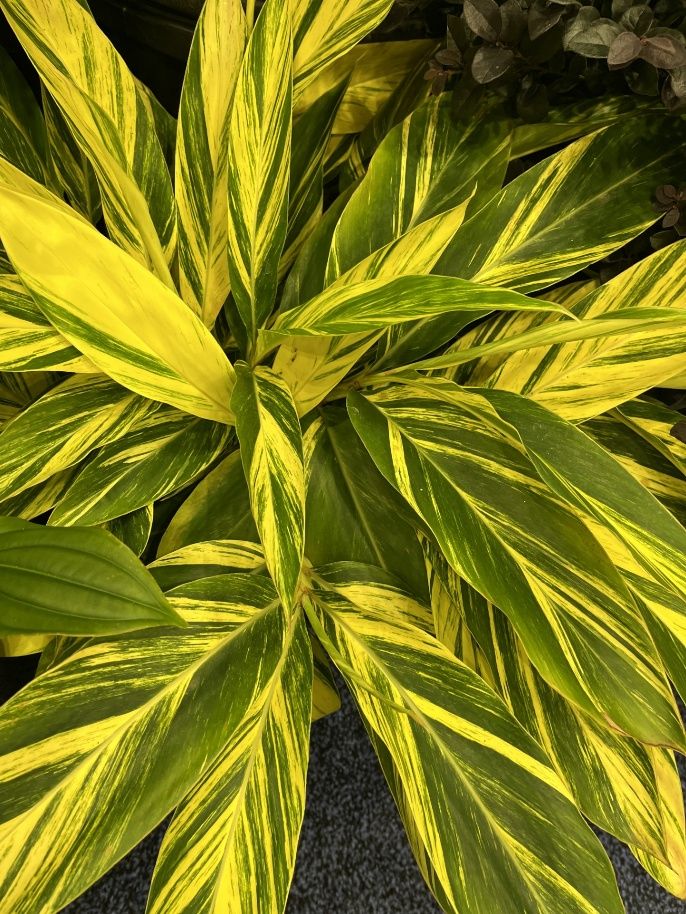
Credit: Keighly Graves, UF/IFAS
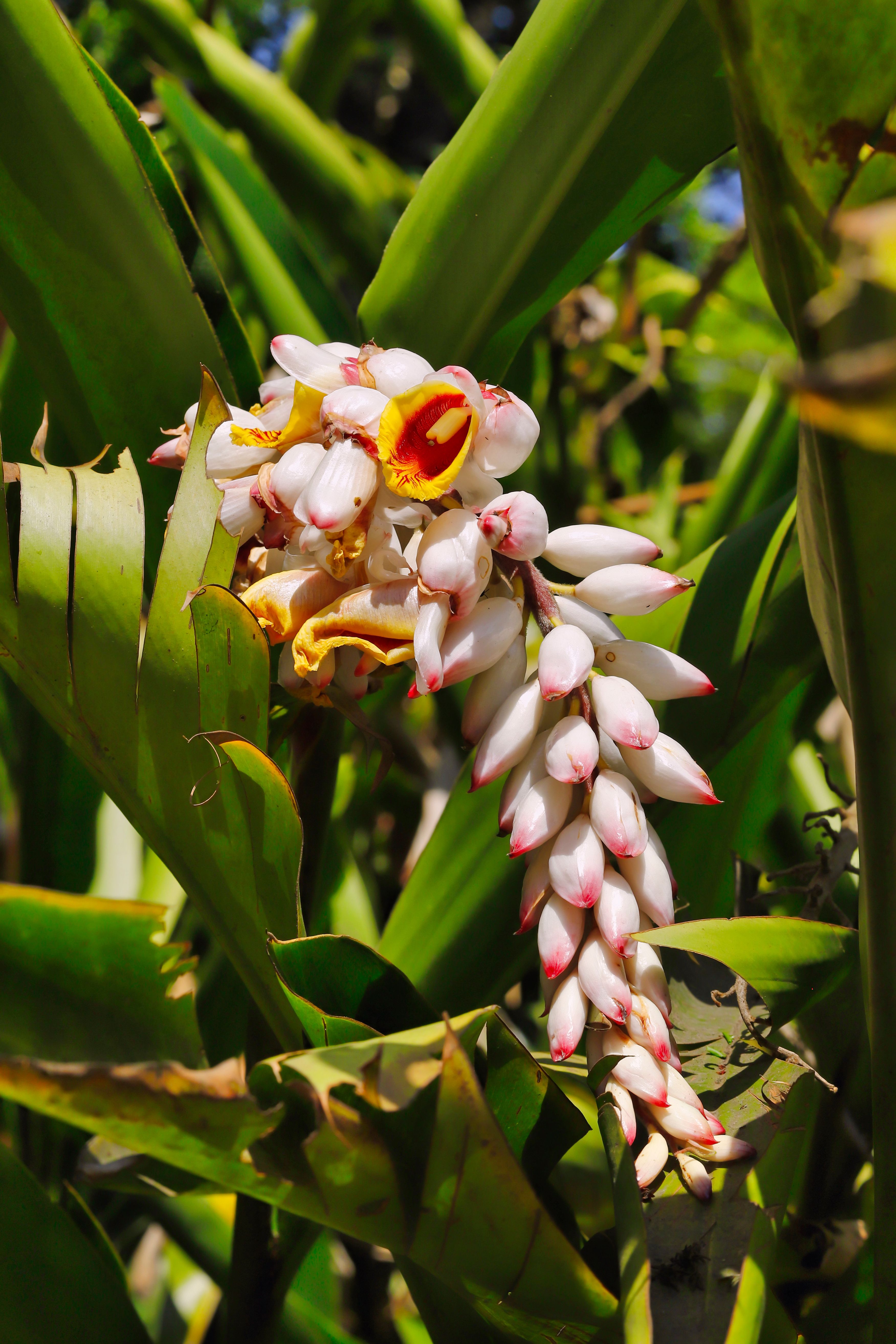
Credit: niltonemaia via Adobe Stock
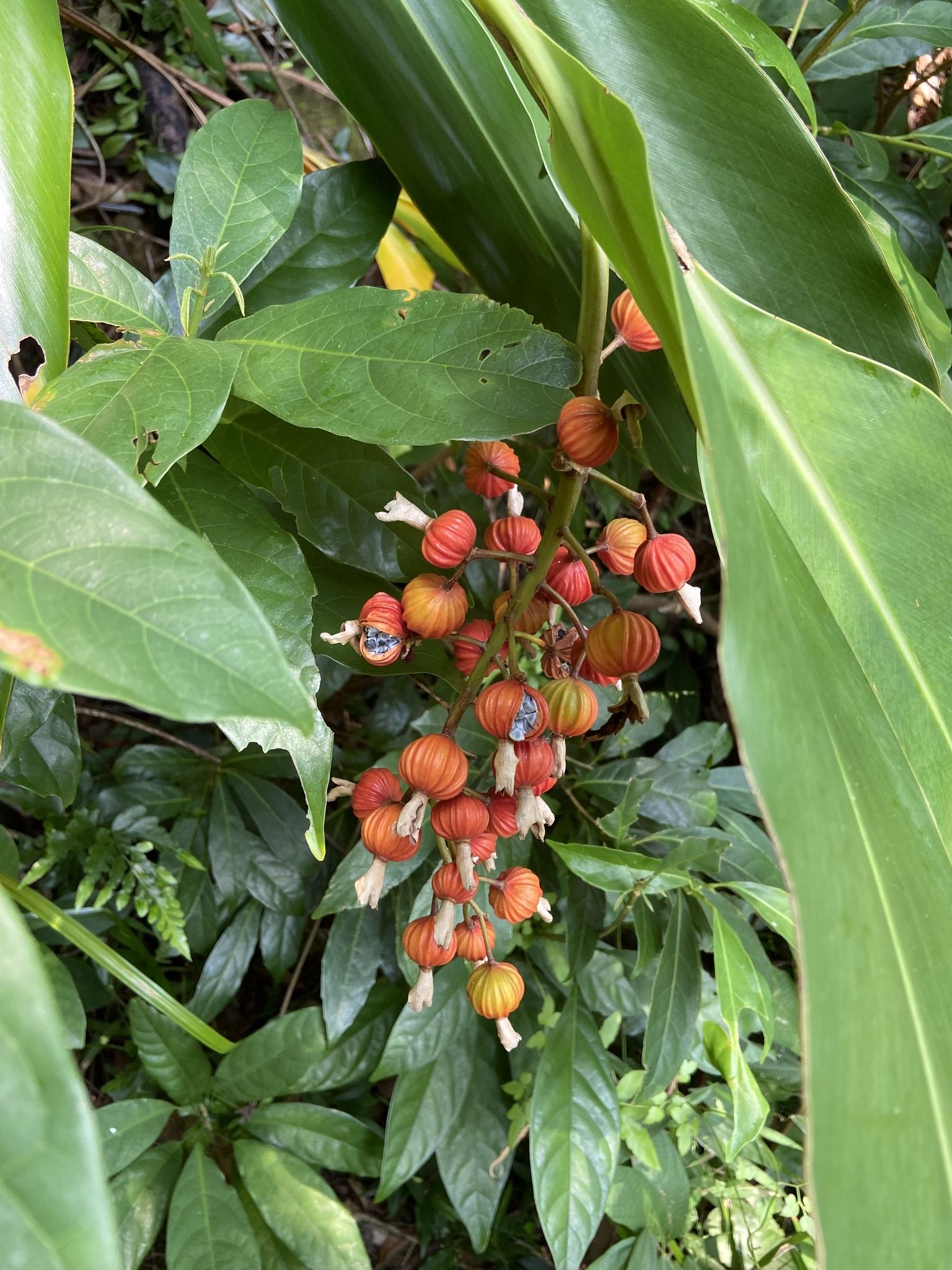
Credit: © mountaingirlhk, some rights reserved (CC-BY-NC-ND) via iNaturalist
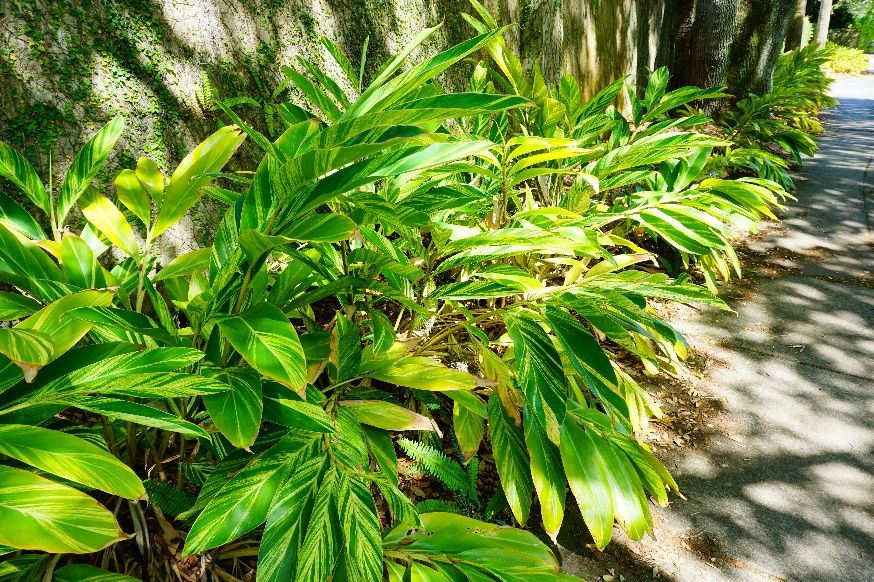
Credit: Feng via Adobe Stock
General Information
Scientific name: Alpinia zerumbet 'Variegata'
Pronunciation: al-PIN-ee-uh zair-um-BET ‘var-E-got-ah’
Common name(s): variegated shellflower, variegated shell ginger
Family: Zingiberaceae
Plant type: herbaceous
USDA hardiness zones: 9B through 11B (Figure 5 and 6)
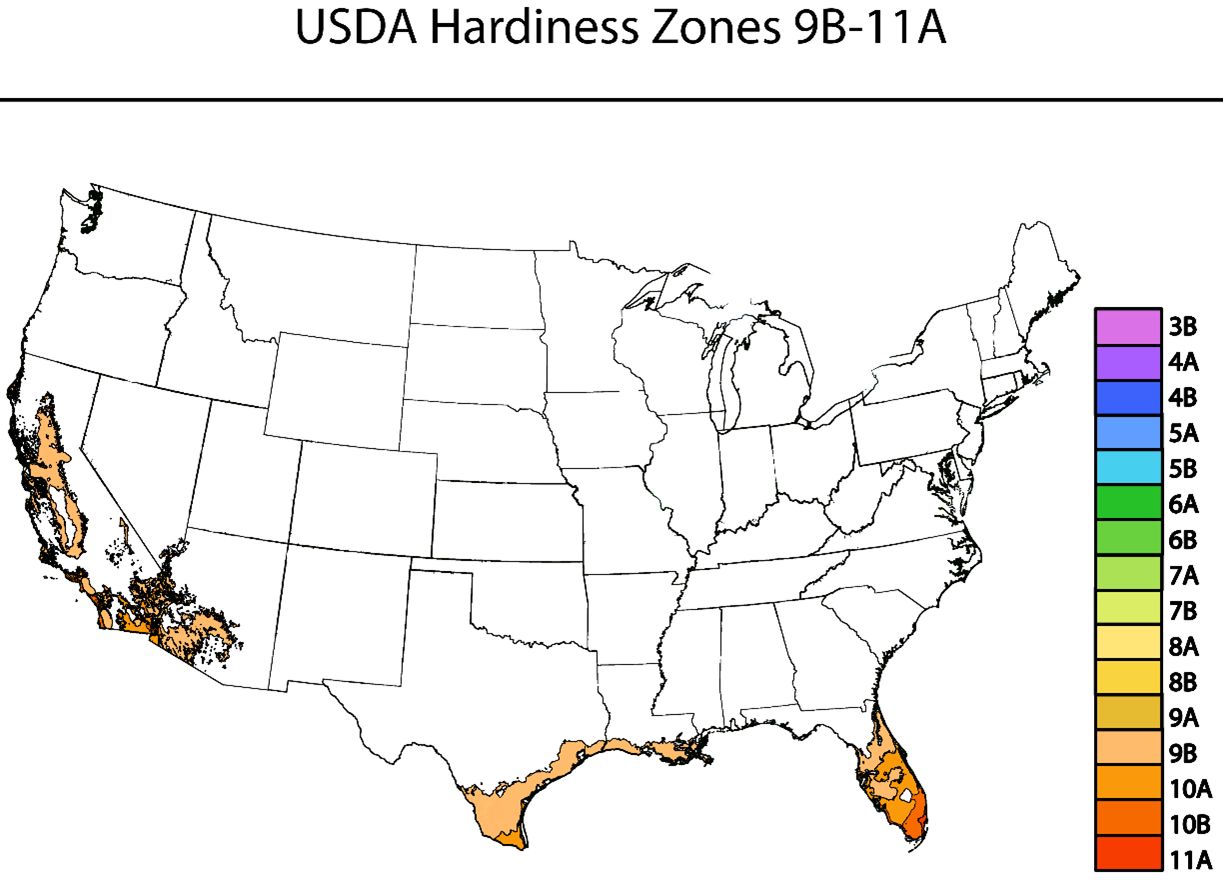
Credit: This map is based on the 2023 USDA Plant Hardiness Zone Map. Visit https://planthardiness.ars.usda.gov/ for specific zone information.
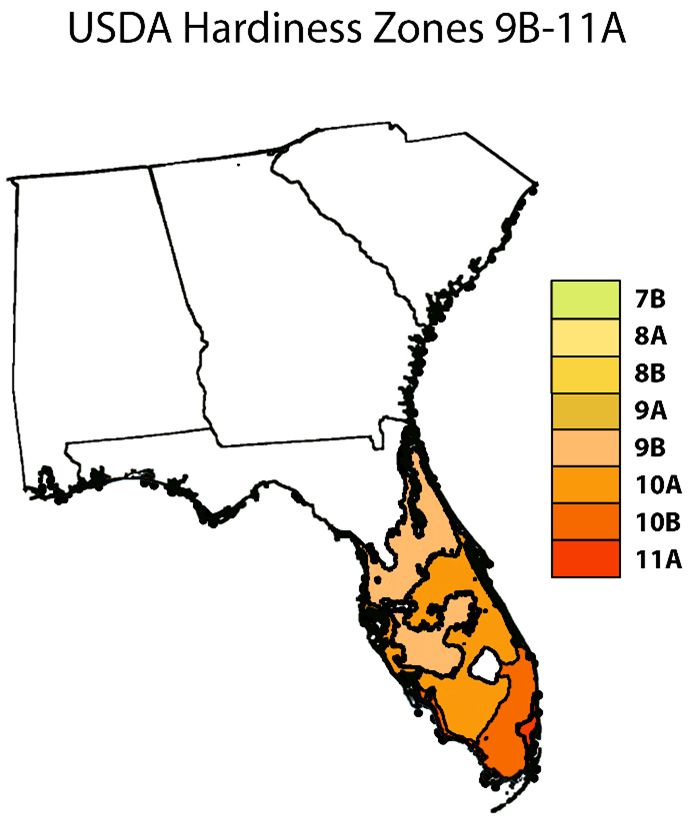
Credit: This map is based on the 2023 USDA Plant Hardiness Zone Map. Visit https://planthardiness.ars.usda.gov/ for specific zone information.
Planting month for zone 9: year-round
Planting month for zones 10 and 11: year-round
Origin: not native to North America
Uses: specimen; border; mass planting; accent; suitable for growing indoors; cut flowers
Availability: generally available in many areas within its hardiness range
Description
Height: 4 to 7 feet
Spread: 5 to 8 feet
Plant habit: upright
Plant density: open
Growth rate: moderate
Texture: coarse
Foliage
Leaf arrangement: spiral
Leaf type: simple
Leaf margin: entire
Leaf shape: oblong
Leaf venation: pinnate
Leaf type and persistence: fragrant when crushed; evergreen
Leaf blade length: 18 to 36 inches
Leaf color: yellow; green; variegated
Fall color: no fall color change
Fall characteristic: not showy
Flower
Flower color: white; orange; yellow
Flower characteristic: pleasant fragrance; flowers periodically throughout the year; showy; flowers borne in clusters
Fruit
Fruit shape: round
Fruit length: 1 to 3 inches
Fruit cover: dry or hard
Fruit color: brown
Fruit characteristic: inconspicuous and not showy
Trunk and Branches
Trunk/bark/branches: typically multi-trunked or clumping stems
Current year stem/twig color: green
Current year stem/twig thickness: very thick
Culture
Light requirement: plant grows in partial shade
Soil tolerances: occasionally wet; acidic; slightly alkaline; sand; loam; clay
Drought tolerance: moderate
Soil salt tolerance: poor
Plant spacing: 24 to 36 inches
Other
Roots: sprouts from roots or lower trunk (rhizomes)
Winter interest: evergreen foliage adds winter interest
Invasive potential: not known to be invasive
Pest resistance: no serious pests are normally seen on the plant
Use and Management
Variegated shell ginger is an excellent specimen plant but may also be used in containers. It makes a nice accent plant in a shrub border or by a building entrance. This perennial stands out in any landscape due to its ornamentally interesting leaves and fragrant shell-like flowers.
Variegated shell ginger performs well when planted in locations with partial shade and moist, fertile, well-drained soils. Variegated shell ginger is moderately drought tolerant but may require additional irrigation during drought conditions. In the colder areas of northern Florida, the stems of this plant will be frozen to the ground, but new shoots will reemerge in the spring.
Propagation is via division of rhizomes during the active growing season.
Design Considerations
With its large, lush, and strikingly variegated green and yellow leaves, shell ginger lends a cool, tropical feel to the landscape. Its bold foliage and delicate, shell-like flowers make it an excellent choice as a specimen or accent, though it is also well-suited for mass plantings, borders, or as a houseplant.
To create visual interest, contrast its smooth, broad leaves with plants of a finer texture, such as soft, mounding shrubs with small leaves or the thin blades of ornamental grasses. Companion plants with dark green or burgundy leaves will accentuate the ginger's bright variegation. For flowering companions, pair it with tones of purple, burgundy, and blue. When shell ginger is used in a mass planting, place large groupings of companion plants at its base to create a full, layered effect.
Pests and Diseases
Minor pest issues include mites. No diseases of major concern.