Introduction
Honey bees play a crucial role in pollination, collecting nectar from flowers to produce honey (Figure 1). Honey bees must visit an estimated two million flowers to make one pound of honey (Jaganathan and Mandal 2009). In 2023, beekeepers in Florida harvested an average of 35 pounds of honey from each of the state’s 210,000 honey-producing colonies (USDA National Agricultural Statistics Service 2024). That’s 70 million flower visits per colony in one year alone! High incidences of honey bee floral visitation combined with increased backyard beekeeping raise concerns about potential competition between honey bees and native pollinators, which may contribute to biodiversity declines.
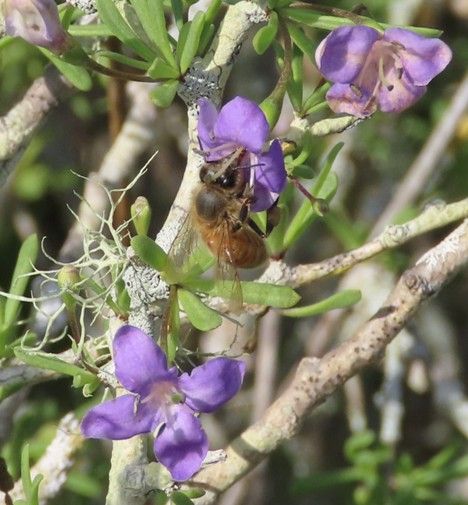
Credit: Richard Owen, used with permission
Conservation-minded beekeepers can balance colony provisioning and native pollinator conservation by carefully landscaping for bees at their hives. This guide explores how enhancing landscape biodiversity benefits honey bees and other pollinators and provides landscaping solutions to improve forage availability while supporting native plant diversity. Targeted at backyard beekeepers in north central Florida, the resource encourages the intentional selection and planting of native and agricultural plants near honey bee colonies. This approach not only supports honey production but also contributes to pollinator conservation, addressing the growing need to balance colony provisioning with environmental sustainability.
Of the current 5,000 registered beekeepers in Florida, 85% are classified as “backyard beepers,” meaning they manage fewer than 50 hives. Many backyard beekeepers manage bees for honey production. Florida’s 2023 honey harvest was valued at $24,035,000 (USDA National Agricultural Statistics Service 2024). Backyard beekeepers, who typically do not transport their hives for commercial pollination services, must ensure their colonies have enough local forage to thrive. By enhancing the diversity of flowering plants near their hives, beekeepers can ensure their colonies stay healthy and resilient, capable of producing a honey surplus while supporting broader conservation goals.
Benefits of Near-Hive Landscaping
Honey bees prefer to forage close to their hive, ideally within 300 feet (Caron and Connor 2022; Figure 2). However, they can and will travel up to five miles if necessary to find suitable forage (Caron and Connor 2022). The farther a worker must travel, the greater her energy expenditure and the less surplus honey she can be expected to produce. A honey bee who spends less energy flying to forage can collect and carry home more nectar more frequently. This translates to higher honey harvests, which is more beneficial for the beekeeper. Additionally, the closer a honey bee remains to her hive, the less likely she is to be forced into competition for food with native pollinators in nearby natural areas. Feeding bees at the hive lessens the competition pressure on native species that use nearby natural areas for food, shelter, and reproduction. Planting high-quality, nectar-bearing plants around hives is good for honey bees, their keepers, and the surrounding ecosystem.
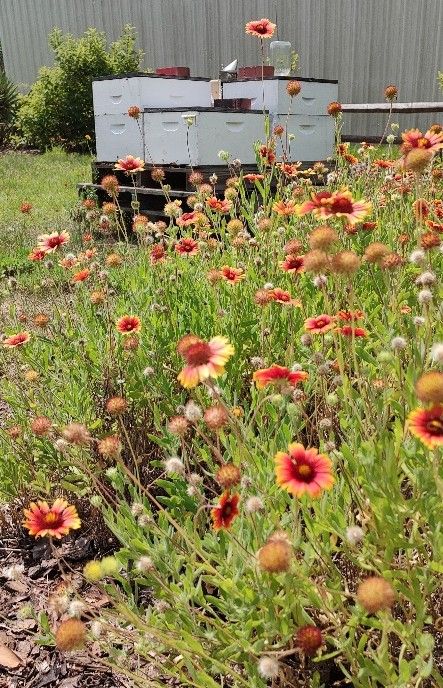
Credit: Catherine Hannan, UF/IFAS
Declining Biodiversity
Wildflower plantings can offset negative impacts to pollinator biodiversity and increase pollination on agricultural lands (Blaydes et al. 2022; Brittain 2013; Jenkins 2019; Kremen and M’Gonigle 2015; Rader et al. 2012). The abundance and species richness of both native pollinators and the plants they rely upon are declining (Potts et al. 2010). Changing land-use patterns, i.e., more land devoted to urbanization and agricultural operations, are reducing pollinator habitat biodiversity and distribution, resulting in fewer flowers. When honey bees travel to natural areas to forage, they directly compete with native species for nectar and pollen (Figure 3). This competition, though difficult to study directly, may exacerbate pollinator declines if it is not properly managed.
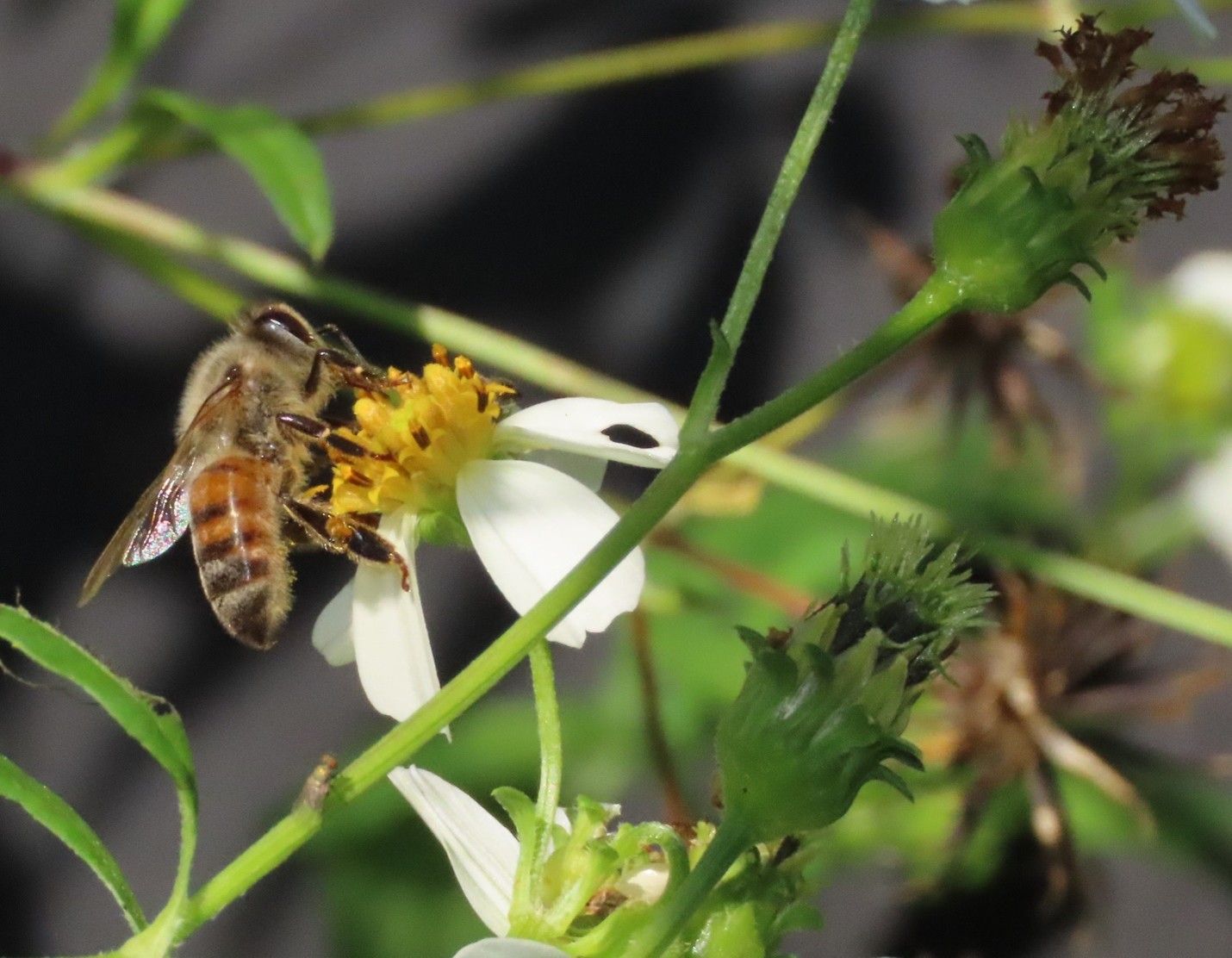
Credit: Richard Owen, used with permission
Guide to Pollinator Habitat Enhancement
Planning Your Planting
To help you get started, the Xerces Society for Invertebrate Conservation at xerces.org offers comprehensive online planning, preparation, installation, and management resources in the Habitat Restoration section on their Pollinator Conservation Program page. With any pollinator habitat installation, it is recommended to first:
- Assess Your Site: Learn your soil type, growing zone, and sun exposure level. Xerces.org has a great Habitat Assessment Guide to help you identify any gaps you might fill.
- Survey Surroundings: Note natural areas nearby and their vegetative structure to understand what native plants will do well in your area.
- Engage with Neighbors: Collaborate with neighbors who have pollinator-friendly gardens to supplement one another’s efforts.
Plant Selection
- Diversity Is Critical: Try to incorporate at least 25 species of native plants alongside agricultural varietals.
- Don’t Overlook Flowering Trees: Flowering trees are essential bee forage that make great additions to flowering shrubs, low-growing plants, herbs, and ground cover.
- Diversify Floral Shape and Color: Look for flowers with open centers that act as landing pads for honey bees. Choose white, purple, blue, or yellow blooms.
- Why Native Plants? Plant and pollinator relationships are highly specialized and locally adapted. Flowers entice bees with nourishing nectar and pollen, and, in return, bees transfer pollen to other flowers, fertilizing plants. Additionally, native plants may be easier to establish and maintain due to local adaptations.
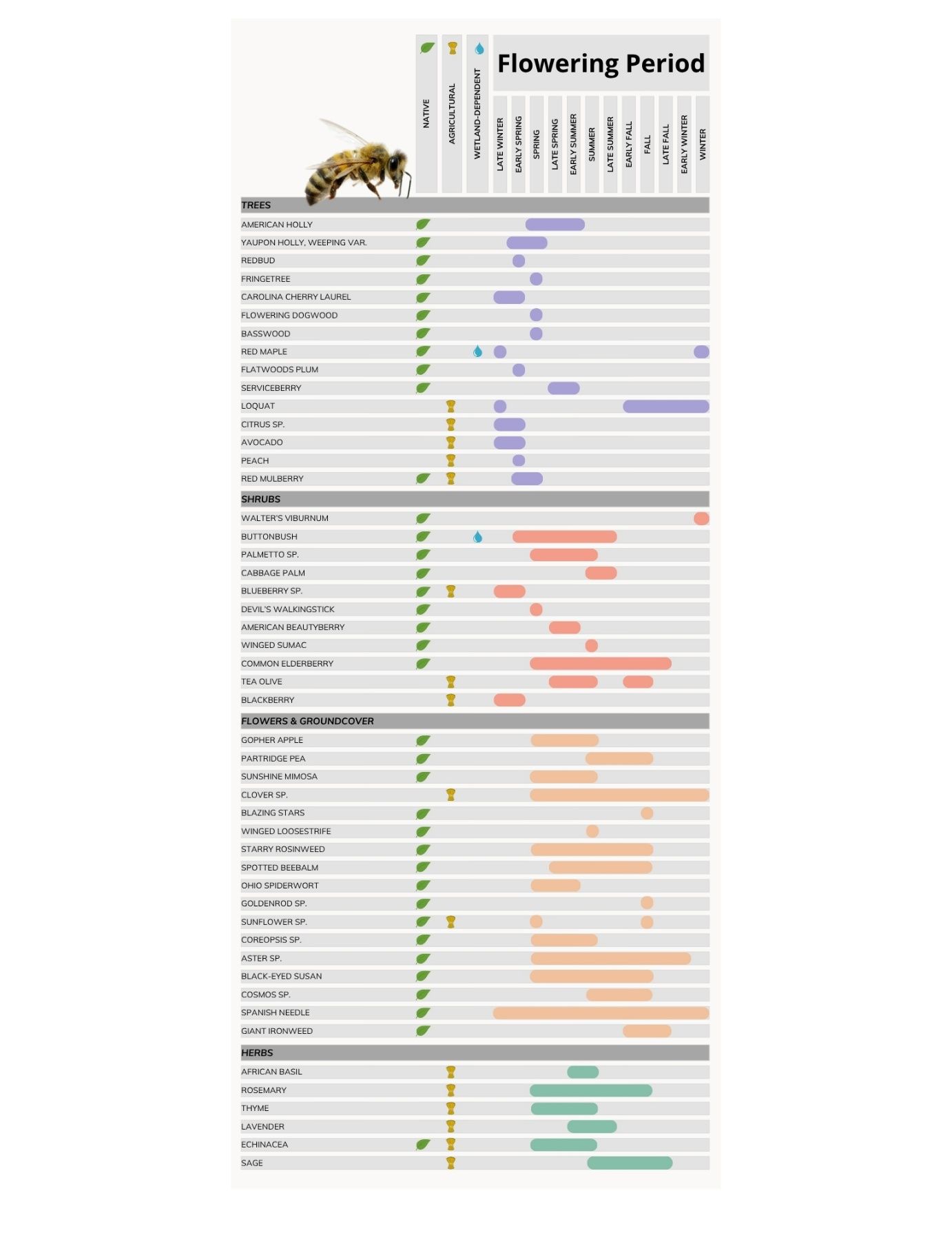
- Seasonal Considerations: Choose plants that provide abundant flowers at various points throughout the growing season, focusing on periods just before Florida’s spring and fall nectar flows. Careful selection of plants that flower in early spring and early fall can help to supplement honey bee hives during nectar dearths, reducing colony stress and maintaining hive health and resiliency.
- Work in Stages: Plant areas of a size that you can reasonably irrigate and monitor for the first year until plants become established. Then, move on to the next area. Plan ahead for landscaping expansions by establishing taller plants first. Place them toward the back and interior of your site before planting shorter species along the edges. It may be helpful to draw a sketch of your area so that adequate space is reserved for future plantings, particularly if you plan to incorporate trees and shrubs into your design.
- Plant in Clumps: Clusters are more visible to pollinators and can increase visitation.
Bee-Friendly Practices
- Reduce Chemical Use: Minimize pesticide and fertilizer use. Compost is an excellent soil supplement alternative to store-bought fertilizer!
- Respect Soil Health: Avoid intensive soil disturbance to benefit ground-nesting insects. Heavy mulch can restrict the burrowing ability of ground-nesting pollinators. Consider leaving open patches of soil or use a lighter mulch such as pine needles.
Recommended Plants for North Central Florida
Credit: Catherine Hannan, UF/IFAS
Table 1. Recommended plants for north central Florida.
Conclusion
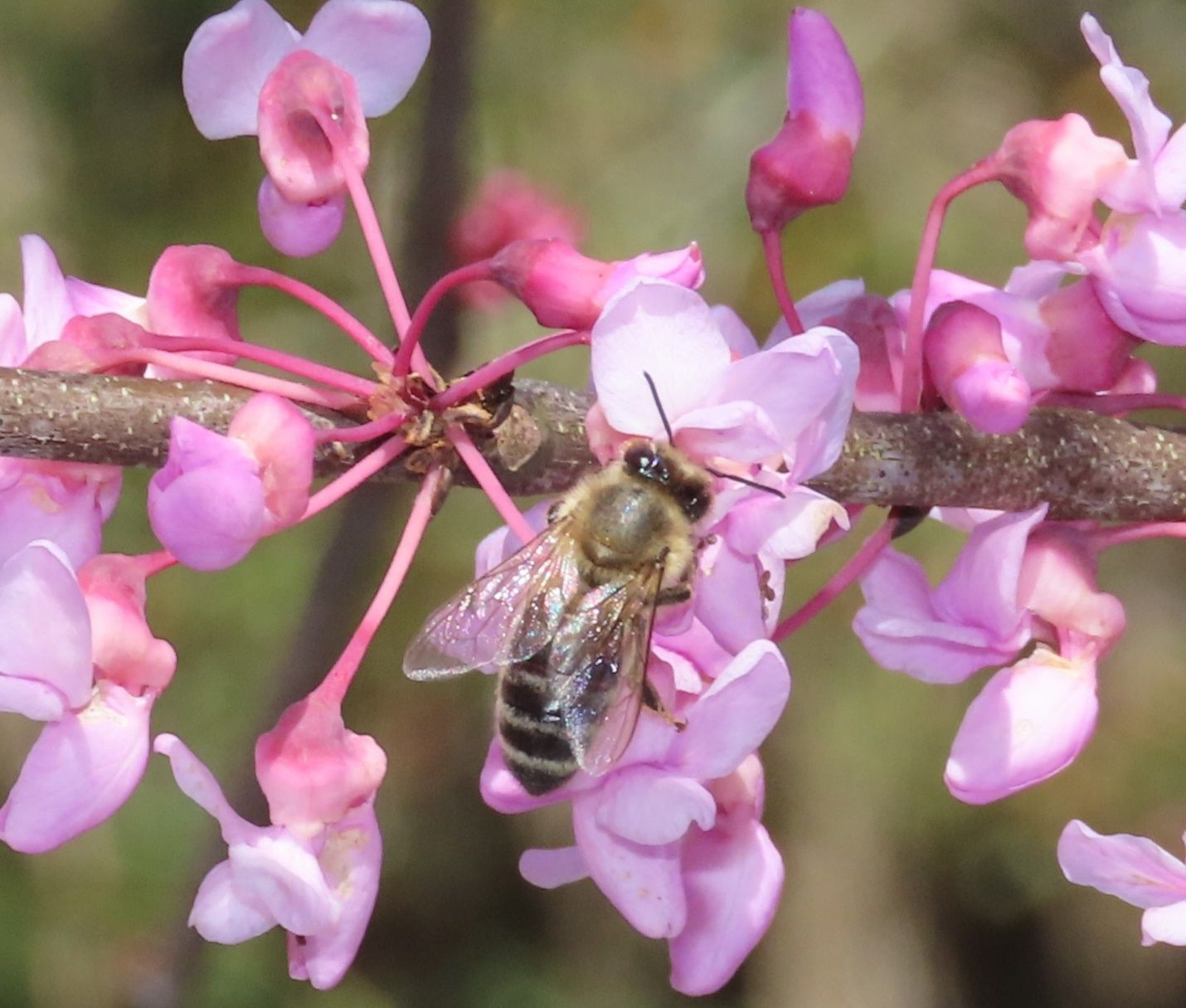
Thoughtful landscaping around bee hives promotes biodiversity and benefits beekeepers, honey bees, and native pollinators (Figure 4). Providing high-quality nectar and pollen resources at the hives may increase honey yields and profitability. This practice may also contribute to healthier, stronger colonies more resilient to pest infestation. It may also reduce interspecies competition and contribute to global conservation. These potential benefits could offset the upfront time and cost associated with establishing a native garden. Beekeepers who plant diverse native and agricultural plants near their hives may support pollinator diversity for future generations, maintain healthier colonies, and realize increased profits.
Credit: Richard Owen, used with permission
Additional Resources
Attracting Native Bees to Your Florida Landscape: https://edis.ifas.ufl.edu/publication/IN1255
Native Plants for Pollinators and Beneficial Insects: Florida https://xerces.org/sites/default/files/publications/22-019_01_NPPBI-Florida_web.pdf
Nectar Plants: https://sfyl.ifas.ufl.edu/lawn-and-garden/nectar-plants/
The Importance of Pollinators: https://www.usda.gov/peoples-garden/pollinators
North Florida Garden Guide and Resources: https://docs.google.com/document/d/1Wq7Xj0pQYGeXrttdmqYbsEt-so27SWlXjUCtmvcOlFI/edit
Beekeeping: Florida Bee Botany https://ufdc.ufl.edu/IR00004402/00001/pdf
USDA Natural Resources Conservation Service (NRCS) Cost-Share Programs: EQIP CPAs, DIAs, and CEMAs | Natural Resources Conservation Service (usda.gov)
Work Cited
Blaydes, H., E. Gardner, J. D. Whyatt, S. G. Potts, and A. Armstrong. 2022. "Solar Park Management and Design to Boost Bumble Bee Populations." Environmental Research Letters 17:1–13. https://doi.org/10.1088/1748-9326/ac5840
Brittain, C., N. Williams, C. Kremen, and A. M. Klein. 2013. "Synergistic Effects of Non-Apis Bees and Honey Bees for Pollination Services.” Proceedings of the Royal Society B—Biological Sciences. 280:20122767. https://doi.org/10.1098/rspb.2012.2767
Caron, D. M., and L. J. Connor. 2022. Honey Bee Biology and Beekeeping (3rd edition). Wicwas Press.
Jaganathan, S. K., and M. Mandal. 2009. “Antiproliferative Effects of Honey and of Its Polyphenols: A Review.” BioMed Research International 2009:830616. https://doi.org/10.1155/2009/830616
Jenkins, M. 2019. “Enhancing Native Pollinators of Watermelon Agroecosystems in South Carolina.” All Dissertations. 2382. https://tigerprints.clemson.edu/all_dissertations/2382
Kremen, C., and L. K. M’Gonigle. 2015. "Small-Scale Restoration in Intensive Agricultural Landscapes Supports More Specialized and Less Mobile Pollinator Species.” Journal of Applied Ecology 52:602–610. https://doi.org/10.1111/1365-2664.12418
Potts, S. G., J. C. Biesmeijer, C. Kremen, P. Neumann, O. Schweiger, and W. E. Kunin. 2010. “Global Pollinator Declines: Trends, Impacts and Drivers.” Trends in Ecology & Evolution 25:345–353. https://doi.org/10.1016/j.tree.2010.01.007
Rader, R., B. G. Howlett, S. A. Cunningham, D. A. Westcott, and W. Edwards. 2012. “Spatial and Temporal Variation in Pollinator Effectiveness: Do Unmanaged Insects Provide Consistent Pollination Services to Mass Flowering Crops?” Journal of Applied Ecology 49:126–134. https://doi.org/10.1111/j.1365-2664.2011.02066.x
United States Department of Agriculture National Agricultural Statistics Service. 2024. “Honey” (March 2024). ISSN: 1949-1492. https://esmis.nal.usda.gov/sites/default/release-files/hd76s004z/hm50wd54j/fq979h127/hony0324.pdf Bottom of Form