
In the commercial poultry industry, chickens have been selected over the years for high performance. Broilers have the genetic potential to grow rapidly and efficiently. A broiler can increase its body weight 4.5-fold during the first 7 days of life and be over 6 pounds by 42 days of age. A commercial layer can produce over 450 eggs by 100 weeks of age. To achieve their genetic potential, the chickens must be healthy, stress-free, and comfortable, and they must have a strong immune system to fight off disease challenges. As production performance has improved, modern strains of chickens are more fragile and susceptible to stressors. The integrity of the immune system is difficult to evaluate. Poultry farmers often only know their chickens have damage to the immune system when opportunistic diseases start to cause problems and an investigation is conducted. Opportunistic disease organisms are often present in poultry houses, but they do not cause any problems. However, if the chickens are immunosuppressed, these organisms can cause disease. This publication describes common causes of immune suppression in commercial poultry. The intended audiences are commercial poultry producers, allied industry, and poultry veterinarians. This publication aims to instruct those involved with poultry in evaluation of poultry flocks to determine if immunosuppressive diseases are causing losses in those flocks.
Immune Suppression: General Indicators
Commercial poultry flocks often have complications that are difficult to explain. There are many different causes for the problems observed, all of which must be considered in the investigation. It is necessary to also evaluate whether the immune system is compromised and responsible for the reported complications. Common findings that may suggest immune suppression include the following.
- Failure to resolve live virus vaccine reactions: Chicken flocks are commonly vaccinated with live attenuated Newcastle and infectious bronchitis vaccines during their growing cycle. These vaccines should result in mild and self-limiting respiratory reactions starting 2–3 days after vaccination and resolving by 7–10 days. Reactions that are stronger than expected and continue for an extended period, often with bacterial complications, indicate an underlying problem. In addition to immune suppression, other causes could be concomitant Mycoplasma gallisepticum infection, field virus challenge with Newcastle and infectious bronchitis viruses, or poor air quality with high levels of dust and ammonia.
- Failure to respond to antibiotic treatments: If an antibiotic treatment fails to resolve an identified bacterial infection, this indicates an underlying problem. Poultry farmers will comment that an antibiotic had been helpful in resolving bacterial infections in the past but recently has been ineffective. There are many possible reasons in addition to immune suppression, including the development of antibiotic resistance and improper dosing.
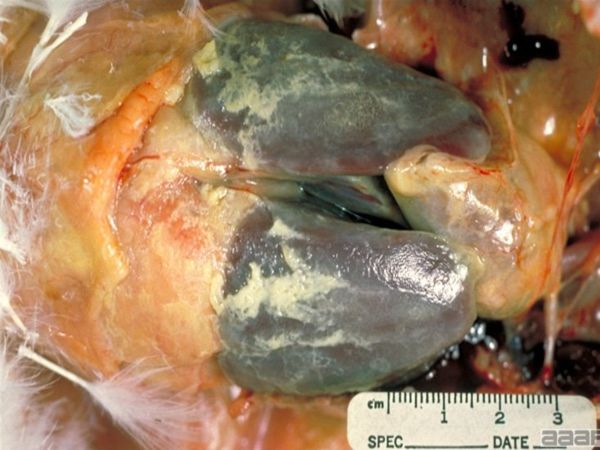
- Increased incidence of complicated bacterial infections with opportunistic bacteria such as Escherichia coli: These bacteria are always present in the poultry house, on the skin, and in the intestines of chickens. If these opportunistic bacteria are causing disease, an investigation must be conducted to identify the reason. These infections can lead to airsacculitis and septicemia. Additionally, heavily contaminated drinking water, wet litter conditions, and complications following respiratory disease field virus challenge can result in disease associated with opportunistic bacteria (Figure 1).
Credit: Gary Butcher, UF
4. Increased mortality and poor performance: Farmers often express frustration as non-specific reduced performance and increased mortality result in substantial losses. They often state that they have not changed any management or husbandry practices, but flock performance is poor. They may describe lower body weights, poor body weight uniformity, poor feed conversion, increase in mortality, and increase in condemnations at the processing plant. There are many possible causes that need to be ruled out, including immune suppression.
5. Decreased serologic response to vaccination: Following vaccination, the farmer has a good idea of what the baseline antibody titer response should be. If titers are lower than anticipated, there is an underlying problem. Besides immune suppression, other causes for this problem are incorrect storage of vaccines, improper administration of vaccines, and even the presence of chlorine in the water if administered by the drinking water route.
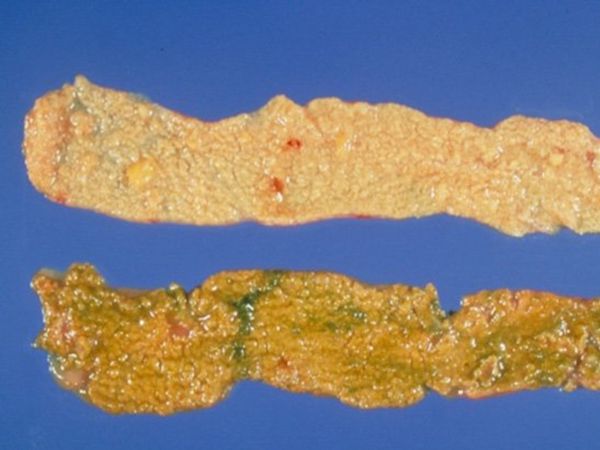
6. Increased incidence of secondary diseases, including gangrenous dermatitis, inclusion body hepatitis, and necrotic enteritis: The pathogens responsible for causing these diseases are commonly found in poultry houses. Infection is usually subclinical as these are mild diseases. However, when losses start to occur, it is necessary to determine if birds are immunosuppressed. A chicken with a damaged immune system is unable to resolve a challenge with a mild disease organism. With these diseases, there are other factors that may result in clinical disease. For example, necrotic enteritis is caused by Clostridium perfringens that normally inhabit the intestinal tract. If feed is changed from a corn and soy diet to a diet including rye or wheat, the viscosity of the ingesta increases in the intestine. The passage in the intestine slows down and allows the Clostridia to overgrow, resulting in disease (Figure 2). Inclusion body hepatitis is usually a subclinical disease. However, in recent years, variants have developed that can cause significant losses in a flock.
Credit: Gary Butcher, UF
The symptoms above are general indicators that are commonly found in poultry flocks where birds have a compromised immune system. However, there are many factors in addition to immune suppression that can cause these problems. If these changes are present, immune suppression needs to be included in the differential diagnosis.
Immune Suppression: Specific Indicators
There are specific indicators that directly imply that poultry are immunosuppressed. These indicators result in direct damage to the immune system and can be verified during a disease investigation. Consult with an experienced poultry veterinarian to evaluate the immune system of suspect chickens. The lymphoid organs change with age, and following damage to the lymphoid tissue, undergo a progression of changes. Often, additional diagnostic testing, including PCR, serology, and histopathology, is needed to fully identify the etiology.
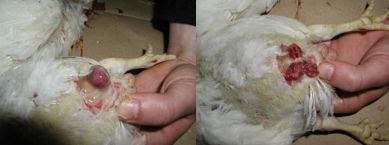
- Early and permanent damage to the bursa of Fabricius in chickens under 2.5 weeks of age: The bursa of Fabricius (BF) in chickens is responsible for the development of B lymphocytes, which are antibody-producing cells. The BF is essential for B lymphocyte development during embryonic development until about 2.5 weeks of age. It can continue functioning out to 10–12 weeks of age, but there is sufficient development of B lymphocytes by 2.5 weeks of age that damage to the BF is not going to be a major problem. Chickens have a viral disease called infectious bursal disease (IBD) that specifically targets these lymphocytes in the bursa of Fabricius (Figure 3). Chicks must be protected against this disease during the early weeks of life. This disease is very complex and includes classic strains, very virulent strains, and variant strains. Control of this disease in young chickens requires: identification of the strain(s) in the farm; a vaccine program in the parent flock to provide maternal antibodies to the young chickens so they have protection during the first weeks of life; vaccination of young chickens to stimulate active immunity; and a comprehensive biosecurity program to reduce field virus challenge levels so the field virus does not overwhelm the BF. This gives the vaccines time to stimulate the immune system before maternal antibodies decline by approximately 3 weeks of age. This disease was first recognized in poultry in the early 1960s in the United States and has since spread worldwide. It was shown to have spread from saltwater fish to poultry when the industry started using fishmeal in poultry diets.
Credit: Gary Butcher, UF
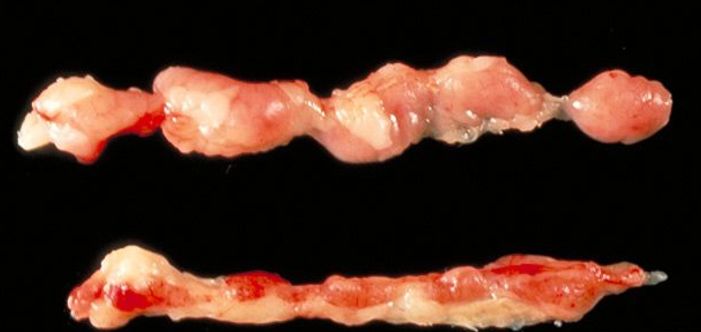
2. Early and permanent damage to the thymus in young chickens: The thymus in chickens is responsible for development of T lymphocytes. There are numerous T lymphocytes associated with the cell-mediated immune system. Chickens have a disease called chicken anemia virus (CAV) that specifically targets these cells in the thymus during the first 2 weeks of life (Figure 4). The virus destroys the developing T lymphocytes. It is critical that young chicks are protected against challenge with the CAV during the initial weeks of life. This is accomplished by vaccination of the parent flock so that hens pass maternal antibodies into the egg yolk, and then to the newly hatched chicks. These antibodies protect the chicks against the disease challenge during the early weeks of life.
Credit: Gary Butcher, UF
3. General lymphoid cell depletion: If the T and/or B lymphocytes are depleted, the chicken will lack the ability to mount an immune response to a challenge. Different factors, such as some mycotoxins, can cause this to occur.
4. Failure to respond to antigens: Birds are administered live and inactivated vaccines. If the chickens fail to respond to these antigens, their immune system is not functioning. If, following vaccination, the chickens are still susceptible to disease challenges, this suggests that the immune system did not respond.
5. Failure to mount a cell-mediated immune response (CMI): Antibodies are important for protection against certain diseases such as infectious bursal disease. For protection against other diseases such as pox and infectious laryngotracheitis, the cell-mediated immune response is more important. The proper function of both the B cell (antibodies) and T cell (cell-mediated) immune systems is essential.
6. Marek’s disease infection in young susceptible chickens: Marek’s disease infection is very common in commercial poultry flocks worldwide. Longer-lived chickens, such as breeders and commercial egg layers, are always vaccinated. For broilers, which are processed at 32–68 days of age, vaccination is important, especially in broilers that are processed at later ages. Infection with Marek’s disease in unvaccinated young chickens may lead to the development of lymphoid cell tumors. The virus is also able to cause significant immune suppression. A Marek’s vaccination program to stimulate immunity and good biosecurity to reduce viral disease challenge load in the poultry house are necessary.
Immune Suppression: Confusing Factors
In some cases, diseases occur that are difficult to explain. An investigation will show that the immune system is intact. Lab work will demonstrate that the birds have been vaccinated properly and should be resistant to the disease challenge. Thus, other factors need to be considered.
- Introduction of a new pathogen for which current vaccines are not protective or available: When a new disease or a new strain of an existing disease is introduced, no vaccine can stimulate protective immunity to the new pathogen. In this case, the immune system is competent, but the chickens do not have any immunity against the new agent. In recent years, as new diseases and new strains of disease have been introduced, significant losses have occurred. When disease outbreaks are first occurring and before the disease agent is characterized, immune suppression is considered. Some recent examples include variant infectious bursal disease, variant infectious bronchitis disease, and Newcastle disease virus genotype VII (NDV-GVII). Variant infectious bursal disease caused severe immune suppression in chickens with an intact immune system and with high levels of antibodies against the classic form of the disease. Once a new variant strain was recognized, the problem was resolved by the production of a new vaccine against this new virus. Variant infectious bronchitis disease is a coronavirus that mutates readily. When a new variant of the virus was introduced into an area, the chickens had an intact immune system and had antibodies against the classic strains of the virus. Immune suppression was considered until it was demonstrated to be a new strain. The problem was solved with the development of a new vaccine for this variant strain of the virus. Newcastle disease virus genotype VII (NDV-GVII) spread to many areas of the world and caused devastating losses in chickens with good protection from the classic vaccines and intact immune systems. It was demonstrated that this virus was different enough that existing vaccines did not provide adequate protection.
- Inappropriate or ineffective vaccination programs: A vaccine program is designed to provide protection to chickens against disease challenges. However, a flawed vaccine program can result in considerable losses, even in birds with an intact immune system. Some common examples include use of virulent vaccines, insufficient maternal antibodies at the time of vaccination, and improper vaccination techniques. The virulent IBD vaccine is virulent enough to cause significant damage to the bursa of Fabricius in chicks that do not have adequate maternal antibodies to buffer the reaction. The vaccine itself will result in damage to the bursa as well as immune suppression. Maternal antibodies are passed from the hen into the yolk of the egg and then to the chick. These will be found in the chicks out to around 3 weeks of age. These are protective antibodies. If given a live virus vaccine, these antibodies will neutralize some of the vaccine viruses and reduce the vaccine reaction. If maternal titers are low in a parent flock, the titers will be correspondingly low in the newly hatched chicks. When vaccinating young chicks, the lack of maternal antibody buffering can result in an increased vaccine reaction. Using a fine spray application of live respiratory vaccines versus water or coarse spray application causes a much stronger respiratory vaccine reaction. These chickens would have an intact immune system, but the reaction to the live vaccine would be stronger than expected due to use of a more aggressive vaccine application route.
- Development of resistance to commonly used antibiotics: Antibiotics have been used to control bacterial infections in poultry for many years. Following long-term use, some bacteria have developed resistance. When bacterial infections occur, poultry farmers may report that losses continue even after antibiotic treatment. Investigation of the disease outbreak may reveal that the flock’s immune system is functioning, but the bacteria causing the disease have developed resistance to the antibiotic. Antibiotic resistance is a problem, and the poultry industry has significantly reduced the use of antibiotics in commercial poultry production in recent years. Additionally, most antibiotic use now requires veterinary oversight to ensure the correct antibiotic and the correct dose are used.
- Environmental factors may result in disease outbreaks: The management of poultry flocks can have a major impact on health and performance. Paying attention to the basics of husbandry that have been learned over many years is important in reducing the buildup of infectious agents. On any farm, attention to basic sanitation principles, commonsense biosecurity practices, proper ventilation to bring in fresh air and exhaust contaminated air, manageable chicken density, and “downtimes” or rest periods for the poultry house between flocks are all critical in ensuring the chickens have an environment where they can grow to their genetic potential. Any shortcuts will result in performance losses. When basic management practices are ignored, and performance suffers, few poultry farmers will look at these as the cause for the loss of performance. Losses of performance due to poor management will often appear similar to those that occur in an immune-suppressed flock. For example, inadequate ventilation with buildup of dust, ammonia, and bacteria will lead to opportunistic E. coli infections in the respiratory system. This is similar to what may be seen in immune-suppressed chickens, which are unable to ward off even opportunistic bacteria.
- Diseases often appear differently in different breeders and strains of poultry: For example, Salmonella gallinarum is deadly in brown egg layers and mild to subclinical in white egg layers. Avian adenovirus hepatitis is deadly for commercial broilers but is subclinical in commercial layers. When a disease occurs and is fatal for one type of chicken but not for another, this can be confusing. Often, immune suppression in the affected birds may be suspected. Identification of the etiologic agent will be required to explain the disease pattern.
Conclusion
Immunosuppressive diseases cause significant losses in the commercial poultry industry. These diseases are complex and, in many cases, difficult to recognize. Immune suppression can be caused by primary disease agents, such as infectious bursal disease and chick anemic virus, that damage the immune system. In most cases, a poultry farmer will describe general losses such as low body weights, poor uniformity, increased mortality, and increased condemnations at processing, or possibly specific lesions that are associated with an opportunistic disease such as gangrenous dermatitis or inclusion body hepatitis. It is important to understand that secondary diseases occur when the chicken's immune system is compromised. If the investigation is stopped at this point, this will not solve the problem, and non-specific losses will continue. A detailed investigation will demonstrate if there is damage to lymphoid tissue in the bursa of Fabricius or thymus. If this is the case, then the findings reported are just aftereffects of the resulting immune suppression and will disappear once the cause of the immune suppression is resolved. In this paper, the primary immunosuppressive diseases were described. Several clinical signs and lesions that may suggest immune suppression were presented. Additionally, several diseases and management problems that may cause clinical signs and lesions which may be confused with immune suppression were also described. When losses occur in a flock, it is important to consider the role of immunosuppressive disease in the differential diagnosis.