
Introduction
The intended audience for this publication is backyard and small-scale poultry producers.
Before the hurricane and tropical storm season, weatherizing your backyard poultry coops is crucial to ensure the safety and well-being of your birds. Unlike large livestock animals, poultry should not be let loose from their enclosure during a storm event. Allowing chickens to roam freely can separate them from the flock and put them at risk for serious injury or death. Poultry that escape a damaged coop during a storm become susceptible to predators, including domesticated dogs. Flock owners are responsible for ensuring their flocks have a safe and secure dwelling with access to feed and water at all times.
This publication outlines how to protect your coop from heavy winds, flooding, and flying debris. A well-built, well-anchored coop in a place that will not flood or blow over in strong winds is the goal. These precautions need to be considered in advance. When a major storm is approaching, construction supplies become scarce and time is short to prepare for your family’s needs.
Below are some important ways to keep your backyard chicken coop structurally safe during hurricane season.
Location
To minimize flooding risk, it is important to choose a well-drained, elevated site for the coop. Avoid low-lying areas prone to standing water and flooding. Reducing or eliminating floodwaters will reduce the risk of injury, disease spread, and electrical shock.
If water does flood the coop, make sure roosts are placed high enough so birds can perch and keep their feet and bodies dry. Also ensure feed is off the ground so it will not get wet, because wet feed quickly turns moldy or unappetizing to birds. Chickens trapped in a coop in a low area may drown if the water level rises.
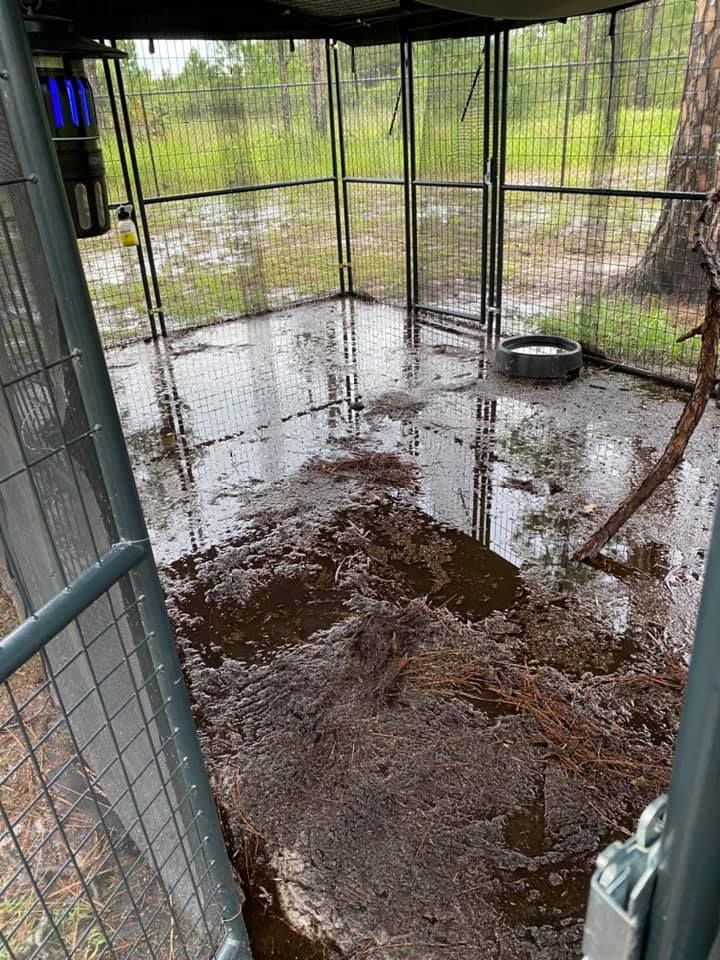
Credit: Ashley Johanning, Naples, FL
Choose a location that can be blocked from strong wind, keeping in mind that surrounding vegetation such as trees may be a hazard. The birds must have access to an enclosed area in the coop that is protected from high winds and direct rain. If not, then wrapping the coop in a tarp or covering it with plywood may be necessary to provide protection from these elements. Be sure the tarp or plywood is sufficiently secure, but not airtight so some fresh air can enter. Lack of fresh air would result in a buildup of dust, ammonia, carbon dioxide, and aspergillosis (mold spores) in a short period of time.
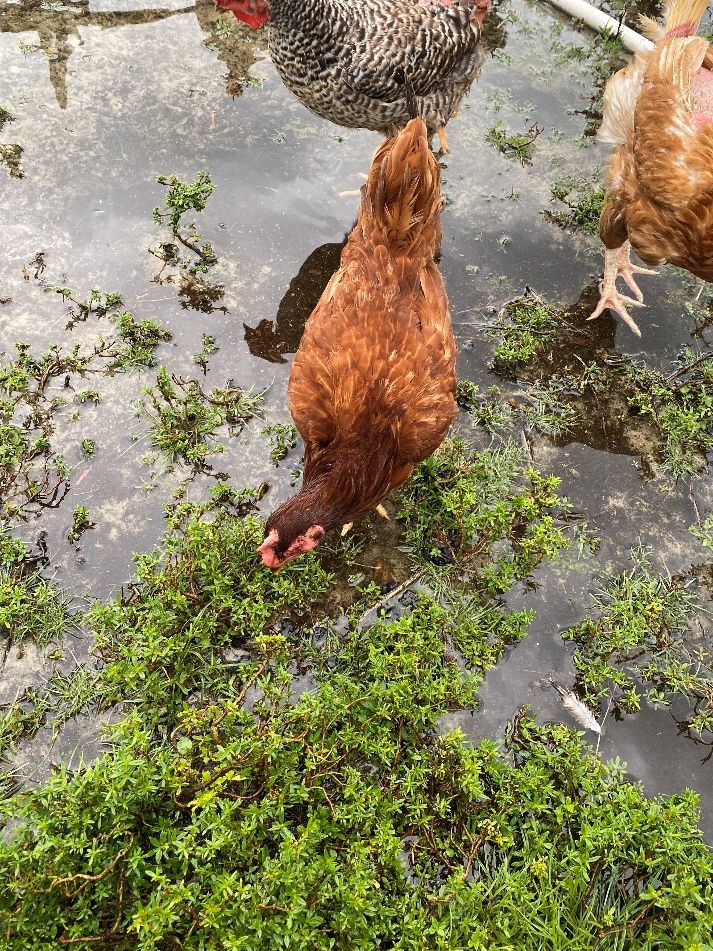
Credit: J. Ryals, UF/IFAS
Foundation, Structure, and Roof Reinforcements
Inspect the coop throughout the year for any wear, tear, or damage. Staying organized to make improvements ahead of time will save you the headache of last-minute preparations when resources are scarce and other priorities demand attention.
Ensure that the coop's foundation is strong and securely anchored to the ground. You can use auger anchors or hurricane straps to fasten the coop to the foundation.
You can strengthen the coop structure by adding cross-bracing and reinforcing joints. Use bungee cords or straps to secure tarps or to reinforce roofs.
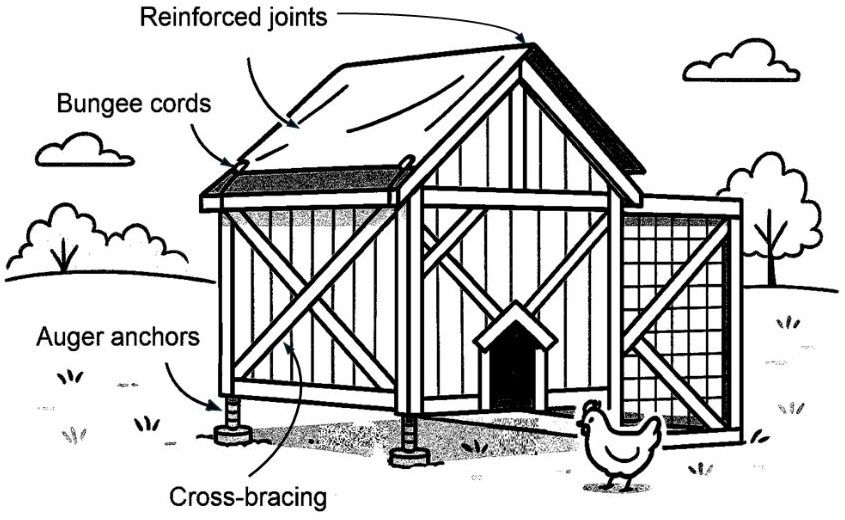
Credit: AI-generated image using ChatGPT and the prompt, “Create a simple drawing of the following concept so readers can view an illustration: ‘You can strengthen the coop structure by adding cross-bracing and reinforcing joints. Use bungee cords or straps to secure tarps or as reinforcement for roofs,’” June 5, 2025.
It is a good idea to use hurricane-resistant materials for construction. This will help you be better prepared for any category of storm, especially in terms of wind.
Keep in mind any equipment and supplies you may need, such as tarps, zip ties, drills, rope, bungee cords, hammers, nails, and personal protective equipment.
Openings
Before a wind event, ensure that you have doors and openings latched, locked, or screwed closed. Plywood or other resistant materials can be used to help protect openings and windows from flying debris.
Seal gaps to prevent water and wind from entering. It is a good idea to assess the coop throughout the rainy season to see where water comes in and to fill those gaps when you find them. Also consider where your birds will shelter from sideways rain and ensure the nesting or roosting areas are protected from sideways rain.
Assessing Surrounding Trees, Vegetation, and Loose Materials
Assess the vegetation surrounding the coop. Prune trees and branches that could fall onto the coop or become flying hazards.
Also consider removing materials near the coop, such as extra supplies, containers, and general yard debris. These could become flying debris during a storm.
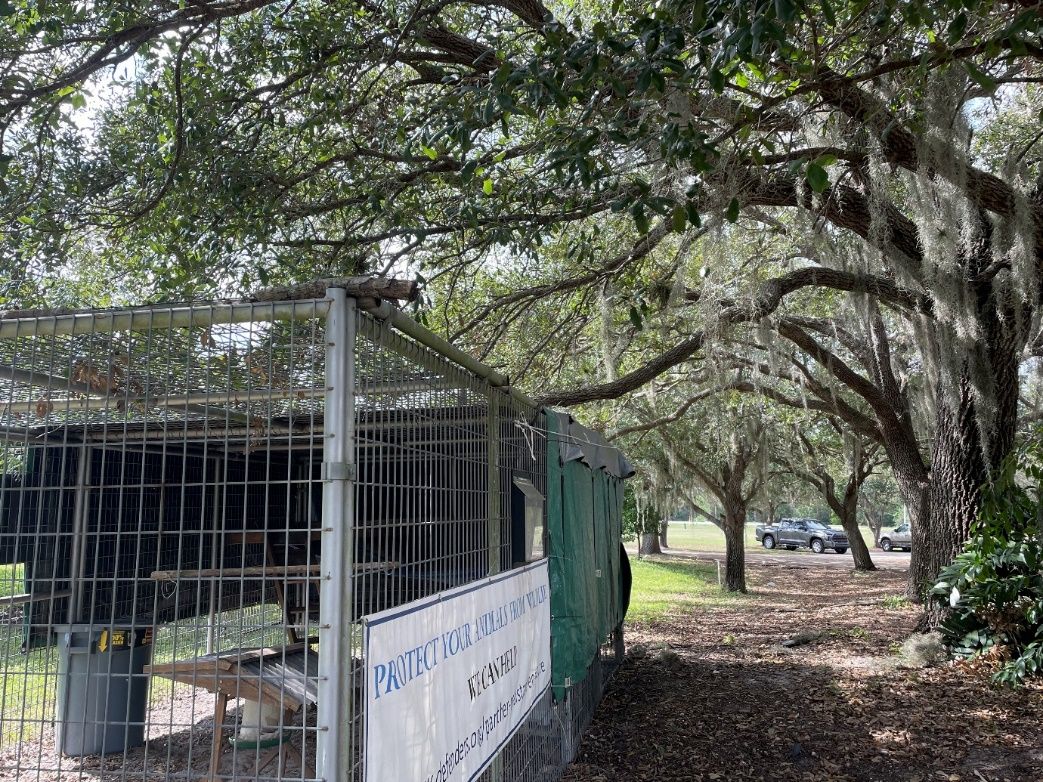
Credit: J. Ryals, UF/IFAS
Electricity
If electricity runs to your coop, turn it off at the main breaker or disconnect switch. This helps prevent electrical shock hazards and reduces the risk of fire.
Brooding heaters, lights, and outlets should be moved higher, in a more secure shelter, or indoors to avoid contact with floodwater, which could put you and your poultry flock at risk for electrocution.
Mobile Coops
Mobile chicken coops may be relocated to an enclosed space such as a garage or secured to a pole barn to prevent them from blowing away in high winds.
If mobile coops are to be kept outdoors, make sure they are anchored securely. This will prevent the coop from tipping over or lifting into the air. Sandbags over beams or auger anchors, ground rods, T-posts, and tie-down straps can help to keep mobile coops in place.

Credit: J. Ryals, UF/IFAS
Emergency Evacuation Plan
Warnings about impacts and mandatory evacuations for hurricanes and tropical storms can arrive on short notice. Often, it is not feasible to move poultry during a storm. This is especially true if the flock size is larger. However, having a plan in place for evacuating chickens before the storm is essential. Backyard chicken owners should also be aware of other significant threats, such as wildfires in southwest Florida, and plan accordingly.
For very small flocks such as those in a backyard setting, moving chickens to an indoor location such as a garage or enclosed room in a temporary cage may be feasible. Note that you should not put chickens in the main living areas of your house including bathrooms and kitchens. This is to prevent the spread of any potential infectious diseases such as Salmonella and Campylobacter.
For most flocks and small commercial operations, the best thing to do is to prepare the location and coops as well as possible and secure the poultry in their coop. If you want to move your flock off premises, prepare a secure transport container and identify a safe location for temporary housing. Additionally, make sure to follow proper biosecurity practices to protect your flock and others that may be in or near off-site locations.
Stocking up on Essentials
One simple way to prepare ahead of a storm is to have enough feed, water, and other supplies to last through the storm, and for a few days or weeks after the storm has passed. Feed supply chains, for example, can be heavily impacted in other areas where a storm hits, delaying milling and transport of supplies to your area.
Have enough feed and water on site. Water is the most critical nutrient, and poultry cannot survive long without it. Clean water must be available.
Have a first aid kit prepared for your chickens in case of injury. These include things such as disposable gloves, disinfectant spray, topical antibiotic ointment, sterile saline solution, gauze, first aid tape, Epsom salt, scissors/tweezers, and vitamins/electrolyte packets.
Staying Informed
Monitor local weather forecasts regularly. Be prepared to act well in advance of a hurricane event. Know designated evacuation routes for your location. It may also be a good idea to secure the birds in the coop before the bad weather approaches. Once the birds are in the coop, do not check on them during the storm. Ensure your and your family’s safety first.
Create and keep a list of emergency contact numbers. You may consider printing these out for use in case the electricity and internet are down. Some of these may include a local veterinarian for your poultry and other pets, kennels, Florida State Agricultural Response Team (SART), friends, family, and neighbors who can assist you after the storm.
Post-Storm Inspection and Biosecurity
Once the storm has passed and you can safely move about, survey your coop to document any damage and evaluate your flock for injured birds. Remove any storm debris such as broken branches, metal debris, screws, and vegetation that could injure your birds.
Keep an eye on your flock after a storm has passed. While immediate attention should go to feeding and water needs, remember that illness can also move through the flock after stressful events or where there is excessive standing water. Standing water can harbor bacteria and may also increase mosquito populations, which can facilitate disease spread. Mold in feed, coop materials, or bedding can also cause illness in your birds. If you notice any respiratory distress, cough, lethargy, or general unthriftiness in your flock, you may be dealing with illness.
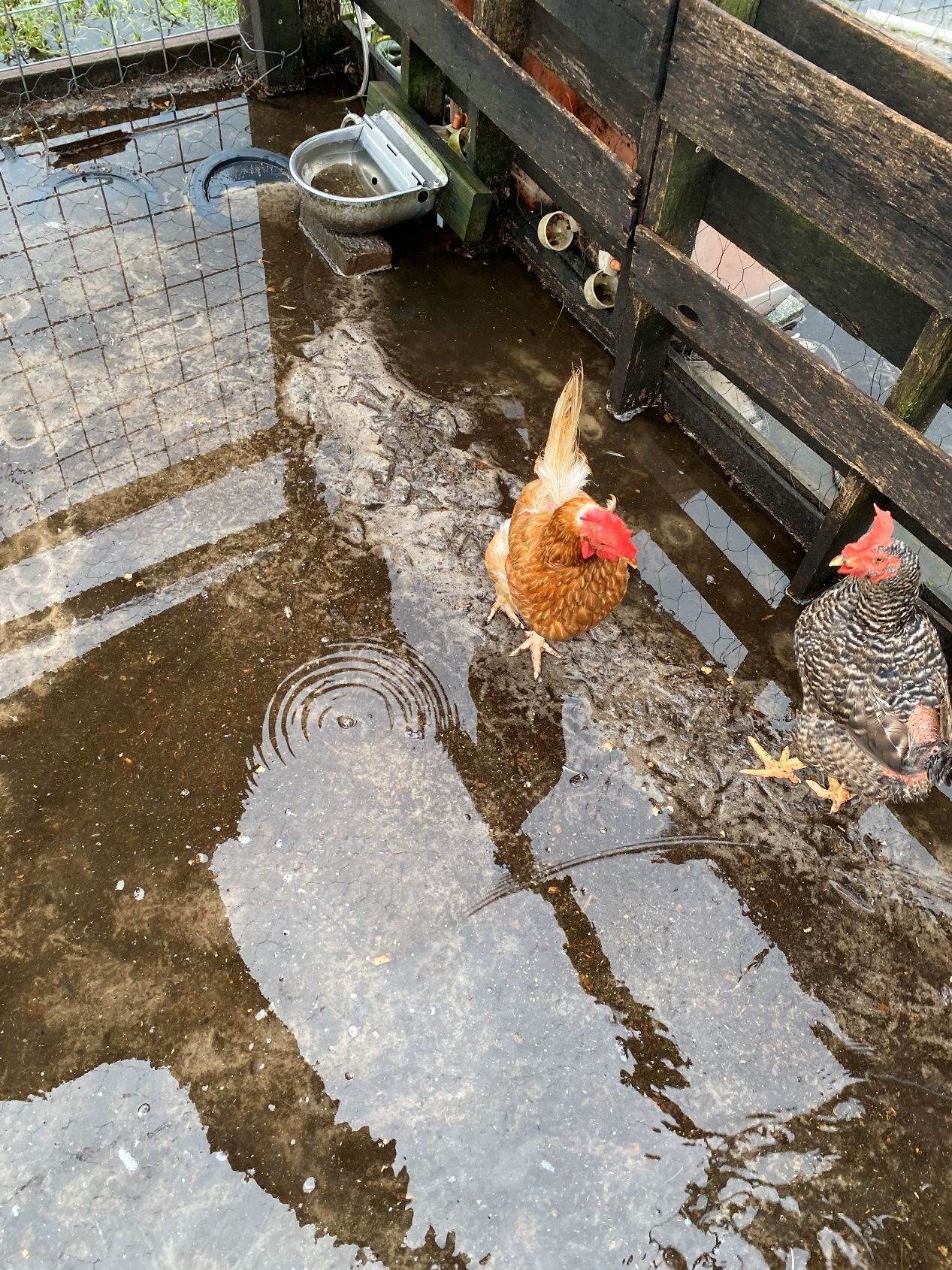
Credit: J. Ryals, UF/IFAS
If the coop is damaged and poultry escape from their enclosure, they may have contact with wild birds, rodents, and other animals, along with their droppings. These can be a source of disease and parasites. Additionally, after a major storm, rodents are more likely to enter coops in search of food. Bags of feed must be kept in a cool, dry location. If the feed is kept in the area of the coop, place the bags in a sealable plastic or metal container. This keeps the feed dry and reduces the growth of molds that can produce mycotoxins. Inspect plastic materials for evidence of rodent chewing or brittleness from sunlight and outdoor exposure. Keeping feed dry will reduce bacterial growth and help to limit feed spoilage. If wild animals gain access to the feed, they often leave behind droppings that could contain infectious disease organisms. If chickens consume those droppings along with the feed, they will be exposed to the pathogen.
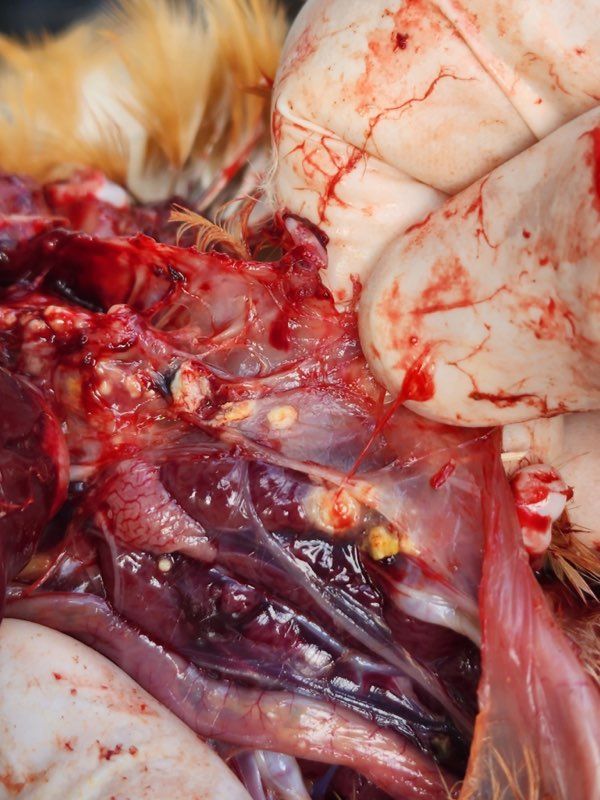
Credit: G. Butcher, UF/IFAS
Conclusion
Before a storm or other natural disaster becomes a threat, make a game plan and take necessary actions to secure your coop and poultry. This can start with the location of your coop and include improvements to the structure throughout the year or as hurricane season approaches. After the storm, inspect the coop for damage and debris, prioritize clean feed and water, ensure the birds have a dry place to perch, and monitor for signs of illness. By planning ahead, you can secure your chicken coop against hurricane threats and better protect your poultry in times of severe weather.
Resources
The Florida State Agricultural Response Team (SART) publication, “Florida Disaster Preparedness Guide for Animals and Agriculture,” is a handy resource if you have livestock or pets.
UF/IFAS Disaster Preparation and Recovery category-specific content: https://disaster.ifas.ufl.edu/