Grower’s Guide to Identifying and Correcting Nitrogen, Phosphorus, and Potassium Deficiencies in Luffa Production
Md Jahidul Islam Shohag, Qiansheng Li, Yuncong Li, Qingren Wang, and Guodong Liu
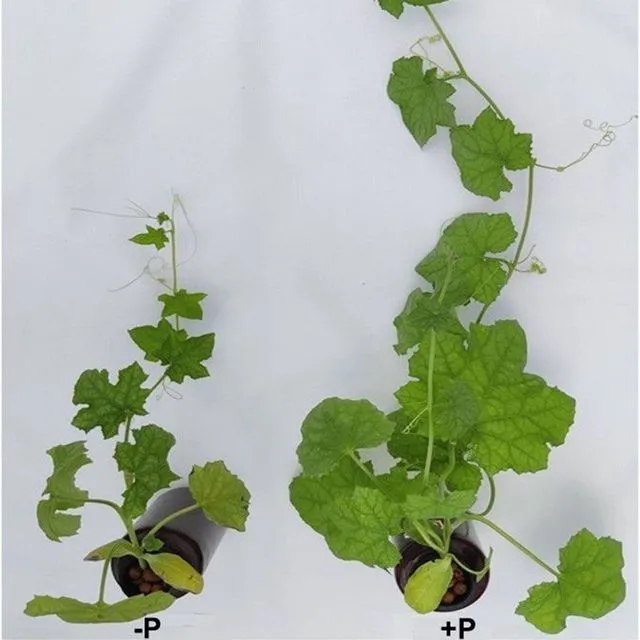
Luffa, referring to the smooth (Luffa aegyptiaca Mill.) and angled (Luffa acutangular (L.) Roxb.) types, is a climbing vegetable from the family Cucurbitaceae that has grown for centuries across Asia. Luffa are consumed as vegetables when immature and used as natural sponges when mature. Luffa is gaining popularity as an alternative vegetable crop in regions like Florida and California, thanks to favorable growing conditions and rising demand for Asian specialty produce. Successful cultivation of luffa relies heavily on proper nutrient management, particularly for nitrogen (N), phosphorus (P), and potassium (K) because mismanagement can lead to deficiencies that cause stunted growth, leaf discoloration, and reduced yields. Early diagnosis and intervention are crucial for ensuring healthy growth and maximizing profitability. This Extension publication provides practical guidance for growers, Extension agents, and students on identifying and correcting N, P, and K deficiencies in luffa.