
Luffa, commonly known as sponge gourd, refers to two main types: smooth luffa (Luffa aegyptiaca Mill.) and angled luffa (Luffa acutangular (L.) Roxb.). It is a climbing vegetable in the cucumber family, Cucurbitaceae (Liu et al. 2024). Grown for centuries across Asia, luffa is prized for its young, edible fruits, which are consumed as vegetables, and its mature, fibrous fruits, which are used as natural sponges (Partap et al. 2012; Azeez et al. 2013). In regions like Florida and California, luffa is gaining popularity as an alternative vegetable crop, thanks to favorable growing conditions and rising demand for Asian specialty produce (Molinar 2012; Xie et al. 2016). Successful cultivation of luffa relies heavily on proper nutrient management, particularly for nitrogen (N), phosphorus (P), and potassium (K). Nutrient mismanagement can lead to deficiencies that cause stunted growth, leaf discoloration, and reduced yields. Early diagnosis and intervention are crucial for ensuring healthy growth and maximizing profitability. This Extension publication provides practical guidance for growers, Extension agents, and students on identifying and correcting N, P, and K deficiencies in luffa.
Optimal Ranges of Nitrogen, Phosphorus, and Potassium in Luffa
A sufficient supply of N, P, and K is critical for optimal growth and fruit production in luffa plants. The ideal range of N in luffa leaf tissue is 3.5% to 6.0% (35,000 to 60,000 ppm) on a dry weight basis. Nitrogen within this range promotes healthy foliage and vigorous growth; however, levels exceeding 6.0% can lead to excessive vegetative growth, nutrient imbalances, and reduced fruit yields and quality (Li et al. 2023).
The recommended P range in luffa leaf tissue is 0.35% to 1.25% on a dry weight basis (Mills and Jones 1996). Plants within this range exhibit strong root development, healthy leaf color, and consistent fruit production. Excess P, though rare, can cause imbalances with other nutrients, particularly micronutrients like zinc, iron, and copper, which may become less available or even deficient (Mills and Jones 1996). Insoluble phosphate compounds may form as a result of chemical interactions between high levels of P and these micronutrients, making them less available to plants. For example, excess phosphate ions (PO₄³⁻) can form insoluble zinc phosphate precipitates (Zn₃(PO₄)₂) in the soil, reducing zinc availability. Additionally, excessive P can suppress the root uptake mechanisms responsible for absorbing certain micronutrients, particularly zinc. This imbalance can lead to deficiency symptoms such as interveinal chlorosis, stunted growth, or poor fruit development, even when micronutrients are present in sufficient quantities in the soil.
Potassium is essential for plant health, water relations, and fruit yield and quality. It is typically applied in balanced proportions with N and P in an NPK fertilizer program. For example, a fertigation ratio of 1:0.6:1 (N:P:K) has been shown to enhance luffa fruit yields, underscoring the importance of balanced nutrient management for high luffa productivity (Murthy et al. 2020).
Identifying Nutrient Deficiencies of Luffa Leaves and Plants
Nutrient deficiencies in luffa may appear as distinct or overlapping symptoms in the leaves and overall plant, often reducing yield and fruit quality. Early detection of these symptoms allows for timely corrective measures to maintain healthy growth and optimize productivity. The following tables and figures describe and illustrate the deficiencies for nitrogen, phosphorus, and potassium.
Nitrogen Deficiency in Luffa Leaves
Table 1. Comparative assessment of leaf symptoms under nitrogen-deficient and nitrogen-sufficient conditions in luffa. The classifications are based on distinct visual characteristics and the progression of symptom expression.
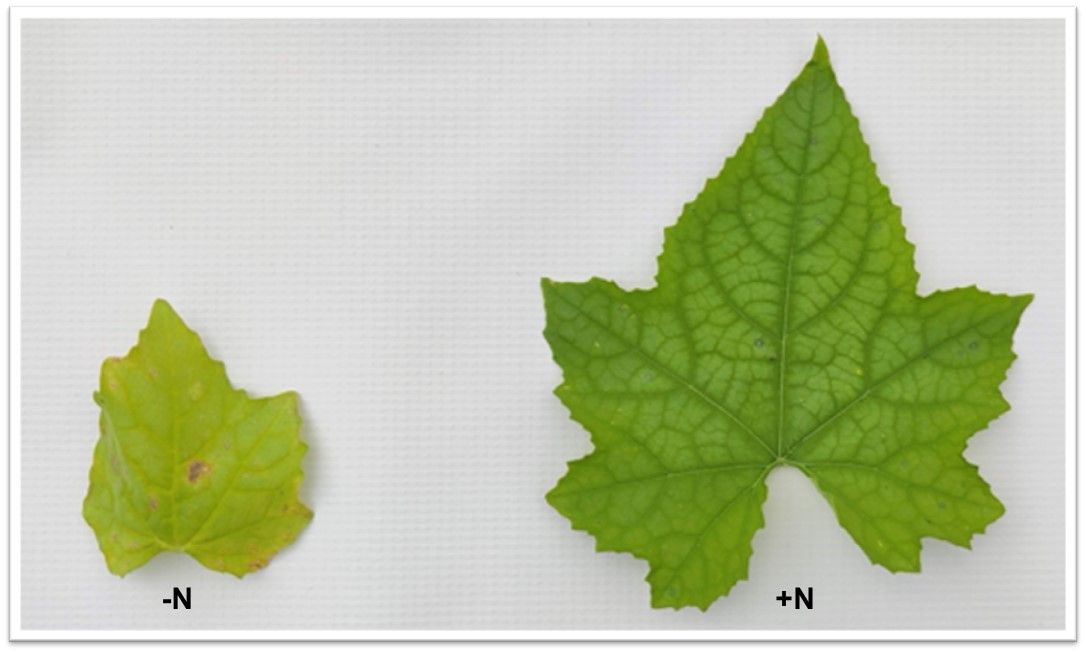
Credit: Qiansheng Li, UF/IFAS
Nitrogen Deficiency in Luffa Plants
Table 2. Diagnostic characteristics of nitrogen deficiency versus sufficient nitrogen supply in luffa plants. The classifications are based on different plant characteristics and diagnostic approaches.
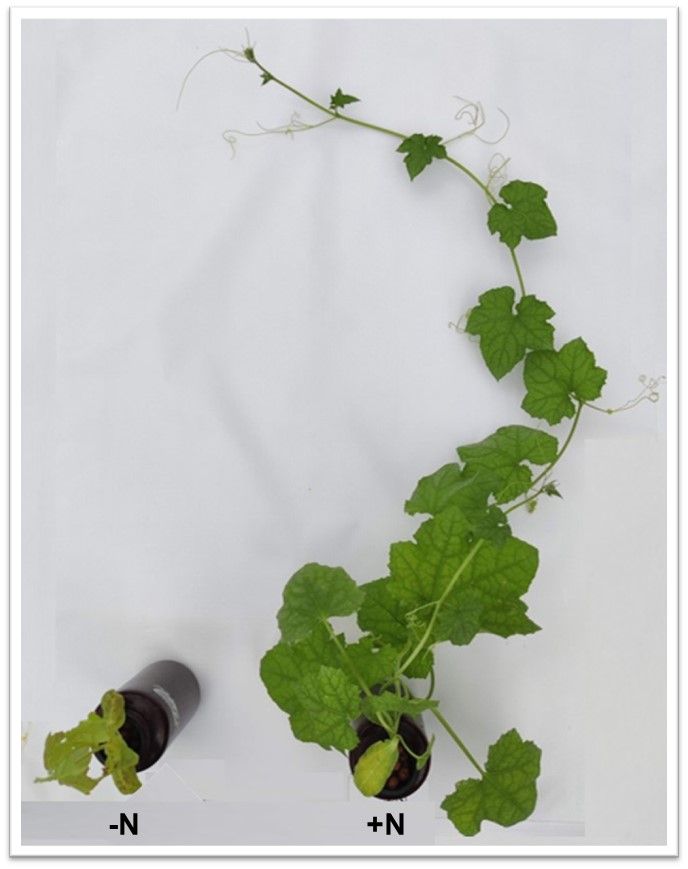
Credit: Qiansheng Li, UF/IFAS
Phosphorus Deficiency in Luffa Leaves
Table 3. Comparative assessment of leaf symptoms under phosphorus-deficient and phosphorus-sufficient conditions in luffa. The classifications are based on symptom progression and severity levels.
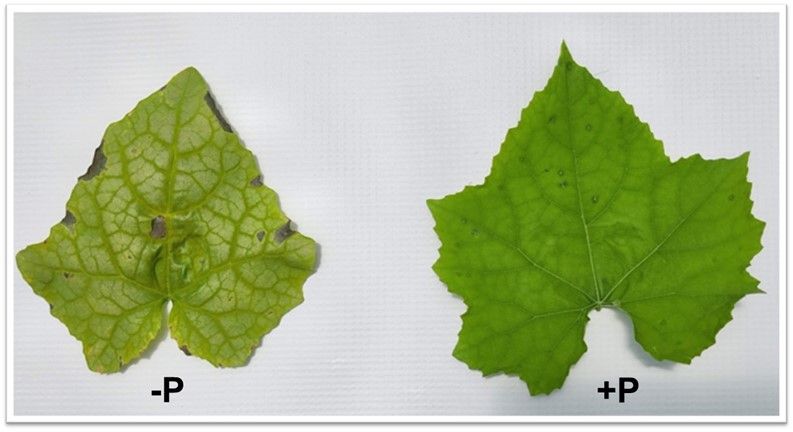
Credit: Qiansheng Li, UF/IFAS
Phosphorus Deficiency in Luffa Plants
Table 4. Diagnostic characteristics of phosphorus deficiency versus sufficient phosphorus supply in luffa plants. The classifications are based on different aspects of plant response to P availability.
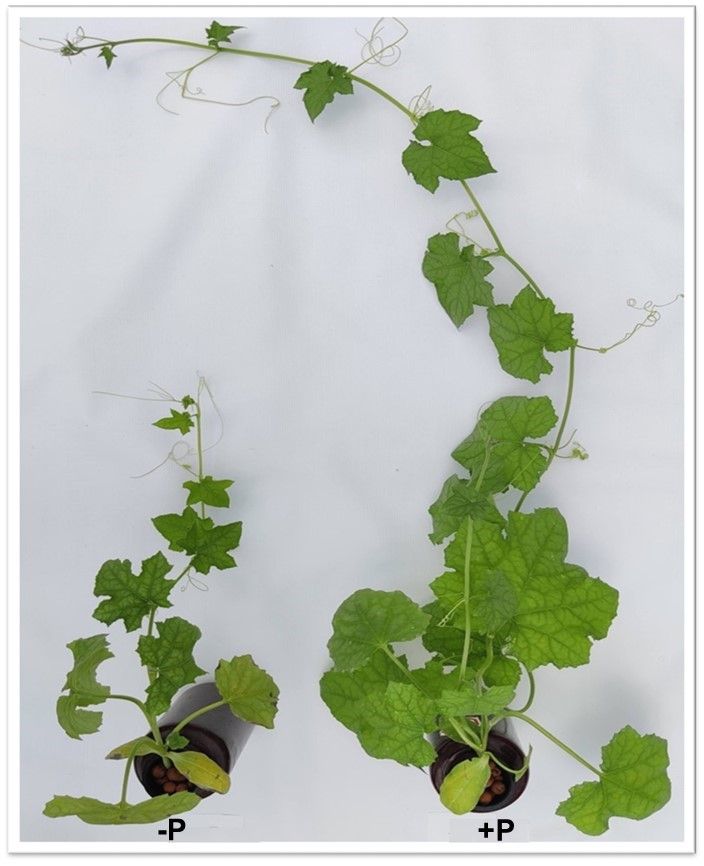
Credit: Qiansheng Li, UF/IFAS
Potassium Deficiency in Luffa Leaves
Table 5. Comparative assessment of leaf symptoms under potassium-deficient and potassium-sufficient conditions in luffa. The classifications are based on symptom severity and progression stages.
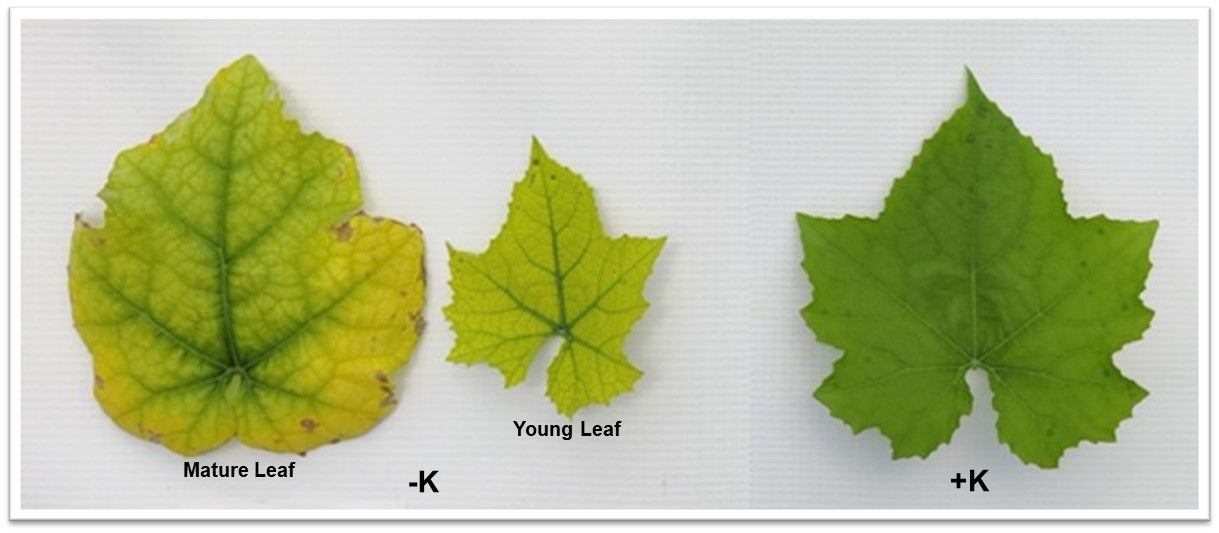
Credit: Qiansheng Li, UF/IFAS
Potassium Deficiency in Luffa Plants
Table 6. Diagnostic characteristics of potassium deficiency versus sufficient potassium supply in luffa plants. The classifications are based on symptom type and deficiency severity progression.
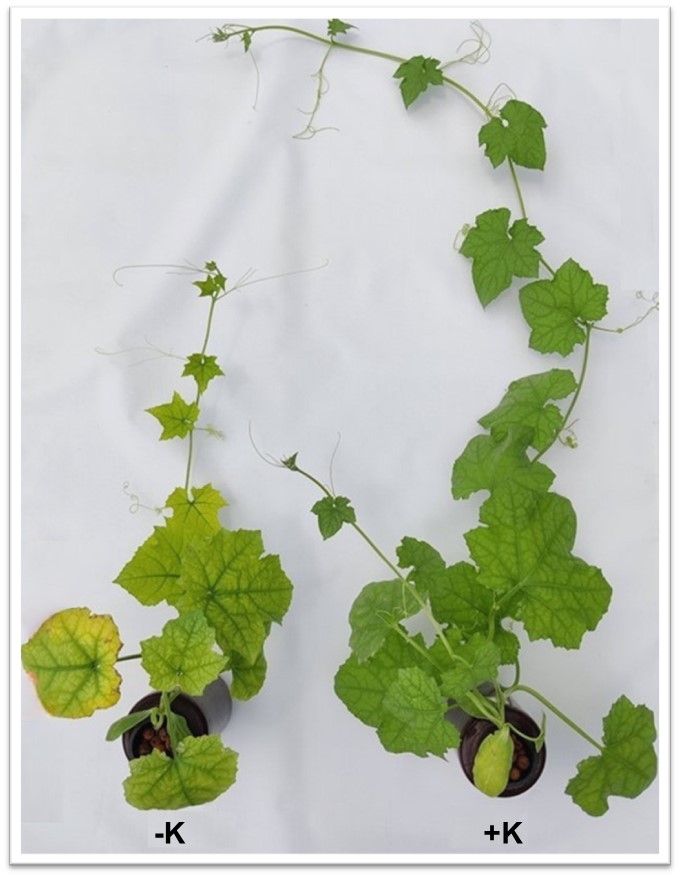
Credit: Qiansheng Li, UF/IFAS
Fertilizer Applications to Correct Nitrogen, Phosphorus, and Potassium Deficiencies
Nitrogen (N), phosphorus (P), and potassium (K) deficiencies in luffa are easily preventable or treatable with proper fertilizer management. Although specific UF/IFAS recommendations for N, P, and K fertilizer applications in luffa production are not currently available for Florida, guidelines for similar crops in the Cucurbitaceae family, such as cucumber, can be adapted for the time being. Typically, the following application rates can be used: 150 lb/A of N and either 120 lb/A each of phosphorus (P₂O₅) and K₂O for medium soil test levels of P and K or 80 lb/A each of P₂O₅ and K₂O for low soil test levels of P and K (Liu et al. 2024).
It is recommended to split applications of N, P, and K, incorporating them into the soil pre-plant and as a side dressing during the growing season. For luffa plants in fertigation, N, P, and K can be applied in multiple micro-doses through the irrigation system over the course of the season. If using dry granular fertilizer, it should be applied at planting to ensure nutrient availability during early root development. Given the relatively immobile nature of phosphorus in soil, adequate early application is crucial to prevent deficiencies later in the plant’s growth.
For more detailed information, refer to chapter 2 in the most recent edition of the Vegetable Production Handbook of Florida on fertilizer management.
References
Azeez, M. A., O. S. Bello, and A. O. Adedeji. 2013. “Traditional and Medicinal Uses of Luffa cylindrica: A Review.” Journal of Medicinal Plants Studies 1 (5): 102–111.
Li, Q., M. Gluck, Y. Wang, et al. 2023. “Symptoms of Nitrogen and Iron Deficiency in Luffa: HS1475, 11/2023.” EDIS 2023 (6). https://doi.org/10.32473/edis-hs1475-2023
Liu, G. D., E. H. Simonne, K. T. Morgan, et al. (2023) 2024. “Chapter 2. Fertilizer Management for Vegetable Production in Florida: VPH ch. 2, CV296, rev. 6/2024.” EDIS 2024 (VPH). https://doi.org/10.32473/edis-cv296-2023
Mills, H. A., and J. B. Jones, Jr. 1996. Plant Analysis Handbook II. Micro-Macro Publishing.
Molinar, R. H. 2012. “Indigenous Asian Specialty Vegetables in the Central Valley of California.” HortScience 47 (7): 835–838. https://doi.org/10.21273/HORTSCI.47.7.835
Murthy H. C., A. K. Nair, D. Kalaivanan, M. Anjanappa, S. Shankara Hebbar, and R. H. Laxman. 2020. “Effect of NPK Fertigation on Post-Harvest Soil Nutrient Status, Nutrient Uptake and Yield of Hybrid Ridge Gourd [Luffa acutangula (L.) Roxb] Arka Vikram.” International Journal of Chemical Studies 8 (4): 3064–3096. https://doi.org/10.22271/chemi.2020.v8.i4ak.10117
Partap, S. A., N. Kumar, K. Sharma, and K. K. Jha. 2012. “Luffa cylindrica: An Important Medicinal Plant.” Journal of Natural Product and Plant Resources 2 (1): 127–134.
Xie, Y., G. Liu, Y. Li, and K. Migliaccio. 2016. “Luffa—an Asian Vegetable Emerging in Florida: HS1285, 9/2016.” EDIS 2016 (7). https://doi.org/10.32473/edis-hs1285-2016