Mongi Zekri
County agent
Send Email
0000-0002-9754-4156
multi-county citrus UF/IFAS Extension agent for Charlotte, Collier, Glades, Hendry, and Lee Counties
Citrus Agents Profile
Mongi Zekri and Tom Obreza
Since mineral nutrition is a major factor in maximizing yield of high-quality fruit, understanding the functions of mineral elements, diagnosing nutrient deficiencies, and providing needed fertilizers are essential. This 4-page fact sheet describes and discusses boron (B) and chlorine (Cl) deficiencies, functions, and recommended practices to alleviate nutritional problems.
Nitrogen is the key component in mineral fertilizers applied to citrus groves. N has more influence on tree growth, appearance, and fruit production/quality than any other mineral element. Nitrogen affects the absorption and distribution of practically all other elements, and it is particularly important to the tree during flowering and fruit set.
Jamie D. Burrow, Tripti Vashisth, Mongi Zekri, Stephen H. Futch, and Arnold Schumann
This document is HS1292, one of a series of the Horticultural Sciences Department, UF/IFAS Extension. Original publication date May 2017.
Thomas A. Obreza, Mongi Zekri, and David V. Calvert
Robert E. Rouse and Mongi Zekri
Mongi Zekri, Robert E. Rouse, and Jonathan H. Crane
Thomas A. Obreza, Brian J. Boman, Davie Kadyampakeni, Mongi Zekri, Kelly Morgan, and Tripti Vashisth
This document is SL460, one of a series of the Department of Soil, Water, and Ecosystem Sciences, UF/IFAS Extension. Original publication date February 2020. Visit the EDIS website at https://edis.ifas.ufl.edu for the currently supported version of this publication.
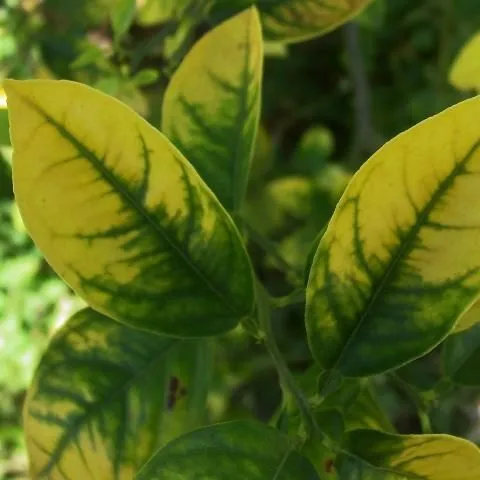
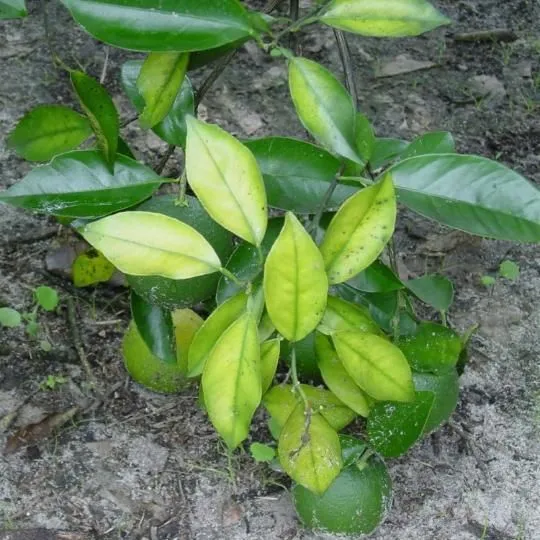
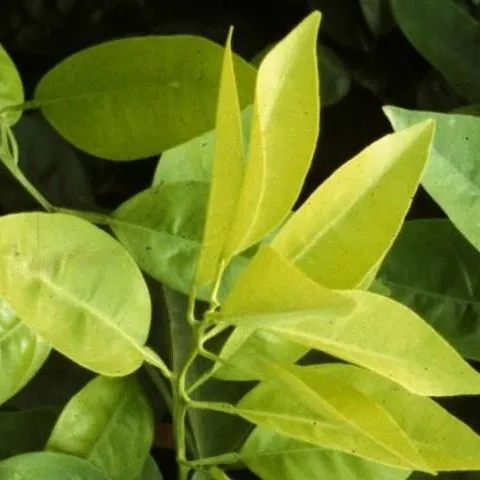
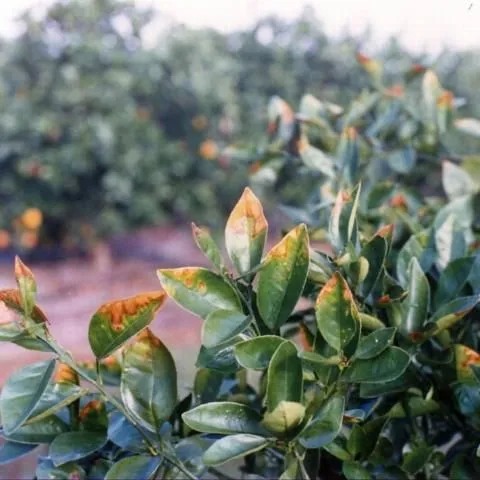
Magnesium deficiency has been a major problem in citrus production. In Florida, Mg deficiency is commonly referred to as “bronzing.” Trees with inadequate Mg may have no symptoms in the spring growth flush, but leaf symptoms develop as the leaves age and the fruit expand and mature in the summer and fall. Magnesium deficiency symptoms occur on mature leaves following the removal of Mg to satisfy fruit requirements.
Thomas A. Obreza, Brian J. Boman, Mongi Zekri, and Stephen H. Futch
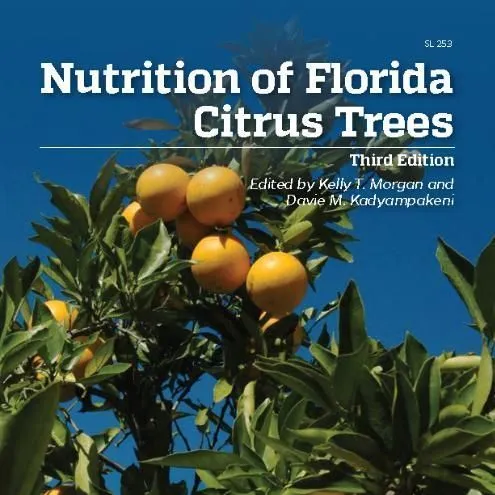
This publication is part of SL253, Nutrition of Florida Citrus Trees, 3rd Edition. For references, a glossary, and appendices, please refer to the full document at https://edis.ifas.ufl.edu/ss478.
Thomas A. Obreza, Brian J. Boman, Mongi Zekri, Stephen H. Futch, Lawrence R. Parsons, James J. Ferguson, Rhuanito Ferrarezi, and Arnold Schumann
Thomas A. Obreza, Mongi Zekri, and Stephen H. Futch
Calcium and sulfur are sometimes called secondary nutrients. This term does not mean that these nutrients play a secondary role in citrus plant growth and development. Ca and S are as essential as N, P, K, Mg, and other nutrients for healthy plant growth. An inadequate supply of Ca and/or S can be a major constraint to crop production and quality.
Mongi Zekri and Thomas A. Obreza
Mongi Zekri, Chris Oswalt, Steve Futch, Gary England, Camille McAvoy, Laurie Hurner, and Parker Platts
Citrus fruits remove large amounts of K compared to other nutrients. Potassium moves from leaves to fruit and seeds as they develop. Potassium is necessary for several basic physiological functions such as the formation of sugars and starch, synthesis of proteins, normal cell division and growth, and neutralization of organic acids. Potassium is important in fruit formation and enhances fruit size, flavor, and color. This nutrient also helps to reduce the influence that adverse weather conditions (such as drought, cold, and flooding) have on citrus trees.
Thomas A. Obreza, Kelly T. Morgan, L. Gene Albrigo, Brian J. Boman, Davie Kadyampakeni, Tripti Vashisth, Mongi Zekri, Jim Graham, and Evan Johnson
Thomas A. Obreza, Mongi Zekri, and Edward A. Hanlon
Since mineral nutrition is a major factor in maximizing yield of high quality fruit, understanding the functions of mineral elements, diagnosing nutrient deficiencies, and providing needed fertilizers are essential. This publication describes and discusses molybdenum (Mo) and nickel (Ni) deficiencies, functions, and recommended practices to alleviate nutritional problems.
Since mineral nutrition is a major factor in maximizing yield of high-quality fruit, understanding the functions of mineral elements, diagnosing nutrient deficiencies, and providing needed fertilizers are essential. This publication describes and discusses iron (Fe) and copper (Cu) deficiencies, functions, and recommended practices to alleviate nutritional problems.
S. H. Futch, L. W. Duncan, and M. Zekri
Kelly T. Morgan, Thomas A. Obreza, Davie Kadyampakeni, Said Hamido, Rhuanito Soranz Ferrarezi, and Mongi Zekri
Mongi Zekri, Thomas Obreza, and Arnold Schumann
Mongi Zekri and Robert E. Rouse
This quick reference table will provide growers with information (suggested rates, use restrictions, etc.) on different herbicides used in citrus. The herbicide table, prepared based on the Florida Citrus Production Guide, will aid growers to select an appropriate postemergent herbicide program in citrus groves.
Thomas A. Obreza, Mongi Zekri, Edward A. Hanlon, Kelly Morgan, Arnold Schumann, and Robert Rouse
Mongi Zekri, Thomas A. Obreza, Robert Koo, and Fernando M. Alferez
Since mineral nutrition is a major factor in maximizing yield of high-quality fruit, understanding the functions of mineral elements, diagnosing nutrient deficiencies, and providing needed fertilizers are essential. This publication describes and discusses manganese (Mn) and zinc (Zn) deficiencies, functions, and recommended practices to alleviate nutritional problems.
Kelly T. Morgan, Davie M. Kadyampakeni, Mongi Zekri, Arnold W. Schumann, Tripti Vashisth, Muhammad A. Shahid, and Thomas A. Obreza
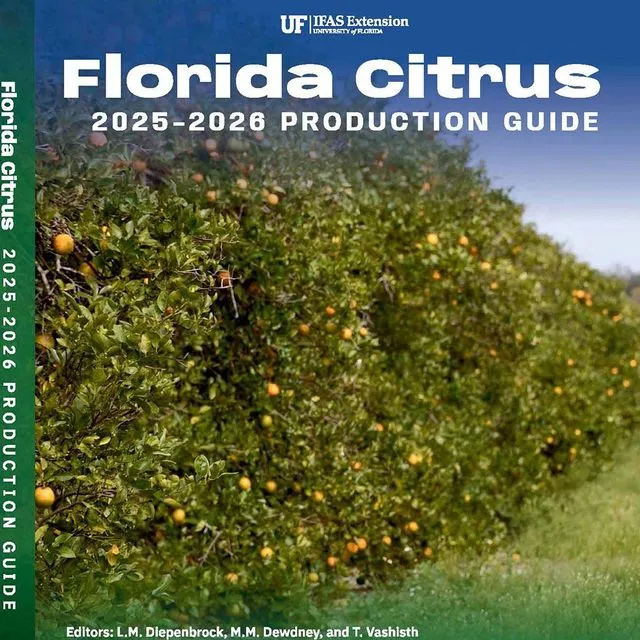
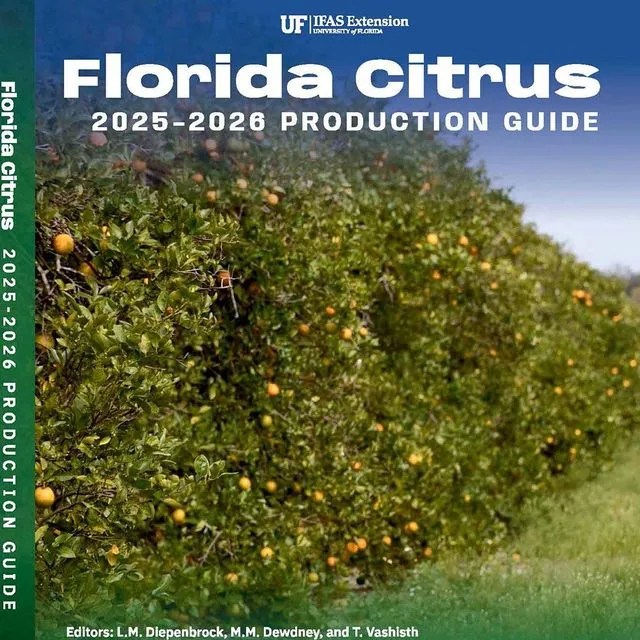
2025–2026 Florida Citrus Production Guide
Jamie D. Burrow, Chris Oswalt, Mongi Zekri, Matthew T. Smith, and Alissa Hevesh
Tom Obreza, Ed Hanlon, and Mongi Zekri
A UF/IFAS numbered Fact Sheet.
Ute Albrecht, Fernando Alferez, John M. Chater, and Mongi Zekri
Ute Albrecht, Lorenzo Rossi, and Mongi Zekri
A UF/IFAS numbered Management. in support of UF/IFAS Extension program: Plant Systems
Fernando Alferez, Ute Albrecht, Susmita Gaire, Ozgur Batuman, Jawwad Qureshi, and Mongi Zekri
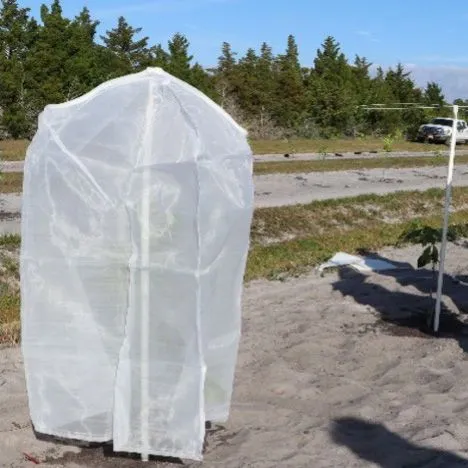
Psyllid exclusion is the most effective strategy to keep citrus trees free from HLB. Individual protective covers (IPCs) are a novel strategy based on psyllid exclusion of individual trees using a protective mesh bag. This new 3-page publication summarizes the knowledge we have accrued from our 3-year-long field studies using the IPC system and provides recommendations that can help with effective use of this technology.
Mongi Zekri, Arnold Schumann, Tripti Vashisth, Davie Kadyampakeni, Kelly Morgan, Brian Boman, and Tom Obreza
A UF/IFAS numbered Fact Sheet. Published by Plant Systems
Tripti Vashisth, Mongi Zekri, Fernando Alferez, and Muhammad A. Shahid
Christopher Vincent, Tripti Vashisth, Mongi Zekri, and Ute Albrecht
Mongi Zekri, Arnold W. Schumann, Tripti Vashisth, Davie M. Kadyampakeni, Kelly T. Morgan, Brian Boman, Muhammad A. Shahid, and Thomas A. Obreza
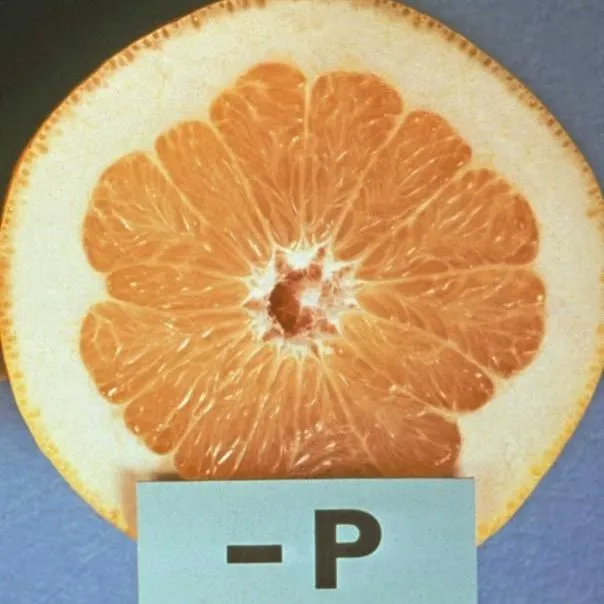
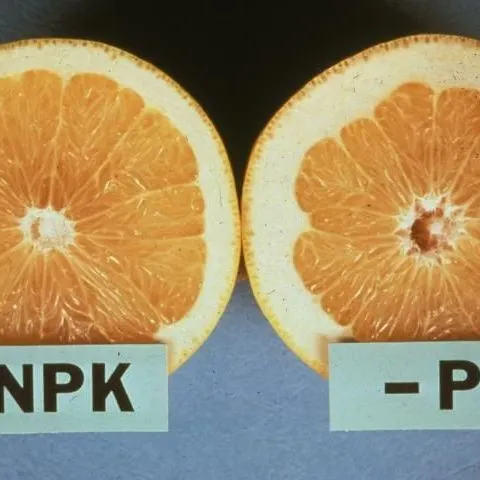
Phosphorus deficiency is not common in Florida citrus groves. If it does occur, it is more difficult to diagnose than nitrogen (N) deficiency or other nutrient element deficiencies. Growth is reduced when P supply is too low. Phosphorus is highly mobile in plants, so when it is deficient, it may move from old leaves to young leaves and other actively growing areas where energy is needed to form seeds and fruit.
Tripti Vashisth, Chris Oswalt, Mongi Zekri, Fernando Alferez, Jamie D. Burrow, and Muhammad A. Shahid
Ute Albrecht, Mongi Zekri, and Jeffrey Williamson
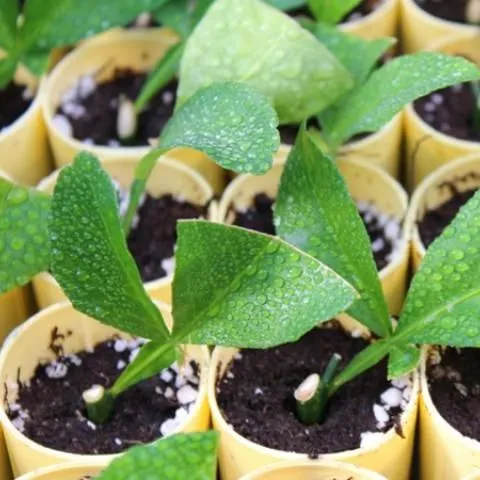
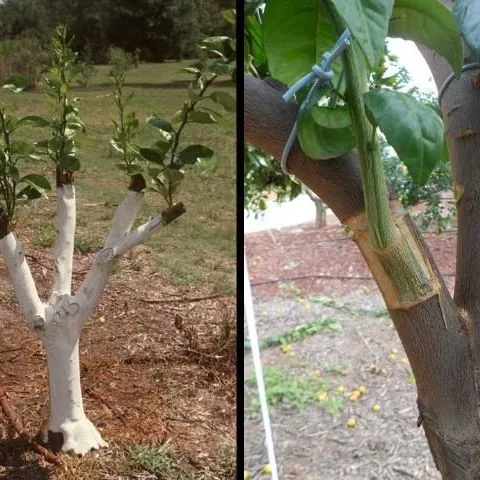
This publication explains the different methods of citrus propagation and includes detailed descriptions and photographs of the grafting process and other principles of propagation.
Davie M. Kadyampakeni, Kelly T. Morgan, Mongi Zekri, Arnold W. Schumann, Sandra Guzmán, Fernando Alferez, Muhammad A. Shahid, and Thomas A. Obreza