
Abstract
This publication explores the multifaceted applications of spraying drones in agriculture, emphasizing their advantages over traditional methods in terms of precision, efficiency, and sustainability. It examines their role in delivering pesticides (herbicides, insecticides, fungicides), fertilizers and nutrients, irrigation, seeding, biological control, pollination, and aquaculture feeding. By leveraging advanced technologies such as Real-Time Kinematic Global Positioning System (RTK-GPS), artificial intelligence (AI), multispectral imaging, and variable-rate application (VRA) systems, spraying drones (Figure 1) optimize resource use, reduce environmental impact, and enhance farm profitability. This article highlights how these applications address long-standing challenges in crop and aquatic management, paving the way for sustainable intensification, supporting food security and ecological health in a changing world. The publication provides useful information about spraying drones to students, research scientists, Extension agents, growers, allied industry, and state agency personnel.
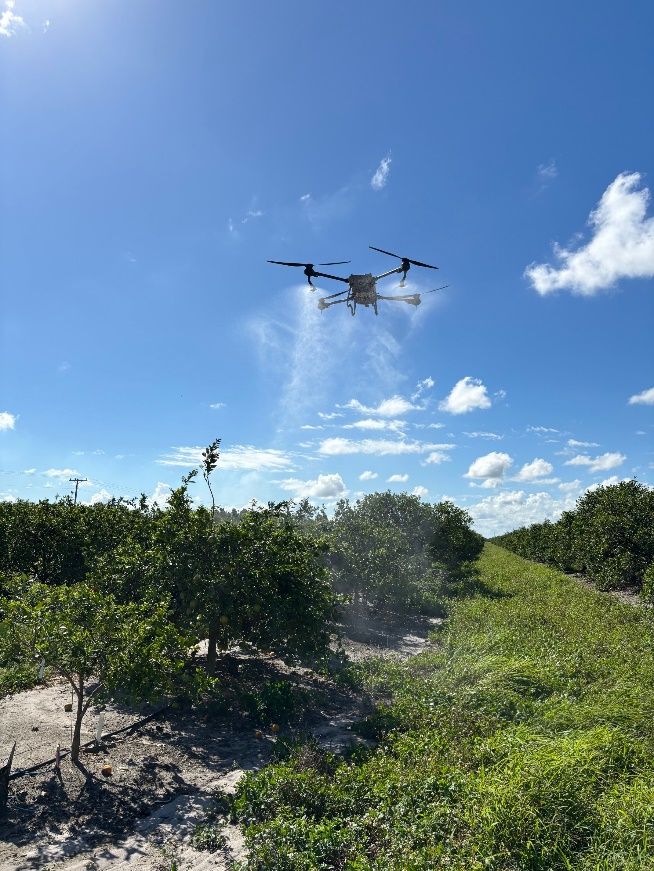
Credit: Wenhao Liu, UF/IFAS
1. Introduction
Agriculture and aquaculture today face unprecedented challenges: escalating labor costs, shrinking arable land, climate variability, and the urgent need to sustainably feed a growing global population projected to reach 9.8 billion by 2050 (UN Population Division 2009; United Nations 2017). Artificial intelligence (AI) and precision agriculture have the potential to address these issues through technology-driven resource optimization and crop productivity enhancement (Júnior et al. 2024; Teshome et al. 2023; Ampatzidis 2018). Precision spraying, as a key component of precision agriculture, integrates targeted application strategies, such as applying pesticides only to detected hotspots or nutrient-deficient zones, to reduce waste and environmental impacts. Traditional spraying methods relying on tractor-mounted sprayers, manual labor, boats, or manned aircraft often fall short in efficiency, precision, and environmental stewardship (Chen et al. 2021; Huang et al. 2009; Partel et al. 2021). In comparison, spraying drones equipped with advanced spraying systems can improve targeting precision, reduce chemical waste, lower labor demands, and enhance cost-efficiency, offering a transformative tool for both crop and aquatic management. These drones integrate cutting-edge technologies such as Real-Time Kinematic Global Positioning System (RTK-GPS, an enhanced GPS system with centimeter-level accuracy), AI, multispectral imaging, and variable-rate application (VRA) systems to deliver inputs with pinpoint accuracy, as shown in Figure 1 (Delavarpour et al. 2023; DJI Agriculture 2024; Rejeb et al. 2022). From pesticide application to pollination, their versatility spans varied agricultural tasks, offering solutions to terrain inaccessibility, chemical overuse, and labor shortages. This paper explores the specialized applications of spraying drones, examining their mechanisms, benefits, and transformative impact on modern farming systems. Figure 2 outlines the applications for spraying drones and provides an overview of the article’s structure.
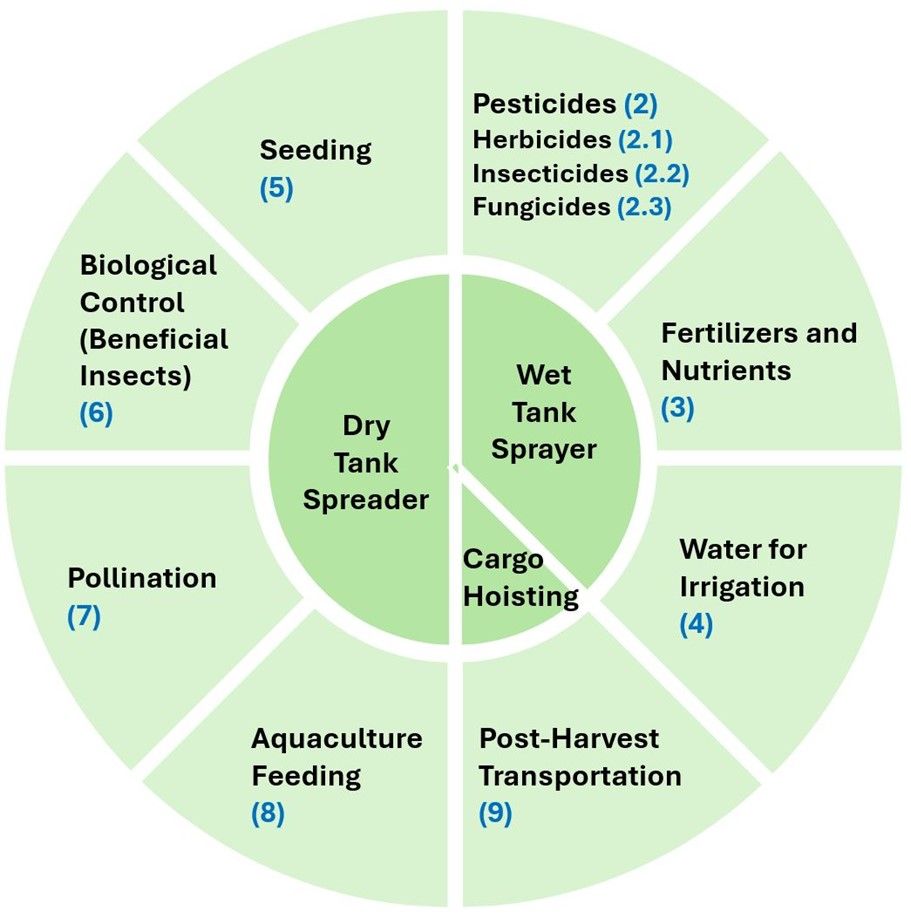
Credit: Wenhao Liu, UF/IFAS
2. Pesticides
2.1 Herbicides
Spraying drones have revolutionized herbicide applications by enabling high-precision, targeted herbicide spraying. Compared to traditional broadcast spraying, this targeted approach can reduce chemical use by up to 30%, lowering environmental impact and input costs (Nobre et al. 2023; Vijayakumar et al. 2023). Drones excel in complex terrains such as steep slopes or wetlands, ensuring uniform application where tractors cannot reach. Low-altitude flight and precision nozzle design control herbicide drift to within a few centimeters of the target area (Huang et al. 2022). This precision not only enhances weed control but also supports sustainable agriculture by reducing soil and water pollution.
Moreover, drones cover large areas quickly, with some models handling 21 hectares per hour (DJI Agriculture 2024). This speed is crucial during critical weed control windows, such as after crop emergence, helping farmers take swift action and reduce labor needs. In labor-scarce or fragmented plot areas, drones provide a scalable solution for consistent weed management. For example, in small mountainous farms, drones can complete tasks in a short time, ensuring crops are not affected by weed competition.
2.2 Insecticides
Spraying drones apply insecticides by precisely targeting pest-affected areas, significantly reducing chemical use and the risk of human exposure to toxins. The drones rely on RTK-GPS and onboard radars for navigation, ensuring insecticides are only used where needed, thereby improving pest control efficiency. In complex environments such as flooded rice fields, spraying drones can quickly adapt and respond to pest outbreaks (Wongsuk et al. 2023).
Safety is another major advantage. Drones eliminate the need for workers to handle toxic chemicals directly, reducing health risks such as respiratory diseases (Tudi et al. 2022). For example, in orchards, drones can precisely spray insecticides deep into the canopy, avoiding overexposure that occurs with manual spraying. This technology supports integrated pest management (IPM) by reducing reliance on broad-spectrum insecticides, promoting safer and more sustainable agricultural practices.
2.3 Fungicides
Spraying drones optimize fungicide application by providing uniform coverage in dense canopies, ensuring comprehensive protection against diseases such as powdery mildew or rust. They can adapt to different crops and disease pressures, adjusting spray volume and droplet size for optimal results. In hilly orchards, drones can apply fungicides in a timely manner, covering up to 15 hectares per hour (DJI Agriculture 2024). By using generated prescription maps from multispectral imaging to identify infected areas, they reduce chemical runoff, supporting environmentally friendly disease management (Matthews 2021).
This precise application reduces the risk of fungicide resistance and protects soil health, aligning with sustainable agriculture goals. For example, it was found that in vineyards, drones can concentrate fungicides on lower leaves where moisture lingers, optimizing disease control and reducing resistance development (de Souza de Oliveira et al. 2024). Additionally, drones can quickly adjust operation times in response to changing weather conditions, ensuring maximum efficacy.
3. Fertilizers and Nutrients
Spraying drones use precision technology to facilitate site-specific, targeted fertilizer application, improving crop nutrient uptake and reducing waste, especially in rugged or waterlogged terrains. They can efficiently apply specialized nutrient solutions such as micronutrients (e.g., zinc, boron, manganese) or biostimulants, addressing deficiencies in crops such as citrus. In Florida's sandy soils, drones can spray chelated iron fertilizers on iron-deficient trees, correcting chlorosis and improving fruit quality (Zang et al. 2023). Their navigation capabilities in complex terrains ensure uniform application, increasing yields and supporting sustainability by reducing nutrient leaching into water bodies.
Variable-rate application systems allow drones to adjust fertilizer amounts in real time based on soil or crop data, improving nutrient use efficiency by 15% to 25% compared to uniform application (Fabiani et al. 2020). This targeted approach reduces costs and environmental impact, making it ideal for smallholders or specialty crop producers managing fragmented plots.
4. Water for Irrigation
Spraying drones provide precise irrigation by delivering water to specific plant areas, improving efficiency in hard-to-reach areas such as terraced fields. They supplement traditional systems, effectively delivering water and nutrients during dry periods. For example, in sub-Saharan Africa, drones can fill irrigation gaps for smallholders, targeting scarce water resources to high-value crops (You et al. 2011).
Although payload limits large-scale irrigation, typically ranging from 20 to 85 liters, drones excel in spot treatments or emergency irrigation, reducing evaporation and runoff losses. For example, in arid vegetable farming, drones can provide critical moisture support to seedlings. Their precision conserves resources and enhances crop resilience in water-scarce environments, supporting sustainable intensification.
5. Seeding
Spraying drones guided by RTK-GPS and AI algorithms precisely sow seeds in complex terrains (Figure 3). In irregular fields, they significantly outperform traditional methods, greatly reducing labor and time costs. A study in China showed that drone-seeded rice fields achieved 75.64% plant uniformity, far higher than the 54.73% from manual methods (Qi et al. 2022). They can cover 21 hectares per hour, allowing for rapid deployment during tight planting windows (DJI Agriculture 2024).
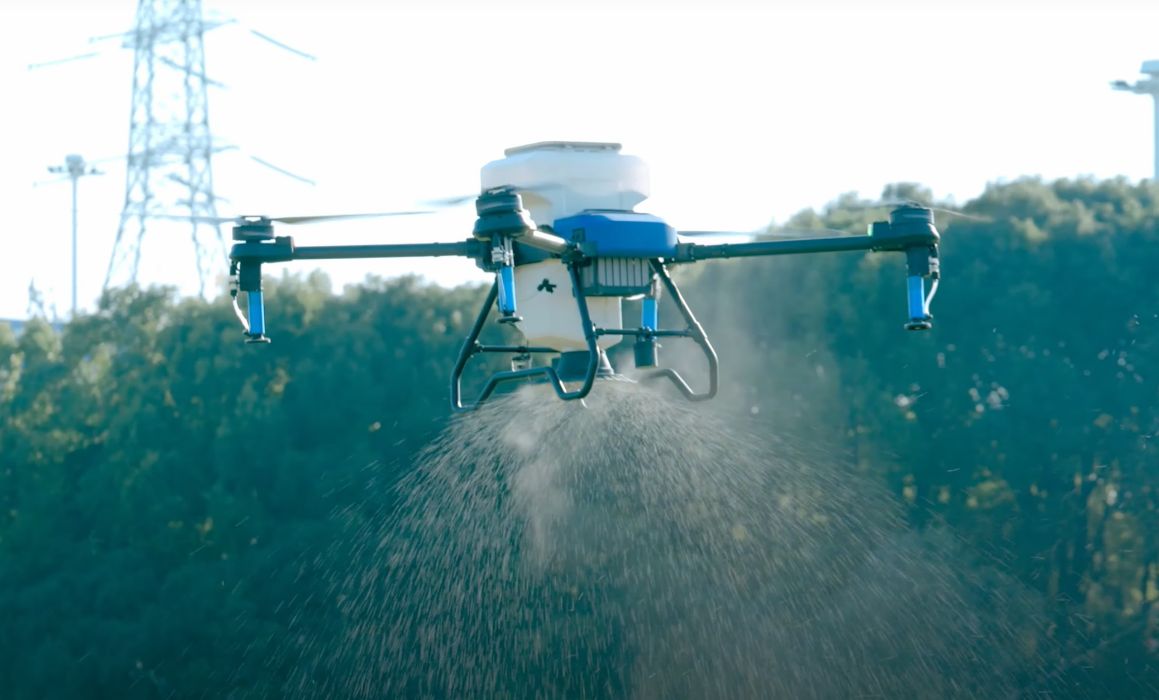
Credit: Agri Spray Drones
This precision improves germination rates and supports diverse applications such as cover cropping or reforestation. Specialized attachments ensure seeds make full contact with the soil and retain moisture, which are crucial for crop establishment (Blunk et al. 2017). They can also customize seed mix ratios and sowing amounts, optimizing resource use in diversified agricultural systems (e.g., quickly sowing grass seeds in pasture restoration).
6. Biological Control (Beneficial Insects)
Sprayer drones promote sustainable biological control by precisely releasing beneficial insects such as parasitoid wasps or predatory insects. They ensure uniform distribution in complex terrains such as orchards, reducing labor costs and chemical use. In organic lettuce fields, drone-released lacewings effectively suppressed aphid populations, demonstrating the potential to reduce pesticide dependence (Del Pozo-Valdivia et al. 2021).
This method enhances pest suppression effectiveness, aligns with integrated pest management goals, and promotes ecological balance in agricultural systems. By combining remote sensing data, drones can target beneficial insect releases to pest-concentrated areas to optimize efficiency and cost-effectiveness (Filho et al. 2019). For example, in cotton fields, drone-released natural enemies can control pests early, reducing the need for subsequent chemical interventions.
7. Pollination
Spraying drones provide an efficient pollination solution for areas lacking natural pollinators. They can uniformly deliver pollen over large areas. In tall crops such as almonds, drones reduce labor costs by up to 80% (Alyafei et al. 2022). In walnut orchards, drone-applied pollen improved fruit set rates, proving its effectiveness in ensuring reliable yields (Akca et al. 2024).
This technology supports yield security in pollinator-stressed areas, providing a scalable solution for sustainable crop production. Innovative techniques such as soap bubble pollination, where pollen is delivered to flowers via drones that use bubbles containing surfactants, further enhance pollen adhesion and reduce mechanical damage to flowers, improving pollination success in controlled environments (Yang and Miyako 2020).
8. Aquaculture Feeding
Spraying drones enhance aquaculture efficiency by uniformly distributing feed in ponds or cages, improving growth rates and reducing waste in remote or shallow areas. They can quickly deliver feed and adjust based on stocking density and water conditions for optimal efficiency. In tilapia ponds, uniform feeding can improve feed conversion efficiency by 10% to 15%, lowering costs and supporting sustainable seafood production (Boyd and Tucker 1998).
This precision maintains water quality and lowers environmental impact by reducing uneaten feed. Drones can also integrate with monitoring tools to adjust feeding strategies based on real-time data, further optimizing resource use (Parra et al. 2018). For example, in shrimp farming, drones and real-time sensing can be used to avoid overfeeding, reducing the risk of water eutrophication.
9. Post-Harvest Transportation of Agricultural Products
Spraying drones designed with high carrying capacities can also be utilized for transportation, enhancing post-harvest logistics by efficiently moving goods across rugged terrains (Figure 4). In field trials, the DJI Agras T100, equipped with a modular cargo suspension system, transported up to 85 kg of harvested citrus fruit within two minutes, demonstrating a tenfold increase in efficiency (Zhang 2024). Their modular design allows them to accommodate various cargo types, further enhancing farm productivity and profitability, particularly in challenging landscapes.

Credit: Wenhao Liu, UF/IFAS
In fragmented plots or steep slopes where traditional vehicles struggle, this capability is especially important. For example, in mountainous orchards, drones can quickly transport freshly picked fruit to collection points, preventing quality degradation. Automated transportation reduces operational downtime, improving overall agricultural supply chain efficiency.
10. Overall Advantages
Spraying drones offer transformative benefits over traditional agricultural methods, as demonstrated across their applications in pesticide delivery, fertilization, seeding, biological control, pollination, irrigation, and aquaculture feeding. These advantages enhance precision, efficiency, and sustainability, addressing key challenges in modern farming systems. A summary of their overall advantages is presented below.
- Enhanced precision and accuracy: Spraying drones equipped with RTK-GPS precisely deliver agricultural inputs, significantly reducing waste and environmental impact compared to traditional broadcast methods. This precision enhances pest control, nutrient absorption, and seed placement, promoting sustainable agricultural practices.
- Increased efficiency and flexibility: Spraying drones cover extensive areas rapidly (up to 21 hectares/hour), significantly decreasing application time compared to manual methods. Their ability to operate flexibly during optimal conditions enables growers to strategically time interventions, assisting during critical growth stages such as pollination or pest control.
- Unrestricted terrain accessibility: Spraying drones effectively operate across challenging terrains, including steep slopes, wetlands, and fragmented plots, where conventional machinery is impractical. Their agility enables precise, uniform application at lower spray altitudes. This is especially helpful in specialty crops such as Florida’s citrus groves and vegetable fields, which have obstacles that limit traditional aerial spraying.
- Significant labor cost reduction: Automating spraying tasks with drones drastically cuts labor demands and associated costs. This is particularly beneficial in labor-scarce regions such as Florida. Reduced dependence on manual labor enables current workers to focus on higher-value activities, significantly improving farm productivity and profitability.
- Improved operator safety: Spraying drones minimize human exposure to hazardous chemicals, protecting operators from health risks such as respiratory illnesses and chemical poisoning. By reducing workers’ proximity to harmful substances, drones enhance overall safety and occupational health in agricultural operations.
- Real-time data integration: Advanced drones with sensors like LiDAR or spectral cameras collect real-time crop health and environmental data. This enables precise, data-driven decision-making, enhancing growers’ ability to quickly identify variability in fields and adapt their management practices.
- Cost-effectiveness for small to medium-sized farms: Spraying drones offer affordable, flexible spraying solutions ideal for small and medium-sized farms and specialty crop producers, especially where larger machinery is impractical or costly. Their lower operational costs and adaptability make drones an attractive precision application tool for growers seeking effective yet economical solutions.
- Environmental sustainability: Spraying drones significantly contribute to environmental sustainability by precisely applying agricultural inputs and by minimizing chemical runoff, drift, and nutrient leaching. These practices help protect water quality and ecosystem health, reduce agriculture’s environmental footprint, and promote sustainable farming.
- Versatility across applications: Spraying drones function as multifunctional platforms adaptable to various tasks through interchangeable liquid and dry application tanks. This versatility reduces the need for multiple specialized machines, lowering equipment costs, simplifying farm operations, and making drones highly practical for diverse agricultural and aquaculture applications.
11. Overall Disadvantages
A summary of the overall disadvantages of spraying drones is presented below.
- Significant initial investment costs: While cost-effective in the long run, the upfront cost of spraying drone purchase and maintenance, necessary training, and software can be a financial barrier for small-scale farmers.
- Limited payload capacity and flight time: Despite their advantages, spraying drones have limited payload capacities and battery life, requiring frequent refilling and recharging. This can slow down large-scale applications compared to traditional machinery such as tractor-mounted or airplane sprayers.
- Regulatory and legal restrictions: The use of spraying drones is subject to strict regulations, including licensing, operational restrictions, and flight limitations, which can vary across regions. For detailed information, consult Liu and Ampatzidis (2025). Proper compliance with these rules can add complexity to adoption.
- Weather dependence: Wind speed, temperature, and humidity significantly affect drone spraying accuracy and efficiency. Strong winds can cause drift and reduce precision, while adverse weather conditions can limit operational windows.
- Technical knowledge and training requirements: Effective drone operation requires specialized training in flight control, maintenance, and precision application techniques. Operators without prior experience may encounter a challenging learning curve and may need specialized training or professional assistance to ensure effective drone operation.
- Potential for drift and uneven application: While more precise than traditional methods, drone spraying is still susceptible to drift, especially in high winds. Uneven application can also occur if drones are not properly calibrated or if environmental conditions change mid-flight.
- Connectivity and infrastructure requirements: Reliable RTK-GPS and internet connectivity are essential for optimal drone performance. In remote or inadequately connected areas, meeting these requirements can be challenging, potentially affecting operational efficiency. However, most spraying drones can operate without an active internet connection in the field, provided the flight is scheduled in advance.
- Battery performance and maintenance needs: Drone batteries degrade over time and require regular replacements, which add to operational costs. Additionally, proper battery management and charging infrastructure are necessary to maintain efficiency.
- Integration challenges with existing farm equipment: Farmers using traditional machinery may face challenges integrating spraying drones into their current operations, requiring adjustments in workflow, equipment compatibility, and data management systems.
12. Summary
Spraying drones mark a shift in agricultural spray applications, integrating advanced technologies to deliver pesticides, fertilizers, irrigation, seeds, beneficial insects, pollen, and aquaculture feed, and even to transport harvest products. Across these applications, drones overcome limitations of traditional methods, such as labor intensity, chemical overuse, and terrain inaccessibility, enhancing productivity, profitability, and environmental sustainability. They reduce input waste, improve resource use efficiency, and slash labor costs while minimizing ecological footprints through targeted delivery and reduced runoff. In challenging environments, from hilly fields to mangrove-lined shrimp ponds, drones ensure consistent application and bolster resilience against climate and labor constraints.
However, despite these advantages, spraying drones face several limitations. Their limited payload capacity and battery life can constrain efficiency in large-scale operations, requiring frequent refilling and recharging. Regulatory challenges and strict operational guidelines may hinder widespread adoption, particularly in regions with stringent airspace restrictions. Additionally, weather conditions can impact spray accuracy, with wind and humidity affecting drift and coverage. The significant initial investment costs and the need for technical expertise can also be barriers, especially for small-scale farmers without access to training or financial support.
Despite these challenges, the versatility and cost-effectiveness of spraying drones make them a game-changer for small to medium farms and specialty crop producers. As drone technology evolves with innovations such as AI-driven analytics and novel delivery systems, adoption of spraying drones will further drive sustainable intensification and improved agricultural outcomes.
References
Akca, Y., M. M. Ozguven, Z. Altas, and T. Uygun. 2024. “A New Approach for Artificial Pollination in Walnut Trees: AirPoll.” Journal of Environmental Management 368: 122123. https://doi.org/10.1016/j.jenvman.2024.122123
Alyafei, M. A. S., A. A. Dakheel, M. Almoosa, and Z. F. R. Ahmed. 2022. “Innovative and Effective Spray Method for Artificial Pollination of Date Palm Using Drone.” HortScience 57(10): 1298–1305. https://doi.org/10.21273/hortsci16739-22
Ampatzidis, Y. 2018. “Applications of Artificial Intelligence for Precision Agriculture: AE529, 12/2018.” EDIS 2018(6). https://doi.org/10.32473/edis-ae529-2018
Blunk, S., A. H. Malik, M. I. De Heer, T. Ekblad, J. Bussell, D. Sparkes, K. Fredlund, C. J. Sturrock, and S. J. Mooney. 2017. “Quantification of Seed–Soil Contact of Sugar Beet (Beta vulgaris) Using X-ray Computed Tomography.” Plant Methods 13(1): 1–11. https://doi.org/10.1186/s13007-017-0220-4
Boyd, C. E., and C. S. Tucker. 1998. Pond Aquaculture Water Quality Management. Springer. https://doi.org/10.1007/978-1-4615-5407-3
Chen, H., Y. Lan, B. K. Fritz, W. C. Hoffmann, and S. Liu. 2021. “Review of Agricultural Spraying Technologies for Plant Protection Using Unmanned Aerial Vehicle (UAV).” International Journal of Agricultural and Biological Engineering 14(1): 38–49. https://doi.org/10.25165/j.ijabe.20211401.5714
Delavarpour, N., C. Koparan, Y. Zhang, D. D. Steele, K. Betitame, S. G. Bajwa, and X. Sun. 2023. “A Review of the Current Unmanned Aerial Vehicle Sprayer Applications in Precision Agriculture.” Journal of the ASABE 66(3): 703–721. https://doi.org/10.13031/ja.15128
Del Pozo-Valdivia, A. I., E. Morgan, and C. Bennett. 2021. “In-field Evaluation of Drone-Released Lacewings for Aphid Control in California Organic Lettuce.” Journal of Economic Entomology 114(5): 1882–1888. https://doi.org/10.1093/jee/toab125
de Souza de Oliveira, L., C. R. Grigolo, R. H. Pertille, A. J. Modolo, J. R. Da Rocha Campos, A. R. Elias, and I. Citadin. 2024. “Aerial Spraying for Downy Mildew Control in Grapevines Using a Remotely Piloted Aircraft.” Acta Scientiarum Agronomy 46(1): e66613. https://doi.org/10.4025/actasciagron.v46i1.66613
DJI Agriculture. 2024. “DJI Ag Drone Industry Insight Report 2024.” https://www1.djicdn.com/cms_uploads/ckeditor/attachments/9171/03e81f9a23cf4df447b66c91c43d929a.pdf
Fabiani, S., S. Vanino, R. Napoli, A. Zajíček, R. Duffková, E. Evangelou, and P. Nino. 2020. “Assessment of the Economic and Environmental Sustainability of Variable Rate Technology (VRT) Application in Different Wheat Intensive European Agricultural Areas: A Water Energy Food Nexus Approach.” Environmental Science & Policy 114: 366–376. https://doi.org/10.1016/j.envsci.2020.08.019
Filho, F. H. I., W. B. Heldens, Z. Kong, and E. S. De Lange. 2019. “Drones: Innovative Technology for Use in Precision Pest Management.” Journal of Economic Entomology 113(1): 1–25. https://doi.org/10.1093/jee/toz268
Huang, N. Y., N. W. C. Hoffmann, N. Y. Lan, N. W. Wu, and N. B. K. Fritz. 2009. “Development of a Spray System for an Unmanned Aerial Vehicle Platform.” Applied Engineering in Agriculture 25(6): 803–809. https://doi.org/10.13031/2013.29229
Huang, Z., C. Wang, Y. Li, H. Zhang, A. Zeng, and X. He. 2022. “Field Evaluation of Spray Drift and Nontargeted Soybean Injury from Unmanned Aerial Spraying System Herbicide Application under Acceptable Operation Conditions.” Pest Management Science 79(3): 1140–1153. https://doi.org/10.1002/ps.7285
Júnior, B. M. D., B. R. A. Moreira, V. S. Carreira, A. L. Brito Filho, C. Trentin, F. L. P. Souza, D. Tedesco, T. Setiyono, J. P. Flores, Y. Ampatzidis, R. P. Silva, and L. S. Shiratsuchi. 2024. “Precision Agriculture in the United States: A Comprehensive Meta-review Inspiring Further Research, Innovation, and Adoption.” Computers and Electronics in Agriculture 221: 108993. https://doi.org/10.1016/j.compag.2024.108993
Liu, W., and Y. Ampatzidis. 2025. “Regulatory Requirements to Operate Spraying Drones: AE608, 2/2025.” EDIS 2025(2). https://doi.org/10.32473/edis-ae608-2025
Matthews, G. A. 2021. “The Role for Drones in Future Aerial Pesticide Applications.” Outlooks on Pest Management 32(5): 221–224. https://doi.org/10.1564/v32_oct_10
Nobre, F. L., R. F. Santos, J. L. Herrera, A. L. De Araújo, J. A. Johann, F. Gurgacz, J. A. C. Siqueira, and M. Prior. 2023. “Use of Drones in Herbicide Spot Spraying: A Systematic Review.” Advances in Weed Science 41: e00028. https://doi.org/10.51694/advweedsci/2023;41:00028
Parra, L., L. García, S. Sendra, and J. Lloret. 2018. “The Use of Sensors for Monitoring the Feeding Process and Adjusting the Feed Supply Velocity in Fish Farms.” Journal of Sensors 2018: 1–14. https://doi.org/10.1155/2018/1060987
Partel, V., L. Costa, and Y. Ampatzidis. 2021. “Smart Tree Crop Sprayer Utilizing Sensor Fusion and Artificial Intelligence.” Computers and Electronics in Agriculture 191: 106556. https://doi.org/10.1016/j.compag.2021.106556
Qi, P., Z. Wang, C. Wang, L. Xu, X. Jia, Y. Zhang, S. Wang, L. Han, T. Li, B. Chen, C. Li, C. Mei, Y. Pan, W. Zhang, J. Müller, Y. Liu, and X. He. 2022. “Development of Multifunctional Unmanned Aerial Vehicles versus Ground Seeding and Outplanting: What Is More Effective for Improving the Growth and Quality of Rice Culture?” Frontiers in Plant Science 13: 953753. https://doi.org/10.3389/fpls.2022.953753
Rejeb, A., A. Abdollahi, K. Rejeb, and H. Treiblmaier. 2022. “Drones in Agriculture: A Review and Bibliometric Analysis.” Computers and Electronics in Agriculture 198: 107017. https://doi.org/10.1016/j.compag.2022.107017
Teshome, F. T., H. K. Bayabil, G. Hoogenboom, B. Schaffer, A. Singh, and Y. Ampatzidis. 2023. “Unmanned Aerial Vehicle (UAV) Imaging and Machine Learning Applications for Plant Phenotyping.” Computers and Electronics in Agriculture 212: 108064. https://doi.org/10.1016/j.compag.2023.108064
Tudi, M., H. Li, H. Li, L. Wang, J. Lyu, L. Yang, S. Tong, Q. J. Yu, H. D. Ruan, A. Atabila, D. T. Phung, R. Sadler, and D. Connell. 2022. “Exposure Routes and Health Risks Associated with Pesticide Application.” Toxics 10(6): 335. https://doi.org/10.3390/toxics10060335
United Nations. 2017. “World Population Projected to Reach 9.8 Billion in 2050, and 11.2 Billion in 2100.” https://www.un.org/en/desa/world-population-projected-reach-98-billion-2050-and-112-billion-2100
United Nations Population Division. 2009. “Global Agriculture towards 2050: Population Growth.” Food and Agriculture Organization. https://www.fao.org/fileadmin/templates/wsfs/docs/Issues_papers/HLEF2050_Global_Agriculture.pdf
Vijayakumar, V., Y. Ampatzidis, J. K. Schueller, and T. Burks. 2023. “Smart Spraying Technologies for Precision Weed Management: A Review.” Smart Agricultural Technology 6: 100337. https://doi.org/10.1016/j.atech.2023.100337
Wongsuk, S., P. Qi, C. Wang, A. Zeng, F. Sun, F. Yu, X. Zhao, and H. Xiongkui. 2023. “Spray Performance and Control Efficacy against Pests in Paddy Rice by UAV-based Pesticide Application: Effects of Atomization, UAV Configuration and Flight Velocity.” Pest Management Science 80(4): 2072–2084. https://doi.org/10.1002/ps.7942
Yang, X., and E. Miyako. 2020. “Soap Bubble Pollination.” iScience 23(6): 101188. https://doi.org/10.1016/j.isci.2020.101188
You, L., C. Ringler, U. Wood-Sichra, R. Robertson, S. Wood, T. Zhu, G. Nelson, Z. Guo, and Y. Sun. 2011. “What Is the Irrigation Potential for Africa? A Combined Biophysical and Socioeconomic Approach.” Food Policy 36(6): 770–782. https://doi.org/10.1016/j.foodpol.2011.09.001
Zang, Y., Y. Huang, X. Chang, J. Chen, T. Jiang, Z. Wu, L. Lu, and S. Tian. 2023. “High Soil pH and Plastic-shed Lead to Iron Deficiency and Chlorosis of Citrus in Coastal Saline–Alkali Lands: A Field Study in Xiangshan County.” Horticulturae 9(4): 437. https://doi.org/10.3390/horticulturae9040437
Zhang, X. 2024, December 16. “From Aerial Spraying to Cargo Hoisting: DJI Agricultural Drones Empower Zigui Oranges to ‘Take Flight’ and Propel the Low-altitude Economy.” Huanqiu.com. Accessed March 16, 2025. https://uav.huanqiu.com/article/4KgQoIpiAg0