
Introduction
Leaf rust is an important disease of southern highbush blueberries (SHB) in Florida and can be particularly costly in the evergreen production system. Severe leaf rust causes defoliation in the fall or early winter that can decrease floral bud differentiation, photosynthesis, and the next season’s fruit yield. Florida blueberry growers consistently list leaf rust among their top three disease concerns in UF/IFAS Extension surveys. This publication will present information for Florida blueberry growers on the disease cycle, symptoms, and integrated management of this fungal leaf disease.
Symptoms
Leaf rust symptoms are initially observed as small, somewhat angular yellow spots, turning red to black on the upper surfaces of leaves. This is sometimes limited by larger leaf veins, resulting in lesions with parallel straight or angular sides. Multiple lesions can occur on the same leaf, turning the leaves yellow and red over time (Figure 1) before causing defoliation. Dusty clumps of yellow-, orange-, or rust-colored spores (uredineospores) are produced on the underside of the leaf, opposite the upper leaf lesions, during extended periods of humid, wet weather. The color of the masses of spores gives this disease its name. When present, these spores are a key feature distinguishing leaf rust from all other leaf spot diseases (Figure 2). When the disease becomes severe, infected leaves fall from the bushes (Figure 3).

Credit: D. Phillips and P. Harmon, UF/IFAS
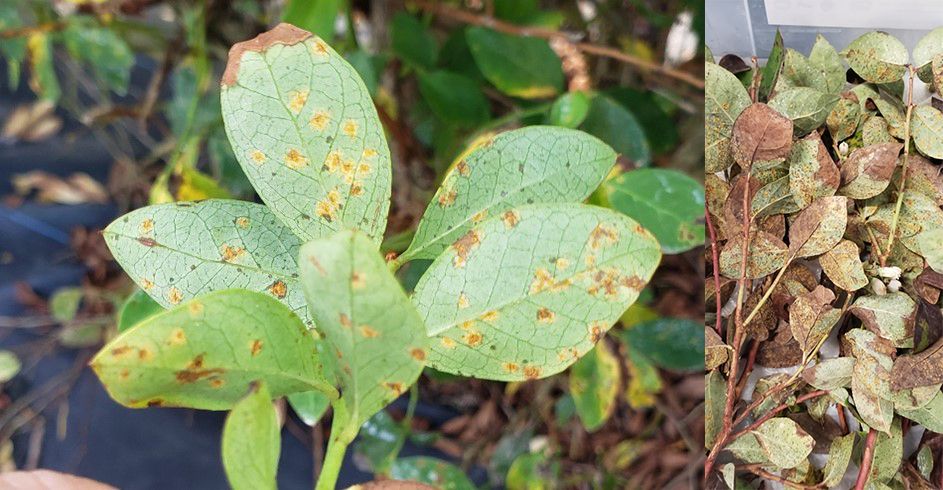
Credit: C. Belizaire and P. Harmon, UF/IFAS
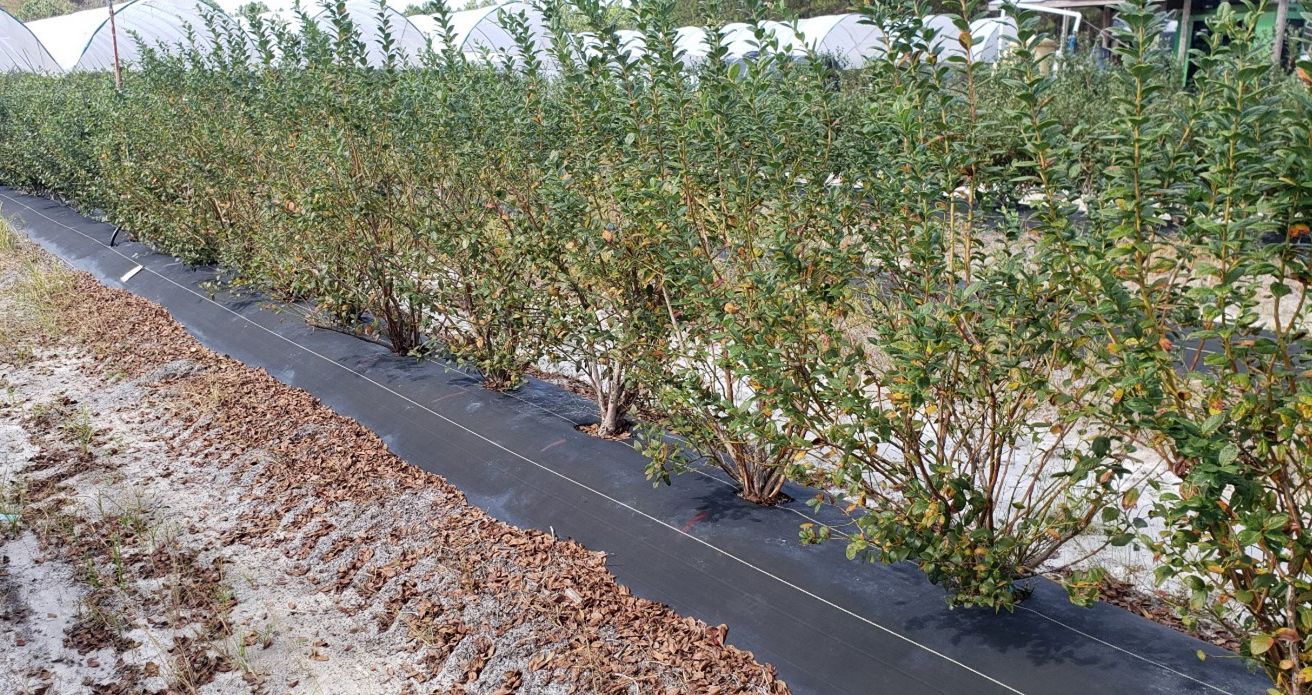
Credit: P. Harmon, UF/IFAS
Disease Cycle
In Florida, the fungus Thekopsora minima causes leaf rust on SHB. The rust pathogen requires a living host to survive and can infect both commercial varieties of blueberry and a handful of native blueberry relatives (Vaccinium spp.). The pathogen is most active during mild temperatures in late fall through early summer, with very little sporulation or disease visible during hot summer months. In southern production areas of Florida, where temperatures are mild and evergreen production is common, the disease remains active and must be managed throughout winter. In northern production, natural defoliation (i.e., the life cycle stage of shedding leaves) limits winter disease impacts and reduces management inputs required for the deciduous production system.
Like many fungal diseases, rust is more likely to be severe when leaves are wet for extended periods of time. Longer durations of leaf wetness and high humidity events in the canopy provide favorable conditions for the rust fungus to infect and spread within blueberry leaves, causing more severe disease symptoms. Altering the environment through the use of drip irrigation and horticultural practices such as canopy pruning can help reduce disease pressure but does not completely eliminate the risk of leaf rust disease.
Even given the perfect environment, the pathogen must be present for disease to occur. The fungus is spread into and across growers’ fields by wind-blown urediniospores. These spores can survive summers at low numbers in commercial fields and on adjacent native Vaccinium spp. New infections in the fall during periods of high humidity and leaf-wetness produce new spores that infect, spread, and cause noticeable levels of disease. (Growers typically reported these in October.) In the deciduous production system, disease progress and spore numbers largely halt when plants drop their leaves in response to low temperatures or hydrogen cyanamide application (occurring in December). The population of the rust fungus diminishes during the defoliation period, and relatively lower levels of the pathogen are present in spring, when the disease cycle restarts on new leaves.
However, in evergreen production, infected leaves persist and the disease produces spores through the winter months and harvest season (March to May). Leaf rust can become quite severe during the mild winters through spring harvest in southern production areas. The relatively larger population of rust spores that survive mild winters on evergreen plants results in an extended period of leaf rust disease threat, with higher disease pressure than is typically observed in deciduous production. In years with favorable conditions for rust development, the disease may impact yield and fruit quality despite increased fungicide expenditures.
Commercial varieties differ in their susceptibility to leaf rust. The SHB varieties ‘Jewel’ and ‘Optimus’ are highly susceptible, meaning that leaf rust disease will more severely impact them than more resistant varieties given the same environmental conditions and disease pressure. All varieties currently grown in Florida can develop leaf rust, but the UF/IFAS Blueberry Breeding Program recently began a new collaborative project to study the disease and characterize blueberry leaf rust resistance.
Management
The best strategies to efficiently manage rust integrate horticultural and chemical methods to reduce the impact of the disease, and strategies differ between deciduous and evergreen production systems. As previously mentioned, irrigation and horticultural practices should be integrated with chemical management options where possible. Overhead sprinkler irrigation promotes disease development and spread, so using drip irrigation instead is preferable where and whenever possible. When using overhead is necessary, consider timing the application to avoid extended periods of leaf wetness. For example, irrigation applied in the early evening will result in leaves staying wet overnight, promoting disease development. A better practice is to time applications to occur after dew formation in early morning hours, when leaves are already wet, so they will dry under the morning sun. Plant spacing, maintenance pruning to increase airflow in the canopy, and controlling weeds in row middles can encourage leaf drying and may help reduce disease pressure.
Several fungicide products are available for blueberry growers to manage rust. These products have the potential to provide excellent control but have economic and environmental costs. Understanding how and when to use these products most efficiently is important for production sustainability. Systemic fungicides move into infected leaves and can stop rust development early in the infection cycle. However, most products will only reduce or delay the amount of sporulation once symptoms are apparent. Fungicides do a better job protecting against new infections, so making repeated applications to maintain a protective residue on the leaves is key to preventing this disease.
Although the same products are used, the timing and application strategy will differ between evergreen and deciduous production. Two reasons for this include the timing of disease occurrence and the different importance of late-season foliage management between the two production systems. The exact timing of when leaf rust outbreaks begin and how significant they become vary from year to year.
In deciduous production areas, rust typically occurs around or just after harvest, slows in the heat of summer, and picks back up during rainy periods in fall. Scouting for disease and fungicide applications should happen during the post-bloom and early fall periods. Scouting refers to looking for disease across production fields before disease becomes severe and obvious defoliation occurs. Deciduous growers should consider starting fungicide management inputs when scouting reveals initial signs of rust in late summer and continuing applications until late fall (about October) when the disease progress may slow with drier weather. At that point, after flower bud differentiation (when the buds that produce next year’s fruit are formed on the plant), the disease may contribute to defoliation without demonstrating a yield impact the following year. Since the rust pathogen cannot survive on dead leaves or stems like some other fungi, the number of remaining spores will be significantly reduced when new leaves emerge in spring. In years with very mild winters, rust can be problematic from bloom through harvest in deciduous production and thus can warrant scouting for disease during this time frame as well. Fungicides used to prevent fruit rots during this time may also help prevent rust on new leaves and fruit.
In the evergreen production regions of the state, rust tends to be slow during the summer, becoming problematic around the end of September. Disease pressure persists all the way through harvest and summer postharvest pruning. There are other foliar disease concerns during summer that can require fungicide inputs (e.g., anthracnose and target spot), but in evergreen production, these applications do not usually give the overlapping rust protection afforded to the deciduous system. This means leaves need protection for a longer period of time, requiring increased fungicide inputs. Once the disease becomes severe, options become fewer, less effective, and more costly. Severe rust in evergreen production can even infect and blemish fruit if left unchecked (Figure 4).
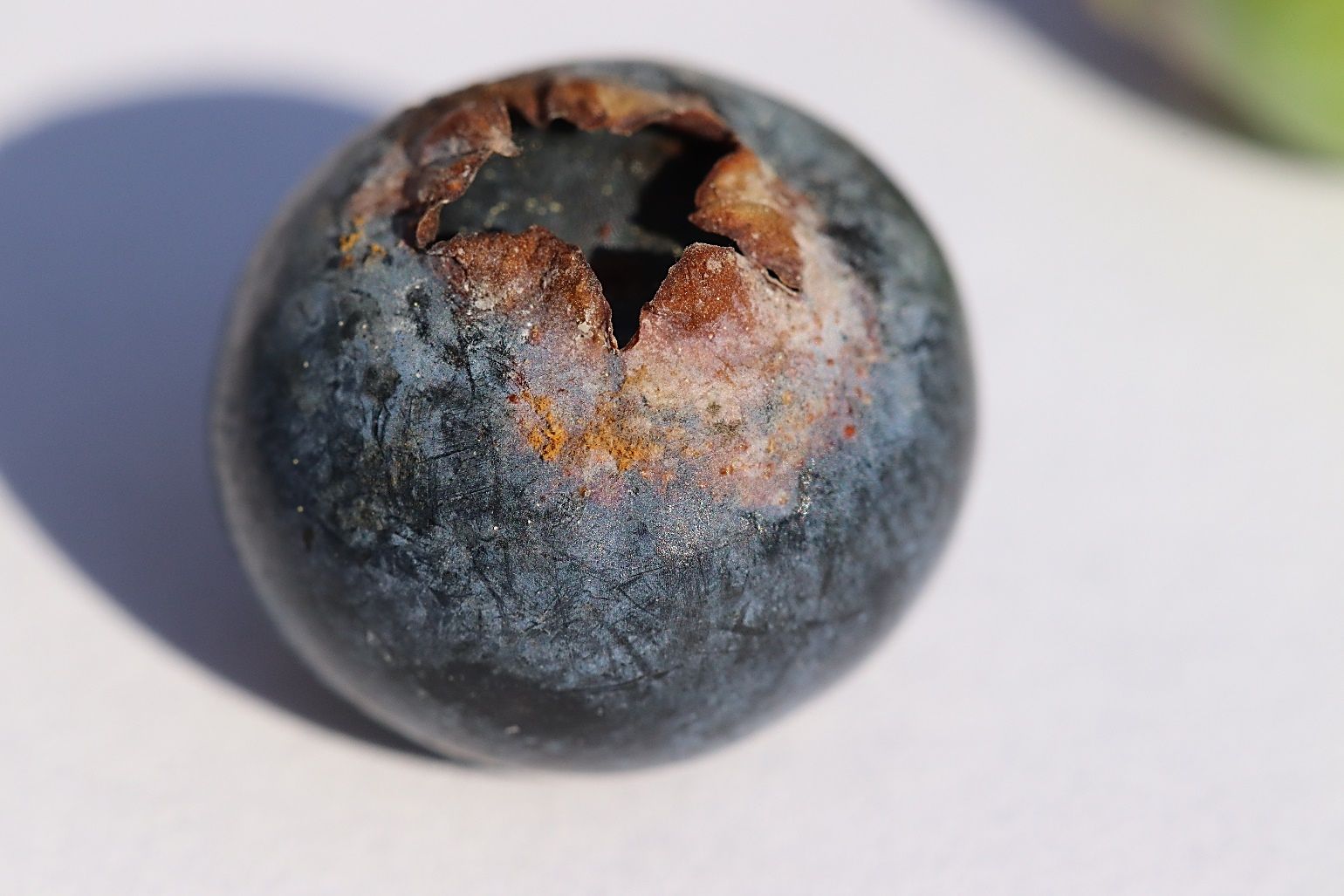
Credit: P. Harmon, UF/IFAS
In the evergreen system, chlorothalonil (sold as BravoTM and others) applications for rust management can begin late fall, before bloom. Chlorothalonil is a contact fungicide that cannot be used after bloom, and some growers have concerns about it causing leaf burn in the summer heat. Chlorothalonil has efficacy for several diseases, and applications made when disease pressure is generally low but expected to increase are beneficial. As the season progresses, growers should scout for rust disease by walking rows, turning over leaves with spots, and looking for the orange spore masses. As rust starts to increase on the interior lower canopy leaves, consider using ProlineTM (prothioconazole), which has stood out in some published research as an excellent choice among demethylation inhibitor (DMI) products for rust. Other products with reported excellent effectiveness include Quilt XcelTM (azoxystrobin and propiconazole) and PropulseTM (fluopyram and prothioconazole). Consider other DMIs with longer preharvest intervals (PHI) if rust increases before bloom (e.g., IndarTM, TiltTM). They will have some efficacy, and this will leave QuashTM and ProlineTM (with a seven-day PHI) as options for any flare-ups closer to harvest. Quadris Flowable® and PristineTM also have rust efficacy and make for good rotation partners with one of the DMI products. If applied at or after bloom, consider tank mixing a captan product with Quadris Flowable® or PristineTM because of the widespread anthracnose ripe rot resistance to these products. Employing one or more of these options in the late fall to pre-bloom period should do a good job of keeping rust severity low through harvest.
Organic management options include copper products and plant-based horticultural oils. Employing these measures preventively will yield better results than if employed once defoliation and fruit infections are common in the field. Numerous biological control products with rust efficacy claims are available as well. These may help reduce disease severity in some cases but do not afford levels of disease control comparable to conventional fungicide products in research trials. Peroxide-based products will kill spores on the surface of leaves through direct contact but have no lasting effect and rarely, if ever, reduce disease severity in research trials. Fungicides with different modes of action should be used in rotation or in a tank mix as part of an integrated postharvest foliage management strategy.