
Introduction and Background
In this publication, we describe methods commonly used to restore salt marshes, particularly those dominated by smooth cordgrass (Spartina alterniflora), which are commonly found along the Gulf and East coasts of the United States (Figure 1). Florida is home to extensive salt marsh habitats, which form along the state’s Gulf and Atlantic coasts (Figure 2). This publication will be of particular use to land managers and property owners whose land includes salt marsh habitat. Restoration methods described here are discussed in an order reflecting increasing costs, effort, and spatial scale, meaning that methods most applicable to owners of small coastal properties will be listed first. We also provide a table summarizing the goal, advantages, and disadvantages of each method for quick reference (Table 1).
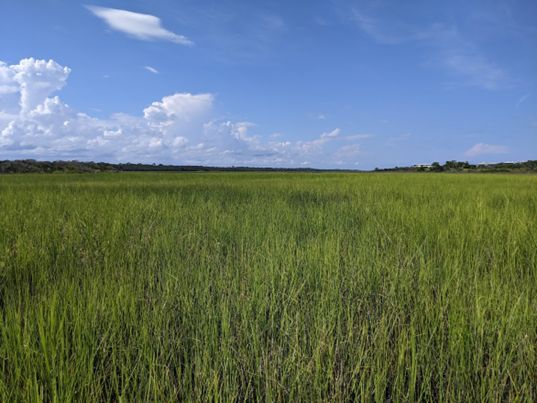
Credit: Emory Wellman, UF/IFAS

Credit: Data courtesy of the Florida Fish and Wildlife Conservation Commission
What are salt marshes?
Salt marshes are a type of wetland that forms in coastal areas. At high tide, these wetlands are regularly flooded by salt water, so all plants living within them must be salt-tolerant. Salt marshes are crucial habitats that provide many valuable ecosystem services to coastal communities and the marine environment. Ecosystem services are the benefits provided to humans by natural ecosystems. These ecosystem services include tangible items like shellfish and timber, but also processes and functions like water quality improvement and flood control. Ecosystem services performed by coastal wetlands include storm protection, habitat provision, and carbon storage, among others. Because of their proximity to human communities and valuable coastal land, salt marshes have experienced significant destruction, alteration, and development throughout modern history.
To understand salt marsh restoration, it is important to first understand the underlying environmental forces that allow salt marshes to exist and survive. Salt marsh plant species have differing abilities to tolerate flooding by salt water, meaning that many salt marsh plant communities are determined by the elevation of the marsh (i.e., plants that do not tolerate frequent flooding by salt water grow at higher elevations). Salt marsh creation and survival depend on the combination of sediment delivery and marsh plant growth over long timescales. Plants slow the flow of water over the marsh surface, allowing sediment particles to drop out of the water and accumulate. Growth and eventual death of plant roots and rhizomes belowground also contribute to building the marsh surface. Together, these processes help salt marshes maintain an elevation that gives them optimal exposure to salt water, supporting the growth of marsh plant communities (Kirwan et al. 2010). This optimal elevation relative to sea level also prevents the marsh from being excessively flooded, or “drowned.” When a salt marsh drowns, plants spend too much time underwater and cannot grow properly. This reduced growth starts a cycle in which less sediment accumulates, fewer plants grow, and ultimately the marsh turns into a bare mudflat. Drowning can occur when sea levels rise too quickly or by too great an amount, outpacing the marsh’s ability to adapt and increase its elevation (Osland et al. 2024).
What is restoration?
Simply, restoration is the process of returning a habitat to a pre-existing state. In a historical, undisturbed state, many habitats have characteristic plant and animal communities and deliver certain ecosystem services. The goal of restoration is often to return a site to this original state, with success of restoration efforts usually gauged by comparing the restored marsh to an un-damaged “reference” site. In the most straightforward cases, habitats are restored by identifying and removing the stressor that is damaging the ecosystem. For example, a marsh that is being harmed by foot traffic can be closed to pedestrians, allowing vegetation to recover and regrow. This sort of restoration is considered “passive” restoration. By comparison, “active” restoration requires human intervention, like planting native species or removing invasive species (Holl and Aide 2011). However, restoration is highly context- and place-dependent, and there is no overarching rule for when intervention is needed. Restoration may be clearly necessary when a marsh stops providing its typical ecosystem services, or is visibly and rapidly degrading (e.g., experiencing invasion or eroding, Figure 3). Marsh restoration may also be necessary as a preemptive measure, for example, when marshes are at risk of drowning due to sea-level rise. Given future climate change impacts, another goal for restoration of coastal habitats like marshes is to build resilience to stressors ahead of time (Abelson et al. 2020).
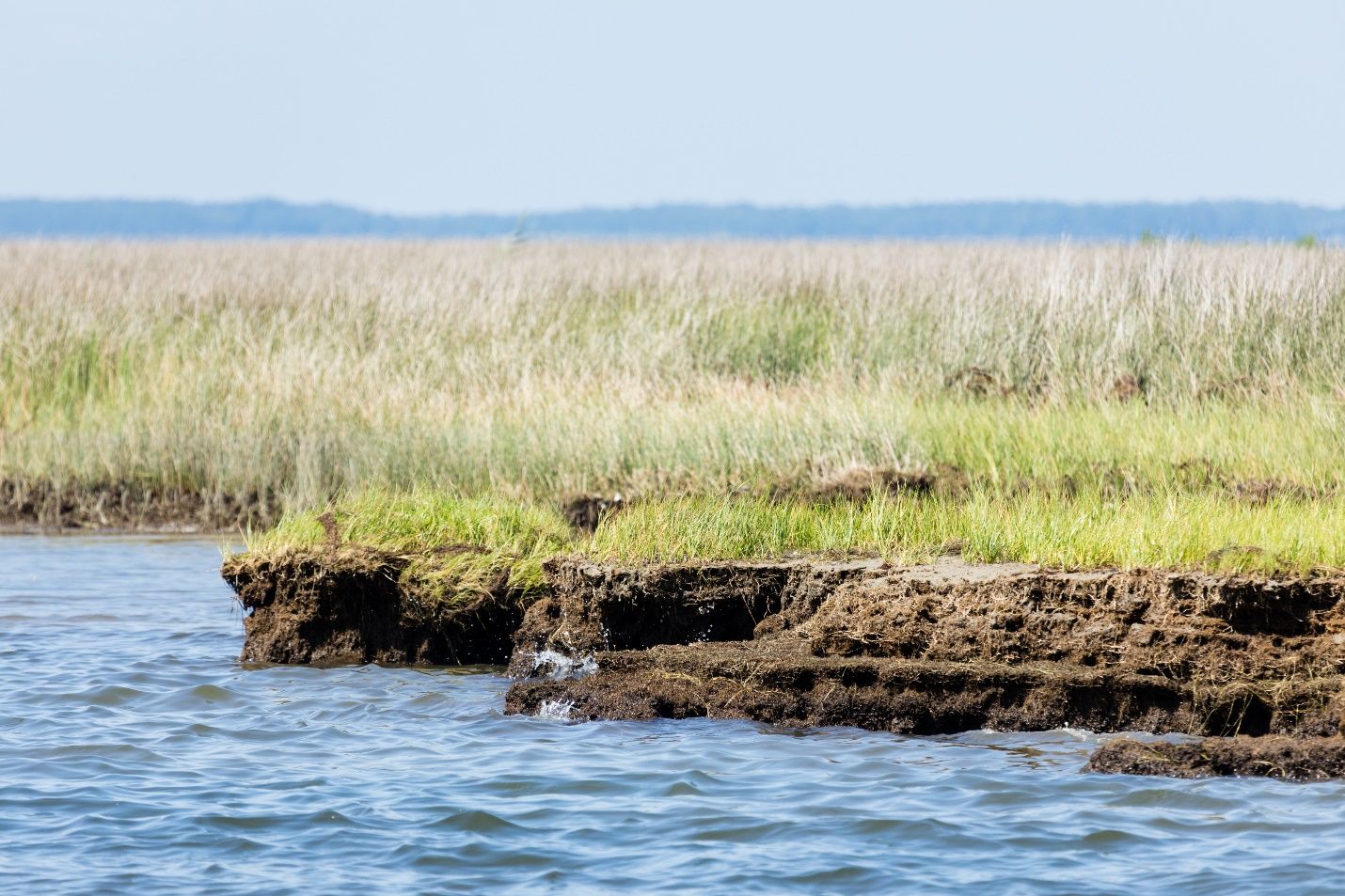
Credit: Will Parson, Chesapeake Bay Program. License information: CC BY-NC 2.0, written permission for photo usage was acquired from Mr. Parson.
It is important to note that some environmental stressors degrade salt marshes at a scale larger than can be addressed by restoration. For example, stressors like high wave energy, restricted flow of salt water, or high inputs of nutrients may cause an otherwise well-planned restoration effort to fail if they are unaddressed. Practitioners should investigate and understand both the small- and large-scale drivers of marsh degradation to conduct effective restoration. A key aspect of restoration is therefore the establishment of clear goals for the project and identification of observable thresholds that represent successful achievement of these goals (e.g., all individuals of a given invasive species are eradicated, stem density of a desired plant species reaches 150 stems per square meter). The timing, extent, and monitoring of restoration efforts is also heavily dictated by funding availability, which should be considered when planning restoration activities. Below, we describe different restoration methods that may be used to restore salt marshes, including those in Florida.
Method 1: Restoration Using Nursery Plants
Description of Method
The most straightforward method of marsh restoration is planting juvenile or adult vegetation acquired from nurseries (Figure 4). By using greenhouse or nursery plants, restoration practitioners can improve the likelihood that planted vegetation will have high rates of establishment success with desired levels of biodiversity. There are many gardens and nurseries specifically dedicated to restoration efforts. For example, students at Tampa Bay High School annually grow around 20,000 wetland plants to restore an average of 5 acres of habitat every year (NOAA Fisheries 2022). Nurseries may grow several species of salt marsh vegetation, allowing restoration practitioners to select the plants that are best suited for a restoration area. For example, in bare or largely unvegetated salt marshes, foundational species like smooth cordgrass can be planted in rows parallel to a shoreline. Smooth cordgrass spreads quickly through vegetative growth, meaning new shoots grow from underground runners rather than from seeds. This quick growth allows smooth cordgrass to cover bare ground and form tall, dense stands. These stands can help shelter other seeds and seedlings as they naturally arrive at or are planted within the site. However, it is important to note that this rapid expansion may also crowd out other desirable plant species, meaning the species and locations targeted for transplantation must be chosen carefully.

Credit: Emma Yockman (UC Santa Cruz). Written permission for photo usage was obtained from Ms. Yockman.
When deciding whether to plant a given species, it is important to consider the ecological role and physical structure of each marsh plant. For example, glassworts (Salicornia sp.) are typically a high marsh species, meaning they are best planted farther away from the water and on the higher elevations of the marsh platform (Calone et al. 2020). Nurseries can also assist in providing coir logs (see Add-on Method: Installation of Coir Logs), which can provide protection for transplanted vegetation and/or prevent erosion of sediment along shorelines.
Outcomes
Local nurseries can provide knowledge regarding what native species are available to plant in the restoration area. Similarly, nurseries may be able to recommend plants that promote specific ecosystem services or restoration goals. For larger restoration projects, the best outcome may entail a community effort—including the assistance of volunteers—to collect, prepare, and plant the selected marsh vegetation. Ideally, the result of restoration via nursery plants is a marsh that is tailored to the site and restoration goals, with matching aesthetics and locally sourced materials.
Best Uses
Restoration using nursery plants is particularly useful in marshes where little vegetation is present and/or the local vegetation is in decline, including sites where natural vegetation establishment is slow. Planting directly from nurseries may be relatively expensive but can successfully promote plant establishment by bypassing seed and seedling growth stages. This method is a relatively quick way to reintroduce plant species that might not otherwise naturally grow from seed or survive as young seedlings. It is important to note that planting elevation and wave energy and other environmental conditions at the site must be suitable for plant survival, otherwise nursery plants will die after transplantation.
Method 2: Transplanting Sods from Donor Marshes
Description of Method
Installation of sods is a quick way to add plant cover to bare or unvegetated regions. Sod transplantation ensures that the planted vegetation matches that which was present historically or that which is present in reference marshes. Wetland sods are usually made up of sedges and rushes with dense root systems that hold together well when collected and transported. This restoration method would be best used in restoration areas where vegetation is patchy and seeds or individual nursery plants struggle to establish. Sods can be collected from public or private land, though landowners willing to donate sods from privately owned marshes may be hard to find. The land managers or owners of the donor marsh will decide how many sods can be removed without harming the donor marsh and may assist with sod collection and transport. Before transplanting, it is also crucial to consider the vegetation and potential seed bank present in the sod, especially if it may contain seeds or individuals of invasive species.
Outcomes
Sods may require months or even years to fully establish and resemble their reference surroundings. However, it is important to note that half-density sods—those that are only half covered by vegetation—can be as economically and ecologically effective as full density sods (Sparks et al. 2013). When choosing the sods, it is also crucial to consider if attributes like sediment type are the same at the donor marsh and the restoration site. If these characteristics differ dramatically, the vegetation in the sod may struggle to survive and expand at the restoration site. Several donor marshes exist in Florida, including those maintained by Duke Energy Corporation in Crystal River and the Marine Discovery Center, a nonprofit organization in New Smyrna Beach. The Center provides salt marsh plants for regional restoration efforts like living shoreline projects.
Best Uses
Transplantation of sods from donor marshes is particularly useful for sites that require rapid establishment of robust, fully grown vegetation. Because sods are collected from mature marshes, the belowground portions (e.g., roots, rhizomes) and aboveground stems of the constituent vegetation are more fully developed than those of young nursery plants. However, because sods can be difficult to source, close collaboration with local environmental officials, nurseries, and land managers is recommended. Due to these challenges in sod harvesting and transplanting, this approach is suitable mainly on the small scale. Researchers in Mississippi found the final cost of harvesting, transporting, and planting full density black needlerush sods to be $474/m2 (Sparks et al. 2013). However, the cost of sods varies depending on their size, the density of vegetation, the region where they are collected, and the associated costs of labor required to prepare the restoration site and acquire the sods (Sparks et al. 2013).
Add-On Method: Installation of Coir Logs
Description of Method
In projects where salt marsh is restored through planting of nursery plants (Method 1) or sods (Method 2), installation of coir logs may increase plant establishment and growth. Coir logs, also called bio-logs, are typically made from coconut fiber and plant-based netting materials. These logs can be placed waterward of newly planted vegetation—or at the edge of an eroding salt marsh—and staked in place. Because the logs are made from biodegradable materials, they naturally deteriorate over time, providing temporary protection from waves and encouraging sediment accumulation among landward plants. Ideally, coir logs persist long enough to allow marsh plants to develop strong root systems or to allow the edge of the eroding marsh to stabilize and sediment loss to stop. Various types and sizes of coir logs exist and can be tailored to the specific site and restoration need. It is important to note that coir logs cannot effectively protect marsh vegetation that is exposed to powerful waves or boat wakes. After plants have grown sufficiently, logs can be slashed open to speed up biodegradation.
Outcomes
In a living shoreline project in Florida’s Santa Rosa Sound, coir logs were installed two months before salt marsh vegetation was planted. These logs stabilized sediment and were found to be in good condition more than one year after their installation, as were the co-located plants. Similar coir log deployments noted potential issues with the logs. First, logs may deflate and lose height, compromising their ability to accumulate sediment and protect plants (Moody et al. 2022). Logs may be damaged by severe weather, or they may fail due to a range of other factors, including the use of large mesh as opposed to small mesh in their construction. Restoration practitioners who are interested in using coir logs must therefore carefully consider site wave energy and optimal coir log design.
Method 3: Fertilizer Addition
Description of Method
When individual plants or marsh sods are planted at a restoration site, restoration practitioners may choose to fertilize them during planting or soon after. Fertilizer additions can promote vegetation growth, allowing the plants to become quickly and robustly established at the restoration site, essentially jump-starting the growth process. Fertilizer can be buried with the plants or sods or added to the marsh surface once vegetation is planted. The growth of marsh vegetation is typically limited by the amount of nitrogen and phosphorus available in the water and soil. Although insufficient nitrogen more commonly limits growth of marsh vegetation, phosphorus may also be limiting in some marsh habitats. Phosphorus also commonly becomes a limiting agent when fertilizer containing only nitrogen is applied. Therefore, adding common fertilizers like ammonium sulfate, concentrated superphosphate, or both can provide new transplants with the nutrients necessary for growth. Slow-release combination fertilizers like Osmocote can also be added into the soil along with the plant, ensuring that the plants receive a steady dose of nutrients over time. Because plants at sites exposed to high wave energy or strong tides may be particularly vulnerable to uprooting, rapid growth and establishment is critical and may be achieved through belowground fertilization. At restoration sites exposed to high wave energy or strong tides, buried fertilizer may be more effective than fertilizer spread on the marsh surface because the latter may be washed away. When considering fertilization, it is also important to understand the sediment type at the restoration site. Sandy, coarse sediment tends to be nutrient-poor, meaning addition of nitrogen and phosphorus could provide a beneficial boost to transplanted vegetation. Mucky or muddy sediment likely has higher nutrient concentrations, potentially negating the need for fertilization.
Outcomes
Adding both nitrogen and phosphorus fertilizers to marsh vegetation can triple aboveground plant growth. Because application of nitrogen alone eventually leads to a shortage of phosphorus, it may be wise to apply both fertilizer types or a combination fertilizer. Slow-release fertilizers ensure a steady dosage of nutrients, helping to prevent “burning” of plant roots and leaves by excessive nutrients (Broome 1988). It is also important to note that fertilization is not a long-term strategy for enhancing growth of vegetation but rather a method to promote establishment and survival in the period post-transplantation. Given that excessive nutrients and eutrophication are a major concern in many coastal areas, fertilization for restoration purposes should be approached thoughtfully.
Best Uses
Fertilizer addition is particularly useful in situations where marsh sods and plants are being transplanted into stressful, low-nutrient habitats where rapid establishment and growth of the plants is crucial. Adding fertilizer to the holes dug for nursery plants or sods can provide a boost to the transplants, particularly if the sediment is sandy and well-drained. Appropriate fertilizers can be easily purchased by homeowners for a private restoration effort or living shoreline installation, though the potential ramifications of nutrient run-off and the merits of fertilizing aboveground versus belowground should be considered. For example, the proximity of the restoration site to sensitive habitats like seagrass beds may make this approach unadvisable.
Method 4: Restoration from Seed
Description of Method
Seed-based restoration is a way to restore vegetation and plant diversity to the restoration area by sowing native seeds. Seeds can be sowed into marshes where native plants have been removed, either because of disturbance or invasive species removal efforts. Introduction of native seeds at the appropriate stage of a plant’s growing season can help increase a site’s biodiversity and resistance to invasion. There are a few important factors to consider when deciding which seeds to sow in a salt marsh. One of these is the existing seed bank, the seeds buried in the soil or floating in the water in the salt marsh. These seeds are likely to continue reappearing in the salt marsh. To read more about seed banks and the ways to analyze them, see Methodology for Wetland Seedbank Assays (Adams and Steigerwalt 2018). Equally important to the seed bank are the historical records of vegetation present in the area. Beneficial native plants that previously grew at the site may have been naturally or mechanically prevented from reappearing. One could therefore consider reintroducing these historical species, either via nursery transplants, sods, or seed, presuming that they would survive the site’s current conditions. To determine vegetation history, land managers and property owners can perform seed bank assays or reach out to Sea Grant Extension agents, local nurseries, and land managers.
Seeding may be the best choice when native plant communities are species-poor, sparse, or recovering slowly following a disturbance. Seeding can also prevent invasive plants from encroaching on a site. When the site seed bank contains large quantities of native seeds, these native salt marsh plants can generally persist over multiple growing seasons and resist invasion. Overall, if restoration goals require marsh plant communities to have high species diversity or high genetic diversity, seeding may be a wise approach. Seeds can be purchased from local nurseries or collected from salt marsh sites within the same watershed as the restoration area. Seed origin can impact plant success, as seeds adapted to the specific environmental conditions of a site are more likely to germinate and survive.
Outcomes
The result of seed-based restoration depends on the landscape before restoration and the type of seed that is sown. In Florida, common plant species that dominate salt marshes include smooth cordgrass (Spartina alterniflora), black needlerush (Juncus roemerianus), and salt hay (Spartina patens). Outcomes from seeding efforts can be maximized through collaborations with nurseries, which can provide advice about the best species to seed in a restoration area. Depending on the species of plant chosen, local nurseries can also provide information about treatments to improve seed germination outcomes, such as soaking and scarification (weakening the seed coat to speed germination).
Best Uses
Restoration from seed is particularly useful for salt marsh sites that require non-urgent revegetation. Seeding requires little physical labor but a large investment of time and patience. Ideally, seeds produced by nearby salt marshes will be carried to the site naturally by tidal flow, requiring little to no effort on the part of the restoration practitioner. Seed bank analyses can point to the presence of desired seeds in the soil at the site. If few seeds arrive naturally at the site and/or few native seeds are found within the seed bank, consider manual introduction of seeds.
Method 5: Including Marsh Vegetation in a Living Shoreline
Description of Method
Living shorelines are a coastal restoration and protection approach that help prevent erosion and support natural coastal habitats using vegetation and/or structures like oyster reefs. Living shorelines can take many forms, but a key attribute is their ability to maintain connection between land and water, setting them apart from typical or hardened shoreline protection strategies like seawalls (NOAA Office of Habitat Conservation 2015). These living shorelines provide valuable ecosystem services like enhanced fisheries production and nitrogen removal, many of which are either not provided by hardened shorelines or are provided at a lower rate (Smyth et al. 2022). Transplanted or naturally occurring marsh plants are often a key component of living shorelines, either alone or combined with other “hard” elements like rock or oyster shells. In areas exposed to low wave energy and few boat wakes, planted marsh on its own may be an effective method to halt shoreline erosion. The friction marsh vegetation imposes on incoming waves reduces erosive energy, and the roots and rhizomes of marsh plants bind sediment and make it more difficult to wash away. However, in areas exposed to higher wave energy, salt marsh plants alone may not be able to protect against erosion sufficiently. In these areas, sills may be constructed waterward of the vegetation. Sills are structures that are usually placed just offshore and oriented parallel to the shoreline with the goal of reducing wave energy and protecting the plants. The sills included in living shorelines are typically made of rock or oyster shells. With time and sufficient sediment build-up, marsh vegetation may expand out from land and towards the structure.
Outcomes
Researchers in North Carolina studied marshes with and without rock sills (i.e., marshes versus living shorelines, Currin et al. 2017). At sites with sills, marsh plants expanded towards and into the sill structure and grew more densely than those at sites without sills. Other studies have found that the density and height of marsh plants may not differ between sites with and without sills, indicating that benefits of living shorelines are site-specific (Bilkovic and Mitchell 2013). Similarly, marshes with sills hosted larger and more diverse communities of fishes and crustaceans and more filter-feeding shellfish (Gittman et al. 2016). Many examples of living shorelines with marsh vegetation exist in Florida. In Florida, oyster sills have been constructed at sites in Choctawhatchee Bay and Pensacola Bay to stabilize sediment, leading to sediment accumulation and recolonization by marsh vegetation. At A.J. Palonis Park in Tampa, volunteers planted salt marsh vegetation landward of an oyster sill to stabilize the shoreline and control erosion (NOAA Fisheries).
Best Uses
This restoration method is particularly useful in intertidal areas where the species that make up living shorelines—mangroves, oysters, and/or salt marsh vegetation—naturally occur. On calm shorelines, including those typically owned by coastal residents, marsh vegetation by itself may provide shoreline stabilization benefits. On shorelines exposed to boat wakes and wind waves, a living shoreline design incorporating both vegetation and a structural element like an oyster sill may be appropriate. The Florida and Mississippi-Alabama Sea Grant programs have created technical guidance and trainings about living shorelines; constructed several demonstration sites (including several in Cedar Key, Florida; Figure 5); and fostered living shoreline knowledge-sharing and outreach (Martin et al. 2024). In Florida, owners and managers of both private and public lands should contact their UF/IFAS county Extension Sea Grant agent to discuss living shoreline design and permitting in their area. To learn more about permitting and monitoring living shorelines, review the other publications in the EDIS living shoreline topic area at https://edis.ifas.ufl.edu/.

Credit: Mark Clark (UF/IFAS). Written permission for photo usage was acquired from Dr. Clark.
Method 6: Thin Layer Placement (TLP)
Description of Method
In regions where sea-level rise and sediment erosion are occurring more quickly than elevation gain, marshes may drown and become mudflats. Unvegetated mudflats are less aesthetically pleasing than salt marshes and provide fewer ecosystem services. Drowning marshes may be restored through the spreading of a thin layer of sediment onto the marsh to imitate natural sedimentation processes and raise the marsh platform to a proper elevation. This thin layer placement (TLP) approach entails deposition of sediment or slurry, a mixture of sediment and water, on a marsh. Dredging and TLP are often coupled, so that sediment is transported to and deposited on marshes soon after being dredged from a waterway. The US Army Corps of Engineers (USACE), the agency responsible for most dredging activities in the United States, aims to increase the beneficial use of dredged material to 70% by 2030, with marsh restoration via TLP being one such beneficial use. Once slurry or sediment is deposited on the marsh surface, vegetation can recruit naturally to the site or be planted. Further active or passive restoration techniques can also be used to reintroduce species and increase the biodiversity of the plant community.
If a salt marsh seems to be drowning and losing vegetation, TLP might be the best remedy. Compared to techniques like nursery plantings, TLP is a major project that requires high financial investment and careful logistical planning. For example, it is crucial to consider the source of sediment to be placed and the method by which it is deposited. TLP sediments may be moved onto the marsh and arranged with heavy construction equipment (Figure 6), which may damage the wetland. Also, it is important to consider the longevity of a TLP project. Meaning, if a wetland is drowning or degrading rapidly, TLP might not be a long-term solution for that marsh. It is also important to note that because of the scale, cost, and labor involved, TLP projects necessitate careful planning and acquisition of permits from agencies like the USACE and state environmental protection agencies.
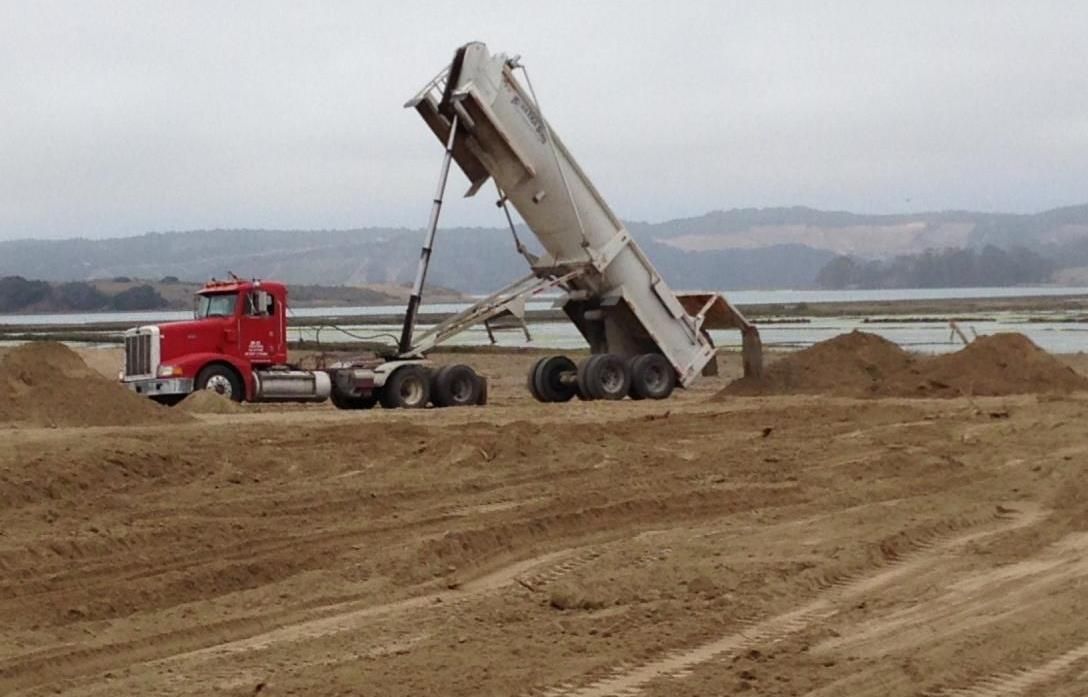
Credit: Monique Fountain (Elkhorn Slough National Estuarine Research Reserve). Written permission for photo usage was obtained from Ms. Fountain.
Outcomes
The outcome of TLP depends on the size of the restoration area and the amount and type of sediment placed. TLP can be costly and take a long time to permit and implement. The calculations determining the type, origin, and amount of sediment to be placed on the marsh may be particularly challenging. If project design and sediment placement are successful, the elevation added to a restored marsh by TLP can ensure that a marsh is resilient to decades of new disturbances. In St. Augustine, the University of Florida Center for Coastal Solutions (CCS) and WSP Environment and Infrastructure Inc. are designing a TLP project to improve the resilience of local salt marshes to sea-level rise and erosion. When completed, the project will reinforce marsh shorelines and enhance their ability to protect local infrastructure from storm surges (UF Center for Coastal Solutions 2024).
Best Uses
Thin layer placement is particularly useful when a salt marsh is facing the threat of drowning. TLP is therefore commonly discussed as a restoration method that helps salt marshes survive sea-level rise and ongoing impacts of climate change. The amount of sediment added to a site is variable and can range anywhere from a few inches to several feet. Restoration practitioners must carefully consider sea-level rise predictions, sediment availability, the current state of the salt marsh, and many other factors when determining the timing and quantity of TLP.
Method 6: Restoring Hydrologic Connectivity
Description of Method
Salt marsh development and survival depends on regular exposure to salt water. As described in the introduction, salt marsh plants have different flooding tolerances. These different flooding tolerances help determine the number and types of species present within a salt marsh. Flooding in salt marshes occurs because of rising and falling tides. Activities like coastal development can disrupt the natural tide cycle, altering the amount of saltwater flooding a salt marsh or the frequency with which it floods. One example of disruption is the construction of dikes, which separate marshes from their source of salt water. When tides can no longer flood salt marshes, upland vegetation may take over the marsh and disrupt or eliminate salt marsh ecosystem service provision. Alternatively, restriction of natural tidal flow may cause the salt marsh to be flooded too much or for too long, drowning the marsh vegetation and causing the marsh to turn into a mudflat. Restoration efforts that aim to restore hydrologic connectivity are therefore common in marshes that have been diked, drained, or gated for purposes of mosquito control or flood control.
A key goal of hydrological restoration is to restore the natural flow of salt water into and out of the marsh, supporting salt marsh plant communities and the ecosystem services they provide. Removing dikes to restore tidal flushing is a common restoration approach in New England and the San Francisco Bay. Portions of levees and dikes that were constructed as parts of agricultural or mosquito control efforts can be removed (“breached”) to restore tidal water movement. Similarly, culverts or other openings can be constructed in dikes, and tide gates can be installed or opened (if they already exist). In Florida, many marsh habitats were cut off from salt water and ditched in efforts to control mosquitoes. When ditches are dug in marshes, the sediment that is dug up, called “spoil,” is piled next to the marsh, dividing the marshes and disconnecting them from sources of salt water. Ditches can be filled and regraded to facilitate regrowth of salt marsh plants. Marshes that have been impounded for mosquito control efforts can be reconnected to salt water on a schedule dictated by the mosquito breeding season (Rotational Impoundment Management, or RIM). Specifically, marshes are flooded and tidal flow prevented during breeding season to prevent mosquitoes from laying eggs. When mosquitoes are not breeding, flooding does not need to be maintained, and normal tidal flow allows salt marsh plants to grow and marine animals like fishes and crabs to access the marsh.
Outcomes
When salt water from tides is reintroduced, freshwater vegetation tends to die, allowing salt-tolerant marsh plants to re-establish and spread. The speed at which marsh plants and marsh ecosystem services are restored depends on the site, with quicker recovery observed at sites with lower elevations and those that are flooded by salt water for longer time periods. Because salt marsh animal communities will not return until marsh plants recover, the types and numbers of animals within a restored marsh might not match those in a reference marsh for up to ten years. In Florida, restoration of tidal flow as part of the RIM program has led to re-establishment of estuarine fish communities in impounded marshes. In the Pine Island Conservation Area, a large amount of spoil was removed and the site regraded to a typical salt marsh elevation. With this restoration of tidal saltwater flooding, salt marsh vegetation re-established at the site without the need for plantings (Taylor 2012).
Best Uses
This restoration method is particularly useful in salt marsh habitats that have been significantly altered, meaning their natural connection to marine and estuarine waters has been either unnaturally increased or decreased. These large-scale changes to the flow of tides and salt water are typically the result of coastal development or pest control efforts. Although the logic behind restoring hydrologic connectivity is simple, the data and capital required to plan, permit, and execute reconnection are substantial. It is also important to note that hydrologic reconnection alone may not be sufficient to restore highly degraded marshes. In these cases, additional efforts to, for example, transplant sods or nursery plants may be necessary.
New Approach: Harnessing Mutualisms
The approaches described above are well-established methodologies for salt marsh restoration. In addition, recent research points to the potential power of ecological mutualisms in improving the outcomes of salt marsh restoration. Mutualisms are ecological relationships between organisms in which each organism benefits from the relationship. Mutualisms can exist either between individuals of different species (inter-specific) or individuals of the same species (intra-specific). Enhancing salt marsh restoration success through strategic use of mutualistic relationships holds great promise, but knowledge thus far is based mostly on projects performed on smaller, research-relevant scales. The following sections are therefore currently more theoretical than those above. Readers who are interested in the use of mutualistic relationships in marsh restoration should review the articles cited below to learn more.
Inter-Specific Interactions
Description of Method
Smooth cordgrass dominates many salt marshes on the US East and Gulf coasts (though it is invasive on the West coast). This cordgrass forms a mutualistic relationship with ribbed mussels (Geukensia demissa, Figure 7; Bertness 1984). Mussels improve sediment chemistry in favor of the vegetation, and their feces contains nutrients that fertilize the plant, promoting growth. The relationship is beneficial to the mussels as well, because cordgrass provides shade that protects mussels from heat stress and stems to which mussels can attach (Bertness 1984). Researchers have noted that this mutualism could be used as a component of marsh restoration efforts involving cordgrass, given the many benefits provided by the mussels to the grass (Derksen-Hooijberg et al. 2018).

Credit: Emory Wellman (UF/IFAS)
Outcomes
Cordgrass plugs transplanted with mussels expanded more than plugs transplanted alone, demonstrating increased growth (Derksen-Hooijberg et al. 2018). Mussels also helped the cordgrass respond to disturbance (clipping of all aboveground leaves), improving the survival and growth of the plants (Derksen-Hooijberg et al. 2018). In Massachusetts and New Hampshire, researchers are transplanting mussels into threatened marshes to examine how the mussels might facilitate marsh recovery (Mass Audubon 2022).
Intra-Specific Interactions
Description of Method
Traditionally, marsh plants used for restoration purposes have been spaced at regular intervals and at equal distances from one another. Alternatively, researchers have considered grouped planting for smooth cordgrass, or the aggregation of wild-collected or nursery plants into clumps. This clumping allows plants to share water, nutrients, and oxygen belowground through their roots. Further, aggregation in a group increases resistance to waves, which otherwise might uproot individual plants. However, it is important to note that these findings are specific to smooth cordgrass. For example, work done in a California salt marsh indicates that grouping transplants of Alkali heath (Frankenia salina) and marsh jaumea (Jaumea carnosa) in clumps increased competition among the plants and reduced their growth (Tanner et al. 2023).
Outcomes
Researchers planted smooth cordgrass in clumped and spaced configurations in a salt marsh habitat in Tampa, Florida (Silliman et al. 2015). Plants in clumps had a higher likelihood of survival than those in spaced configurations and also demonstrated increased stem density and aboveground growth (Silliman et al. 2015).
Conclusion
Regardless of the approach used, salt marsh restoration requires careful planning. Selection of a restoration method depends on the goal of the restoration, the size of the area being restored, funding and permitting requirements, and site-specific attributes (i.e., presence of invasive species, sediment type, wave energy). Although “one size fits all” approaches generally do not exist, thoughtful, careful marsh restoration projects can successfully recover marsh structure and function to the benefit of coastal communities and ecosystems. To the extent possible, it is often beneficial to mimic natural succession, or the stages through which habitats like salt marshes pass while they mature. For example, at a salt marsh site experiencing erosion and high wave energy, it may seem logical to deposit sediment prior to transplanting vegetation. However, as previously discussed, the friction imposed by salt marsh plants on water prevents sediment erosion and encourages accumulation. Therefore, transplanting vegetation prior to adding sediment may ultimately improve retention of sediment at the site. It is also important to note that many of the restoration techniques described above are not standalone. Indeed, coupling several techniques—like nursery transplants with coir logs—may improve the speed of recovery and restoration outcomes.
Many of the approaches described above require permits and financial investment. Marsh restoration methodologies differ in terms of the associated labor, permitting, planning, and costs. Land managers and private property owners who are interested in conducting marsh restoration should consider reaching out to Florida Sea Grant. UF/IFAS Extension agents can visit the salt marsh in question and provide information on topics like native vegetation and potential permit exemptions, like the existing one for living shoreline installation.
Works Cited
Abelson, Avigdor, Daniel C. Reed, Graham J. Edgar, et al. 2020. “Challenges for Restoration of Coastal Marine Ecosystems in the Anthropocene.” Frontiers in Marine Science 7:544105. https://doi.org/10.3389/fmars.2020.544105
Reinhardt Adams, Carrie, and Nancy M. Steigerwalt. 2018. “Methodology for Wetland Seedbank Assays: ENH1090 EP354, 2 2008” EDIS 2008 (4). Gainesville, FL. https://doi.org/10.32473/edis-ep354-2008
Bertness, Mark D. 1984. “Ribbed Mussels and Spartina Alterniflora Production in a New England Salt Marsh.” Ecology 65 (6): 1794–1807. https://doi.org/10.2307/1937776
Bilkovic, D. M., and M. M. Mitchell. 2013. “Ecological Tradeoffs of Stabilized Salt Marshes as a Shoreline Protection Strategy: Effects of Artificial Structures on Macrobenthic Assemblages.” Ecological Engineering 61:469–81. https://doi.org/10.1016/j.ecoleng.2013.10.011
Broome, Stephen W., Ernest D. Seneca, and William W. Woodhouse. 1988. “Tidal Salt Marsh Restoration.” Aquatic Botany 32 (1): 1–22. https://doi.org/10.1016/0304-3770(88)90085-X
Calone, Roberta, Rabab Sanoubar, Enrico Noli, and Lorenzo Barbanti. 2020. “Assessing Salicornia Europaea Tolerance to Salinity at Seed Germination Stage.” Agriculture 10 (2): 29. https://doi.org/10.3390/agriculture10020029
Currin, Carolyn A., Jenny Davis, and Amit Malhotra. 2017. “Response of Salt Marshes to Wave Energy Provides Guidance for Successful Living Shoreline Implementation.” in Living Shorelines. CRC Press. https://doi.org/10.1201/9781315151465-14
Derksen-Hooijberg, Marlous, Christine Angelini, Leon P. M. Lamers, et al. 2018. “Mutualistic Interactions Amplify Saltmarsh Restoration Success.” Journal of Applied Ecology 55 (1): 405–14. https://doi.org/10.1111/1365-2664.12960
Gittman, Rachel K., Steven B. Scyphers, Carter S. Smith, Isabelle P. Neylan, and Jonathan H. Grabowski. 2016. “Ecological Consequences of Shoreline Hardening: A Meta-Analysis.” BioScience 66 (9): 763–73. https://doi.org/10.1093/biosci/biw091
Holl, K. D., and T. M. Aide. 2011. “When and Where to Actively Restore Ecosystems?” Forest Ecology and Management 261 (10): 1558–63. https://doi.org/10.1016/j.foreco.2010.07.004
Kirwan, Matthew L., Glenn R. Guntenspergen, Andrea D’Alpaos, James T. Morris, Simon M. Mudd, and Stijn Temmerman. 2010. “Limits on the Adaptability of Coastal Marshes to Rising Sea Level.” Geophysical Research Letters 37(23). https://doi.org/10.1029/2010GL045489
Martin, Sara, Savanna C. Barry, Armando J. Ubeda, et al. 2024. “Reducing Barriers to Living Shorelines Through Sea Grant Extension Programs.” Oceanography 37 (1): 129–33. https://doi.org/10.5670/oceanog.2024.227
Mass Audubon. 2022. “Saving the Salt Marsh with Mussels?” Mass Audubon. Retrieved May 31, 2024 (https://www.massaudubon.org/news/latest/saving-the-salt-marsh-with-mussels)
Moody, Joshua A., Sarah A. Bouboulis, LeeAnn Haaf, Ella R. Rothermel, and Danielle A. Kreeger. 2022. “The Spatiotemporal Development of Two Shellfish Populations and Their Associated Filtration Capacity on a Living Shoreline near Milford, Delaware, USA.” Ecological Engineering 180:106661. https://doi.org/10.1016/j.ecoleng.2022.106661
NOAA Fisheries. 2022. “Tampa Bay Watch Wetland Nursery Program.” NOAA. Retrieved August 14, 2024 (https://www.fisheries.noaa.gov/data-tools/noaa-restoration-project)
NOAA Fisheries. n.d. “A.J. Palonis Park Marsh Restoration - Phase II.” Retrieved May 31, 2024 (https://www.fisheries.noaa.gov/data-tools/noaa-restoration-project?2507)
NOAA Office of Habitat Conservation. 2015. “Guidance for Considering the Use of Living Shorelines.” 35pp.
Osland, Michael J., Bogdan Chivoiu, James B. Grace, et al. 2024. “Rising Seas Could Cross Thresholds for Initiating Coastal Wetland Drowning within Decades across Much of the United States.” Communications Earth & Environment 5 (1): 1–8. https://doi.org/10.1038/s43247-024-01537-x
Silliman, Brian R., Elizabeth Schrack, Qiang He, et al. 2015. “Facilitation Shifts Paradigms and Can Amplify Coastal Restoration Efforts.” Proceedings of the National Academy of Sciences 112 (46): 14295–300. https://doi.org/10.1073/pnas.1515297112
Smyth, Ashley R., Laura K. Reynolds, Savanna C. Barry, Natalie C. Stephens, Joshua T. Patterson, and Edward V. Camp. 2022. “Ecosystem Services Provided by Living Shorelines: SL494 SS707, 5 2022.” EDIS 2022 (3). Gainesville, FL. https://doi.org/10.32473/edis-ss707-2022
Sparks, Eric L., Just Cebrian, Patrick D. Biber, Kate L. Sheehan, and Craig R. Tobias. 2013. “Cost-Effectiveness of Two Small-Scale Salt Marsh Restoration Designs.” Ecological Engineering 53:250–56. https://doi.org/10.1016/j.ecoleng.2012.12.053
Tanner, Karen E., Kerstin Wasson, and Ingrid M. Parker. 2023. “Competition Rather than Facilitation Affects Plant Performance across an Abiotic Stress Gradient in a Restored California Salt Marsh.” Restoration Ecology 31 (7): e13746. https://doi.org/10.1111/rec.13746
Taylor, D. Scott. 2012. “Removing the Sands (Sins?) of Our Past: Dredge Spoil Removal and Saltmarsh Restoration along the Indian River Lagoon, Florida (USA).” Wetlands Ecology and Management 20 (3): 213–18. https://doi.org/10.1007/s11273-011-9236-0
UF Center for Coastal Solutions. 2024. “New Project to Bolster St. Augustine Marsh against Sea Level Rise and Erosion.” Retrieved July 26, 2024 https://ccs.eng.ufl.edu/new-project-to-bolster-st-augustine-marsh-against-sea-level-rise-and-erosion/
Table 1. Brief summary of the typical goal(s), advantages, and disadvantages of each salt marsh restoration method described in this publication.