
Florida is one of the top states in the United States for production of fresh vegetables (Court et al., 2023), including popular summer crops such as corn and tomatoes. Florida is ranked first in the U.S. in sweet corn production (Dittmar et al., 2023). Tomatoes are one of the world’s most consumed crops, and Florida and California jointly account for two-thirds of the U.S. fresh tomato production (Guan et al., 2018). Eating five servings of fruit and vegetables as recommended by the Dietary Guidelines for Americans can reduce risk for chronic disease and help individuals maintain a healthy weight (Bertoia et al., 2015; Hung et al., 2004). This publication is intended for individuals who are interested in knowing more about warm-season crops that are grown in Florida, as well as ways to store, prepare, and cook these crops in healthy meals.
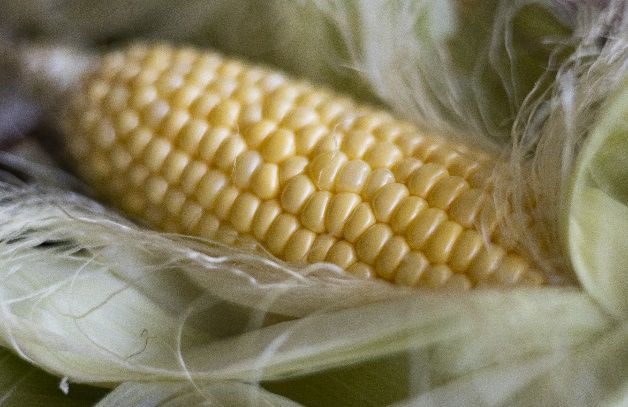
Corn (maize) is one of the preeminent "New World" crops grown by several Indigenous nations in North, South, and Central America (Smith, 2012). Sweet corn (Zea mays convar. saccharata var. rugosa) grows well in Florida. Corn likes wide spacing, well-drained soil, and full sun; poorly drained soils may encourage seed rot and/or fungal disease (Kanissery et al., 2023). Corn has a succulent and sweet flavor, particularly when cooked. It keeps best in a sealed bag when ears are not shucked. It will keep for 7–10 days if stored appropriately. To prepare corn, shuck the husk, remove the silk, and rinse the corn under cool water. You can trim the kernels off the cob or cook it whole. Sweet corn can freeze well for up to one year after it is blanched (CalFresh, n.d.).
Credit: Cat Wofford, UF/IFAS
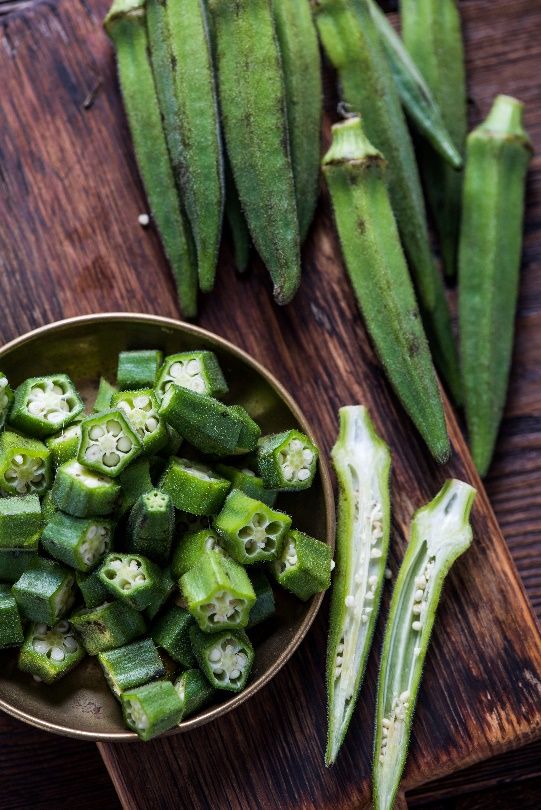
Okra (Abelmoschus esculentus) is an “Old World” plant that was widely distributed in Africa and Asia in prehistoric times (Smith, 2012). Like corn, okra grows well in Florida's hot, humid summers. Okra is an excellent source of vitamin K, and a good source of vitamin C and magnesium (USDA, n.d.). Okra has a mild, sweet, grassy flavor. How it is cooked dictates its texture. Roasting, frying, or grilling okra makes it crisp and crunchy, while sautéing or using in soups and stews gives it a moist, tender, chewy texture. To reduce the characteristic "slime" (mucilage), cook at a high, dry heat or add vinegar or other acidic ingredients, such as tomatoes, while cooking (Smith, 2012). It can be steamed, boiled, fried, pickled, and cooked in soups and stews, notably gumbo. To prepare okra, rinse the pod, cut off the calyx (stem), pat dry, and either cut the pod in half lengthwise, or slice it into half-inch rounds. Unwashed, dry okra pods should be stored in the vegetable crisper, loosely wrapped in perforated plastic bags. If freezing, blanch the pods in boiling water then "shock" them in an ice bath. Afterward, either cut the pods or freeze the whole pods by placing them on a parchment-lined baking sheet in the freezer. Okra stays fresh for about four days in the fridge before pods start to bruise and deteriorate. Blanching and storing pods in the freezer is a great way to reduce food waste. Okra byproducts such as polysaccharides from its leaves and stalk are being studied as a biodegradable food packaging material (Olawuyi & Lee, 2022).
Credit: Credit: © marcin jucha / Adobe Stock
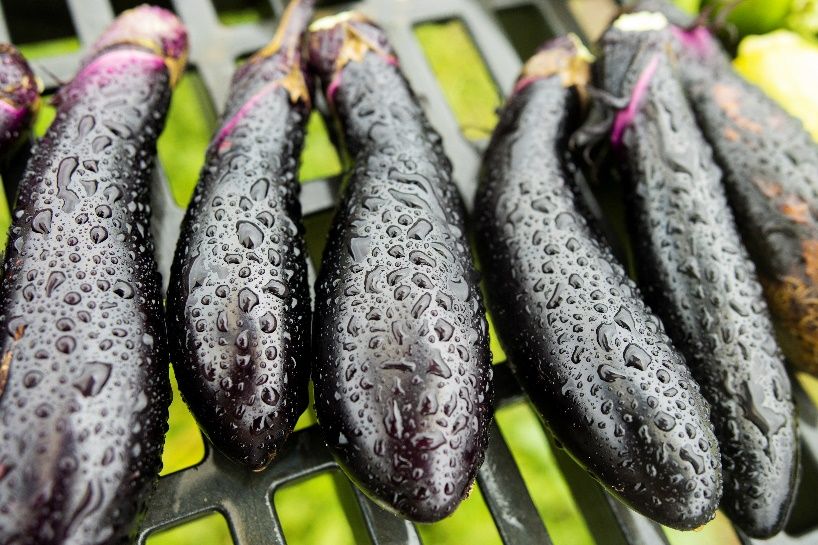
Plants in the Solanaceae family are referred to as “nightshades.” Some solanaceous plants can be grown in Florida in both warm and cool seasons. One member of the Solanaceae family is the eggplant. While often considered a vegetable, it is technically fruit — a berry, specifically (Smith, 2012). Japanese eggplant (Solanum melongena) thrives in both warm and cool seasons in Florida (Roberts et al., 2023). Eggplant is a good source of manganese (USDA, n.d.). Japanese eggplant's flavor is milder and less bitter than other eggplant varieties. It can be astringent when raw, but tender and complex when cooked; its spongy texture is very absorbent when paired with sauces. It is perfect for roasting, grilling, sautéing (e.g., ratatouille), or stir-frying with soy sauce and other fragrant sauces and spices (CalFresh, n.d.). To prepare, rinse the eggplant, then trim each end. Halve the eggplant longways and chop pieces to the desired thickness. The skin is edible, so there is no need to peel it. Avoid storing at room temperature under warm conditions. To prolong freshness, wrap the eggplant in paper towels and place it in a plastic bag in the refrigerator for up to ten days. You can also freeze sliced, uncooked eggplants in a plastic bag and use them within a month.
Credit: Tyler Jones, UF/IFAS
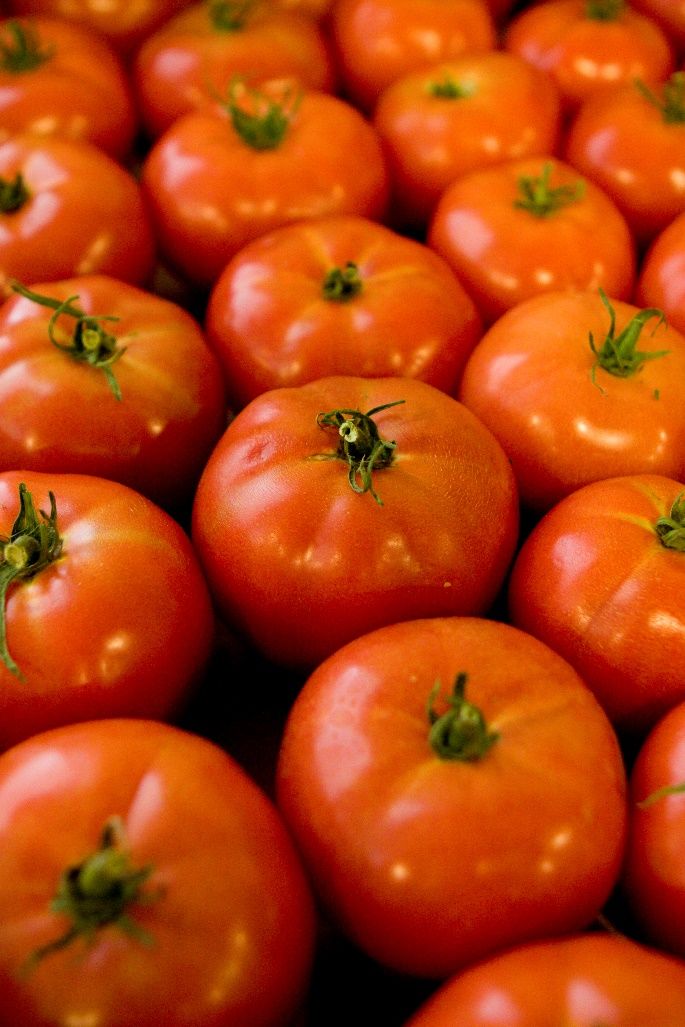
Tomatoes (Solanum lycopersicum) are another nightshade crop that can be grown in Florida as both a fall crop and a spring crop. Tomatoes are originally from South America. They prefer well-drained, fertile soil and full sun to partial shade, and they can be direct seeded or transplanted (Frey, Kanissery, Smith, Desaeger, & Vallad, 2023). Solanaceous crops are generally good candidates for container gardening. Tomatoes are often touted for their health benefits because they contain the antioxidant lycopene, but they also have various other beneficial compounds with antioxidant and anticancer properties. Epidemiological studies have found associations between increased consumption of tomatoes and decreased risk of chronic degenerative diseases (Frusciante et al., 2007; Salehi et al., 2019). To prepare tomatoes, halve, slice, dice, or chop as desired. Whole tomatoes can be stored at room temperature, but they should be refrigerated if they are cut. They store fresh at room temperature for 2–3 days or up to a week in the refrigerator (CalFresh, n.d.).
Credit: Tyler Jones, UF/IFAS
Hot peppers (Capsicum frutescens; Capsicum chinense; Capsicum baccatum) and sweet (mild) peppers (Capsicum annuum) grow as warm-season crops (Frey, McAvoy, Desaeger, Vallad, & Boyd, 2023). Peppers are originally from Central and South America. Peppers in the Capsicum genus are also part of the Solanaceae family (Smith, 2012). Hot peppers can be dried to keep for up to a year. To prepare peppers, rinse them and remove the stem and seeds, then slice, dice, or chop as desired. For hot peppers, wear gloves; make sure to wash your hands after handling the seeds. There are a variety of sweet (mild) peppers that grow in Florida, such as the Corno di Toro, Jimmy Nardello, and Yummy, that can be used to add color and flavor to recipes like salads and stir-fries. Whether mild or hot, peppers can be stored fresh in the refrigerator for 1–2 weeks or frozen for longer-term storage.
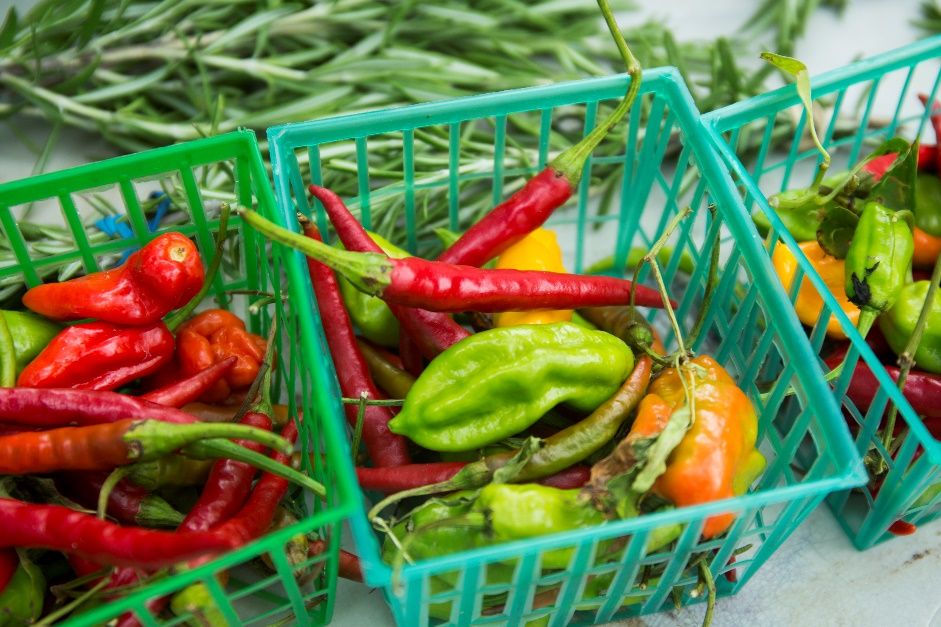
Credit: Tyler Jones, UF/IFAS
Florida’s warm-season vegetables, such as tomatoes, peppers, and corn, are excellent raw in salads or on sandwiches. They can also be cooked, roasted, sautéed, or grilled. There are many ways to enjoy Florida’s bounty in the summer months. For more information and recipes for these crops, visit the Fresh From Florida website (Florida Department of Agriculture and Consumer Services, 2025).
Additional Resources
Eggplant: https://gardeningsolutions.ifas.ufl.edu/plants/edibles/vegetables/eggplant.html
Heat-Tolerant Vegetables: https://gardeningsolutions.ifas.ufl.edu/plants/edibles/vegetables/heat-tolerant-vegetables/
Hot Peppers: https://gardeningsolutions.ifas.ufl.edu/plants/edibles/vegetables/hot-peppers.html
Peppers: https://gardeningsolutions.ifas.ufl.edu/plants/edibles/vegetables/peppers.html
Tomatoes: https://gardeningsolutions.ifas.ufl.edu/plants/edibles/vegetables/tomatoes.html
Sweet Corn: https://gardeningsolutions.ifas.ufl.edu/plants/edibles/vegetables/corn.html
Okra: https://gardeningsolutions.ifas.ufl.edu/plants/edibles/vegetables/okra.html
References
Bertoia, M. L., Mukamal, K. J., Cahill, L. E., Hou, T., Ludwig, D. S., Mozaffarian, D., Willett, W. C., Hu, F. B., & Rimm, E. B. (2015). Changes in Intake of Fruits and Vegetables and Weight Change in United States Men and Women Followed for Up to 24 Years: Analysis from Three Prospective Cohort Studies. PLOS Medicine, 12(9), e1001878. https://doi.org/10.1371/journal.pmed.1001878
CalFresh. (n.d.). Discover Foods. EatFresh. Retrieved February 18, 2025, from http://eatfresh.org/discover-foods/
Court, C., Ferreira, J.-P., Botta, R., & McDaid, K. (2023). Economic Contributions of the Agriculture, Natural Resource, and Food Industries in Florida, 2019: FE1136, 7/2023. EDIS, 2023(4). https://doi.org/10.32473/edis-fe1136-2023
Dittmar, P. J., Dufault, N. S., & Agehara, S. (2023). Chapter 1. Commercial Vegetable Production in Florida: VPH ch. 1, CV100/HS710, rev. 6/2023. EDIS. https://doi.org/10.32473/edis-cv100-2023
Florida Department of Agriculture and Consumer Services. (2025). Fresh From Florida: Recipes. https://www.followfreshfromflorida.com/recipes
Frey, C., Kanissery, R., Smith, H. A., Desaeger, J., & Vallad, G. E. (2023). Chapter 18. Tomato Production: VPH ch. 18, CV137/HS739, rev. 6/2023. EDIS. https://doi.org/10.32473/edis-cv137-2023
Frey, C., McAvoy, E. J., Desaeger, J., Vallad, G. E., & Boyd, N. S. (2023). Chapter 13. Pepper Production: VPH ch. 13, CV130/HS732, rev. 6/2023. EDIS. https://doi.org/10.32473/edis-cv130-2023
Frusciante, L., Carli, P., Ercolano, M. R., Pernice, R., Di Matteo, A., Fogliano, V., & Pellegrini, N. (2007). Antioxidant Nutritional Quality of Tomato. Molecular Nutrition & Food Research, 51(5), 609–617. https://doi.org/10.1002/mnfr.200600158
Guan, Z., Biswas, T., & Wu, F. (2018). The U.S. Tomato Industry: An Overview of Production and Trade: FE1027, 9/2017. EDIS, 2018(2). https://doi.org/10.32473/edis-fe1027-2017
Hung, H.-C., Joshipura, K. J., Jiang, R., Hu, F. B., Hunter, D., Smith-Warner, S. A., Colditz, G. A., Rosner, B., Spiegelman, D., & Willett, W. C. (2004). Fruit and Vegetable Intake and Risk of Major Chronic Disease. JNCI: Journal of the National Cancer Institute, 96(21), 1577–1584. https://doi.org/10.1093/jnci/djh296
Kanissery, R., Frey, C., Meszaros, A., Viana Xavier, K., Desaeger, J., & Beuzelin, J. (2023). Chapter 17. Sweet Corn Production: VPH ch. 17, CV135/HS737, rev. 6/2023. EDIS. https://doi.org/10.32473/edis-cv135-2023
Roberts, P. D., Frey, C., Meszaros, A., Boyd, N. S., Desaeger, J., & Qureshi, J. (2023). Chapter 8. Eggplant Production: VPH ch. 8, CV124, rev. 6/2023. EDIS. https://doi.org/10.32473/edis-cv124-2023
Salehi, B., Sharifi-Rad, R., Sharopov, F., Namiesnik, J., Roointan, A., Kamle, M., Kumar, P., Martins, N., & Sharifi-Rad, J. (2019). Beneficial Effects and Potential Risks of Tomato Consumption for Human Health: An Overview. Nutrition, 62, 201–208. https://doi.org/10.1016/j.nut.2019.01.012
Smith, A. F. (Ed.). (2012). The Oxford Encyclopedia of Food and Drink in America. Oxford University Press. https://www.oxfordreference.com/display/10.1093/acref/9780199734962.001.0001/acref-9780199734962
USDA. (n.d.). FoodData Central. Retrieved October 31, 2024, from https://fdc.nal.usda.gov/