
Florida producers grow a variety of fruit and nut crops, with different types of fruit being available fresh from Florida year-round. Fruit and nut farming in Florida provides direct employment to a large number of employees (4,627). When considering multiplier effects, Florida’s fruit and tree nut farmers support $920 million in sales revenue (Court, 2025). Fruits are an essential part of a balanced diet, and like vegetables, may help in reducing the risk for certain diseases (Abobatta, 2021). Both fruit and nuts have compounds that contribute to health (Alasalvar et al., 2020). Many fruits are high in water content and are a great source of vitamins, particularly vitamin A and vitamin C, as well as a good source of potassium and dietary fiber (Wallace et al., 2020). This publication is intended for individuals who are interested in learning more about fruit and nut crops grown in Florida, and ways to store, prepare, and include these foods in healthy meals and snacks.
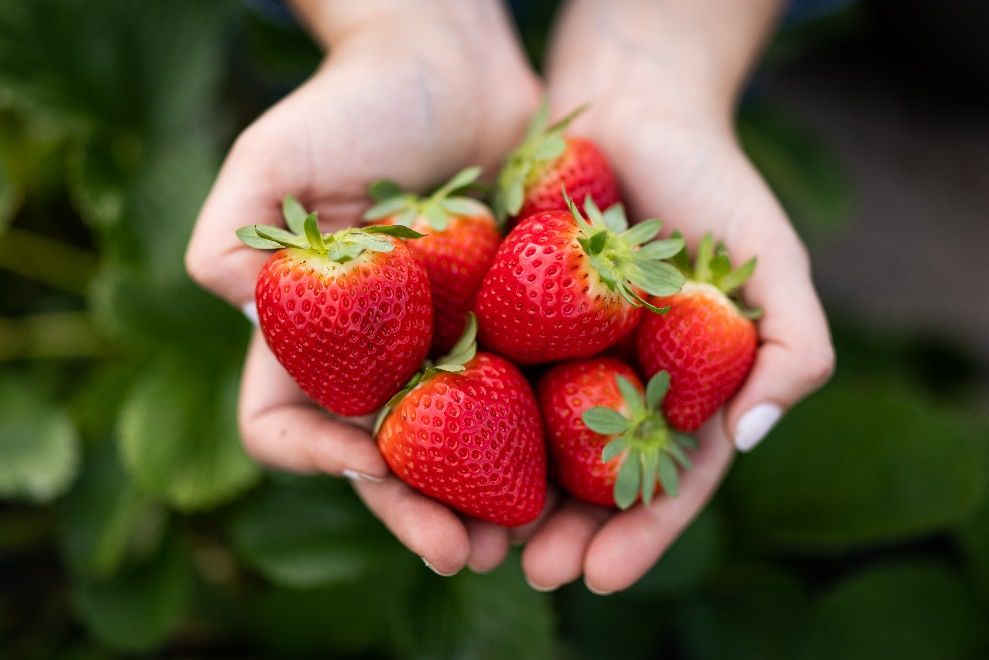
Florida is the strawberry (Fragaria x ananassa) capital of the world in the winter (Whitaker et al., 2021), and second in strawberry production in the United States, accounting for $434 million in annual sales (Florida Department of Agriculture and Consumer Services, 2023). Strawberries are typically grown in the ground in fields, and when transplanted, they take 30–50 days to first develop ripe fruit. Strawberries are bountiful in Florida from February–April (Whitaker et al., 2021; Whitaker et al., 2023). Although they are cold hardy, strawberries should be covered (freeze protected) during a hard freeze (Park-Brown et al., 2021). Research has shown that strawberries have numerous health benefits, including antioxidant and anti-inflammatory properties (Afrin et al., 2016; Basu et al., 2014; Giampieri et al., 2015), and are an excellent source of vitamin C as well as a good source of dietary fiber (USDA, n.d.). They have a crisp, juicy texture with a sweet or slightly tart taste when fully ripe. This level of sweetness or tartness depends on the variety. They should be eaten when fully ripe. Strawberries can be made into jam, used in smoothies, added to fruit salads, desserts, and kabobs, or used as a topping to yogurt or ice cream (CalFresh, n.d.-a). Botanically, the fruit of the strawberry is what most people consider its seeds, which are actually achenes. Achenes are hard, dry, one-seeded fruit. The red, juicy part of the strawberry is the associated receptacle for all the hard, dry fruits on the outside (Smith, 2012).
Credit: Cristina Carrizosa, UF/IFAS
Fruits that grow on trees in Florida include figs (Ficus carica), Asian or sand pears (Pyrus pyrifolia), Chinese/Japanese persimmons (Diospyros kaki), and peaches (Prunus persica) (Campbell et al., 2022; Sarkhosh, Andersen, & Huff, 2020; Sarkhosh et al., 2022; Sarkhosh, Popenoe, & Huff, 2020; Sarkhosh & Andersen, 2019). Tree fruit in Florida is available from late spring through fall.
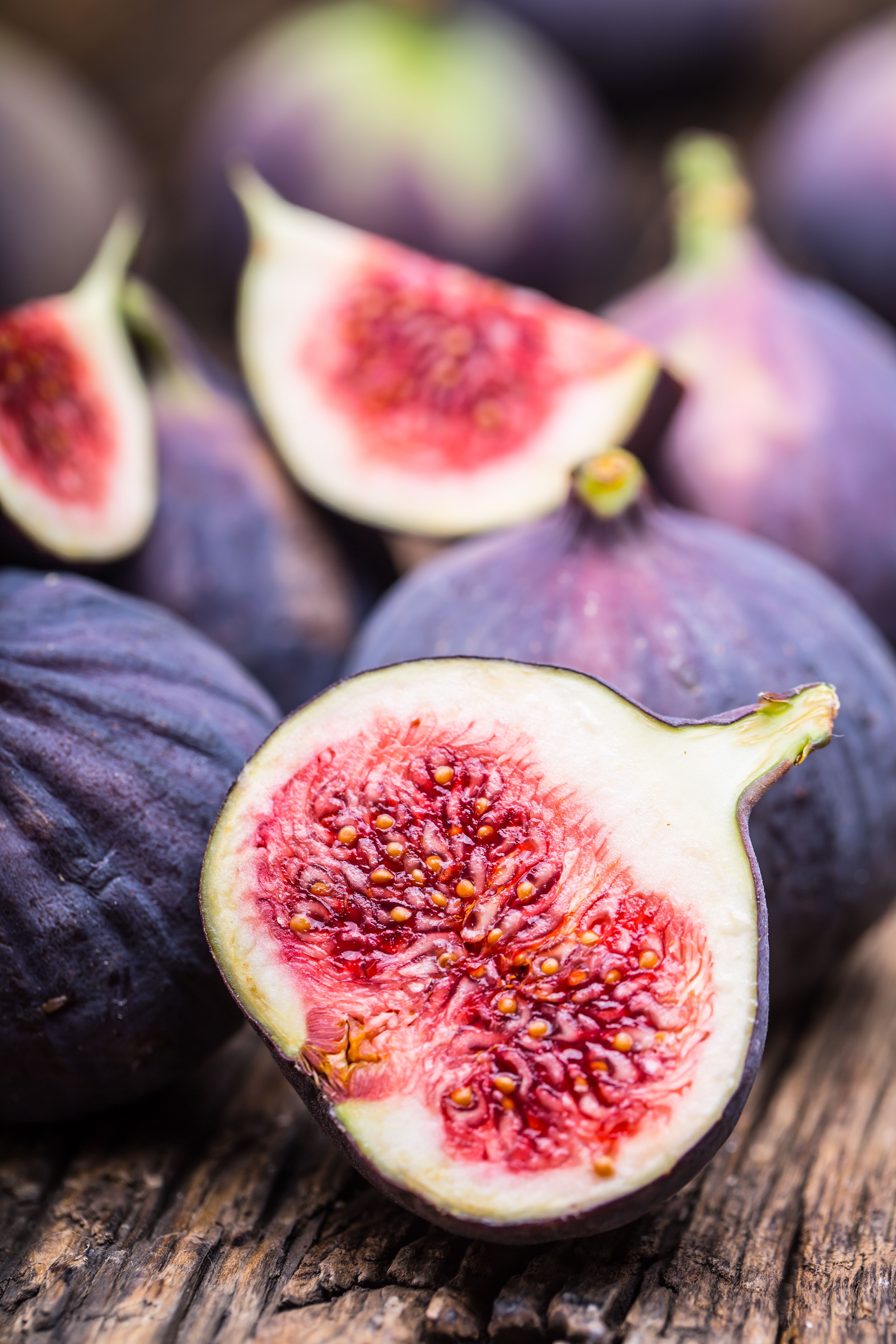
Many types of figs can be grown in Florida and are available during the summer months (Sarkhosh & Andersen, 2019). Fig trees can reach heights of up to 20 feet, and they thrive best in full sun with well-draining soil. Figs are a good source of dietary fiber, potassium, and magnesium (USDA, n.d.). They have velvety skin, a sweet jam/honey-like taste, and a soft texture with some crunch (seeds). Figs can be eaten raw on their own, but they can also be added to salads, baked in desserts, or preserved in jams or jellies.
Credit: ©weyo / Adobe Stock
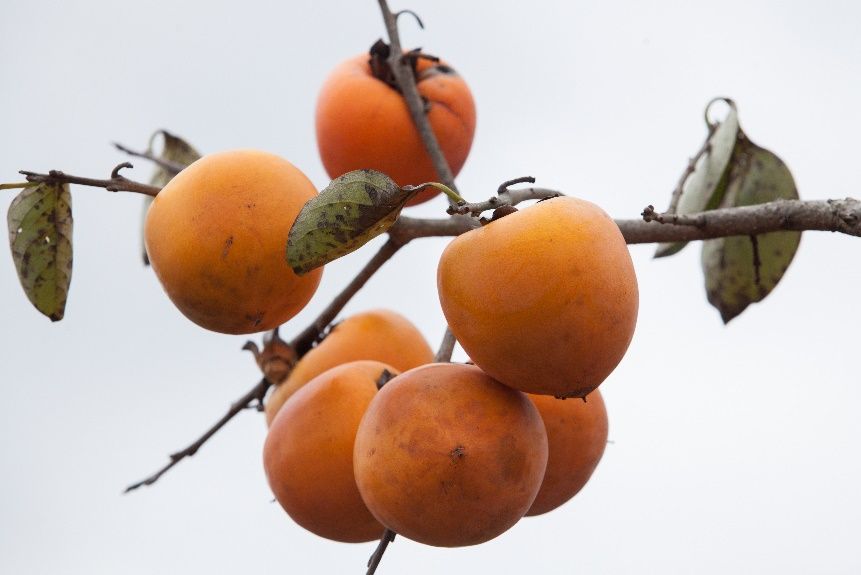
Pears and persimmons are both from East Asia and prefer well-drained soil, full sun, and regular water for optimal growth. Chinese and Japanese persimmon trees take several years to bear fruit and can be 20 to 30 feet tall. Persimmons are available from Florida farms from September through October (Sarkhosh, Andersen, & Huff, 2020).
Persimmons are an excellent source of dietary fiber, potassium, and vitamin A (USDA, n.d.). Persimmons have a bit of a learning curve for consumption because there are two distinct kinds: astringent and non-astringent. Astringent varieties are typically eaten raw when fully ripe and have honey-sweet and rich flavor with a silky, mushy texture. In most cases, the skin is palatable. Astringent varieties can be refrigerated for a few days to prevent them from going bad quickly and should be eaten right away when ripe. To keep longer, they can be dried, fermented, or frozen as a puree. There is a Japanese cultural tradition of hand-drying persimmons over a few weeks to produce a rich and sweet product called hoshigaki (Blumberg et al. 2004). Non-astringent varieties are mildly sweet, with a crisp, apple-like texture. To prepare non-astringent varieties, rinse the fruit, remove the calyx, and slice the fruit like an apple. The skin can be eaten or peeled. Non-astringent persimmons can be stored for a few weeks at room temperature, and longer in the refrigerator. They may be stored for a few days under refrigeration, if not quite ripe, and for a month, if hard at harvest. All varieties of persimmons can be enjoyed raw, cooked down into a jam, dried, or fermented (Sarkhosh, Andersen, & Huff, 2020).
Credit: Tyler Jones, UF/IFAS
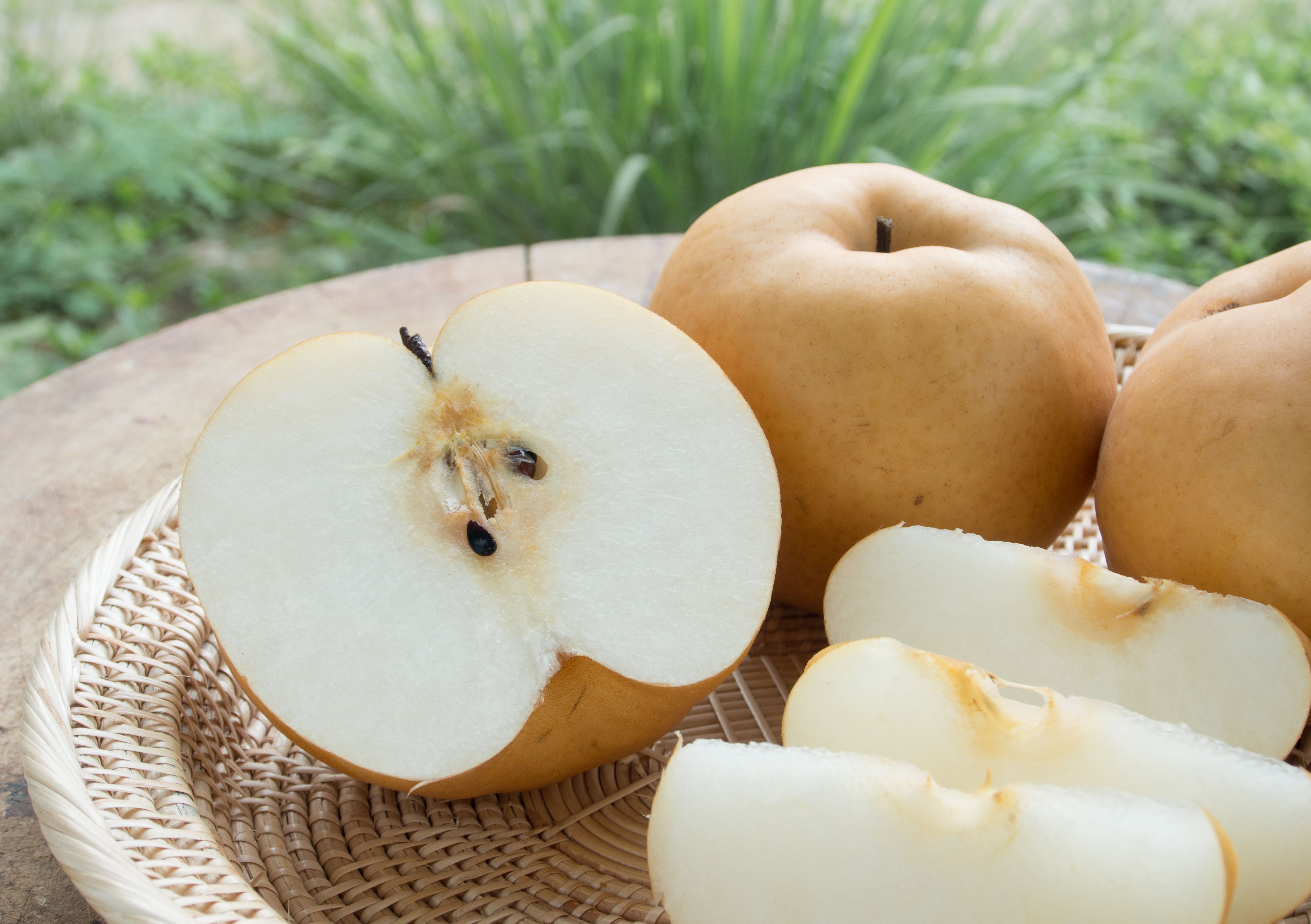
Pears are a good source of dietary fiber and vitamins C and K (USDA, n.d.). They have a sweet and slightly floral flavor, with a hint of acidity. Pears have a crisp and juicy texture, like apples, and can be enjoyed whole as a snack, added to salads, or used in pies or tarts. They can also be juiced, pureed, or made into jam. Unlike European pears, which ripen off the tree, Asian pears are typically harvested when they are already mature and ready to eat (Smith, 2012). Asian or sand pears are harvested during the summer and are available from Florida farms from July through August (Sarkhosh, Popenoe, & Huff, 2020).
Credit: ©utah51 / Adobe Stock
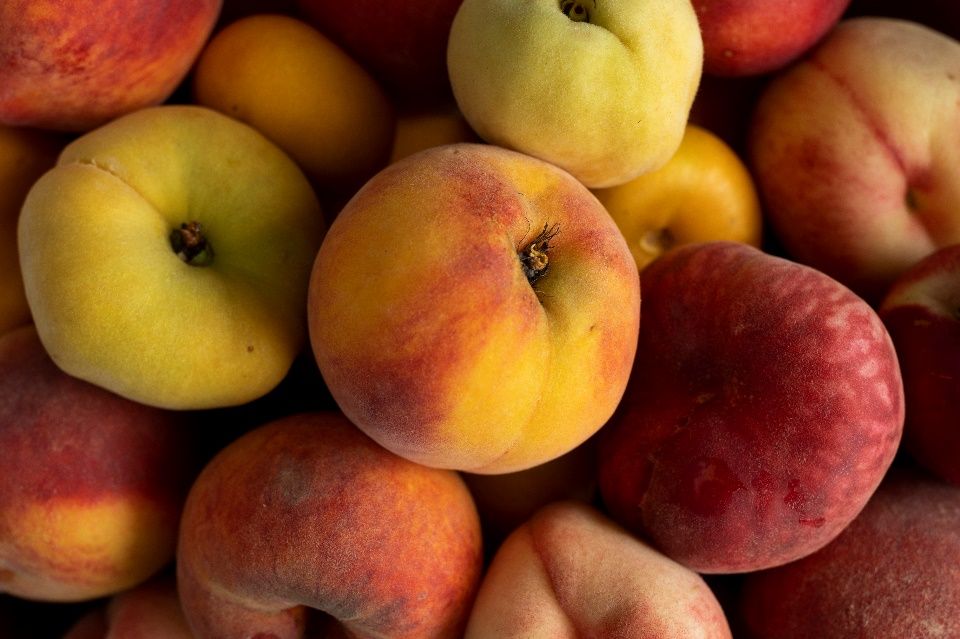
Peach is a deciduous fruit tree that requires cold temperatures (chill hours) in the winter for optimum growth and fruit production. The minimum chill hours required for optimal fruit production depend on the peach cultivar and are referred to as the “chill unit requirement.” Peach cultivars historically required more than 650 chill units, but as a result of UF/IFAS peach breeding efforts, there are now “low-chill” cultivars with requirements as low as 100 chill units (which allow peach production in Florida) (Campbell et al., 2022; Sarkhosh et al., 2022). Because peaches are rich in phytochemicals such as phenolic compounds, carotenoids, vitamins, volatiles, and organic acids, which are known for their antioxidant and anti-inflammatory properties, the crop is being investigated as a potential medicinal food (Bento et al., 2022). Peaches are excellent sources of dietary fiber and vitamins A and C (USDA, n.d.). They are juicy, with a honey-like sweetness, but can be slightly acidic or sour depending on cultivar and ripeness level. Peaches can be eaten whole, used in desserts such as pies, cobblers, and crisps, or added to smoothies or salads. They are also delicious grilled. Keep ripe peaches at room temperature for 1 to 2 days or in the refrigerator for up to 5 days. Leave unripe peaches at room temperature to ripen, then transfer them to the refrigerator. To reduce waste, peach pits and skins can be used to make infused water, teas, or syrups (Davidson & Jaine, 2013).
Credit: Cat Wofford, UF/IFAS
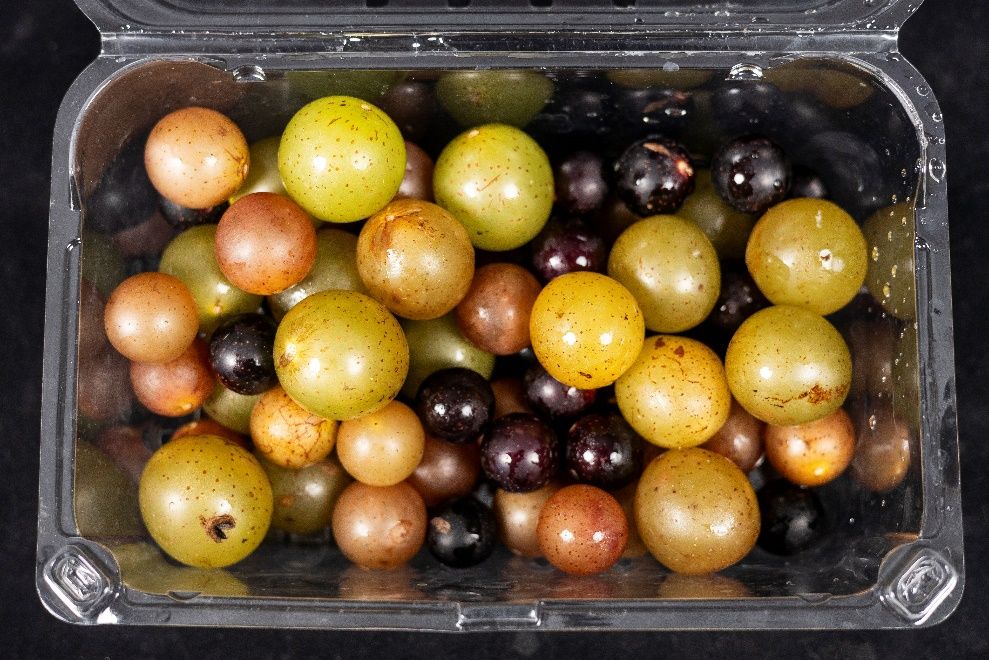
Muscadine grapes (Vitis rotundifolia) are native to the southeastern United States and were the first native grape species to be cultivated in North America (Andersen et al., 2020). Muscadine grapes are warm-season fruit that grow well in Florida and are available from Florida farms in midsummer. Their popularity is partially due to their tolerance of insect and disease pests, as well as their natural resistance to pathogens to which European grapes (Vitis vinifera L.) are susceptible. These characteristics make muscadine grapes easier to grow in the home landscape without requiring pesticides (Andersen et al., 2020). Muscadine grapes are an excellent source of dietary fiber and vitamin K, and a good source of potassium and vitamin C (USDA, n.d.). Their flavor is juicy, sweet, and somewhat tart, and their skin is thick with a slight bitterness. They have crunchy seeds inside that are edible, but most people do not eat them. They are excellent eaten on their own, but they can also be freeze-dried or processed to make jam, jelly, juice, or even wine (CalFresh, n.d.-a; Sarkhosh et al., 2023).
Credit: Cat Wofford, UF/IFAS
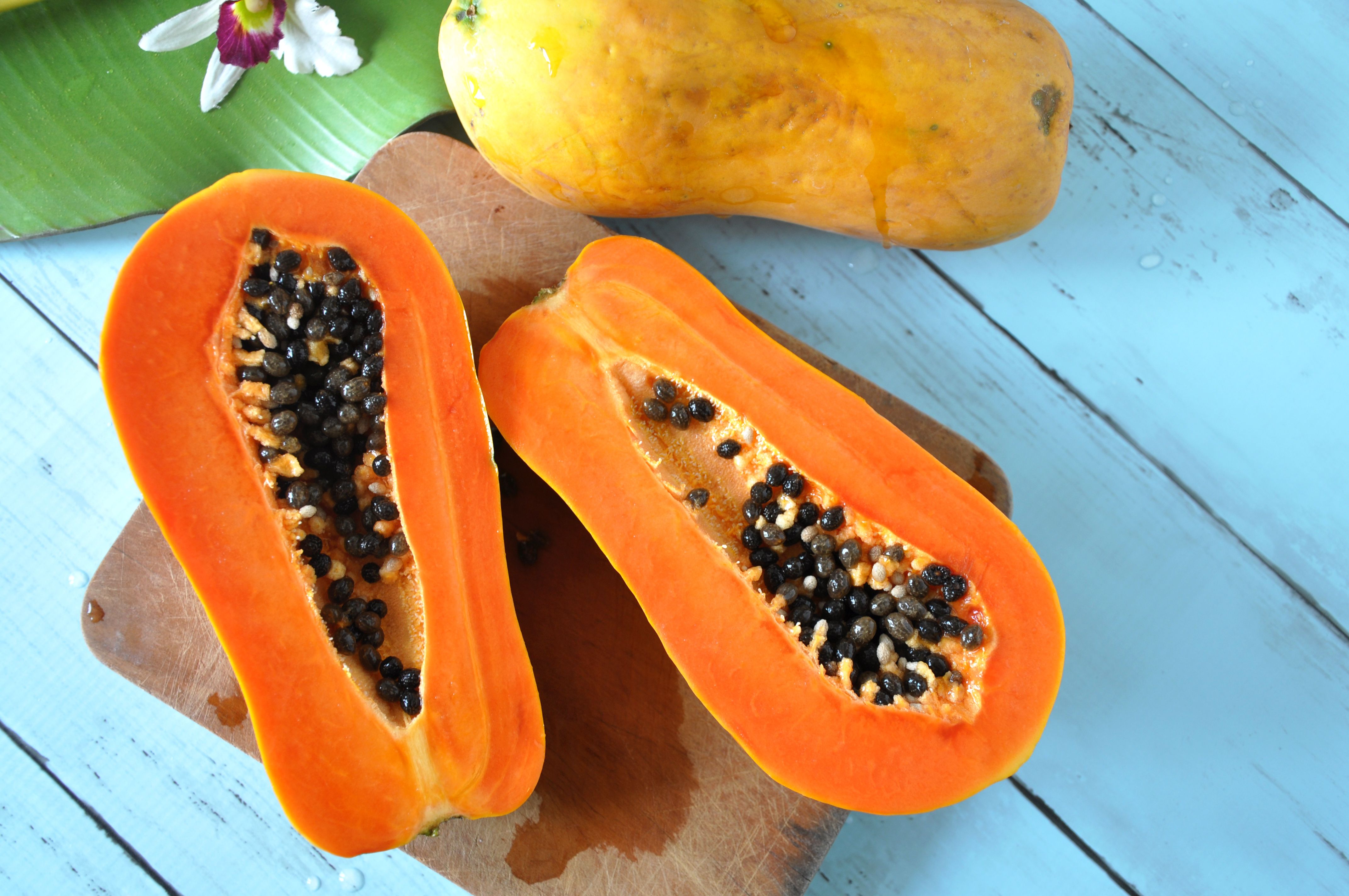
South Florida has the best potential in the U.S. for commercial papaya (Carica papaya) production because papaya can be grown year-round in the subtropical climate (Evans et al., 2018). Papaya is a warm-season crop that is sensitive to frost. Papayas should be harvested when the fruit color starts to change from green to yellow. The plants are often called trees because they can grow to over 30 feet tall, but they are short-lived perennial crops that rarely live to be 10 years old (Crane, 2020; Gilman et al., 2021). Papaya is a low-calorie, nutrient-dense food, containing nutrients and phytochemicals that have potential health benefits (Ali et al., 2011). Papaya is an excellent source of vitamins A and C, and a good source of folate (USDA, n.d.). It has a sweet, tropical flavor with hints of citrus. The flesh is soft and juicy, similar to that of a ripe melon. When the fruit is firm and green, it can be cooked like a vegetable. When ripe and sweet, papaya can be eaten raw on its own, or it can be added to smoothies, fruit salads, or desserts. Papaya seeds can be used in salad dressings. To prepare, rinse the papaya thoroughly under running water, cut it lengthwise, and scoop out seeds with a spoon (CalFresh, n.d.-a).
Credit: ©daniaphoto / Adobe Stock
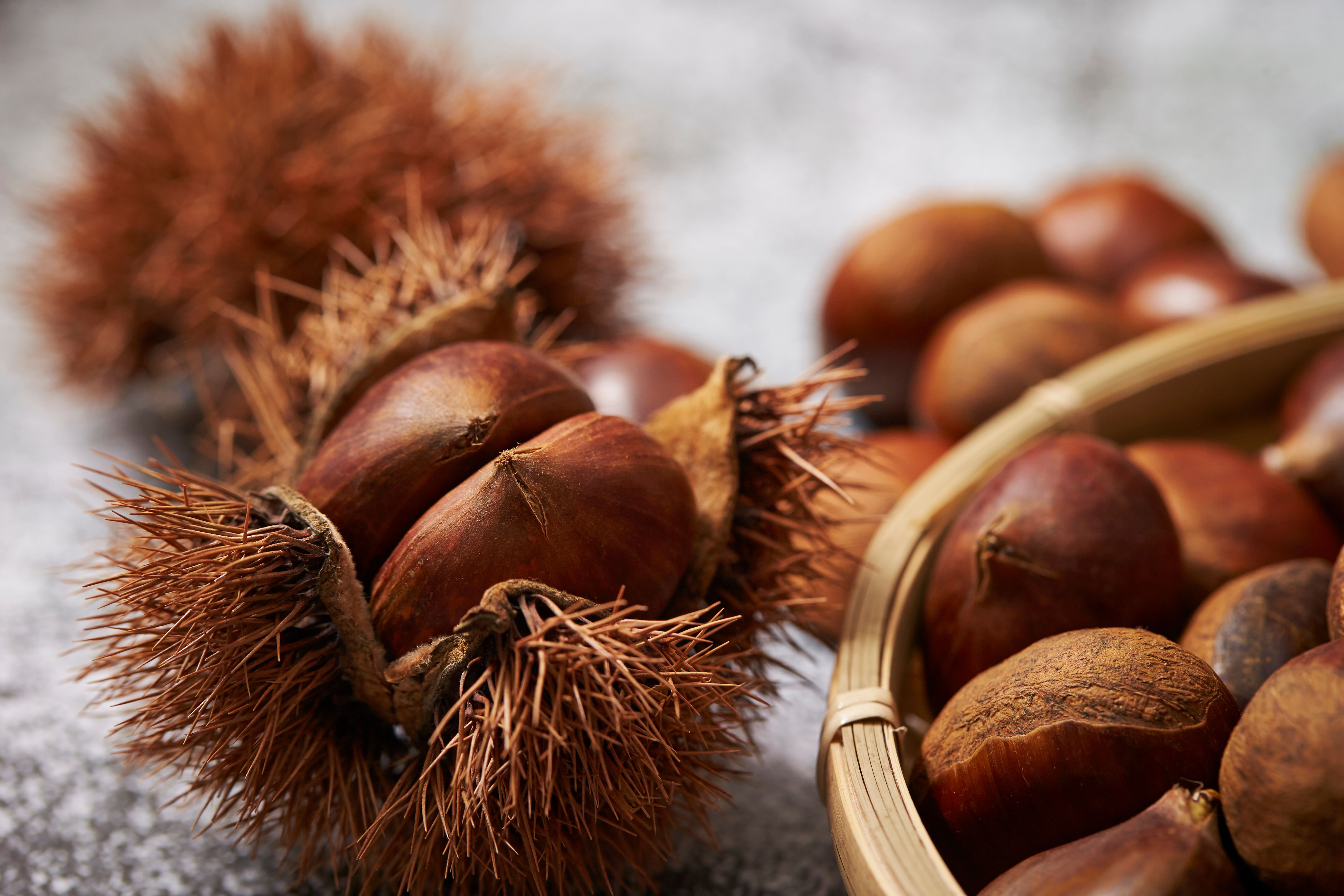
Chestnuts were one of the earliest domesticated tree crops, being mentioned in Chinese poetry more than 5,000 years ago (Hochmuth et al., 2018). While the tree produces rot-resistant lumber, the chestnut blight in 1904 killed almost all chestnut trees in the U.S. in less than 40 years (Hochmuth et al., 2018). Today, blight-resistant hybridized Chinese chestnut trees are planted (Smith, 2012). Chestnuts grow well in Florida, and can be a productive and profitable orchard crop, including American chestnut (Castanea dentata) and Chinese chestnut (Castanea mollissima). Chestnut trees prefer moderately acidic, well-drained soil and can grow up to 40 feet tall (Hochmuth et al., 2018). Chestnuts are harvestable within a short window during the fall and are available from September through November. Chestnuts are an excellent source of vitamin C. They must be cooked to be edible and can be used in both sweet and savory recipes. They have a sweet, buttery taste (similar to that of baked sweet potatoes) and soft texture when boiled or dry roasted. Chestnuts must be peeled after heat preparation, and before eating whole or mashing. To cook chestnuts, rinse them well, make a nick in the skin on each flat side, either simmer them in a pan of water or roast them in the oven for 15 minutes, then peel them and enjoy (Hochmuth et al., 2018).
Credit: ©mnimage / Adobe Stock
Many fruits are excellent when eaten raw and on their own, but they can also be made into fruit salad, added to baked goods or smoothies, or used to make jams or jellies (CalFresh, n.d.-b). The skins of many fruits have beneficial nutrients such as dietary fiber, so you do not need to peel them. Make sure to rinse and scrub fruit well under cool water just before eating. Most fruit should be stored in the refrigerator, and if stored properly, can last from a few days to up to a few weeks (CalFresh, n.d.-a).
Additional Resources
Chestnuts: https://gardeningsolutions.ifas.ufl.edu/plants/trees-and-shrubs/trees/chestnut.html
Deciduous Fruit Trees: https://gardeningsolutions.ifas.ufl.edu/plants/edibles/fruits/deciduous-fruit-tree/
Fig: https://edis.ifas.ufl.edu/publication/MG214
Muscadine Grapes: https://edis.ifas.ufl.edu/publication/HS100
Papaya: https://gardeningsolutions.ifas.ufl.edu/plants/edibles/fruits/papaya.html
Peaches: https://gardeningsolutions.ifas.ufl.edu/plants/edibles/fruits/peaches.html
Japanese Persimmon: https://gardeningsolutions.ifas.ufl.edu/plants/edibles/fruits/japanese-persimmon/
Strawberries: https://gardeningsolutions.ifas.ufl.edu/plants/edibles/fruits/strawberries.html
References
Abobatta, W. F. (2021). Nutritional and Healthy Benefits of Fruits. Biomedical Journal of Scientific & Technical Research, 40(2). https://doi.org/10.26717/BJSTR.2021.40.006412
Afrin, S., Gasparrini, M., Forbes-Hernandez, T. Y., Reboredo-Rodriguez, P., Mezzetti, B., Varela-López, A., Giampieri, F., & Battino, M. (2016). Promising Health Benefits of the Strawberry: A Focus on Clinical Studies. Journal of Agricultural and Food Chemistry, 64(22), 4435–4449. https://doi.org/10.1021/acs.jafc.6b00857
Alasalvar, C., Salvadó, J.-S., & Ros, E. (2020). Bioactives and Health Benefits of Nuts and Dried Fruits. Food Chemistry, 314, 126192. https://doi.org/10.1016/j.foodchem.2020.126192
Ali, A., Devarajan, S., Waly, M. I., Essa, M. M., & Rahman, M. S. (2011). Nutritional and Medicinal Value of Papaya (Carica papaya L.). Natural Products and Bioactive Compounds in Disease Prevention, 34–42.
Andersen, P. C., Sarkhosh, A., Huff, D., & Breman, J. (2020). The Muscadine Grape (Vitis rotundifolia Michx): HS763/HS100, rev. 10/2020. EDIS, 2020(6). https://doi.org/10.32473/edis-hs100-2020
Basu, A., Nguyen, A., Betts, N. M., & Lyons, T. J. (2014). Strawberry as a Functional Food: An Evidence-Based Review. Critical Reviews in Food Science and Nutrition, 54(6), 790–806. https://doi.org/10.1080/10408398.2011.608174
Bento, C., Gonçalves, A. C., Silva, B., & Silva, L. R. (2022). Peach (Prunus persica): Phytochemicals and Health Benefits. Food Reviews International, 38(8), 1703–1734. https://doi.org/10.1080/87559129.2020.1837861
CalFresh. (n.d.-a). Discover Foods. EatFresh.org. Retrieved February 18, 2025, from https://eatfresh.org/discover-foods/
CalFresh. (n.d.-b). Find a Recipe. EatFresh.org. Retrieved February 17, 2025, from https://eatfresh.org/find-a-recipe/
Campbell, D., Treadwell, D., Sarkhosh, A., Liburd, O. E., & Brecht, J. (2022). Organic Peach Production in Florida: HS1447, 10/2022. EDIS, 2022(5). https://doi.org/10.32473/edis-hs1447-2022
Court, C. (2025). Florida’s Agriculture and Food System Fast Facts 2025. https://fred.ifas.ufl.edu/media/fredifasufledu/economic-impact-analysis/ag-fast-facts/booklets/Florida-Agriculture-Food-System-Fast-Facts.pdf
Crane, J. H. (2020). Papaya Growing in the Florida Home Landscape. EDIS.
Davidson, A., & Jaine, T. (2013). The Oxford Companion to Food. Oxford University Press. https://www.oxfordreference.com/display/10.1093/acref/9780192806819.001.0001/acref-9780192806819
Evans, E. A., Ballen, F. H., & Crane, J. H. (2018). An Overview of US Papaya Production, Trade, and Consumption: FE914/FE914, 9/2012. EDIS, 2012(9). https://doi.org/10.32473/edis-fe914-2012
Florida Department of Agriculture and Consumer Services. (2023). Florida Agriculture Overview and Statistics. https://www.fdacs.gov/Agriculture-Industry/Florida-Agriculture-Overview-and-Statistics
Giampieri, F., Forbes-Hernandez, T. Y., Gasparrini, M., Alvarez-Suarez, J. M., Afrin, S., Bompadre, S., Quiles, J. L., Mezzetti, B., & Battino, M. (2015). Strawberry as a Health Promoter: An Evidence Based Review. Food & Function, 6(5), 1386–1398. https://doi.org/10.1039/C5FO00147A
Gilman, E. F., Watson, D. G., Klein, R. W., Koeser, A. K., Hilbert, D. R., & McLean, D. C. (2021). Carica papaya: Papaya: FPS106/FP106, 5/2007. EDIS, 2007(15). https://doi.org/10.32473/edis-fp106-1999
Hochmuth, R. C., Wallace, R. D., Blokland, P. J. V., & Williamson, J. G. (2018). Production and Marketing of Chestnuts in the Southeastern United States.
Park-Brown, S., Treadwell, D., Stephens, J. M., & Webb, S. (2021). Florida Vegetable Gardening Guide.
Sarkhosh, A., & Andersen, P. C. (2019). The Fig: HS27/MG214, rev. 11/2009. EDIS, 2009(10). https://doi.org/10.32473/edis-mg214-2009
Sarkhosh, A., Andersen, P. C., & Huff, D. M. (2020). Japanese Persimmon Cultivars in Florida: SP101/MG242, rev. 2/2020. EDIS, 2020(1). https://doi.org/10.32473/edis-mg242-2020
Sarkhosh, A., Habibi, F., & Sargent, S. A. (2023). Freeze-Dried Muscadine Grape: A New Product for Health-Conscious Consumers and the Food Industry: HS1468, 7/2023. EDIS, 2023(4). https://doi.org/10.32473/edis-hs1468-2023
Sarkhosh, A., Olmstead, M., Chaparro, J., Andersen, P., & Williamson, J. (2022). Florida Peach and Nectarine Varieties. EDIS.
Sarkhosh, A., Popenoe, J., & Huff, D. (2020). The Pear (Pyrus spp.) in Florida Home Gardens: HS1393, 11/2020. EDIS, 2020(6). https://doi.org/10.32473/edis-hs1393-2020
Smith, A. F. (Ed.). (2012). The Oxford Encyclopedia of Food and Drink in America. Oxford University Press. https://www.oxfordreference.com/display/10.1093/acref/9780199734962.001.0001/acref-9780199734962
USDA. (n.d.). FoodData Central. Retrieved October 31, 2024, from https://fdc.nal.usda.gov/
Wallace, T. C., Bailey, R. L., Blumberg, J. B., Burton-Freeman, B., Chen, C. O., Crowe-White, K. M., Drewnowski, A., Hooshmand, S., Johnson, E., Lewis, R., Murray, R., Shapses, S. A., & Wang, D. D. (2020). Fruits, Vegetables, and Health: A Comprehensive Narrative, Umbrella Review of the Science and Recommendations for Enhanced Public Policy to Improve Intake. Critical Reviews in Food Science and Nutrition, 60(13), 2174–2211. https://doi.org/10.1080/10408398.2019.1632258
Whitaker, V., Boyd, N. S., Peres, N., Desaeger, J., Lahiri, S., & Agehara, S. (2023). Chapter 16. Strawberry Production: VPH ch. 16, CV134/HS736, rev. 6/2023. EDIS. https://doi.org/10.32473/edis-cv134-2023
Whitaker, V., Peres, N., Lahiri, S., Brown, S. P., & Chandler, C. K. (2021). Growing Strawberries in the Florida Home Garden: HS1154/HS403, rev. 9/2021. EDIS, 2021(5). https://doi.org/10.32473/edis-hs403-2021